Abstract
Climate change has imposed greater challenge on cowpea production in the savannah ecology of West Africa sub-region in the recent time, however, development of varieties that combined resilience (stability) and precocity with high seed yield would be a sustainable approach to mitigate this problem. To this end, nine advanced breeding lines were evaluated along with two commercial varieties across three locations in guinea savannah ecology, using a randomized complete block design of three replications. Results obtained for seed yield and yield components indicate that the eleven cowpeas exhibited substantial variability for all plant traits studied and implications discussed. Additive Main Effect and Multiplicative Interaction (AMMI) analysis however revealed that the variations recorded were substantially attributable to genotypic component (70–80%) and less of environment (0.7–7.0%), a measure of phenotypic stability of these cowpea lines. However, seed yield and yield components vary significantly across the three locations, which further emphasize the important role of soil and climatic variables to cowpea production. In this study, two varieties (IT07K-299-6 and IT11K-61-82) consistently combined high seed yield (> 2 tons/ha) with precocity across the three locations, and could be multiplied for distribution to farmers as short-term intervention for yield increase. Reduced seed viability of these varieties reflects seed storage challenge in cowpea farming. In addition to significant contributions of some yield components to seed yield, there was evidence of strong association between precocity and high yield, and its implication for cowpea improvement discussed.
-
Key words: Cowpea breeding, Genetic variability, Guinea savannah ecology, Seed yield & Yield components, Varietal development
INTRODUCTION
Cowpea (
Vigna unguiculata L. Walp.), remains one of the main staple food legume and cheap source of protein for millions of poor inhabitants of low-land humid and dry savannah regions of Africa.
Timko et al. (2007) opined that cowpea plays a critical role in the lives of millions of people of Africa and other parts of developing world, where it is used to supplement cereal- and tuber-based diets that are of low protein content. Cowpea recipes could also substitute for animal proteins in vegetarian diets because of its rich protein and amino acids (
Alghali 1991;
Boukar et al. 2011). In addition to its rich nutritional value, cowpea has become a valuable component of farming system in many countries across West Africa sub-region because of its ability to restore soil fertility through nitrogen fixation (
Carsky et al. 2002;
Tarawali et al. 2002;
Sanginga et al. 2003). Hay produced from cowpea plant residues also play major role in the feeding of ruminant animals during the dry season in many northern parts of West Africa (
Tarawali et al. 2002).
Nigeria is a major producer of cowpea as it accounts for about 61% of total seed production in Africa (
http://www.iita.org/crops/cowpea; last visited in 24
th September, 2018), with production of about 3.6 million metric tons in 2016 (
www.fao.org/faostat/en/#data/QC; last visited in 23
rd July, 2018). This high volume of production demonstrates the importance of cowpea cultivation as a component of Nigerian farming system, with cultivation expanding beyond northern region traditionally known for the crop in recent time (
Nwofia et al. 2006;
Akande et al. 2012). However, in spite of the enormous economic, nutritional and ecological/environmental benefits offered by cowpea as food and commodity crops for people of sub-Sahara Africa, its production has been seriously affected by low seed yield. Available statistics indicate significant low yield across years (
http://faostat.fao.org/site/339/default.aspx.), with yield at farm-gate far below the optimum. Studies have shown that low yield of below 500 kg/ha are prevalent in the sub-Sahara region (
Adipala et al. 1997;
Oyekanmi and Sangodoyin 2007).
Mortimore et al. (1997) had also reported cowpea yield of 110 kg/ha on farmers’ fields in the northern guinea savannah of Nigeria, an area considered as heart of cowpea production in West and Central Africa. Generally, farmers-traditional cultivars are known to be well adapted to the low input conditions, but often exhibit very poor yield with indeterminate/late plant maturity and highly susceptible to drought and major diseases and pests. And concerted efforts made by national and regional breeding programs to address these production constraints have yielded limited success because of the diverse ecological space and poor extension services in West Africa sub-region. Thus, in order to achieve significant cowpea yield improvement in farmers’ fields there is an urgent need to compliment national and regional efforts through adoption of Researcher-Farmers’ participatory model that is agro-ecologically focused. Evidently, yield is known to be a complex phenotypic trait in plants with many interwoven physiological and developmental traits controlled by different arrays of genes. And understanding interrelationship among yield component constituents (
Oladejo et al. 2011) and the environment (
Nwofia 2012) is vital to developing varieties that will produce high and stable seed yield, but above all adapted to different agro-ecological environments.
Okeleye et al. (1999) had advocated for development of varieties that are adaptable to guinea savannah ecology, often characterized by high rate of crop failure, because of unreliable total amount, distribution and duration of rainfall. Such improved varieties are not readily available to farmers in this region today. As a strategy to bridge this gap, 21 cowpea breeding lines from International Institute of Tropical of Agriculture (IITA), Ibadan, Nigeria were initially evaluated for three years to select promising high yielding and adaptable cowpea varieties for guinea savannah agroecology. And that study led to identification of nine lines with potential for high yield (
Aliyu and Makinde 2016). Meanwhile,
Oyekanmi and Sangodoyin (2007) had opined that such promising lines should be evaluated across multiple locations for grain-seed yield before introduction to national seed system and final release to farmers. Thus, this study set to evaluate these selected nine advanced cowpea breeding lines with potentials for high grain-seed yield along with two commercial varieties on farmer’s fields across three locations in Kwara State located in the guinea savannah agro-ecology.
MATERIALS AND METHODS
Eleven cowpea genotypes which include nine advanced breeding lines and two commercial varieties as checks were evaluated across three locations during the 2017 cropping season. The nine breeding lines (IT07K-299-6, 1T08K-126-19, IT08K-150-12, IT08K-150-24, IT10K-125-100, 1T10K-815-5, IT10K-837-1 and IT11K-61-82) were selected from previous pre-breeding evaluation study (
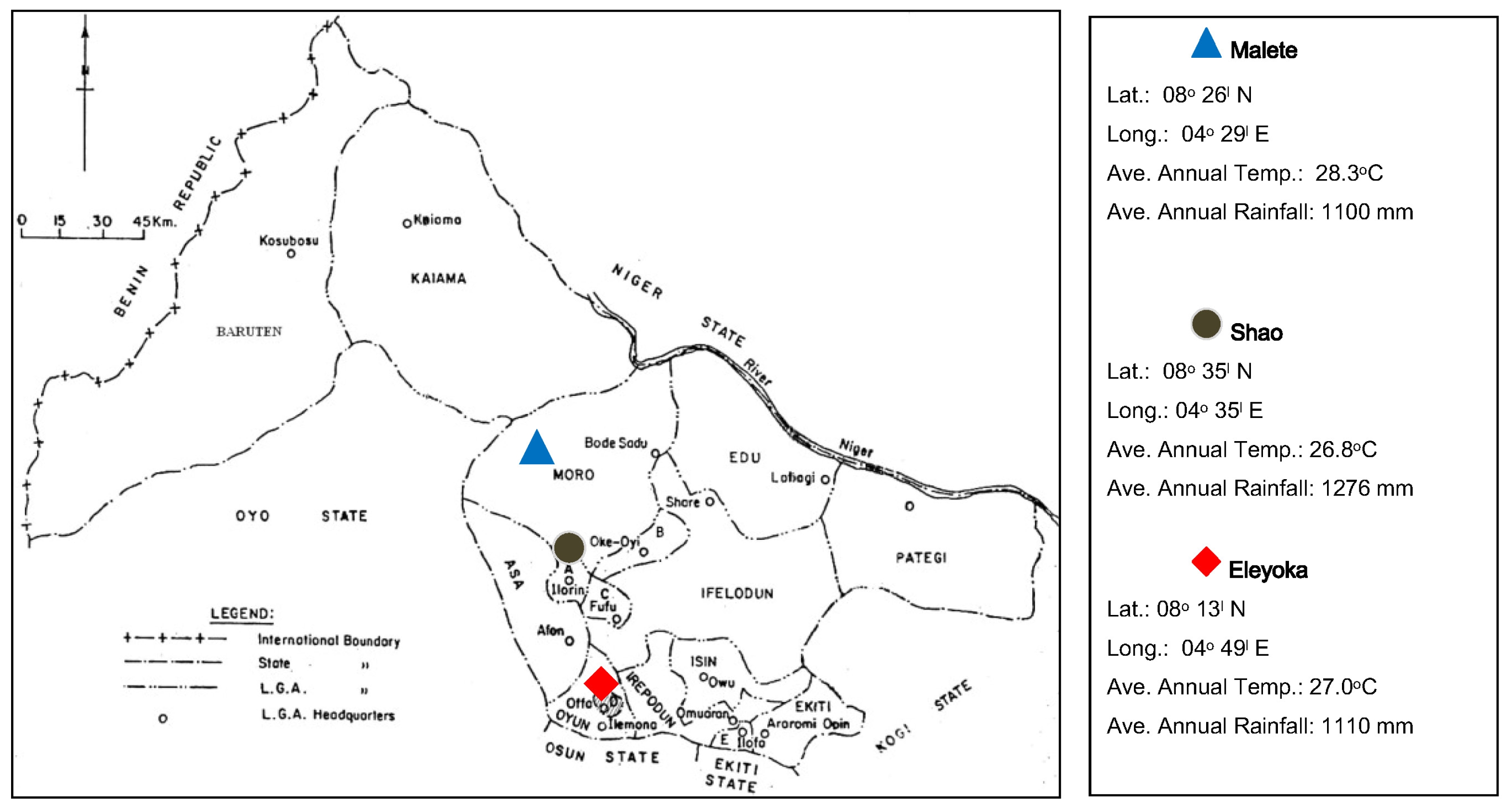
Aliyu and Makinde 2016). Seeds of these advanced breeding lines were sourced from IITA, Ibadan and the commercial varieties (Ife Brown and TVX 3236) were sourced from National Seed Service. Three farming communities known for cowpea cultivation were selected viz., Eleyoka from Ifelodun Local Government Area, Malete and Shao from Moro Local Government Area, all in Kwara State and the climatic attributes of these selected locations presented (
Fig. 1). Kwara State is demographically an agrarian state with a total land area of 36,852 km
2 and is located in the guinea savannah ecology of Nigeria. It is bordered in the south and north by the tropical forest and Sudan savannah ecologies, respectively. Soil samples were collected from each farm site in 4 replicates for physical and chemical analyses to have an overview of the nutrient status of the soils and their implication on cowpea yield. Processed soil samples were analyzed at IITA laboratory and results of physical and chemical parameters of the soils are presented in
Supplementary Tables S1 and S2, respectively. Each field trial, consisting of 11 varietal treatments was laid out in a randomized complete block design (RCBD) and replicated thrice. And each treatment plot consists of two rows of 10 m length with 1.0 m of alley between plots. Two seeds were planted per hole at spacing of 0.3 × 0.6 m and thinned down to one after 2 weeks of germination, thus, giving effective plant population of about 55,555 plant/ha. Planting was done during 2017 cropping season (July–October 2017) with sowing done across the three locations within 48 hours to minimize variation in volume of precipitation. The experimental plots were manually weeded thrice and field pests were managed with fortnight spraying of cypermethrin and pendimethaline at the rate of 20 g a.i/ha, until pod maturity. Plant data were collected on survival count (%) (SVC), pod maturity (PDM), pod seed fill (POF), pod length (cm) (POL), pods per plant (PPP), seeds per pod (SPO), seeds per plant (SPP), 100-seed weight (g) (HSW), seed weight per plant (SWP), and seed-grain yield per hectare (kg) (YPH). Pod maturity was ranked into 1.00 (95% pod maturity less than 45 days after sowing), 3.00 (95% pod maturity at 45–60 days after sowing) and 5.00 (95% pod maturity later than 60 days after sowing). All data were summarized and statistically analyzed for analysis of variance and Additive Main Effect and Multiplicative Interaction (AMMI) analysis using GENSTAT softwares (13.0 version) by VSN International (
www.vsni.co.uk/software/genstat).
RESULTS
Results of analysis of variance indicate that the 11 cowpea varieties exhibited significant different (
P < 0.01) for plant survival count and all the seed yield component traits evaluated (
Table 1). Similarly, locations and its interaction with variety (L × V) recorded significant differences (
P < 0.05 and
P < 0.01) for all the plant traits studied. The results also showed that yield components such as yield per hectare, and seed per plant recorded very high coefficients of variation and contrastingly, moderately low variation for pod length, pods per peduncle, seeds per pod and individual (hundred) seed weight (
Table 1). Grand mean values of these data (
Table 1) indicate that this group of cowpeas had about 55% plant survival rate, predominantly medium maturing with pod-seed fill of 97%, pod length of 15 cm, two pods per peduncle, 14 seeds per pod and 165 seeds per plant. These varieties are predominantly medium seed size (0.14 g/seed), with average seed yield of 1.2 tons/ha (
Table 1). Summarized data across the 3 experimental locations indicate that cowpea plants performed comparably better in Malete with Shao being the least (
Table 2). However, among the 11 varieties, IT07K-299-6 and IT11K-61-82 recorded significant better performance by combining high plant survival rate with early maturity (precocity) and high seed yield of more than 2 tons/hectare. TVX-3236 was the most viable among the lots, which is about three times better than the poorest variety (IT10K-817-7). Five varieties (46%) among these cowpeas are late maturing and while three (27%) each exhibited early and medium maturities, respectively (
Table 2). In time of pod size, IT10K-837-1 is characterized by very long pods, which is about twice length of TVX-3236 and Ife Brown pods. High number of pods per peduncle was mostly recorded for IT11K-61-82, TVX-3236, and IT07K-299-6; with about 41%, 33%, and 14% above the group mean (
Table 2). Comparably, IT07K-299-6 and IT08K-150-12 exhibited efficient seed development than other nine varieties, with about 120% in pod-seed fill. Production of large seeds differentiates IT10K-837-1 from the rest of the varieties.
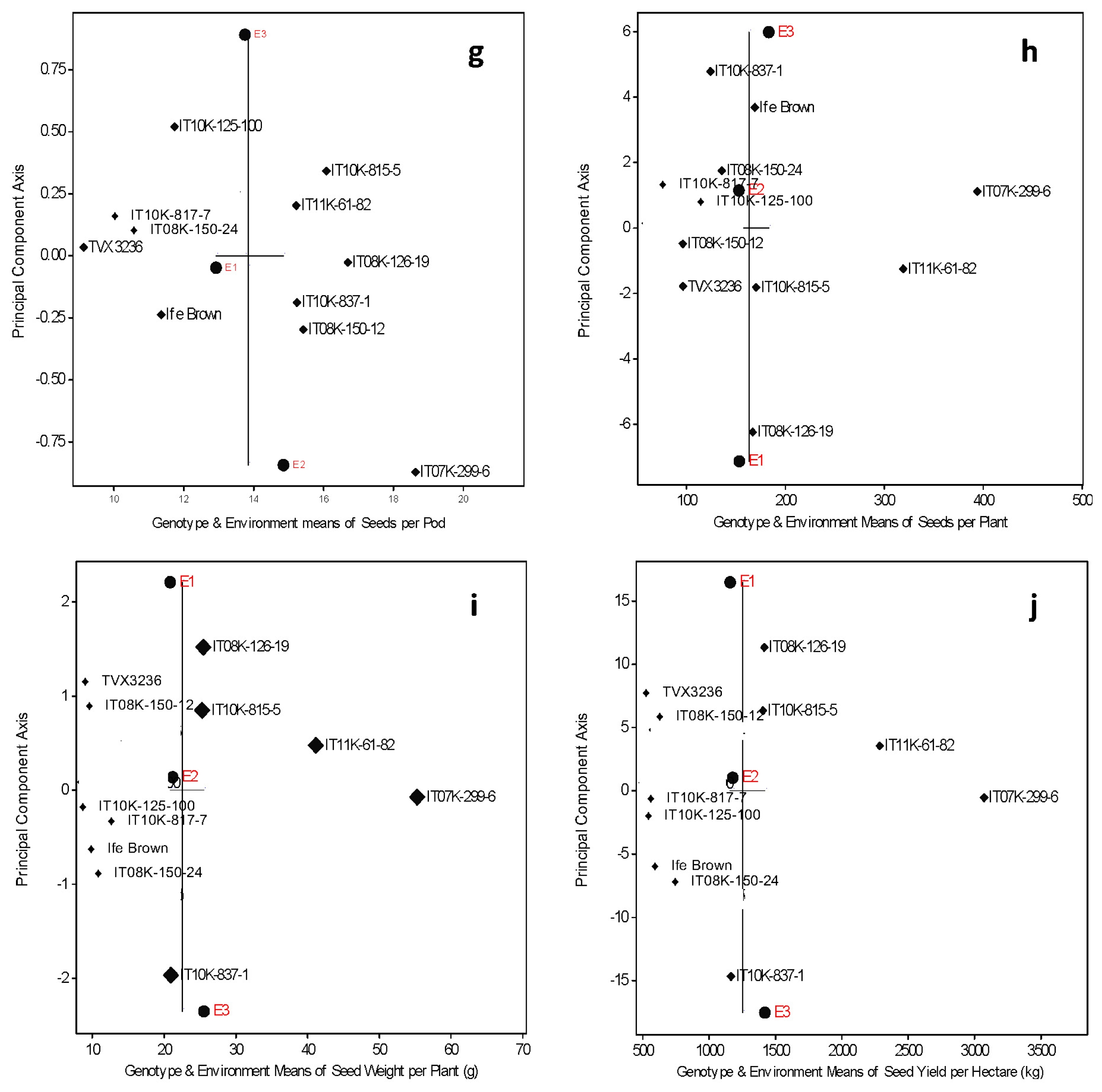
For brevity, G × E data of plant characters and seed yield components were analyzed with AMMI statistical procedure, summarized and presented as biplots of principal components (
Fig. 2a–j). And overview of this AMMI analysis shows that variation in cowpea attributes is more of genotype (variety) than environment (location) (
Fig. 2a–j), with between 70% and 89% variability due to varietal effect, and 0.7% and 7% to environment (data not shown). TVX-3236, IT11K-61-82 and IT07K-299-6 were best three varieties in terms of plant survival rate across the 3 locations, with performance in Malete being exceptionally higher than other locations (
Fig. 2a). In terms of pod maturity, IT11K-61-82, IT10K-815 and IT07K-299-6 are the most precocious varieties (
Fig. 2b). For pod-seed fill efficiency, IT08K-126-19, IT07K-299-6, IT08-150-12 and IT11K-61-82 had more than 100% seed fill with Malete being most favorable (
Fig. 2c). However, IT10K-837-1 with largest seed weight produced the longest pods across the three locations, with Malete being the most favorable for these yield components (
Fig. 2d, e). AMMI biplot for pod clustering (pods/peduncle) identifies IT11K-61-82, TVX-3236 and IT07K-299-6 to be outstanding with Malete being distinct from two others (
Fig. 2f). G × E biplots of seeds per pod and seeds per plant identify IT07K-299-6, IT08K-126-19 and IT10K-815-5 as best varieties and Malete performance being distinct from other (
Fig. 2g, h). Biplots of seed weight per plant (g) and total seed yield per hectare (kg) though indicate significant variation across the three locations, had IT07k-299-6, IT11K-61-82 and IT08K-126-19 as outstanding varieties, also with plants grown in Malete being the most prolific (
Fig. 2i, j).
Correlation coefficient analysis of plant characters and seed yield components is presented in
Table 3. Plant survival rate recorded significant positive correlations with pod-seed fill, peduncle per plant, seeds per pod, seeds per plant, seed weight per plant, and seed yield per hectare. However, it recorded negative significant correlations with pod maturity and seed weight. Correlations between pod maturity and pod-seed fill, pod length, pods per peduncle, seeds per pod, seeds per plant, and seed yield per hectare are negatively significant (
P < 0.001; r (97) = 0.254). Pod-seed fill recorded positive significant correlations with pods per peduncle, seeds per pod, seeds per plant, seed weight per plant, and seed yield per hectare. It however recorded a significant negative correlation with pod length. Correlations between pods length and seeds per pod, seed weight, seed weight per plant, and seed yield per hectare are significantly positive. Pods per peduncle showed positive and significant correlations with seeds per plant, seed weight per plant, and seed yield per hectare, but had significant negative relationship with seed size (individual seed weight). Seeds per pod and seeds per plant recorded significant positive correlations with seed weight per plant, and seed yield per hectare. Correlations between seed weight, and seed yield per hectare are significantly positive (
Table 3).
DISCUSSION
Development and selection of improved genotypes is a major sustainable strategy to combat problem of low yield in dry savannah regions of sub-Sahara Africa. And one of the most sustainable breeding strategies is the continuous expansion of germplasm and evaluation of promising genotypes for adaptation and yield stability. Breeding for stable yield would also involve evaluation of crop varieties across diverse environments within or without regions to identify superior genotypes with broad or specific adaptation due to G × E interaction.
Kaya et al. (2002) opined that varietal adaptation could be differs significantly across environments. In this study, nine advance breeding cowpea lines were evaluated along with two commercial varieties (as checks) across three locations (microenvironments) in the guinea savannah ecology (Kwara State, Nigeria) to select and develop improved cowpeas with high seed yield for farmers in this dry savannah region in the country.
Govindaraj et al. (2015) emphasized the importance of genetic variability as a life-blood of crop improvement and,
Meena et al. (2017) opined that success in the development of high yielding varieties is consequence upon level of genetic variability and diversity of the breeding population. The eleven cowpea varieties used in this study however exhibited wide range of phenotypic variability for total seed yield and some yield component traits like pod maturity period and seeds per plants. Thus, wide variability extant of this nature could be attributed to inherent genetic properties of cowpea varieties and/or environmental influence, which could be exploited for improvement through selection and/or hybridization of individuals with desired quality characteristics. Wide genetic variability in cowpea has been reported in other studies (
Grisih et al. 2006;
Idahosa et al. 2010;
Nwofia et al. 2014;
Shanko et al. 2014).
Owusu et al. (2018) advocated the need to develop cowpeas that combine earliness with high yield in Ghana. In terms of pod maturity (phenology), six of the advanced breeding lines expressed early to medium pod maturity period and comparatively better than the existing commercial varieties (Ife Brown and TVX 3236) that are late maturing. Matured pods were ready for harvest 2–3 weeks earlier in these six cowpeas compared to the late maturing genotypes. These set of individuals with early (IT07K-299-6, IT10K-815-5 and IT11K-61-82), and medium (IT08K-126-19, IT08K-150-12, and IT10K-125-100) maturing habit could be genetically exploited to develop varieties amenable to two cropping cycles in the guinea savannah region with limited range of rainfalls. Precocity in cowpea would not only makes it possible to perform two to three planting cycles per year (
de Moura Oliveira et al. 2016), but could reduce losses and/or stabilize the production in regions with long periods of droughts (
Machado et al. 2008;
Ayo-Vaughan et al. 2011). Cowpeas with short period of maturity also allow farmers to cultivate the crop as second harvest after main crops like maize (corn), soybean or rice. Interestingly, two varieties (IT07K-299-6 and IT11K-61-82) from six individual identified with early maturity combine earliness with high seed yield and could be selected as improved varieties to meet short-term need of farmers in this region. Genetic studies on earliness (precocity) in cowpea reported that the trait is controlled by polygenes and could be greatly influenced by environment (
Adeyanju and Ishiyaku 2007;
Ayo-Vaughan et al. 2011;
Neto et al. 2017). Perhaps polygenic nature of this trait could explain variation in pod maturity of the same cowpea variety across locations in this study.
The choice of AMMI analysis for this G × E data was because of its robustness (
Thillainathan and Fernadez 2001) and synteny with other statistical tool like GGE biplot as recently reported (
Aliyu et al. 2014). Significant variation recorded in seed yield and yield components across the three locations within the same ecology underscores the complex interplay between genes (genotypes) and environment and the need to incorporate genotype by microenvironment (G × mE) interaction in the breeding scheme during varietal development program. Aliyu and Abdulkareem (unpublished data) observed significant variations in seed yield and yield components of cowpea from two locations within 5 kilometers radius.
Sreelakshmi et al (2010) opined that G × E interaction and its components have a direct bearing on the environmental adaptation of the varieties to be recommended for commercial cultivation. Among the three locations where field trials were conducted, cowpeas from Malete performed fairly better than the two other locations. In other words, seed yield from Malete and Eleyoka were 7.00% and 1.40% above mean seed yield, respectively. On the contrast, seed yield from Shao was 8.42% below the mean seed yield. Variation in seed yield and yield components across farm locations as observed in this study could be attributed to soil nutrient composition and climatic variables. Soil pH (below 6.8 and above 7.5) has been reported to significantly affect cowpea yield (
Joe and Allen 1980;
Goenaga et al. 2013), while change in temperature of 1°C below and above optimum could speed up leaf senescence, and high soil precipitation (volume of rainfall) reduces root nodulation and consequently reduce seed yield in cowpea (
Bagnall and King 1987;
Ajetomobi and Abiodun 2010). However, the best three cowpea varieties (IT07K-299-6, IT11K-61-82 and IT08K-126-19) for Malete and Shao, and (IT07K-299-6, IT11K-61-82 and IT08K-150-24) for Eleyoka have potentials to produce about 2.72 tons/ha, 2.17 tons/ha and 1.93 ton/ha of grain-seed yield, respectively. These genotypes could be selected for farmers use in the short-term. It is important to note that the best three varieties in Malete also ranked best three in Shao (08° 35′ N 04° 35′ E), which has a congruity with Malete (08° 26′ N 04° 29′ E) compared to Eleyoka (08° 13′ N 04° 49′ E). Indeed, climatic variables like amount of rainfall and temperature in Malete and Shao are relatively close compared to Eleyoka (
Fig. 1).
Importantly, two cowpeas (IT07K-299-6 and IT11K-61-82) consistently produced high seed yield across the three experimental locations. This stable expression of high yield suggest that these two cowpea varieties probably possessed inherent resilience mechanisms for stability of yield component compensation, stress tolerance and capacity to recover rapidly from stress (
Nath et al. 2013).
Significant positive correlation between plant survival rate and yield components further underscore the importance of high-quality seeds to cowpea seed yield. Seeds with germination (viability) below 85% are not advisable for field planting as there was significant reduction in seed yield in varieties with lower survival percentage. Results obtained in this study disagree with
Adetumbi et al. (2011) that reported no significant difference in seed yields of old and new seed of two varieties of cowpea. Two varieties of Ife Brown were used in that study and Ife Brown varieties are characterized by late maturity. Sample size, type of genotype and environmental condition could account for variation between the two studies. While there is general opinion that effect of seed ageing would have been removed once seedlings have become established in the field, effect of poor-quality seeds (dying embryo) would be more consequential on plant vigor and seed yield of early maturing varieties than late maturing genotypes.
Baysah (2013) observed significant effect on early stage of growth (2–3 weeks) cowpea.
Akhter et al. (1992) reported increased frequency of abnormal cells with seed age.
Furthermore, significant positive correlation between yield components (pods per peduncle, seeds per pod, seeds per plant, and seed weight per plant) and seed yield recorded in this study is consistent with previous studies (
Drabo et al. 1984,
1985;
Ogunbodede 1989;
Aliyu and Makinde 2016), which suggest plausible faster genetic improvement of seed yield in these cowpea varieties. Relationships between plant maturity and seed yield components were however negative and significant, indicating early maturing varieties from this study produce higher seed yield compare to late maturing types. This is a positive selection index for cowpea improvement in this location. This result is consistent with previous data (
Aliyu and Makinde 2016) but contrast to
Owusu et al. (2018) that reported positive association between high grain yield and late maturity in northern Ghana. Variations between the two studies could be attributed to climatic variables, genotypes, and breeding history of the plant materials (
Molosiwa et al. 2016). Perhaps, overgeneralization of inference from correlation and/or genetic linkage studies between cowpea plant maturity and seed yield components could sometimes be misleading, therefore inferences and conclusions should be drawn on biotypes and/or regions data-specific basis.
Data reported in this study has further shed light on the significant role of environment on phenotypic and genotypic stability of cowpea seed yield and yield components especially in the savannah ecology in West Africa sub-region and its implication on overall cowpea production. However, this multi-locational on-farm varietal trial has led to identification and selection of two cowpea genotypes (IT07K-299-6 and IT11K-61-82) that combined precocity with stable high seed yield across the three trial locations. These varieties could be multiplied for immediate release to farmers through formal seed distribution system to salvage declining cowpea production in the area.
Supplementary Information
ACKNOWLEDGEMENTS
We acknowledged the technical supports of Mr. Omotayo Jimoh and Mr. Muhammed Usman, both Laboratory Technicians in the College of Agriculture, Kwara State University, Malete for this project. We also appreciated our undergraduate students and farmers that participated in this study.
ACKNOWLEDGEMENTS
We acknowledged the technical supports of Mr. Omotayo Jimoh and Mr. Muhammed Usman, both Laboratory Technicians in the College of Agriculture, Kwara State University, Malete for this project. We also appreciated our undergraduate students and farmers that participated in this study.
Fig. 1Map of Kwara State showing the three experimental locations (farms) and their climatic characteristics.
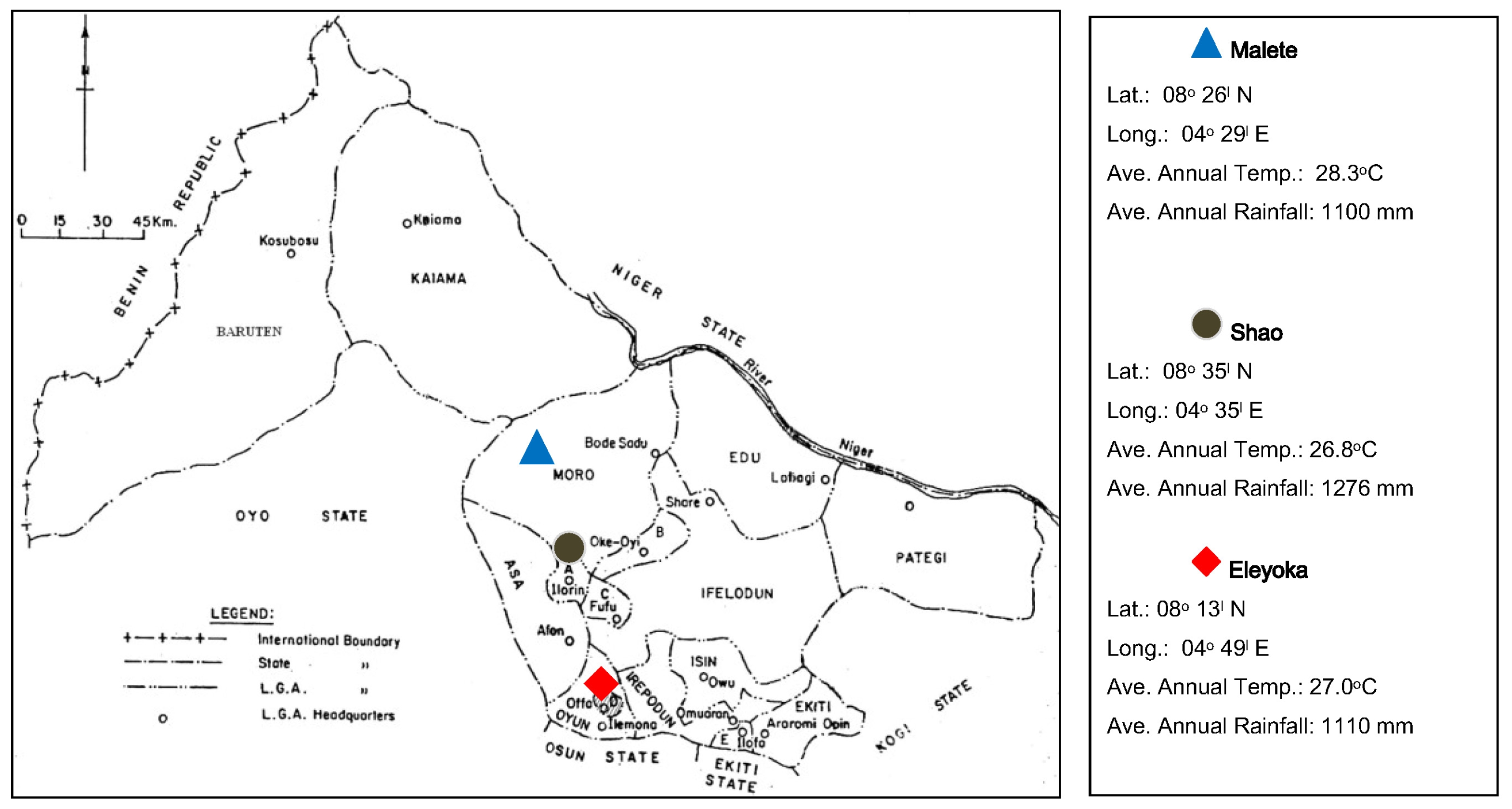
Fig. 2Additive Main Effect and Multiplicative Interaction (AMMI) analysis biplots of Genotype x Environment Means of (a) Plant Survival Count (rate), (b) Pod Maturity Period, (c) Pod-seed filling efficiency, (d) Hundred seed weight, (e) Pod length (cm), (f) Pods per peduncle, (g) Seeds per pod, (h) Seeds per plant, (i) Seed weight per plant and (j) estimated total seed yield per hectare of data from 11 cowpea varieties across three experimental locations. Locations are indicated in AMMI biplots as E1: Shao, E2: Malete, and E3: Eleyoka.
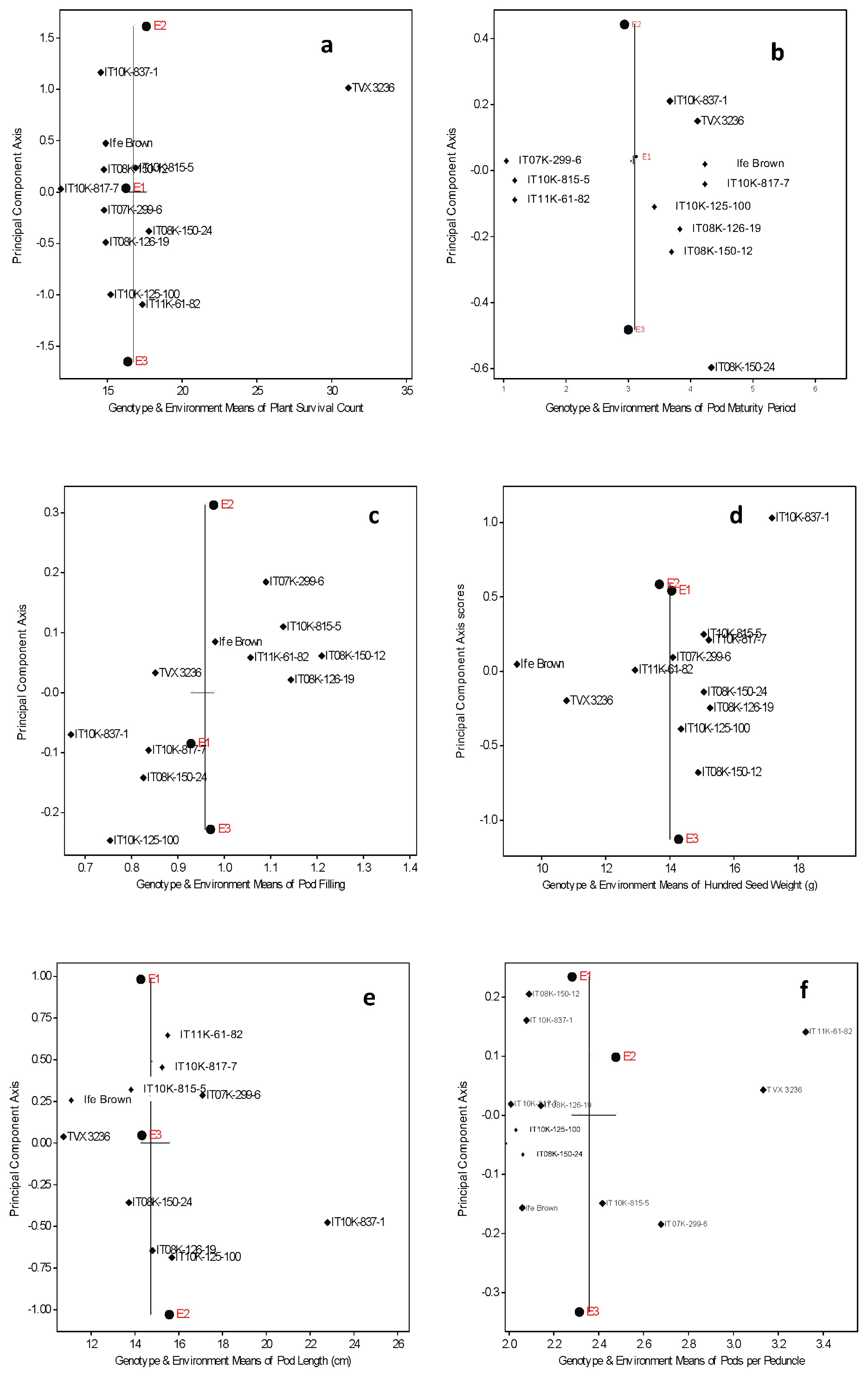
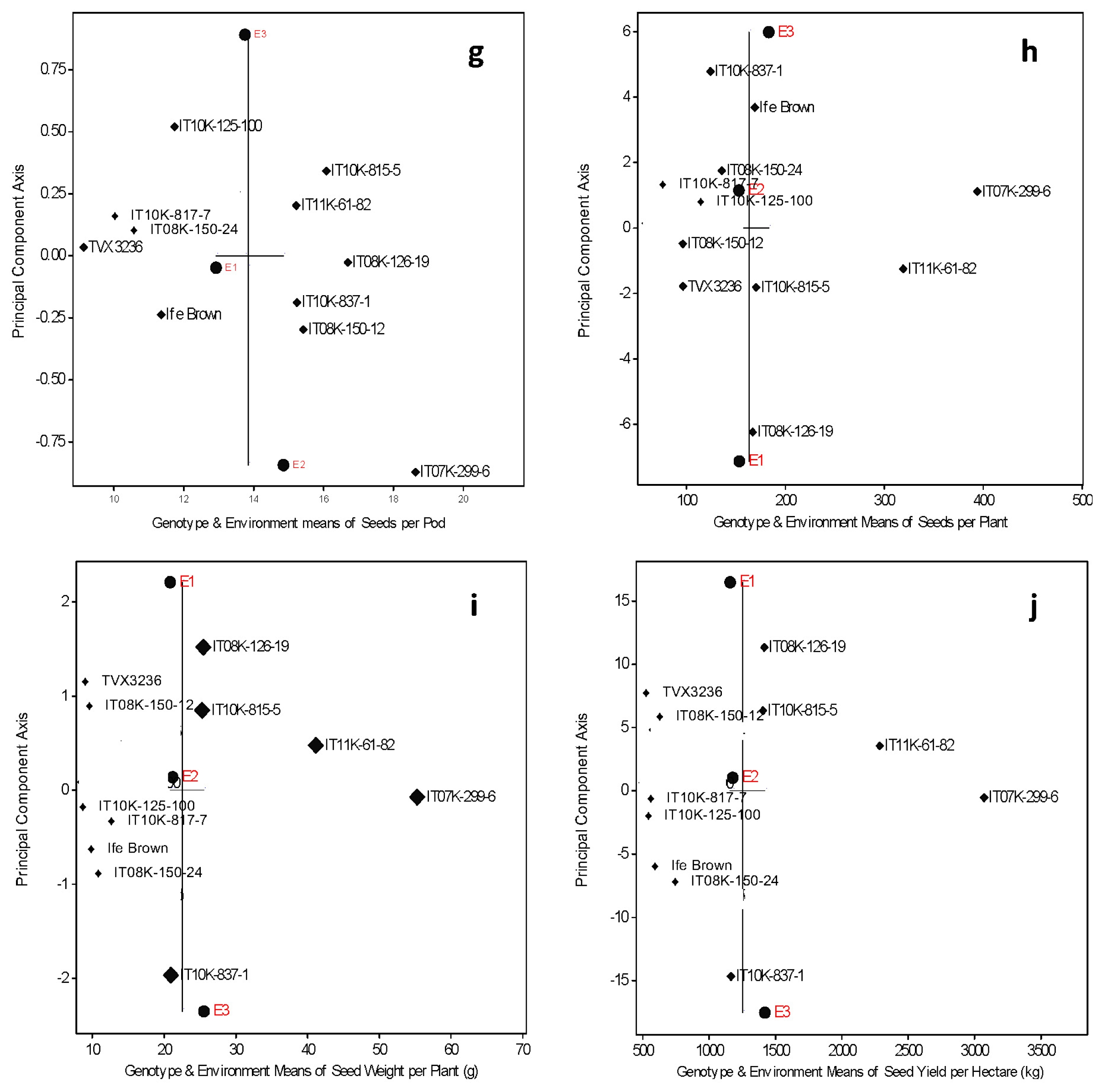
Table 1Level of variability of yield and yield components traits in 11 cowpea varieties across three locations.
Table 1
|
Source of variation |
Degree of freedom |
SVCz)
|
PDMy)
|
POFx)
|
POLw)
|
PPPv)
|
SPOu)
|
SPPt)
|
HSWs)
|
SWPr)
|
YPHq)
|
|
Replication |
2 |
12.28 |
0.04 |
0.00 |
0.78 |
0.00 |
0.87 |
3384.00 |
1.07 |
91.00 |
280866.00 |
|
Variety |
10 |
528.90**
|
21.01**
|
0.32**
|
95.15**
|
2.07**
|
104.50**
|
74946.00**
|
45.59**
|
1478.73**
|
4563890.00**
|
|
Location |
2 |
166.25**
|
1.73**
|
0.02 |
29.62**
|
0.35**
|
49.76**
|
3922.00 |
3.05*
|
104.61*
|
322862.00*
|
|
Variety x Location |
20 |
38.27**
|
0.53*
|
0.18 |
2.93*
|
0.09**
|
4.92*
|
8576.00**
|
1.75 |
125.09**
|
386079.00**
|
|
Error |
44 |
10.92 |
0.22 |
0.01 |
1.57 |
0.02 |
2.27 |
1986.00 |
0.98 |
36.51 |
112671.00 |
|
Mean |
|
19.34 |
3.10 |
0.97 |
14.77 |
2.36 |
14.06 |
164.85 |
14.00 |
22.87 |
1270.68 |
|
Range |
|
4.00–39.00 |
1.00–5.00 |
0.54–1.39 |
9.65–26.65 |
1.80–4.20 |
7.50–27.80 |
24.89–530.64 |
7.94–18.77 |
3.07–69.41 |
170.66–3855.92 |
|
Coefficient of variation (%) |
|
43.77 |
49.94 |
21.79 |
23.42 |
21.23 |
23.42 |
63.23 |
17.05 |
62.20 |
62.20 |
Table 2Mean values of 11 cowpea varieties and performance in three locations.
Table 2
|
SVCz)
|
PDMy)
|
POFx)
|
POLw)
|
PPPv)
|
SPOu)
|
SPPt)
|
HSWs)
|
SWPr)
|
YHPq)
|
|
Location |
|
Shao |
50.06 |
3.36 |
0.94 |
14.18 |
2.28 |
13.04 |
153.40 |
14.06 |
20.96 |
1164.00 |
|
Malete |
62.43 |
2.94 |
0.99 |
15.86 |
2.48 |
15.43 |
175.20 |
13.67 |
24.48 |
1360.00 |
|
Eleyoka |
53.34 |
3.00 |
0.97 |
14.27 |
2.31 |
13.73 |
165.90 |
14.27 |
23.18 |
1288.00 |
|
LSD (0.05) |
4.68 |
0.23 |
0.04 |
0.62 |
0.07 |
0.74 |
22.11 |
0.49 |
2.99 |
166.50 |
|
Variety |
|
IT07K-299-6 |
83.49 |
1.00 |
1.19 |
17.66 |
2.68 |
21.07 |
360.00 |
14.10 |
50.53 |
2807.00 |
|
IT08K-126-19 |
58.40 |
3.00 |
1.14 |
14.81 |
2.14 |
16.69 |
223.00 |
15.26 |
33.76 |
1876.00 |
|
IT08K-150-12 |
42.23 |
3.00 |
1.21 |
12.75 |
2.09 |
15.42 |
96.40 |
14.88 |
14.03 |
779.00 |
|
1T08K-150-24 |
50.80 |
4.33 |
0.83 |
13.72 |
2.00 |
11.31 |
135.70 |
15.06 |
20.90 |
1161.00 |
|
ITK10K-125-100 |
43.49 |
3.00 |
0.75 |
15.68 |
2.00 |
11.73 |
64.20 |
14.34 |
9.40 |
522.00 |
|
IT10K-815-5 |
48.26 |
1.00 |
1.13 |
14.27 |
2.42 |
16.08 |
170.50 |
15.05 |
25.29 |
1405.00 |
|
IT10K-817-7 |
23.80 |
5.00 |
0.84 |
13.98 |
2.01 |
11.42 |
88.50 |
15.21 |
13.43 |
746.00 |
|
IT10K837-1 |
38.40 |
3.66 |
0.67 |
22.80 |
2.08 |
15.24 |
130.30 |
17.19 |
22.00 |
1222.00 |
|
IT11K-61-82 |
87.63 |
1.00 |
1.06 |
14.40 |
3.32 |
15.22 |
285.00 |
12.91 |
36.56 |
2031.00 |
|
Ife Brown |
42.54 |
5.00 |
0.98 |
11.66 |
2.06 |
11.38 |
163.20 |
9.22 |
15.29 |
849.00 |
|
TVX-3236 |
88.89 |
4.11 |
0.85 |
10.74 |
3.13 |
9.14 |
96.60 |
10.78 |
10.40 |
578.00 |
|
LSD (0.05) |
7.20 |
0.19 |
0.13 |
1.25 |
0.11 |
1.06 |
44.96 |
0.88 |
5.14 |
285.80 |
|
Mean |
55.26 |
3.10 |
0.97 |
14.77 |
2.36 |
14.06 |
164.90 |
14.00 |
22.87 |
1271.00 |
Table 3Correlation analysis of seed yield and yield components of cowpea.
References
- Adetumbi JA, Teixeira da Silva JA, Alamu O. 2011. Cowpea (Vigna unguiculata L. Walp.) seed germination indices and yield as affected by length of storage. Seed Science and Biotechnology. 5: 11-14.
- Adeyanju AO, Ishiyaku MF. 2007. Genetic study of earliness in cowpea (Vigna unguiculata L. Walp). International Journal of Plant Breeding and Genetics. 1: 34-37.
- Adipala E, Obuo JE, Osiru DSO. 1997. A survey of cowpea cropping systems in some districts of Uganda. African Crop Science Conference Proceedings. 3: 665-672.
- Ajetomobi J, Abiodun A. 2010. Climate change impacts on cowpea productivity in Nigeria. Africa Journal of Food, Agriculture, Nutrition and Development. 10: 2258-2271.
- Akande SR, Olakojo SA, Ajayi SA, Owolade OF, Adetumbi JA, Adeniyan ON, et al. 2012. Planting date affects cowpea seed yield and quality at southern guinea savanna, Nigeria. Seed Technology. 34: 51-60.
- Akhter FN, Kabir G, Mannan MN, Shaheen NN. 1992. Aging effect of wheat and barley seeds upon germination mitotic index and chromosomal damage. Medical Journal of Islamic World Academy of Sciences. 5: 44-48.
- Alghali AM. 1991. Studies of cowpea farming in Nigeria with emphasis on insect pest control. Tropical Pest Management. 37: 71-74.
- Aliyu OM, Adeigbe OO, Lawal OO. 2014. Phenotypic stability of yield components in cashew (Anacardium occidentale L.) using additive main effect and multiplicative interaction (AMMI) and GGE biplot analyses. Plant Breed Biotech. 2: 354-369.
- Aliyu OM, Makinde BO. 2016. Phenotypic analysis of seed yield and yield components in cowpea (Vigna unguiculata L. Walp). Plant Breed Biotech. 4: 252-261.
- Ayo-Vaughan MA, Ariyo OJ, Daniel IO, Alake CO. 2011. Diallel analysis of earliness in cowpea. African Crop Science Conference Proceedings. 10: 1-4.
- Bagnall DJ, King RW. 1987. Temperature and irradiance effects on yield in cowpea (Vigna unguiculata). Field Crops Res. 16: 217-229.
- Baysah NS. 2013. Assessing the effect of seed quality characteristics on the growth and yield of four cowpea (Vigna unguiculata L. Walp). M. Sc. Thesis Kwame Nkruma University of Science and Technology. 96.
- Boukar O, Massawe F, Muranaka S, Franco J, Maziya-Dixon B, Singh B, et al. 2011. Evaluation of cowpea germplasm lines for protein and mineral concentrations in grains. Plant Genet Resour. 9: 515-522.
- Carsky RJ, Vanlauwe B, Lyasse O. 2002. Cowpea rotation as a resources management technology for cereal-based system in the savannas of West Africa. pp. 252-266. Fatokun CA, Tarawali SA, Singh BB, Kormawa PM, Tamo M, editors. Challenges and opportunities for enhancing sustainable cowpea production. International Institute of Tropical Agriculture. Ibadan, Nigeria.
- de Moura Oliveira RM, Filho FRF, Ribeiro VQ, de Almeida Lopes ÂC, da Silva Bernardo KA, Cruzio AS. 2016. Diallel analysis in cowpea aiming at selection for extra-earliness. Crop Breeding and Applied Biotechnology. 16: 167-173.
- Drabo I, Redden R, Smithson JB, Aggarwal VD. 1984. Inheritance of seed size in cowpea (Vigna unguiculata L., Walp.). Euphytica. 33: 929-934.
- Drabo I, Ladeinde TAO, Redden R, Smithson JB. 1985. Inheritance of seed size and number per pod in cowpeas (Vigna unguiculata L., Walp.). Field Crops Res. 11: 335-344.
- Girish G, Viswanatha KP, Manjunath A, Yogeesh LN. 2006. Genetic variability, heritability, and genetic advance analysis in cowpea (Vigna unguiculata L., Walp). Environment and Ecology. 24: 1172-1174.
- Goenaga R, Ayala T, Quiles A. 2013. Yield performance of cowpea plant introductions grown in Calcareous soils. Horttechnology. 23: 247-251.
- Govindaraj M, Vetriventhan M, Srinivasan M. 2015. Importance of genetic diversity assessment in crop plants and its recent advances: an overview of its analytical perspectives. Genetic Research International. 2015: Article ID 431487..
- Idahosa DO, Alika JE, Omoregie AU. 2010. Genetic variability, heritability and genetic advance as indices for yield and yield components selection in cowpea, (Vigna unguiculata L., Walp). Academia Arena. 2: 22-26.
- Joe WHE, Allen JR. 1980. Effect of soil pH on plant growth and nodulation of cowpea. Comm Soil Sci Plant Anal. 11: 1077-1085.
- Kaya Y, Palta Ç, Taner S. 2002. Additive main effects and multiplicative interactions analysis of yield performances in bread wheat genotypes across environments. Turk J Agric For. 26: 275-279.
- Machado CF, Teixeira NJP, Filho FRF, de Moura Rocha M, Gomes RLF. 2008. Identification of Cowpea genotypes for earliness, plant architecture and grain yield. Revista Ciência Agronômica. 39: 114-123.
- Meena SS, Verma SK, Choudhary R, Nehra M, Panwar RK, Singh JP. 2017. Interpretation of genotype x environment interaction and grain yield stability in some advance lines of pigeon pea (Cajanus cajan (L.) Millsp.) grown at different altitudes. Chemical Science Review and Letters. 6: 1113-1119.
- Molosiwa OO, Gwafila C, Makore J, Chite SM. 2016. Phenotypic variation in cowpea (Vigna unguiculata (L.) Walp.) germplasm collection from Botswana. Int J Biodivers Conserv. 8: 153-163.
- Mortimore MJ, Singh BB, Harris F, Blade SF. 1997. Cowpea in traditional cropping systems. pp. 99-113. Singh BB, Mohan Raj DR, Dashiell KE, Jackai LEN, editors. Advances in cowpea research. Co-publication of International Institute of Tropical Agriculture (IITA). Ibadan, Nigeria: Japan International Research Centre for Agricultural Sciences (JIRCAS). Japan.
- Nath A, Harer PN, Dey U. 2013. Stability analysis and G x E Interaction in mungbean (Vigna radiata L. Wilczek): A review. Afr J Agric Res. 8: 3340-3347.
- Neto AMB, de Matos RF, de Sousa Pinheiro M, de Magalhães Bertini CHC, Dovale JC. 2017. Genetic variability and selection of extra-early cowpea progenies. Revista Caatinga. 30: 698-707.
- Nwofia GE, Ene-Obong EE, Okocha PI. 2006. Genotypic and phenotypic variability in cowpea grown in a humid environment in Nigeria. Tropical Science. 46: 82-86.
- Nwofia GE. 2012. Yield and yield components in vegetable cowpea on an ultisol. Afr J Agric Res. 7: 4097-4103.
- Nwofia GE, Nwanebu MC, Mbah EU. 2014. Yield and yield component responses of some cowpea varieties to population density structures under rain-fed conditions in lowland tropics of Southeast Nigeria. World Journal of Agricultural Sciences. 10: 68-75.
- Ogunbodede BA. 1989. Comparison between three methods of determining the relationships between yield and eight of its components in cowpea, Vigna unguiculata L. Walp Sci Hortic. 38: 201-205.
- Okeleye KA, Ariyo OJ, Olowe VI. 1999. Evaluation of early and medium duration cowpea (Vigna unguiculata (L.) Walp) cultivars for agronomic traits and grain yield. Nigeria Agricultural Journal. 30: 1-11.
- Oladejo AS, Akinwale RO, Obisesan IO. 2011. Interrelationships between grain yield and other physiological traits of cowpea cultivars. Afr Crop Sci J. 19: 189-200.
- Owusu EY, Akromah R, Denwar NN, Adjebeng-Danquah J, Kusi F, Haruna M. 2018. Inheritance of early maturity in some cowpea (Vigna unguiculata (L.) Walp.) genotypes under rain-fed conditions in Northern Ghana. Advances in Agriculture. 2018. Article ID 8930259.
- Oyekanmi AA, Sangodoyin OS. 2007. Evaluation of advanced lines of cowpea (Vigna unguiculata (L.) Walp) for agronomic traits and grain yield in the transition zone of Nigeria. Asian J Plant Sci. 6: 163-167.
- Sanginga N, Dashiell KE, Diels J, Vanlauwe B, Lyasse O, Carsky RJ, et al. 2003. Sustainable resource management coupled to resilient germplasm to provide new intensive cereal-grain-legume-livestock systems in dry savannah. Agric Ecosyst Environ. 100: 305-314.
- Shanko D, Adargie M, Zelleke H. 2014. Genetic variability and heritability of yield and related characters in cowpea (Vigna unguiculata L. Walp.). Res Plant Biol. 4: 21-26.
- Sreelakshmi C, Shivani D, Kumar CVS. 2010. Studies on genotype x environment interaction and stability in white seeded pigeon pea (Cajanus cajan L.) genotypes. Legumes Research. 33: 217-220.
- Tarawali SA, Singh BB, Gupta SC, Tabo R, Harris F, Nokoe S, et al. 2002. Cowpea as a key factor for a new approach to integrated crop-livestock systems research in the dry savannas of West Africa. pp. 233-251. Fatokun CA, Tarawali SA, Singh BB, Kormawa PM, Tamo M, editors. Challenges and opportunities for enhancing sustainable cowpea production. International Institute of Tropical Agriculture. Ibadan, Nigeria.
- Thillainathan M, Fernandez GCJ. 2001. SAS application of Tai’s stability analysis and AMMI model genotype x environmental interaction (GEI) effects. J Hered. 92: 367-371.
- Timko MP, Ehlers JD, Roberts PA. 2007. Cowpea. pp. 49-67. Kole C, editor. Genome mapping and molecular breeding in plants. 3: Springer-Verlag. Berlin, Heidelberg, Germany: