Abstract
Rice yield is severely affected by phosphorus (P) deficiency, and plants have evolved various strategies to cope with this limitation. While some rice genotypes are adapted to low phosphate (Pi) availability, others remain sensitive to Pi deficiency. In this study, we conducted a genome-wide association study (GWAS) using a hydroponically cultivated population of 190 North Korean (NK) rice plants to identify genes associated with phosphorus use efficiency (PUE) and Pi deficiency tolerance. The rice plants were grown in Yoshida nutrient media with either full (10 mg/L) or low-P (1 mg/L) concentrations for 40 days. The phenotypic response to Pi deficiency was assessed at the seedling stage, followed by an evaluation of eight agricultural traits: chlorophyll content (SPAD), shoot length (SL), shoot fresh weight (SFW), shoot dry weight (SDW), root fresh weight (RFW), root dry weight (RDW), and tiller number (TN). The GWAS analysis revealed a total of 166 significant lead SNPs, with six located near known genes for Pi deficiency tolerance: OsTre6P and OsPT3 for RL, OsGH3.12 for SPAD, OsCPK30 for SL, OsWRKY74 for RSL, and OsPT10 for RSL and RRFW. An additional six lead SNPs were identified as novel genes. The haplotypes of 12 candidate genes showed significant differences in the phenotypic values of the corresponding traits. In conclusion, both known and novel genes identified in this GWAS have significant impacts on Pi deficiency tolerance in the NK rice population.
-
Key words: Rice, Phosphorus, Pi deficiency, Genome-wide association study
Introduction
Phosphorus (P) is one of the major macronutrients for crops and is a main factor constraining the growth and development of crops worldwide in soil (
Raghothama 1999). Low recovery rates of phosphorus fertilizers throughout the season increase rice production costs and cause water pollution (
Conley et al. 2009). Therefore, breeding and using phosphorus-efficient crops is essential for sustainable farming. A deficiency in phosphorus (P) can cause various physiological issues in rice, including stunted growth, fewer tillers, slender and weak stems, and a reduced number of grains per panicle. These effects ultimately lead to decreased rice yields. In Asia, about 60% of rain-fed lowland rice is cultivated in areas with poor soil that naturally lacks phosphorus or has a high phosphorus-fixing capacity.
Breeders have increasingly focused on developing rice genotypes with enhanced phosphorus efficiency. Among these efforts, the
Pup1 quantitative trait locus (QTL) has been particularly valuable due to its significant additive effect on phosphorus use efficiency (PUE).
Pup1, mapped from a backcross population between the phosphorus-deficiency intolerant Nipponbare and tolerant Kasalath, is located on the long arm of chromosome 12. The application of
Pup1 in molecular marker-assisted backcrossing (MABC) has yielded successful outcomes (
Chin et al. 2011). A minor QTL located on the long arm of chromosome 6 has also been mapped, where three known Pi-responsive regulatory genes
OsERF3,
OsTHS1, and
OsPTF1 are co-located; however, this QTL has not yet been widely incorporated into large-scale breeding programs. Additionally, several promising genes involved in PUE have been identified through overexpression and knockout studies in rice, and are currently undergoing advanced testing in other cereal crops. GWAS has played a crucial role in identifying loci and candidate genes linked to Pi deficiency tolerance in rice. Several studies have identified key genes involved in phosphorus uptake, transport, and homeostasis. For instance, the
OsPSTOL1 (Phosphorus Starvation Tolerance 1) gene, identified through GWAS, enhances root growth under Pi-deficient conditions, thereby improving phosphorus uptake efficiency (
To et al. 2020). Another gene,
OsPHO1;2, is involved in Pi transport from roots to shoots and has been associated with Pi efficiency (
Secco et al. 2010). Additionally,
OsSPX1 and
OsSPX3 are part of the SPX domain family that regulates Pi homeostasis in rice. Mutations in these genes result in altered Pi signaling and tolerance (
Li et al. 2018). Further GWAS analyses have also identified novel genes such as
OsLPR3 and
OsLPR5, which are linked to low-phosphate root architecture, and
OsPAP21b, which encodes a purple acid phosphatase involved in Pi remobilization (
Ai et al. 2023). These discoveries provide a genetic basis for breeding rice varieties that are more resilient to Pi deficiency, offering a sustainable solution to improving rice productivity in phosphorus-deficient soils. However, the underlying mechanism of the plant response to P deficiency has not been fully understood.
Thus, the identification of more genetic factors involved in tolerance to P deficiency, especially from new genetic resources, is valuable. In this study, we performed GWAS analysis to identify the genetic composition of low-P tolerance in rice using NK rice genotypes which has not been extensively utilized for the genetic studies. Haplotype analysis was performed to identify significant known or unknown genes associated with low-P response.
Materials and Methods
Plant materials
In this study, a subset of 190 NK rice cultivars was selected from an initial collection of 4,000 NK rice varieties maintained at the International Rice Research Institute (IRRI) in Los Baños, Philippines (14°35'N, 120°58'E) in 2010. These cultivars were chosen based on their non-precocious flowering and normal growth characteristics. The NK rice accessions at IRRI are conserved for germplasm preservation and future domestication potential. To prepare the seeds for germination, they were surface-sterilized using a 1% sodium hypochlorite solution, followed by rinsing with deionized water. The seeds were then germinated at 30°C for 3 days. After germination, the seedlings were cultivated in Yoshida's nutrient solution (
Yoshida et al. 1971). The seedlings were hydroponically cultivated for 40 days in a greenhouse at Hankyong National University, located in Anseong-si, South Korea in March 2023. Each rice genotype was planted in six replicates. The nutrient content of the Yoshida solution used in this study was as follows: 1) 40 ppm NH
4NO
3 for nitrogen, 2) 10 ppm NaH
2PO
4⋅H
2O for phosphorus, 3) 40 ppm K
2SO
4 for potassium, 4) 40 ppm CaCl
2 for calcium, 5) 40 ppm MgSO
4⋅7H
2O for magnesium, 6-1) 0.5 ppm MnCl
2⋅4H
2O for manganese, 6-2), 0.05 ppm (NH
4)
6Mo
7O
24⋅4H
2O for molybdenum, 6-3) 0.2 ppm H
3BO
3 for boron, 6-4) 0.01 ppm ZnSO
4⋅7H
2O for zinc, 6-5) 0.01 ppm CuSO
4⋅5H
2O for copper, 6-6) 2 ppm FeCl
3⋅6H
2O for iron, 6-7) 0.02 ppm C
6H
8O
7⋅H
2O, and 6-8) 0.006 ppm H
2SO
4. The hydroponic beds were maintained at pH 5.0, and the Yoshida solution was replaced weekly. For the control group (normal-P condition, NP), we used the traditional Yoshida solution (10 ppm NaH
2PO
4⋅H
2O). For the treatment group (low-P condition, LP) we used a modified solution with phosphorus concentration reduced to 1 ppm, which is 1/10th of the normal-P condition.
After 40 days of hydroponic cultivation, we conducted phenotyping on the 190 NK rice population (NK190) for eight agronomic traits: chlorophyll content (SPAD), shoot length (SL), shoot fresh weight (SFW), shoot dry weight (SDW), root fresh weight (RFW), root dry weight (RDW), and tiller number (TN). The relative low-P (RLP) value was calculated using the following formula: RLP = (low-P / normal-P) x 100. The relative low-P traits include chlorophyll content (RSPAD), shoot length (RSL), shoot fresh weight (RSFW), shoot dry weight (RSDW), root fresh weight (RRFW), root dry weight (RRDW), and tiller number (RTN). The phenotype data averaged from six biological repeats were compiled into a phenotype data file and used for GWAS analysis.
GWAS, LD, and haplotype analysis of candidate genes
The GWAS analysis utilized the Fixed and Random Model Circulating Probability Unification (Farm-CPU) v2.07, implemented through the rMVP R package, which is recognized for its efficiency in memory usage, enhanced visualization, and parallel processing capabilities (
Lipka et al. 2012). In this study, 1,048,576 SNPs were chosen based on specific criteria, including a minor allele frequency of at least 0.05, a maximum missing data rate of 25%, a minimum genotype quality of 30, and a sequencing depth of at least 5, with all filtering conducted using PLINK. To manage linkage disequilibrium (LD), SNP pruning was performed using PLINK v1.9 with the command (--Indep-pairwise "50 5 0.2"). Genomic regions ranging from 100 kb to 1 Mb around the lead SNPs were identified as potential candidate regions for gene discovery, guided by LD analysis. The LD patterns between lead SNPs and adjacent SNPs were assessed through pairwise genotype correlations (R2), calculated using the R2 command in PLINK v1.9 (
Purcell et al. 2007). Haplotype analysis was subsequently carried out, excluding any genotype data with missing values or heterozygous SNPs and indels. Haplotypes were constructed using all variants, including SNPs and indels, without any restriction on the maximum allele frequency (MAF).
Results
Phenotypic variation of NK population for low-P stress
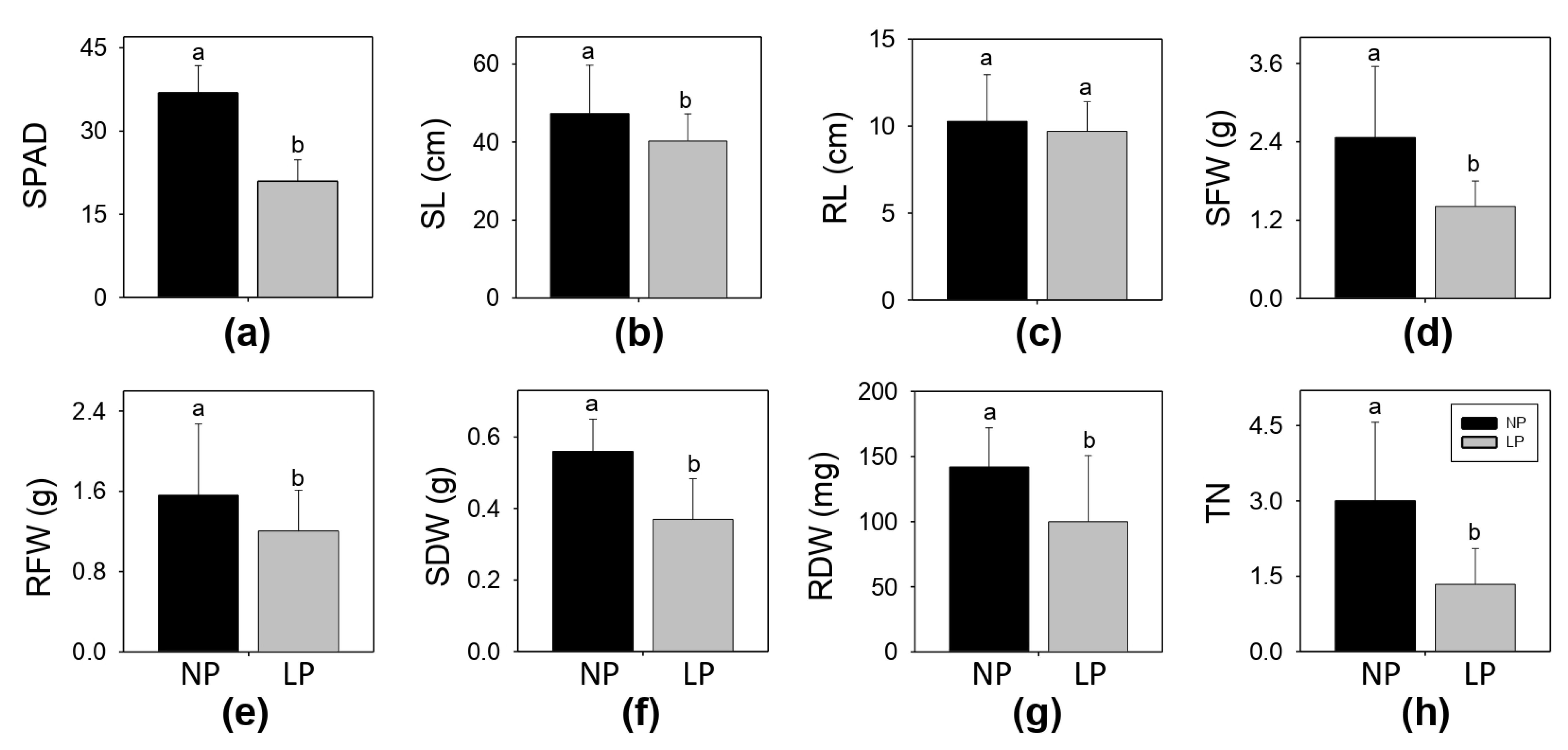
For phenotyping of NK190 rice varieties under low P conditions, 7-day-old plants grown in Yoshida hydroponic solution were subjected to low-P (1 mg/L) treatment for 40 days. Phenotyping was conducted for the eight traits, SPAD, SL, RL, SFW, RFW, SDW, RDW, and TN for low-P stress at the seedling stage of the rice plant. All traits were significantly different between normal and low-P treatment (
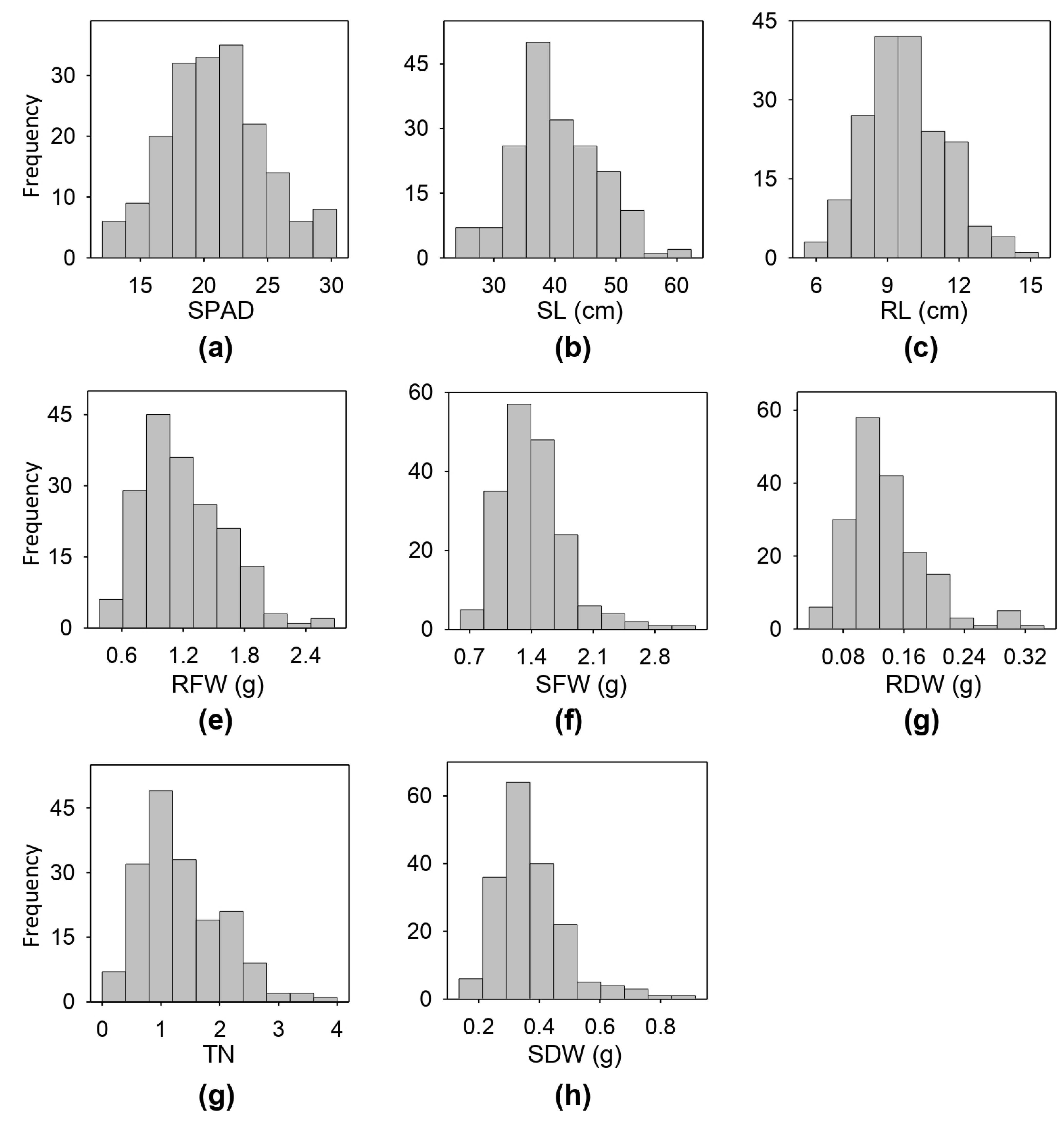
Fig. 1). Phenotype frequencies of the NK varieties displayed an approximately normal distribution for most agronomic traits with a positive skewness (
Fig. 2 and
Supplemental Fig. 1).
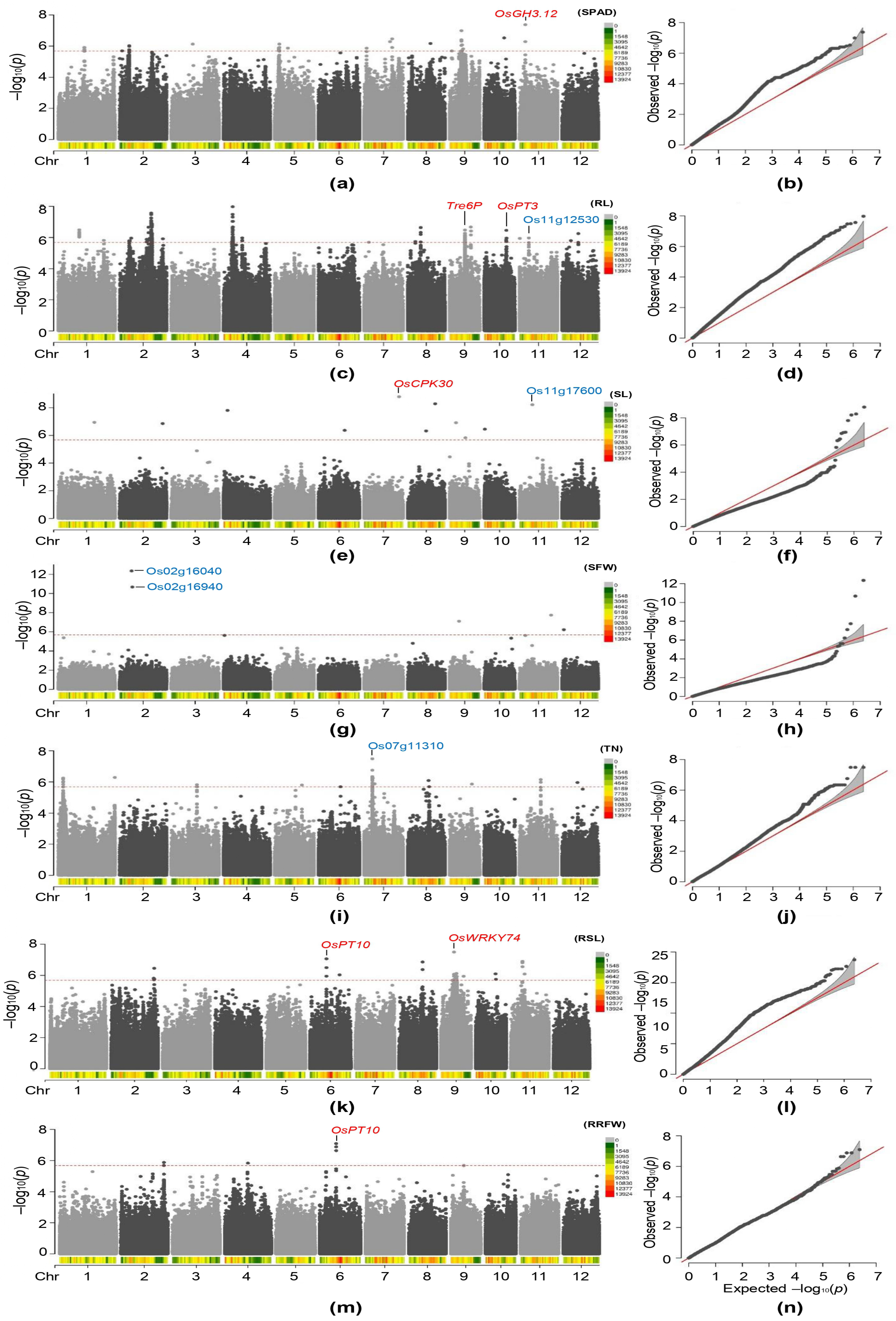
To identify candidate genes associated with Pi deficiency stress tolerance, we performed a GWAS with the 190 NK rice accessions. GWAS was performed using fixed and random model circulating probability unification (Farm-CPU) v2.07 models. A total of 10,994,201 SNPs were identified and only 1,048,576 SNPs that have the high quality with MAF ≥ 0.05 genotypes were included in the GWAS. Filtered SNPs were used for GWAS with phenotypic data. We conducted GWAS for a total of 16 traits including eight agronomic traits and eight additional relative values. Through GWAS, we identified a total of 166 significant loci associated with all 16 traits under low-P stress conditions using NK rice populations. Of them, six loci were co-localized with the known low-P or PUE-related genes (
Fig. 2,
Table 1). These loci include Chr11:4404404 (
p=4.21x10
-8), Chr09:11764480 (
p=3.32x10
-7), Chr10:16796006 (
p=3.45x10
-7), Chr07:26694717 (
p=1.60x10
-9), Chr06:12559478 (
p=8.06x10
-8), and Chr09:9926197 (
p=3.20x10
-8) (
Fig. 1 and
Table 1). The additional six loci were identified as being associated with novel genes since their functions have not been previously reported to be related to low-P stress tolerance: Chr11:7129860 (
p=1.07x10
-6), Chr11:9811597 (
p=6.10x10
-9), Chr02:9125731 (
p=4.45x10
-13), Chr02:25743591 (
p= 6.65x10
-7), Chr07:6242548 (
p=3.25x10
-8), and Chr02:9662605 (
p=2.10x10
-11) (
Fig. 1 and
Table 2).
The candidate gene analysis identified several known genes (
OsTre6P,
OsGH3.12,
OsPT10,
OsPT3,
OsCPK30, and
OsWRKY74) associated with the lead SNPs for low-P tolerance (
Fig. 3).
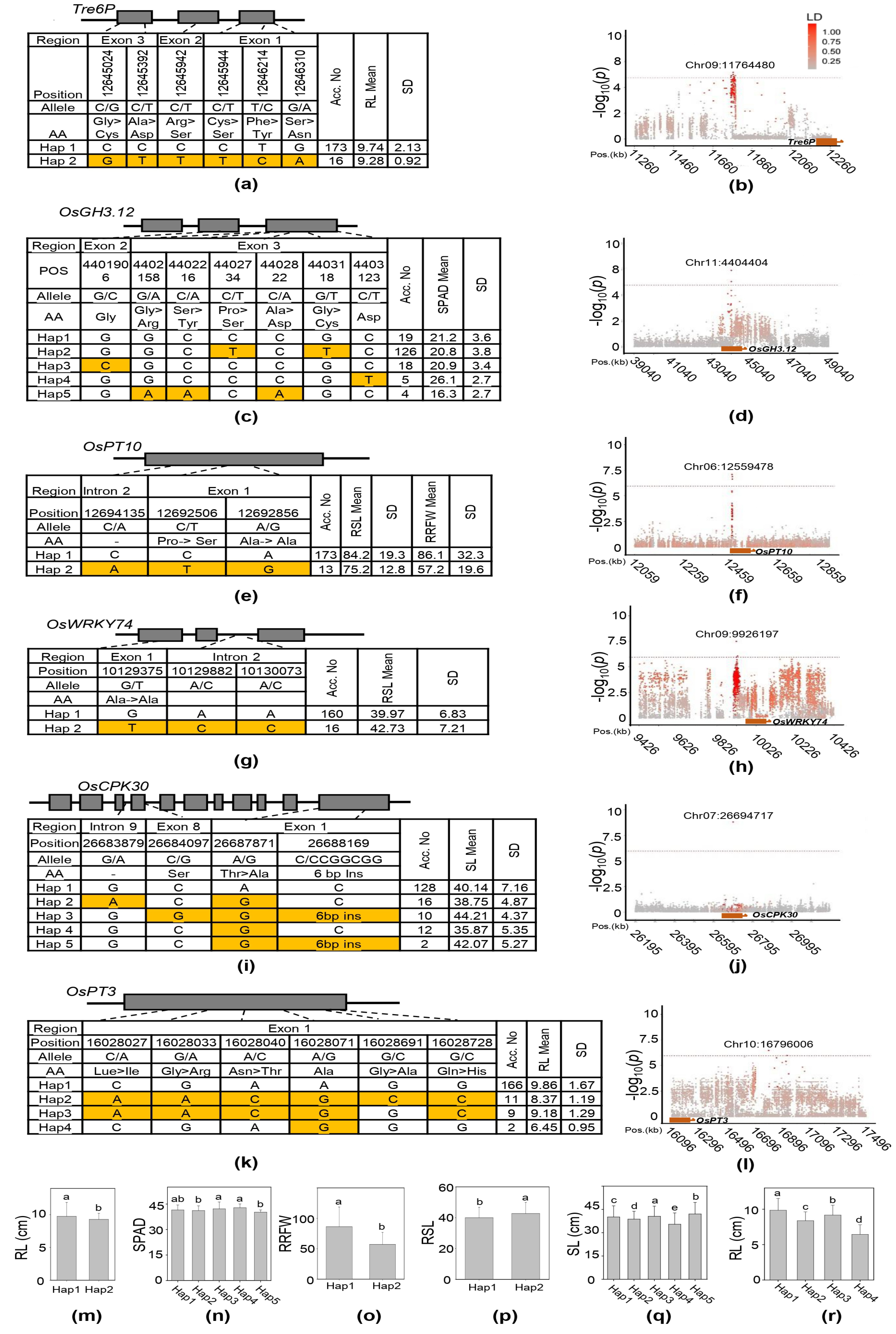
OsTre6P was located about 28 kb away from the lead SNP Chr09:11764480 (
p=3.32x10
-7) associated with the RL trait (
Figs. 4a and
4b). The genetic location of
OsTre6P contained six SNPs in the CDS region, which were classified into two haplotypes. Hap 2 showed significantly lower RL than the other haplotype (
Fig. 4m).
OsGH3.12 was located about 2.5 kb away from the lead SNP Chr11:4404404 (
p=4.21x10
-8) associated with the SPAD trait.
OsGH3.12 contained seven SNPs and was classified into five haplotypes. Among haplotypes, Hap 4 showed significantly higher SPAD values than those of the other Haps (
Figs. 4c,
4d, and 4n). The
OsPT10 (LOC_Os06g21950) phosphate transporter is located 135 kb away from the lead SNP Chr06:12559478 (
p=8.17x10⁻⁸), which is associated with both RRFW and RSL traits. The transporter contains two SNPs in Exon 1 and one SNP in intron 2, resulting in two distinct haplotypes. Hap 2 exhibited lower phenotype values for two traits compared to Hap 1 (
Figs. 4e,
4f, and 4o).
OsWRKY74 was identified 202 kb away from the lead SNP Chr09:9926197 (
p=3.20x10
-8).
OsWRKY74 contains three SNPs and was divided into two haplotype groups. Hap 2 showed a significant association with the RSL phenotype (
Figs. 4g,
4h, and 4p).
OsCPK30 (LOC_Os07g44710) was located about 6.5 kb away from the lead SNP Chr07:26694717 (
p=1.60x10
-9) on chromosome 7.
OsCPK30, consisting of 11 exons, had three SNPs in the coding region. By haplotype analysis,
OsCPK30 was classified into five haplotype groups. The 10 NK varieties belonged to Hap 3 and showed a significantly longer SL phenotype compared to the other haplotype groups (
Figs. 4i,
4j, and 4q).
OsPT3, a major P transporter gene in rice, was located about 796.7 kb away from the lead SNP Chr10:16796006 (
p=3.45x10
-7) on chromosome 10. The genetic location of
OsPT3 contained six SNPs in the coding region (CDS).
OsPT3 was classified into four haplotypes. When comparing mean RL among haplotypes, the RL of Hap 4 was significantly shorter than those of the other Haps (
Figs. 4k,
4l, and 4r).
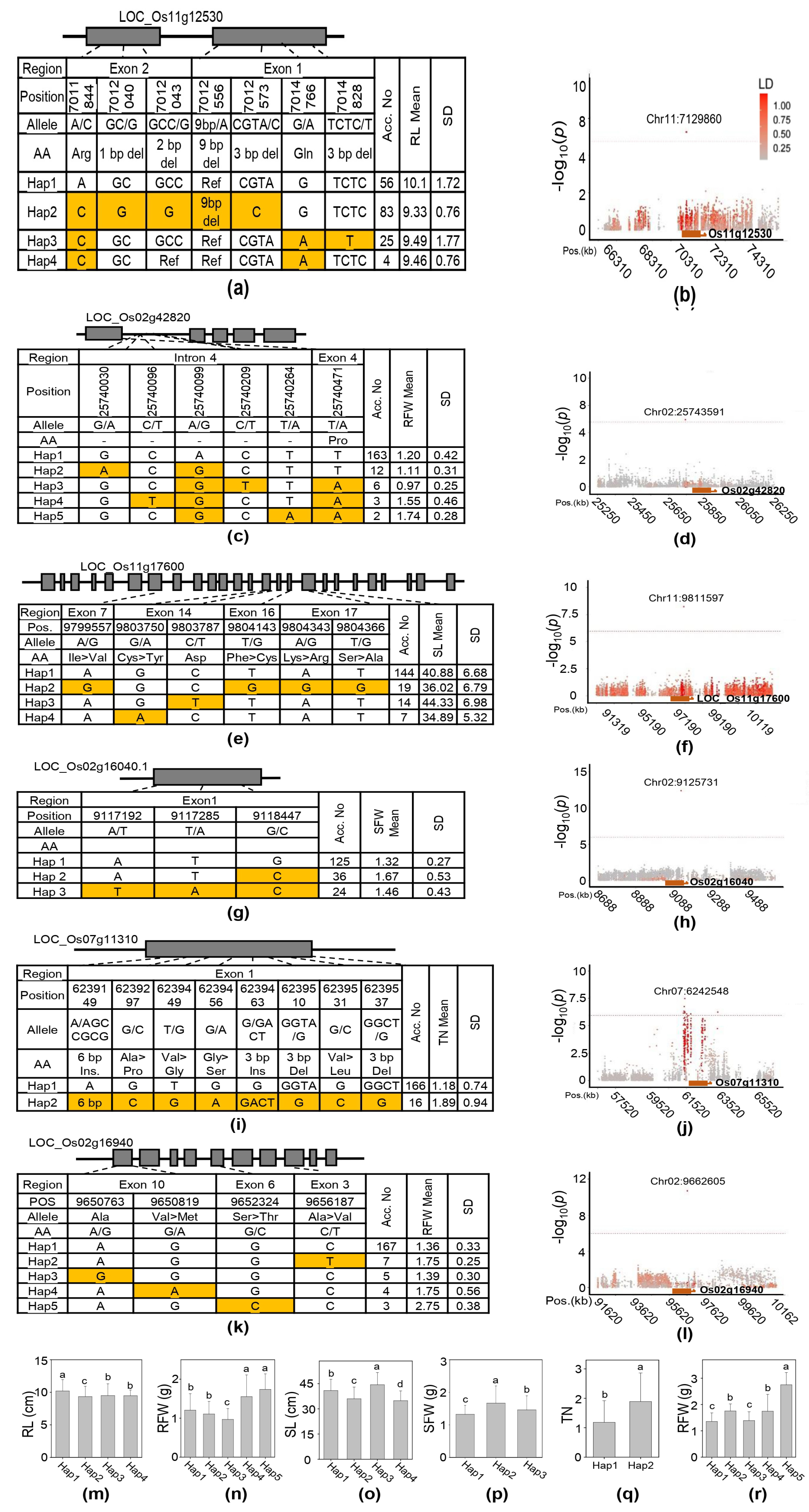
We selected six novel genes based on the highest -log10 value and performed LD and haplotype analysis. LOC_Os11g12530 is located approximately 118 kb away from the lead SNP Chr11:7129860 (
p=1.07x10
-6) associated with the RL trait. Haplotype analysis classified LOC_Os11g12530 into four groups. Four NK varieties belonged to Hap 2 which exhibited significantly lower phenotypes compared to the other three haplotype groups (
Figs. 5a,
5b, and 5m). LOC_Os02g42820, which encodes a putative actin-binding protein and transcription factor, is located 3.5 kb from the lead SNP Chr02:25743591 (
p=6.65x10
-7). The CDS region includes one SNP, and four SNPs are located in intron 4, classifying it into three haplotypes. Among these haplotypes, Hap 5 exhibited a significantly higher RFW value than the others, with two varieties belonging to Hap 5 (
Figs. 5c,
5d, and 5n). LOC_Os11g17600, a
Root Hairless 1 gene, is associated with the lead SNP Chr11:9811597 (
p=6.10x10
-9). The CDS region included six SNPs and was classified into four haplotypes. Among haplotypes, Hap 3 exhibited a significantly higher SL value than other haplotypes, and 14 varieties belonged to Hap 3 (
Figs. 5e,
5f, and 5o). LOC_Os02g16040 is located 8.5 kb away from the lead SNP Chr02:9125731 (
p=4.45x10
-13) associated with the SFW trait. LOC_Os02g16040 haplotypes were built based on three SNP in exon 1 (
Figs. 5g,
5h, and 5r). 36 rice accessions were assigned to the Hap 2 group which showed a significantly higher SFW. LOC_Os07g11310, encoding LTP family protein precursor, is located approximately 3.3 kb away with the lead SNP Chr07:6242548 (
p=3.25x10
-8). The CDS region included 8 SNPs and was classified into two haplotypes. Among haplotypes, Hap 2 exhibited a significantly higher TN value than Hap 1, and 16 varieties belonged to Hap 2 (
Figs. 5i,
5j, and 5q). The last candidate gene (LOC_Os02g16940), encoding a putative Subtilisin homolog, is located 3.3 kb away from the lead peak Chr02:9662605 (
p=2.10x10
-11). This gene contained four SNPs and was classified into five haplotypes. Among haplotypes, Hap 5 showed significantly higher RFW values than those of the other haplotypes, and five varieties belonged to hap 5 (
Figs. 5k,
5l, and 5r).
We also performed an
in-silico transcriptional analysis using the TENOR (Transcriptome Encyclopedia Of Rice) database to identify candidate genes responsive to low-P stress (
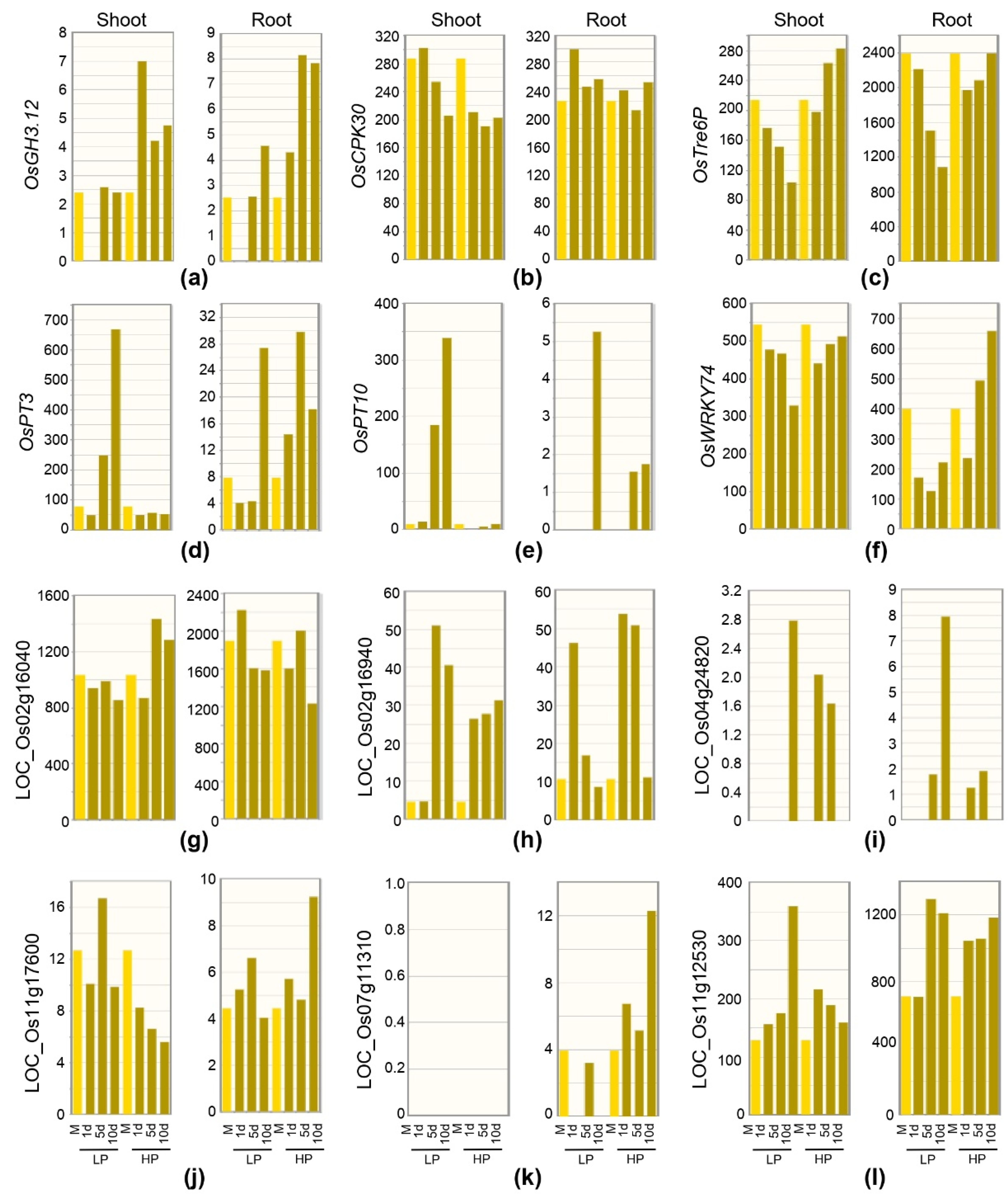
Kawahara et al. 2016). The analysis indicated that 12 known and novel genes exhibited significant changes in gene expression levels under low-P stress conditions compared to the control (
Fig. 6). For known genes, the expression levels of
OsTre6P and
OsWRKY74 remained downregulated from 1 to 10 days after treatment (DAT) in both the shoot and root. Conversely,
OsPT3 and
OsPT10 showed remarkable upregulation in transcript levels 1 DAT, peaking at 10 DAT in both the shoot and root (
Figs. 6c-
6f). Interestingly, the other two known genes showed different expression patterns:
OsGH3.12 showed no response in the shoot but was upregulated in the root 10 DAT, while
OsCPK30 was downregulated in the shoot but upregulated in the root (
Figs. 6a and
6b). For the novel genes, four out of six genes, LOC_Os02g16940, LOC_Os04g24820, LOC_Os11g17600, and LOC_Os11g12530, showed transcriptional upregulation from 1 DAT to 10 DAT in both shoot and root under low-P conditions, although some of these genes were downregulated following their initial upregulation (
Figs. 6h,
6i,
6k and
6m). The other two genes did not show significant change under low-P conditions, whereas some alteration was observed in high-P conditions: LOC_Os02g16040 exhibiting upregulation in the shoot and LOC_Os07g11310 showing upregulation in the root (
Figs. 6g and
6l).
Discussion
This study was designed to explore the genetic basis of P deficiency tolerance in rice using a unique population of NK190 rice genotypes. The NK rice varieties have not been extensively utilized in genetic studies, offering a new genetic pool with the potential to uncover novel genes and pathways involved in low-P tolerance. Through GWAS, this research successfully identified both known and unknown genes associated with P-deficiency tolerance, contributing valuable insights into the genetic architecture of this trait.
Six known genes associated with low-P tolerance
Six known genes―
OsTre6P,
OsGH3.12,
OsPT10,
OsPT3,
OsCPK30, and
OsWRKY74―were identified as being significantly associated with low-P tolerance traits. The identification of these genes reinforces their crucial roles in the molecular response to P deficiency, especially in NK rice population. The molecular response to P deficiency in rice involves a complex network of genes responsible for P uptake, signaling, transport, and homeostasis (
Chiou et al. 2011;
Thibaud et al. 2010). Among these, phosphate transporters like OsPT3 and OsPT10 play pivotal roles in enhancing P acquisition and homeostasis under low-P conditions (
Anandan et al. 2021;
Paszkowski et al. 2002;
Sun et al. 2012)Both genes are part of the PHT1 family, which has been analyzed across different rice subspecies for their role in phosphate efficiency. The association of
OsPT3 with RL and
OsPT10 with RSL (
Figs. 3 and
4) highlights their importance in maintaining phosphorus homeostasis, with their expression being upregulated in response to phosphorus deficiency (
Fig. 6d).
WRKY transcription factors, particularly OsWRKY74, were also identified as key players. OsWRKY74 regulates several phosphate starvation-induced (PSI) PHT1 genes, thereby enhancing tolerance to low-P stress by modulating root architecture and increasing P concentration in plants under deficient conditions (
Dai et al. 2016). A study also found that WRKY transcription factors are broadly involved in nutrient acquisition and stress response regulation (
Jiang et al. 2017). This study also provided additional data showing that
OsWRKY74 was associated with RSL traits under low-P conditions, and Hap 2 showed a significantly higher RSL value than the other Haps (
Figs. 4g,
4h, and 4p).
Auxin signaling plays a significant role in the plant's response to phosphorus deficiency, as indicated by the association of OsGH3.12 with the SPAD trait (
Figs. 4c and
4n). OsGH3.12 is part of the GH3 family, which is involved in auxin conjugation, and plays a role in leaf development and yield traits (
Jain et al. 2006;
Narawatthana et al. 2023). Its identification in this study suggests its potential involvement in root architecture regulation and stress responses, contributing indirectly to improved phosphorus acquisition under deficiency conditions. We also identified OsCPK30, a gene associated with the SL trait under low-P conditions (
Figs. 4i and
4q). As a member of the Calcium-Dependent Protein Kinase (CDPK) family, OsCPK30 is crucial for nutrient transport regulation and conferring tolerance to various stresses, including drought, salt, and abscisic acid (ABA) (
Wang et al. 2019). OsTre6P, another gene identified in this study, was associated with RL traits (
Figs. 4a and
4m). The downregulated expression of OsTre6P in low P tolerant genotypes under stress conditions suggests its involvement in the plant's adaptive mechanisms to low phosphorus availability (
Kumar et al. 2021). Our findings revealed the genetic basis of low-P response in the NK rice genotypes. The six known genes, including phosphate transporter, WRKY transcription factor, and auxin-responsive genes, were identified as major genes playing a significant role in P deficiency tolerance in NK190 rice.
In addition to the known genes, we also uncovered several novel genes that are yet to be fully characterized for their roles in low-P tolerance. Notably, some are known to be involved in abiotic stress tolerance. For instance, LOC_Os02g16040 participates in the abiotic, biotic, and hormonal transcriptomes, as reported in a study analyzing 373 genome microarrays (
Narsai et al. 2010). LOC_Os11g12530 exhibited downregulated expression under heat stress conditions (
Tariq et al. 2019), while LOC_Os02g16940 was highly expressed under both biotic and abiotic stress conditions (
Tyagi et al. 2022). The discovery of these unknown genes leads to a study into their specific roles in P deficiency tolerance. These genes may be involved in previously unexplored pathways or regulatory networks, offering potential new targets for genetic improvement. The integration of these novel genes into breeding programs could significantly improve the resilience of rice to P-deficient conditions, ensuring stable yields in challenging environments.
Acknowledgments
This work was by the Cooperative Research Program for Agriculture Science and Technology Development Project of (RS-2022-RD010405) Rural Development Administration and the National Research Foundation of Korea (NRF) grant funded by the Korea government (MSIT) (No. RS-2023-00253851).
Fig. 1Phenotypic analysis of NK190 genotypes in normal and low P condition. 40-day-old seedlings grown in Normal (NP) and low-P (LP) hydroponic solution. Phenotype analyses were performed with chlorophyll content (SPAD) (a), shoot length (SL) (b), root length (RL) (c), shoot fresh weight (SFW) (d), root fresh weight (RFW) (e), shoot dry weight (SDW) (f), root dry weight (RDW) (g) and tiller number (TN) (h) of the NK190 genotypes. Different letters indicate significant differences according to one-way ANOVA and Duncan's least significant range test (p<0.05).
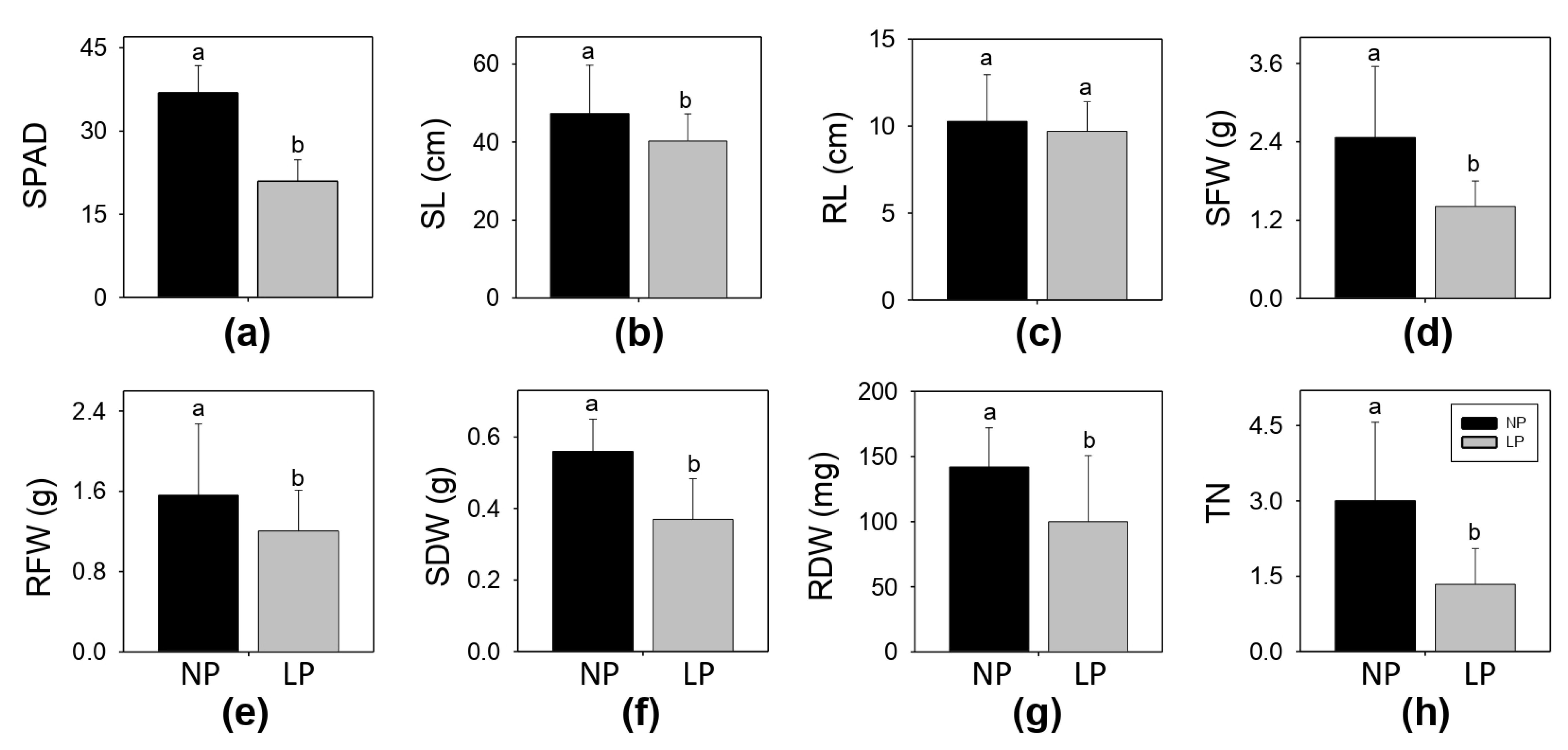
Fig. 2Phenotypic distributions of NK190 rice genotypes grown under low-P condition. Frequency graph of chlorophyll content (SPAD) (a), shoot length (SL) (b), root length (RL) (c), root fresh weight (RFW) (d), shoot fresh weight (SFW) (e), root dry weight (RDW) (f), tiller number (TN) (g) and shoot dry weight (SDW) (h).
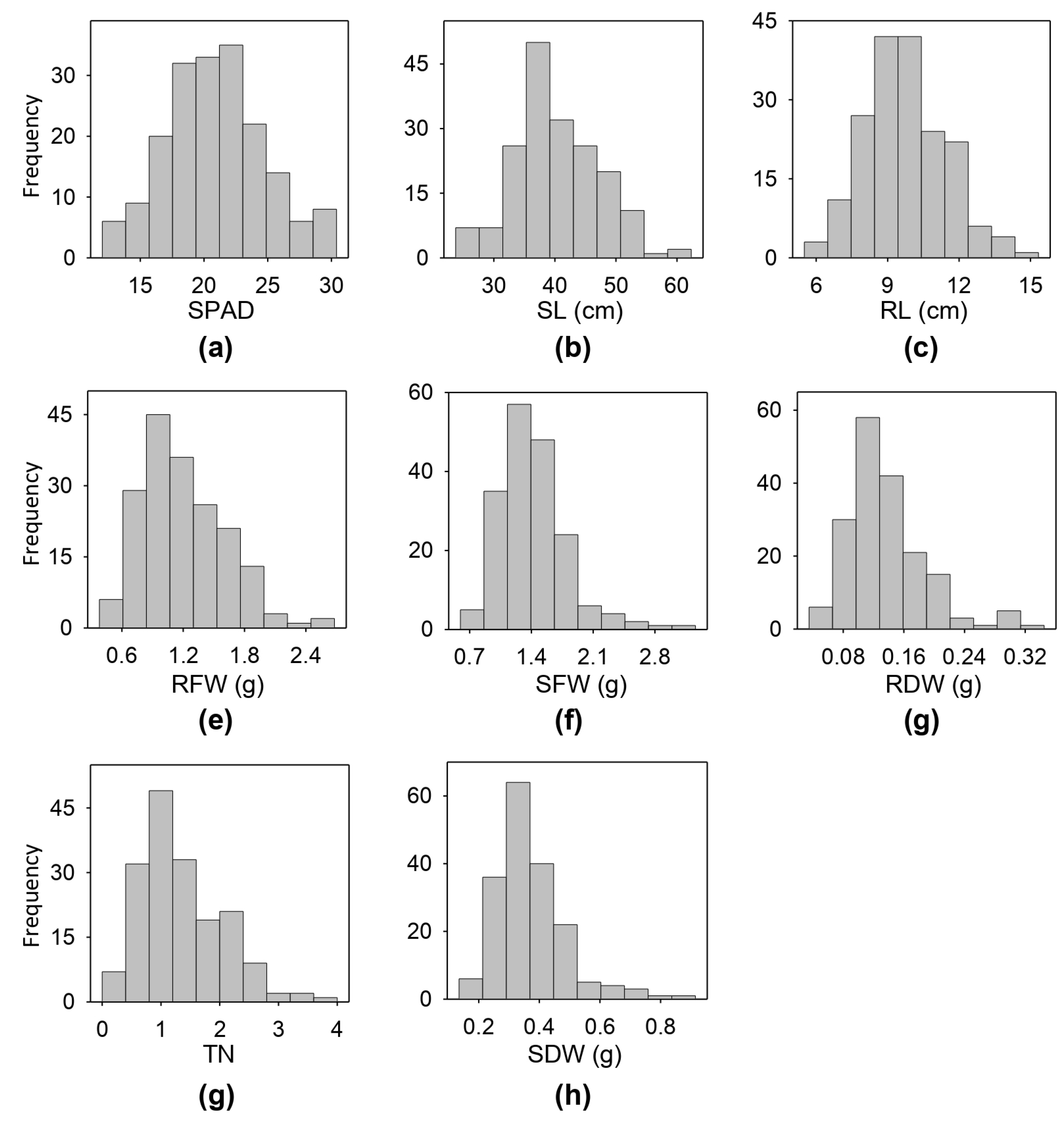
Fig. 3Manhattan plots and quantile-quantile (Q-Q) plots for GWAS on the low-P stress related traits of NK rice accessions. Manhattan and QQ plots for SPAD (a, b), root length (RL) (c, d), shoot length (SL) (e, f), shoot fresh weight (SFW) (g, h), tiller number (TN) (i, j), relative shoot length (RSL) (k, l), and relative root fresh weight (RRFW) (m, n) in FarmCPU model with rMVP. The horizontal red line indicated thresholds (-log10 (p) = 5.934) indicating the significant SNPs correlated with the low-P response. Known and novel candidate genes are marked above lead SNPs. For Q-Q plots, the horizontal axis represents expected -log10 (p), and the vertical axis is observed -log10 (p) of each SNP. The SNPs that had p-values deviated from the linear indicate reasonable positives.
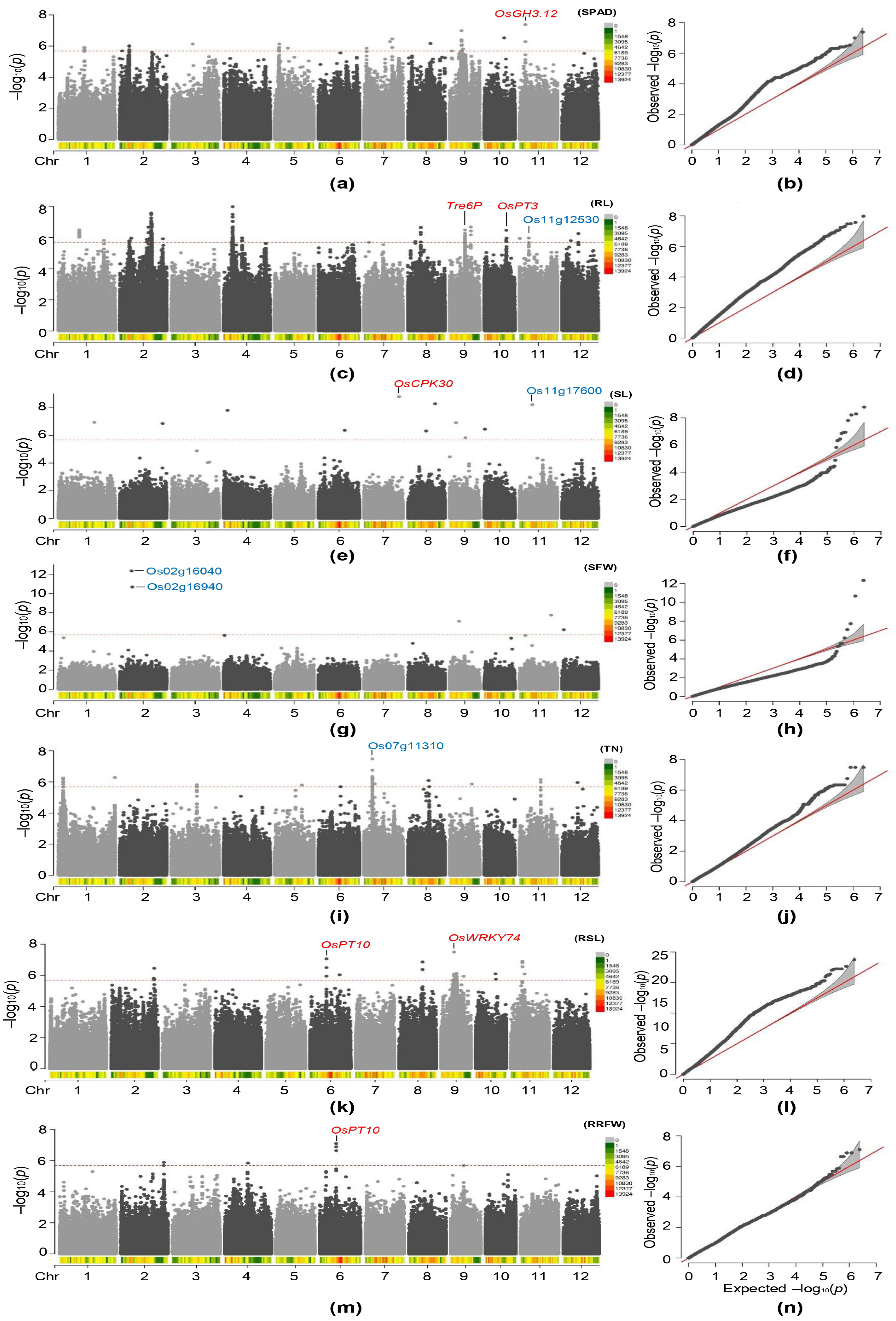
Fig. 4Haplotype analysis of six known candidate genes identified by GWAS. (a, c, e, g, i and k) haplotype analyses of OsTre6P (a), OsGH3.12 (c), OsPT10 (e), OsWRKY74 (g), OsCPK30 (i) and OsPT3 (k). A schematic diagram of each gene is shown on the top. Gray boxes indicate exons. (b, d, f, h, j and l) LD plots show association loci for OsTre6P (b), OsGH3.12 (d), OsPT10 (f), OsWRKY74 (h), OsCPK30 (j) and OsPT3 (l). The color of each SNP indicates the r2 value for the correlation with the lead SNP. Red and green color intensities indicate stronger and weaker LD (0 to 1). (m-r) Phenotypic variation of the haplotypes for OsTre6P (m), OsGH3.12 (n), OsPT10 (o), OsWRKY74 (p), OsCPK30 (q) and OsPT3 (r). Different letters indicate significant differences according to Duncan's least significant range test (p<0.05).
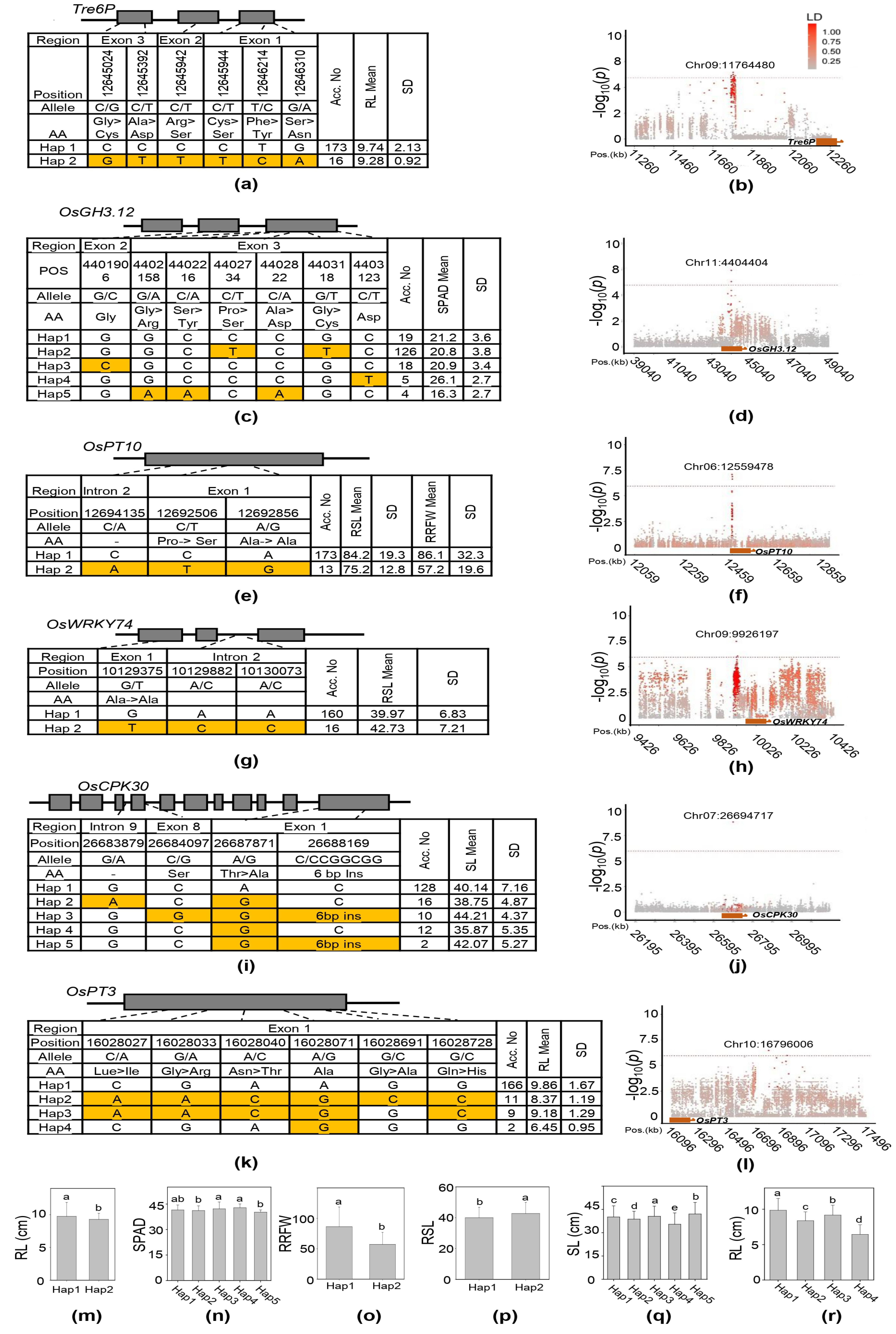
Fig. 5Haplotype analysis of the unknown candidate genes identified by GWAS. (a, c, e, g, i and k) haplotype analyses of LOC_Os11g12530 (a), LOC_Os02g42820 (c), LOC_Os11g17600 (e), LOC_Os02g16040 (g), LOC_Os07g11310 (i), and LOC_Os02g16940 (k). A schematic diagram of each gene is shown on the top. Gray boxes indicate exons. (b, d, f, h, j and l) LD plots show association loci for LOC_Os11g12530 (b), LOC_Os02g42820 (d), LOC_Os11g17600 (f), LOC_Os02g16040 (h), LOC_Os07g11310 (j), and LOC_Os02g16940 (l). The color of each SNP indicates the r2 value for the correlation with the lead SNP. Red and green color intensities indicate stronger and weaker LD (0 to 1). (m-r) Phenotypic variation of the haplotypes for LOC_Os11g12530 (m), LOC_Os02g42820 (n), LOC_Os11g17600 (o), LOC_Os02g16040 (p), LOC_Os07g11310 (q), and LOC_Os02g16940 (r). Different letters indicate significant differences according to Duncan's least significant range test (p<0.05).
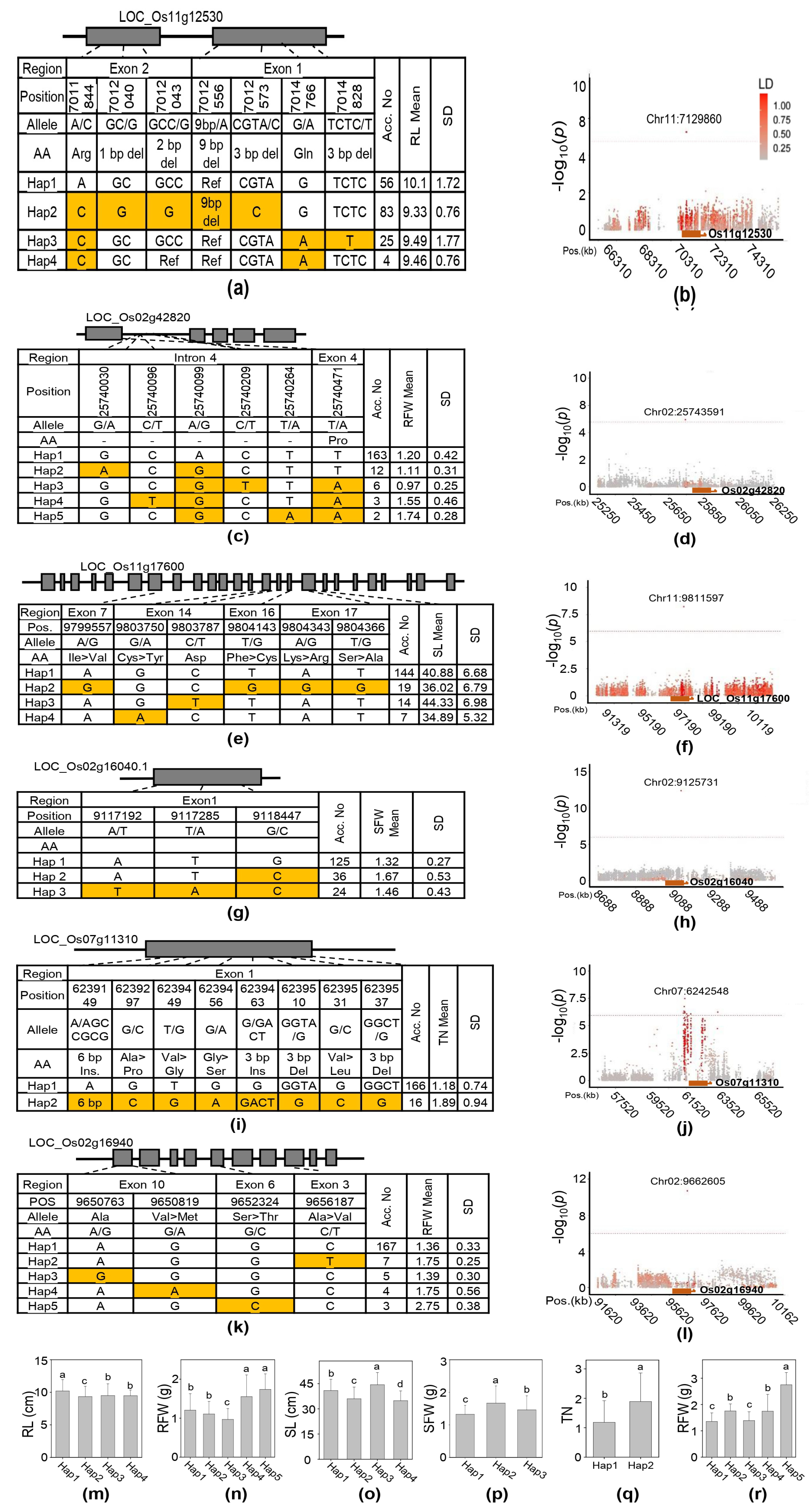
Fig. 6Expression pattern of known and novel candidate genes under low- and high-P treatments. Transcripts data were downloaded from the TENOR database (
https://tenor.dna.affrc.go.jp/). Transcriptional expressions of
OsGH3.12 (a),
OsCPK30 (b),
OsTre6P ©,
OsPT3 (d),
OsPT10 (e),
OsWRKY74 (f),
LOC_Os02g16040 (g),
LOC_Os02g16940 (h),
LOC_Os04g24820 (i),
LOC_Os11g17600 (j),
LOC_Os07g11310 (k), and
LOC_Os11g12530 (l) under low-P (LP) and high-P (HP). M, mock treatment.
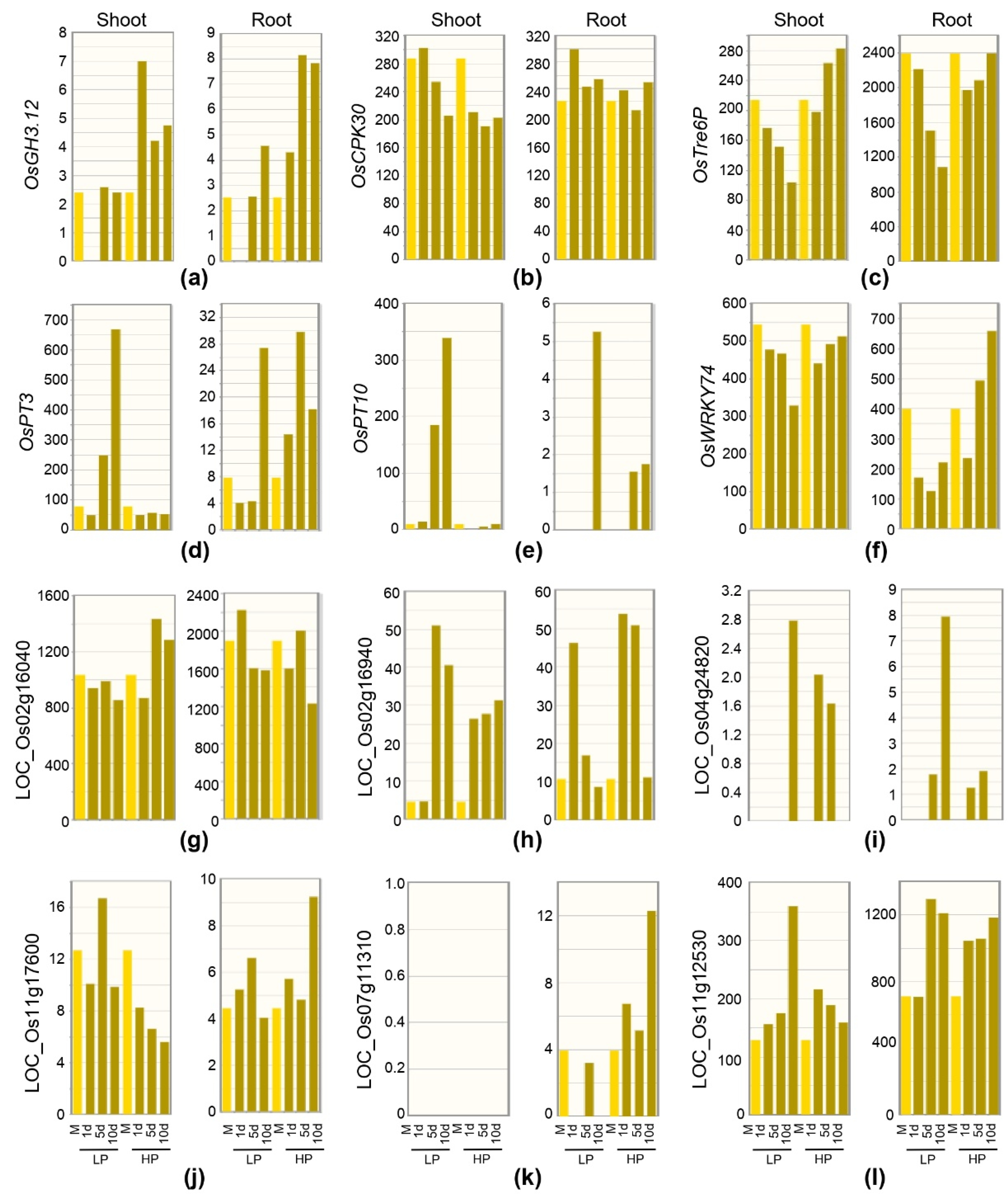
Table 1List of known candidate genes with significantly associated signals identified by GWAS.
Table 1
|
Lead SNP |
Trait |
-log10(p) |
Gene locus |
Gene name |
Function |
References |
|
Chr11:4404404 |
SPAD |
7.97 |
Os11g08340 |
OsGH3.12
|
Auxin responsive |
(Huang et al. 2023) |
|
Chr09:11764480 |
RL |
6.88 |
Os09g20990 |
OsTre6P
|
Trehalose-6-phosphate synthase |
(Kumar et al. 2021) |
|
Chr10:16796006 |
RL |
7.25 |
Os10g30770 |
OsPT3
|
Phosphorus transporter |
(Chang et al. 2019) |
|
Chr07:26694717 |
SL |
8.79 |
Os07g44710 |
OsCPK30
|
Calcium dependent protein kinases |
(Li et al. 2022) |
|
Chr06:12559478 |
RSL, RRFW |
7.05
7.09 |
Os06g21950 |
OsPT10
|
Phosphorus transporter |
(Wang et al. 2014) |
|
Chr09:9926197 |
RSL |
7.49 |
Os09g16510 |
OsWRKY74
|
Transcription factor |
(Dai et al. 2016) |
Table 2List of novel candidate genes with significantly associated signals identified by GWAS.
Table 2
|
Lead SNP |
Trait |
-log 10(p) |
Gene locus |
Function |
|
Chr11:7129860 |
RL |
7.31 |
Os11g12530 |
Receptor-like protein kinase 5 precursor |
|
Chr11:9811597 |
SL |
8.21 |
Os11g17600 |
Root hairless 1, putative, expressed |
|
Chr02:9125731 |
SFW |
12.35 |
Os02g16040 |
Ubiquitin-conjugating enzyme |
|
Chr02:25743591 |
RFW |
6.17 |
Os02g42820 |
Putative actin-binding protein and transcription factor |
|
Chr07:6242548 |
TN |
7.48 |
Os07g11310 |
LTPL166 - Protease inhibitor/seed storage/LTP family protein precursor |
|
Chr02:9662605 |
SFW |
10.67 |
Os02g16940 |
Putative Subtilisin homologue |
References
- Ai H, Liu X, Hu Z, Cao Y. 2023. Mutation of OsLPR3 enhances tolerance to phosphate starvation in rice. Int J Mol Sci. 24: 2437
- Anandan A, Parameswaran C, Mahender A, Nayak AK, Vellaikumar S, Balasubramaniasai C, et al. 2021. Trait variations and expression profiling of OsPHT1 gene family at the early growth-stages under phosphorus-limited conditions. Scientific Reports. 11: 13563
- Chang MX, Gu M. 2019. OsPHT1;3 mediates uptake, translocation, and remobilization of phosphate under extremely low phosphate regimes. Plant Physiol. 179: 656-670.
- Chin JH, Gamuyao R, Dalid C, Bustamam M, Prasetiyono J, Moeljopawiro S, et al. 2011. Developing rice with high yield under phosphorus deficiency: Pup1 sequence to application. Plant Physiol. 156: 1202-1216.
- Chiou TJ, Lin SI. 2011. Signaling network in sensing phosphate availability in plants. Annu Rev Plant Biol. 62: 185-206.
- Conley DJ, Paerl HW, Howarth RW, Boesch DF, Seitzinger SP, Havens KE, et al. 2009. Ecology. Controlling eutrophication: nitrogen and phosphorus. Science. 323: 1014-1015.
- Dai X, Wang Y, Zhang WH. 2016. OsWRKY74, a WRKY transcription factor, modulates tolerance to phosphate starvation in rice. J Exp Bot. 67: 947-960.
- Huang Z, Ye J, Zhai R, Wu M, Yu F, Zhu G, et al. 2023. Comparative transcriptome analysis of the heterosis of salt tolerance in inter-subspecific hybrid rice. Int J Mol Sci. 24: 2212
- Jain M, Kaur N, Tyagi AK, Khurana JP. 2006. The auxin-responsive GH3 gene family in rice (Oryza sativa). Funct Integr Genomics. 6: 36-46.
- Jiang J, Ma S, Ye N, Jiang M, Cao J, Zhang J. 2017. WRKY transcription factors in plant responses to stresses. J Integr Plant Biol. 59: 86-101.
- Kawahara Y, Oono Y, Wakimoto H, Ogata J, Kanamori H, Sasaki H, et al. 2016. TENOR: Database for comprehensive mRNA-Seq experiments in rice. Plant Cell Physiol. 57: e7
- Kumar S, Pallavi , Chugh C, Seem K, Kumar S, Vinod KK, et al. 2021. Characterization of contrasting rice (Oryza sativa L.) genotypes reveals the Pi-efficient schema for phosphate starvation tolerance. BMC Plant Biol. 21: 282
- Li H, Zhang Y, Wu C, Bi J, Chen Y, Jiang C, et al. 2022. Fine-tuning OsCPK18/OsCPK4 activity via genome editing of phosphorylation motif improves rice yield and immunity. Plant Biotechnol J. 20: 2258-2271.
- Li S, Tian Y, Wu K, Ye Y, Yu J, Zhang J, et al. 2018. Modulating plant growth-metabolism coordination for sustainable agriculture. Nature. 560: 595-600.
- Lipka AE, Tian F, Wang Q, Peiffer J, Li M, Bradbury PJ, et al. 2012. GAPIT: genome association and prediction integrated tool. Bioinformatics. 28: 2397-2399.
- Narawatthana S, Phansenee Y, Thammasamisorn B-O, Vejchasarn P. 2023. Multi-model genome-wide association studies of leaf anatomical traits and vein architecture in rice. Front Plant Sci. 14: 1107718
- Narsai R, Ivanova A, Ng S, Whelan J. 2010. Defining reference genes in Oryza sativa using organ, development, biotic and abiotic transcriptome datasets. BMC Plant Biol. 10: 56
- Paszkowski U, Kroken S, Roux C, Briggs SP. 2002. Rice phosphate transporters include an evolutionarily divergent gene specifically activated in arbuscular mycorrhizal symbiosis. Proc Natl Acad Sci USA. 99: 13324-13329.
- Purcell S, Neale B, Todd-Brown K, Thomas L, Ferreira MA, Bender D, et al. 2007. PLINK: a tool set for whole-genome association and population-based linkage analyses. Am J Hum Genet. 81: 559-575.
- Raghothama KG. 1999. Phosphate acquisition. Annu Rev Plant Physiol Plant Mol Biol. 50: 665-693.
- Secco D, Baumann A, Poirier Y. 2010. Characterization of the rice PHO1 gene family reveals a key role for OsPHO1;2 in phosphate homeostasis and the evolution of a distinct clade in dicotyledons. Plant Physiol. 152: 1693-1704.
- Sun S, Gu M, Cao Y, Huang X, Zhang X, Ai P, et al. 2012. A constitutive expressed phosphate transporter, OsPht1;1, modulates phosphate uptake and translocation in phosphate-replete rice. Plant Physiol. 159: 1571-1581.
- Tariq R, Ji Z, Wang C, Tang Y, Zou L, Sun H, et al. 2019. RNA-Seq analysis of gene expression changes triggered by Xanthomonas oryzae pv. oryzae in a susceptible rice genotype. Rice. 12: 44
- Thibaud M-C, Arrighi J-F, Bayle V, Chiarenza S, Creff A, Bustos R, et al. 2010. Dissection of local and systemic transcriptional responses to phosphate starvation in Arabidopsis. Plant J. 64: 775-789.
- To HTM, Le KQ, Van Nguyen H, Duong LV, Kieu HT, Chu QAT, et al. 2020. A genome-wide association study reveals the quantitative trait locus and candidate genes that regulate phosphate efficiency in a Vietnamese rice collection. Physiol Mol Biol Plants. 26: 2267-2281.
- Tyagi A, Shabbir U, Chen X, Chelliah R, Elahi F, Ham HJ, et al. 2022. Phytochemical profiling and cellular antioxidant efficacy of different rice varieties in colorectal adenocarcinoma cells exposed to oxidative stress. PloS One. 17: e0269403
- Wang X, Lv S, Han X, Guan X, Shi X, Kang J, et al. 2019. The calcium-dependent protein Kinase CPK33 mediates strigolactone-induced stomatal closure in Arabidopsis thaliana. Front Plant Sci. 10: 1630
- Wang X, Wang Y, Piñeros MA, Wang Z, Wang W, Li C, et al. 2014. Phosphate transporters OsPHT1;9 and OsPHT1;10 are involved in phosphate uptake in rice. Plant Cell Environ. 37: 1159-1170.
- Yoshida S, Forno DA, Cock J. 1971. Laboratory manual for physiological studies of rice. The International Rice Research Institute. Los Baños, Laguna..