Abstract
Plant breeders have accumulated hybrid effects to increase food production in order to counteract the loss of arable land. Hybrids may possess novel genetic potential to increase agricultural productivity; however, the relationships between genetic resources for optimizing crop productivity remain mostly unclear. In this study, we recorded heterosis effects of genetically inherited traits by reciprocal hybridization of the Solanum lycopersicum cultivar Micro-Tom and the commercial cultivar M82, which are currently available as in silico mutant populations, to identify mutant genes which can induce heterosis. The genetic variations between M82 and Micro-Tom caused intermediate phenotypic effects with regard to flowering time, plant height, and fruit size, indicating additive interactions among variations with a hybrid background. The total yield of F1 hybrid was similar to that of cultivar M82, regardless of reduced vegetative biomass, and it revealed an overdominance effect regarding number of harvested fruits. The inheritance of the phenotypes was similar among reciprocal F1 hybrids with different paternal and maternal materials. Based on the consistency of hybrids and wild types, Micro-Tom mutants showing floral homeotic defects and large plant size can be efficiently screened for overdominant yield mutants in F1 hybrids. Therefore, we suggest that identical traits in reciprocal hybrids between Micro-Tom and M82 varieties are useful as control F1 hybrids to improve field tomato productivity by screening mutant hybrids of Micro-Tom mutants and commercial variety M82.
-
Key words: Micro-Tom, Plant growth, Tomato yield, Heterosis, Hybrids
INTRODUCTION
Global population growth, loss of arable land, and shortened cultivation periods will exponentially increase the need for intensive farming methods and new crop varieties (
Parant 1990;
Roudier et al. 2016;
Smith and Stwalley III 2018;
United Nations 2019). Plant breeders must produce new resources and methods to increase crop yield. Hybrids are produced by crossing different inbred lines which have accumulated genetic differences in the cytoplasmic and nuclear genomes, and the best hybrids are typically selected for improvement of agronomic characte-ristics, which primarily refers to crop yield. This selectable performance, termed hybrid vigor or heterosis, also progressively increases through the breeder’s efforts to identify the optimal combination of inbred lines. The phenomenon of heterosis occurs in many crops, including tomato, but it remains poorly understood with regard to the underlying molecular and genetic mechanisms.
To explain the heterosis effect in plants, the genetic loci responsible for this effect were hypothesized to combine and integrate different factors acquired from the respective parents (
East 1936). Geneticists proposed three hypo-theses to explain the heterosis effect i.e., the dominance, overdominance, and epistasis hypotheses (
Fu et al. 2014). The dominance hypothesis suggests that genetic loci responsible for increased performance contain different alleles, where the dominant allele silences the recessive allele in hybrids; the recessive allele may thus be functional only when the dominant allele is absent (
Bruce 1910;
Jones 1917). By contrast, the overdominance hypothesis sugg-ests that increased performance of a hybrid is due to a synergistic combination of alleles, i.e., the hybrid ex-pressing overdominant alleles shows better performance under an optimized balance of plant growth (
Fu et al. 2014). Overdominance alleles occur in cultivated crops such as rice (
Oryza sativa;
Li et al. 2008) and tomato (
Semel et al. 2006;
Krieger et al. 2010;
Jiang et al. 2013). Epistasis is a genetic effect that combines the functions of alleles between or among transacting genes in hybrids. These genes are nonfunctional when isolated from the gene of interest (
Xiao et al. 1995;
,
Soyk et al. 2017,
2019).
Yu et al. (1997) found evidence of heterosis caused by epistasis other than dominance and overdominance.
Besides the genetic effects associated with heterosis, the interactions between nuclear genes and cytoplasmic factors such as mitochondrial and chloroplast genes may also be responsible for heterosis effects. Cytoplasmic inheritance to hybrid progeny through mitochondrial DNA is influ-enced by the female parent, regardless of the genetic rel-ationship between the parent plants (
Henry et al. 1994). In maize, reciprocal cross effects induced significant modifications of plant characteristics, depending on parental genetic variability and environmental factors (
Kalsy and Sharma 1972).
In
Solanum lycopersicum cultivar M82, large mutant populations have been developed for gene character-ization, which are useful genetic resources for applying heterotic effects in tomato breeding (
Krieger et al. 2010;
Saito et al. 2011;
Soyk et al. 2017). The large-sized and late-flowering phenotype of
single flower truss (
sft) was optimized to increase tomato fruit yield in
sft/+ hybrids, and progressive heterotic effects were observed with optimal flowering time and growth in
ssp/+ sft/+ (
Park et al. 2014,
2016). Moreover,
compound inflorescence (
s)/+ and
jointless2 (
j2) enhance
jointless2 (
ej2)/+ present a comparably optimized molecular-dosage regarding in-florescence architecture, resulting in higher yields (
Soyk et al. 2017). Notably,
S,
J2, and
EJ2 functions during floral development, and their mutants show homeotic defectives (
Burgess 2017). Micro-Tom mutant populations are also useful genetic resources for applying progressive heterotic effects to tomato breed strains and enable subsequent gene characterization, as short generation cycles and dwarf habits can help facilitate the management of plant materials (
Martí et al. 2006;
Shikata and Ezura 2016). Moreover, using Micro-Tom to identify beneficial alleles by random mutagenesis is a vital step in the development of superior cultivars by inducing artificial allelic variation (
Watanabe et al. 2007;
Saito et al. 2011;
Silva et al. 2019).
Here, we analyzed the basal heterotic effects of the F1 hybrids by reciprocal crossing of Micro-Tom and M82 for a better understanding of heterosis using Micro-Tom mutant resources. We predicted that the regulatory effect of dwarfing and flowering-related mutations would increase the productivity of reciprocal F1 hybrids without cyto-plasmic effects. Moreover, we propose that if a positive aspect of Micro-Tom mutant-derived heterosis can be pro-duced in hybrids with M82, plant breeders and researchers may benefit from exploring the genetic materials of Micro-Tom to produce improved field tomato plants.
MATERIALS AND METHODS
Plant materials and growth
Micro-Tom mutants induced by ethyl methanesul-fonate and gamma ray irradiation were obtained from TOMATOMA (NBRP tomato:
http://tomato.nbrp.jp/ indexEn.html). Mutants were grown and characterized regarding quantifiable and observable phenotype traits such as yield, plant weight, flowering time, and vegetative and/or reproductive differences from Micro-Tom. We defined Micro-Tom mutants in a previous study (
Rajendran et al. 2021); three
floral homeotic (
fh) mutants showing addi-tional reproductive organ production and abnormal floral/ inflorescence architecture, and two
large-sized plants (
lp) mutants were used as maternal or paternal parents for crossing with M82. Parental M82 and Micro-Tom plants were grown under long-day conditions and controlled temperatures in a greenhouse at Wonkwang University, Iksan, Republic of Korea. The light/dark cycle was 16/8 hours per day. Plants were supplied with nutrients through irrigation water from one month after transplanting, following the manufacturer’s guidelines (S-feed, Hannong, South Korea).
Crossing was started two weeks after transplantation. A representative healthy plant was selected and was used as the maternal and paternal source. Healthy unopened flowers with yellow petals were selected for maternal material. Sharp sterile tweezers and a spatula were used for crossing. Flowers were labeled using hanging tags and were observed continuously for confirmation. Successful crosses were harvested when they reached maturity.
Seed extraction
Seeds were extracted by splitting the fruits, and extracted seeds were treated with 1.2% Rapidase® (DSM Food Specialties, Netherlands) for 2 hours. The seeds were then washed and drained three times using running water. After this, the seeds were treated with 20% bleach for 10 minutes, followed by five washes under running water and draining. The seeds were then air-dried for two days at room temperature.
Yield trials
Yield trials were conducted as previously described (
Park et al. 2014) in a field in Imsang-ree, Iksan, which belongs to the Department of Horticulture, Wonkwang University, Iksan, South Korea. The yield trial was conducted from March to August in two consecutive years. All wild-type and hybrid plants were planted in a randomized order. Plants with a Micro-Tom background were grown in pots under greenhouse conditions. Seed-lings were grown in 50-hole seed trays for 25-28 days followed by transplanting upon wild-type floral initiation. Micro-Tom plants were transplanted to pots (14.1 cm height, 13.7 cm diameter) filled with approximately 250 g potting substrate (Santo-Heungnung Bio, South Korea) and fitted with a controlled water and nutrient system. Water and nutrient application was executed once per day, according to the manufacturer’s instructions (S-feed, Hannong, South Korea). Plant growth was supported by standard drip irrigation and fertilizer applications. De-fective and/or diseased seedlings were removed before transplantation and before harvesting. Each plant was assigned an area of 0.64 m
2. Irrigation was executed ac-cording to soil moisture, and fertilizer was applied through drip irrigation.
Flowering time, shoot determinacy, and axillary shoot numbers of mature plants were recorded 60 days after transplanting to the field or to pots. Flowering time was determined according to leaf production on the primary shoot before flowering. Shoot determinacy was identified according to termination of the apical meristem on the main shoot. The main shoots consisted of primary shoots and successive sympodial shoots that grew out before shoot termination. Representative images were captured using a digital camera (Canon EOS 80D, Canon Inc., Japan).
Harvesting and data collection
Harvesting was executed when the fruits of the control hybrid plants (Micro-Tom/M82) showed over 70% ripening (red fruits). Plant weight and fruit yield were recorded after the plants and fruits were manually removed from the soil and from the plants, respectively. The average fruit weight and total soluble sugar content (in Brix) in fruit juice was estimated using ten randomly selected fruits. All fruits, including red and green fruits, were weighed to assess total fruit yield. Ten red fruits were randomly selected to estimate average fruit weight. The Brix value (%) was quantified using a digital Brix refractometer (ATAGO Palette, Japan).
Statistical analyses
Quantitative data were statistically analyzed using the JMP 14.3.0 software package (SAS Institute, Cary, NC, USA). Mean values were compared using Student’s t-test (two-tailed) for initial experiments to analyze factors such as flowering time, plant weight, total yield, fruit weight, fruit number, and Brix. Statistical grouping was performed using the Tukey–Kramer multiple-comparison test to determine yield parameters and for multiple comparisons of mutant hybrid phenotypic values. All statistical com-parisons were performed using the “Fit Y by X” function.
RESULTS
Morphological comparison of cultivars Micro-Tom and M82
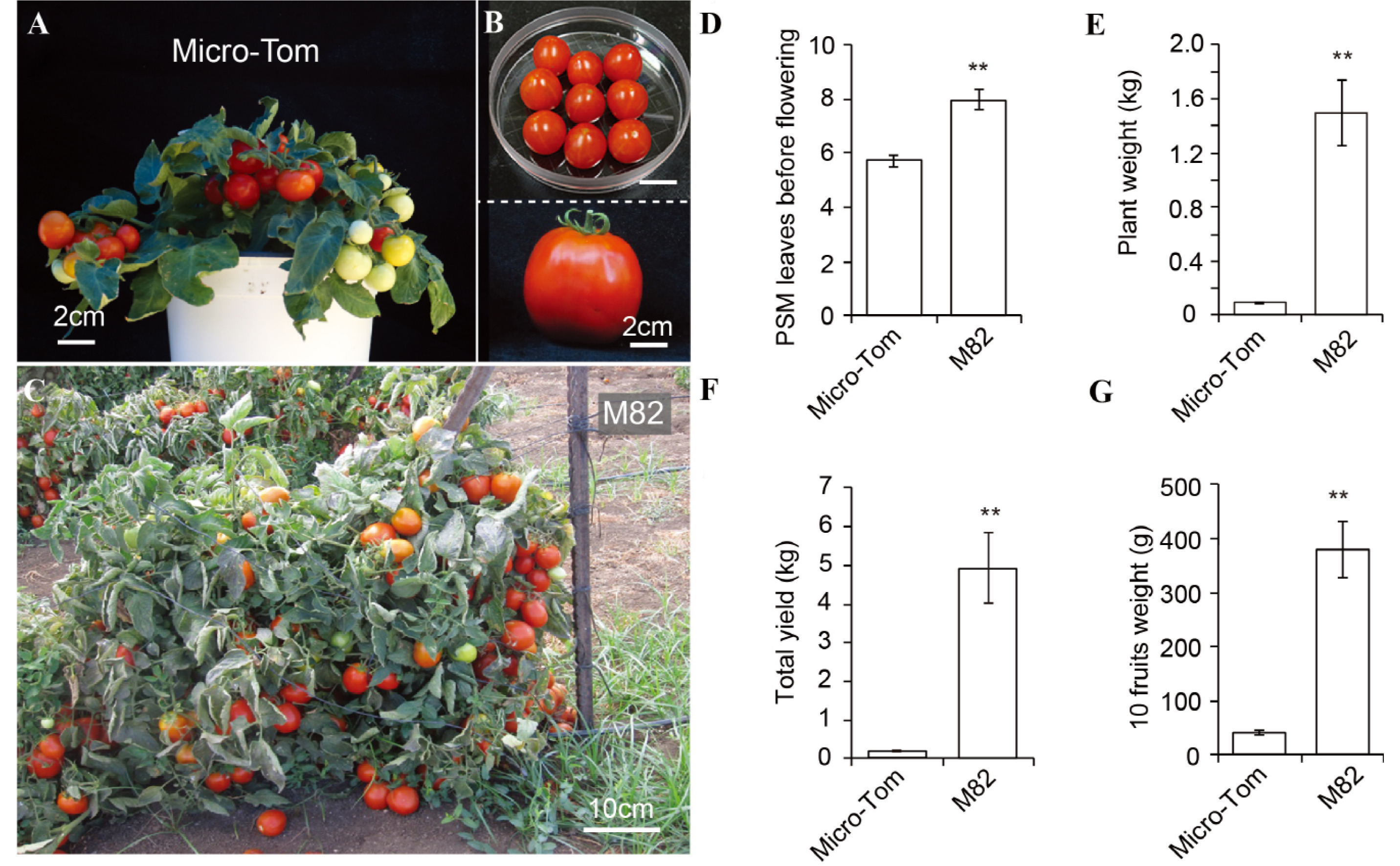
Micro-Tom is a compact plant that can be grown on limited space, and numerous plants can be grown in pot media without any significant effects on maximum per-formance. The compact habit and narrow areal growth facilitated dense growth under greenhouse conditions (
Fig. 1A-C). Due to the mutation affecting flowering time, Micro-Tom produced five to six leaves through primary shoot meristem (PSM) before flowering (
Martí et al. 2006), Micro-Tom flowered before M82 and eventually matured earlier than M82 (
Fig. 1D). This gave Micro-Tom the advantage of a shorter generation time. In less than 12 weeks, Micro-Tom produced up to 20 g weight of vegetative biomass (
Fig. 1E) and a yield of approximately 150 g per plant (
Fig. 1F). Micro-Tom produced almost ten-fold smaller fruits than M82 (
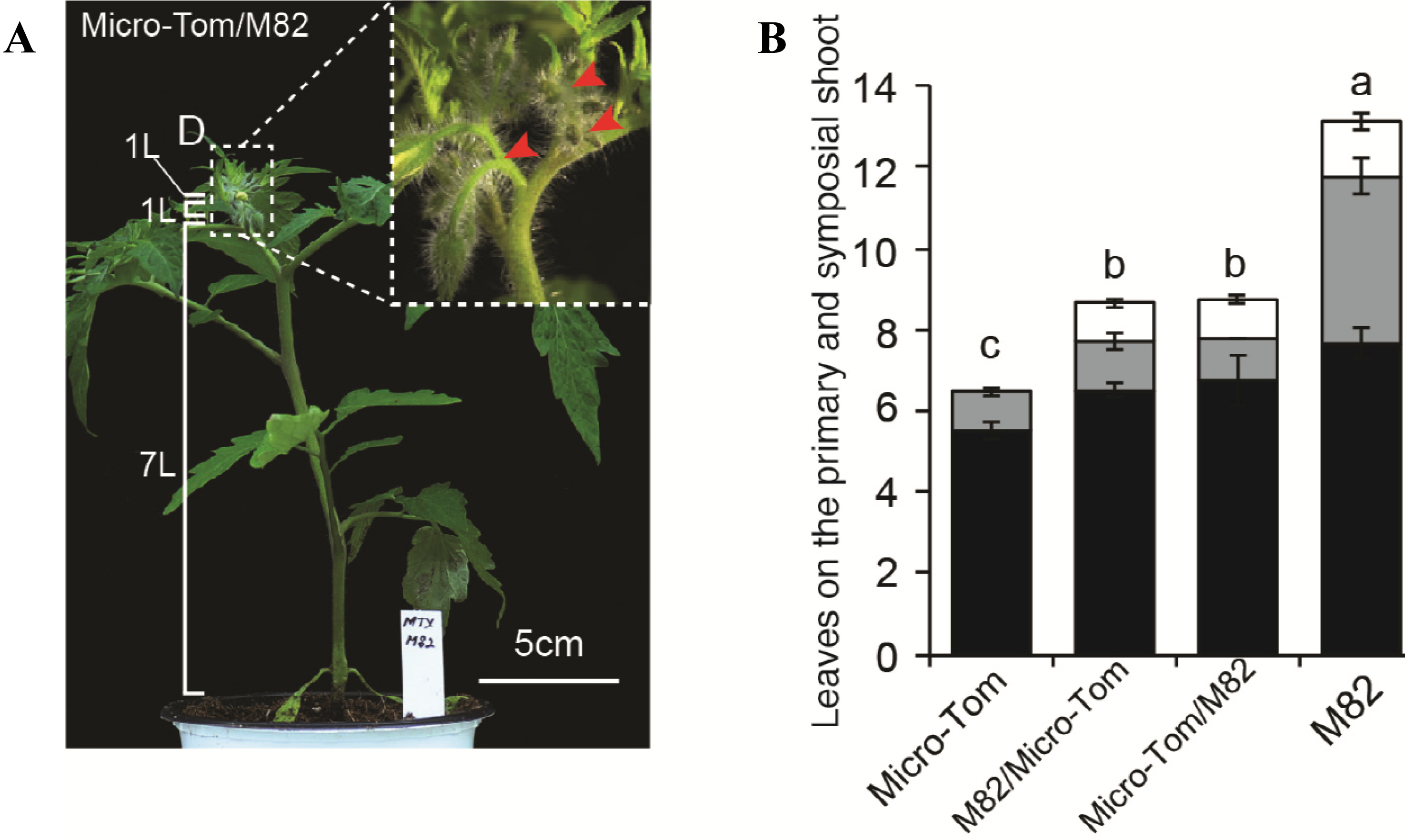
Fig. 1B, G); however, the vegetative biomass: yield ratio of Micro-Tom was lower than that of M82. M82 produces 8-9 PSM leaves before flowering, followed by two sympodial shoots in an interval of 3-4 and 1-2 PSM leaves, respectively, which results in higher leaf and sympodial shoot production than in Micro-Tom (
Fig. 2).
To examine the degree of heterotic effects between hybrids of M82 and Micro-Tom, we hybridized wild types of both cultivars and also performed reciprocal crosses by exchanging maternal and paternal parents, as previously described (
Muhammad and Yabuno, 1975), to identify any non-nuclear gene influences in F1 progeny (here termed “Micro-Tom/M82” and “M82/Micro-Tom”). We first examined growth habits such as flowering time in the reciprocal hybrids by counting leaves produced in primary shoots and successive sympodial shoots. The seedlings of F1 hybrids showed intermediate flowering time and leaf production, compared to the phenotypes of both parents, which indicated additive effects on flowering time and vegetative growth, relative to Micro-Tom and M82 (
Fig. 2A, B).
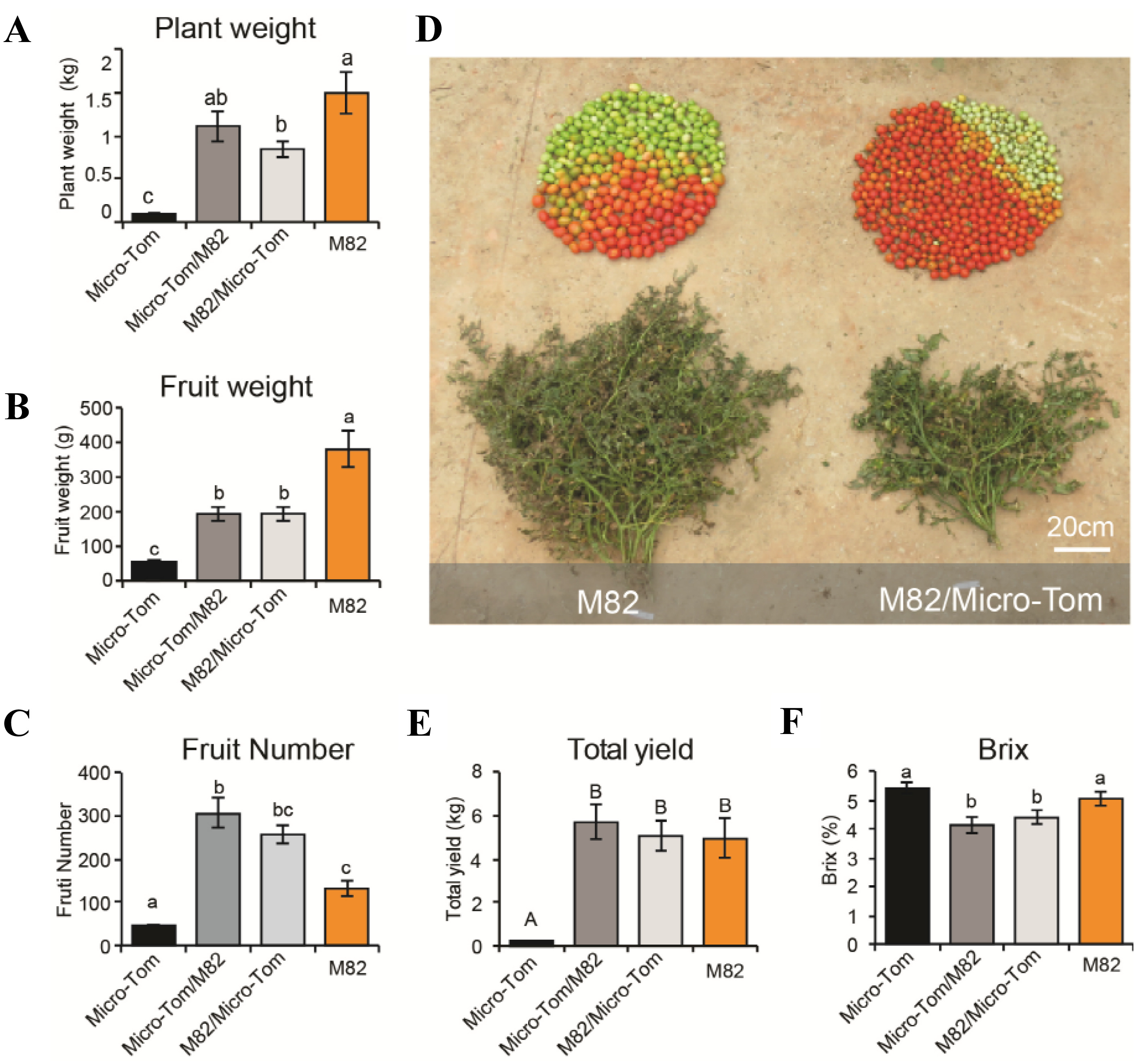
To determine whether the additive growth habits would correspond to hybrid vigor effects in both hybrids, the reciprocal hybrids and parent cultivars were grown under greenhouse and field conditions with a controlled irrigation system to quantify yield-related traits such as plant weight, total yield, and fruit weight (
Fig. 3). First, we quantified the vegetative weights of mature plants, i.e., leaves, stems, and inflorescences produced by the main shoot and axillary branches. Both F1 hybrids showed plant weights intermediate between M82 and Micro-Tom (
Fig. 3A). The fruit weight was lower in hybrids than in M82 but higher than in Micro-Tom, again indicating an additive effect in reciprocal hybrids (
Fig. 3B,
Table 1). However, fruit number was significantly higher in hybrids than in both M82 and Micro-Tom, showing an overdominance effect (
Fig. 3C, D,
Table 1). Even though the plant weight of hybrids was significantly lower than that of M82, the yield of hybrids was similar to that of M82. Both reciprocal hybrids produced yields similar to that of M82, indicating the dominance of M82 regarding yield traits (
Fig. 3D, E,
Table 1). To estimate heterosis effects, we calculated mid-parent heterosis (MPH) and best-parent heterosis (BPH) using the number and weight of fruits, and total yield of all genotypes. A similar increase in MPH was observed regarding fruit number and weight, as well as total yield, between the reciprocal hybrids. Only BPH was highly positive regarding the fruit numbers of both hybrids (
Table 1). Brix values of both hybrids were lower than those of the parents, indicating an underdominance effect (
Fig. 3F,
Table 1). However, the reduction in the Brix value was relatively low.
To examine whether progressive heterosis could be achieved by hybridization with Micro-Tom mutant sources, we first selected
large plants (
lp) and
floral homeotic (
fh) mutants from Micro-Tom mutant popul-ations produced in our previous study (
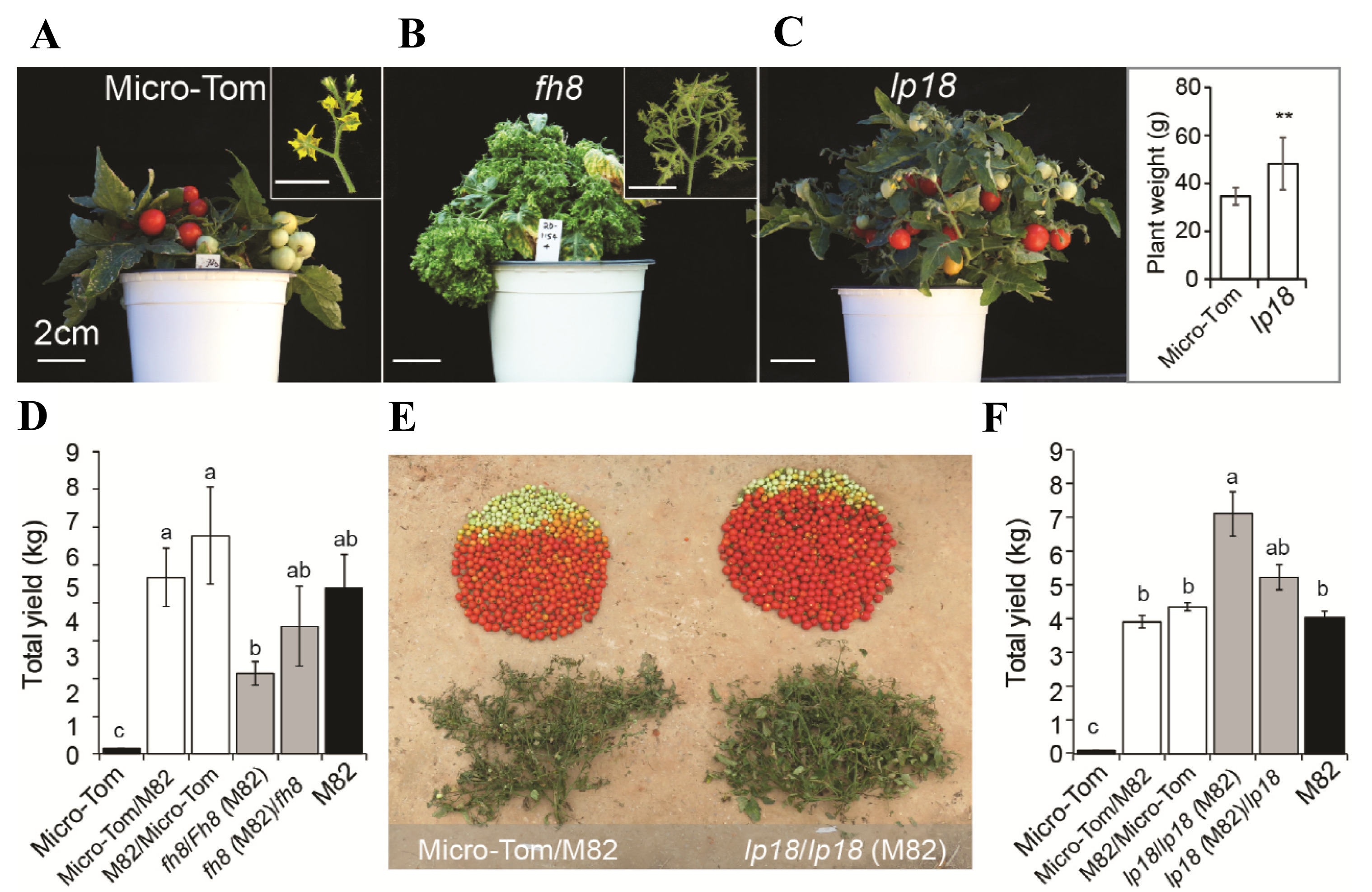
Fig. 4A-C;
Rajendran et al. 2021). We then produced reciprocal crosses with cultivar M82 using three
fh and two
lp mutants. The
fh mutants showed morphologic enlargement in the inflorescence or floral organ development due to homeotic defects and heterochrony in floral organs, and
lp mutants weighted more than twice as much as Micro-Tom plants due to higher production of vegetative tissues. We further conducted yield trials by growing plants of all genotypes (except Micro-Tom) under controlled irrigation field conditions (see Methods). Notably, Micro-Tom plants were grown under controlled irrigation greenhouse conditions because of their small size and weak sunlight.
The hybrids of three
fh mutants and
lp27 (
fh1/+,
fh8/+, and
lp27/+ hybrids) did not show heterosis effects regarding yield-related traits, including total yield, com-pared with the control reciprocal hybrids (Micro-Tom/ M82 and M82/Micro-Tom), where both MPH and BPH values of the mutant hybrids were relatively similar or less than those of the original hybrids (Micro-Tom/M82 and M82/Micro-Tom;
Fig. 4D,
Table 2). This suggested that there were no heterotic effects from the four mutants in the hybrids. The reciprocal hybrids consistently showed similar values (
Table 2). However, the hybrids of
lp18 (
lp18/+) showed a significant increase in yield-related traits, in-cluding total yield, compared with the control hybrids. Both MPH and BPH values of
lp18/+ hybrids were higher than those of the control hybrids (
Table 1,
2). In particular, the total yield of
lp18/+ increased up to 71% BPH, compared with 7% BPH in the control hybrids. Fruit number also increased in
lp18/+ hybrids to 189% and 145% BPH, and improved the 103% and 117% BPH of the control hybrids, indicating progressive heterotic effects in
lp18/+ regarding fruit number (
Fig. 4E, F,
Table 1,
2).
DISCUSSION
Patterns of inheritance under M82/Micro-Tom hybridization
The commercial tomato cultivar M82 passed its performance characteristics on to its hybrids with Micro-Tom, resulting in additive effects on flowering time and plant weight, dominance of total yield, and overdominance of fruit number (
Fig. 2,
3A, C, E). Flower-ing time of the F1 hybrids followed an additive genetic pattern, showing an intermediate flowering time which may be regulated by a dosage effect of the florigen activation complex (
Eshed, 2014). It is also possible that the inherited plant size in F1 hybrids may have been a combined additive effect of
dwarf (
d), a defective mutant of BR biosynthesis, and putative
miniature (
mnt), which may have influenced internode elongation in Micro-Tom. Fruits of hybrids were smaller than those of M82 but larger than those of Micro-Tom. However, the fruit number was significantly increased in the hybrid, suggesting over-dominant inheritance in the F1 hybrid. Finally, F1 hybrids showed similar yields to M82, indicating a dominant effect of yield-related factors in M82. It is noteworthy that Micro-Tom possesses a superior harvest index (data not shown), compared with M82, and it is possible that Micro-Tom enhanced the performance of F1 hybrids. The inherited yield pattern was obviously the dominant effect of M82. However, further studies should be performed to identify precise factors.
Fruit yield is affected by the equilibrium between vegetative and reproductive growth, as determined by the flowering time of shoots (
Park et al. 2016;
Rajendran et al. 2021). Considering plant size and early maturation, mutant hybrids with dosage differences of florigen activation can increase the annual yield per unit area, resulting in higher yield due to the relatively increased sink-source efficiency of intermediate-sized plants (
Park et al. 2014;
Soyk et al. 2017). Moreover, early flowering of F1 hybrids, compared with M82, also elicited early fruit ripening, which would allow earlier harvesting (
Fig. 3D). An additive contribution from the defective shoot growth in Micro-Tom may reduce plant size and cause relatively small F1 hybrids, compared with M82, which could lead to increased productivity in the field through higher planting density. Compared with the traits of M82, reduced plant size did not only affect total yield, but also sustained the total yield weight of F1 hybrids with the dominant yield effect of M82. The yield compensation of the hybrids could be induced by the efficiency in photosynthesis or sink-source relationships despite reduced plant size, which could result in an overdominant increase in fruit numbers in the hybrid.
The lp18 of Micro-Tom enhanced the yield performance in lp18/+ hybrids (Micro-Tom/M82 background), which corresponded to progressive heterosis. Although the control F1 hybrid would induce a heterosis effect in fruit production such as fruit number, it turned out not to be optimal, suggesting that lp18/+ could show the best yield performance with optimal growth. The overdominant effect in F1 hybrids raises the questions of whether there is any other mutation causing this overdominant effect and how these effects function. Further studies should thus be performed to identify the genetic factors associated with overdominant and progressive heterosis effects.
Cytoplasmic effects between reciprocal crosses
Lewis (1955) examined the effect of reciprocal crossing of the wild tomato
S. pimpinellifolium and the
S. lycopersicum cultivar Ailsa Craig, and the results suggested that reciprocal crossing provided insights into cytoplasmic genetic effects on F1 hybrids. Moreover, it was suggested that the non-nuclear genomic effect only occurs in early stages, and the effect equalizes at maturity. In the current study, as expected, plant growth variables such as flowering time and shoot determination were very similar between both reciprocal crosses of Micro-Tom and M82, and all yield-related traits were also similar in both hybrid types. Similar performances of the reciprocal crosses were observed in the hybrids of
fh and
lp mutants, and the overdominant effects were observed in both reciprocal hybrids of
lp18/+, indicating that cytoplasmic genomes are highly compatible between nuclear genes of M82 and Micro-Tom. This also suggests that both parent cultivars were recently established using maternal
S. lycopersicum material.
The results of the current study suggest that Micro-Tom plants have cytoplasmic genomes that are compatible with those of cultivar M82, thus even sustaining plant growth and reproductive harvest in reciprocal cytoplasm siblings, and that the current cultivars such as M82 and Micro-Tom retain the genetic scope that can be further optimized for productivity to a larger extent. We can also use this basic understanding to apply heterosis effects by exploring more novel alleles to increase field tomato productivity using Micro-Tom. Moreover, Micro-Tom mutants as genetic resources can be easily studied by crossing with cultivar M82, so as to enhance heterosis effects, and they can be cloned with respect to where mutations are located in the genome. Further, we suggest that Micro-Tom mutants could also be used to lead to progressive heterosis in other elite tomato cultivars.
DISCLOSURES
The authors have no conflicts of interest to declare.
ACKNOWLEDGEMENTS
We thank members of the Park’s laboratory for discussions. We also thank A. Cho, Y. Chae, and Y.S. La for technical assistance, and S.G. Oh staff for the plant care. This research was supported by the “BioGreen21 Agri-Tech Innovation Program” (grant no. PJ015799), funded by Rural Development Administration to S.J.P. and was supported by the National Research Foundation of Korea (NRF) grant funded by the Korea government (MSIT) (No.1711128306) to Y. K. L.
Notes
-
AUTHOR CONTRIBUTIONS
S.R., Y.K.L. and S.J.P. designed the research and performed the experiments, contributed to the phenotyping and the tomato yield trial. J.H.B., M.W.P. and W.W.J were performed the field managing and systemic controls for tomato growth. S.R., Y.K.L. and S.J.P. wrote the manuscript with editing contributed from all authors.
Fig. 1Growth and yield characteristics in S. lycopersicum cultivars Micro-Tom and M82. (A-C) Representative images of a mature Micro-Tom plant grown in a pot (A), fruits of Micro-Tom (B, top) and M82 (C, bottom), and mature M82 plants grown in the field (C). (D-G) Quantification and comparison of flowering time (D), plant weight (E), total yield (F), and 10-fruit weight (G) between Micro-Tom and M82. Mean values (± s.e.m.) were compared to those of wild-type plants (Micro-Tom) using Student’s t-test; significant differences are indicated by asterisks (**P < 0.01). Scale bars are shown in each panel.
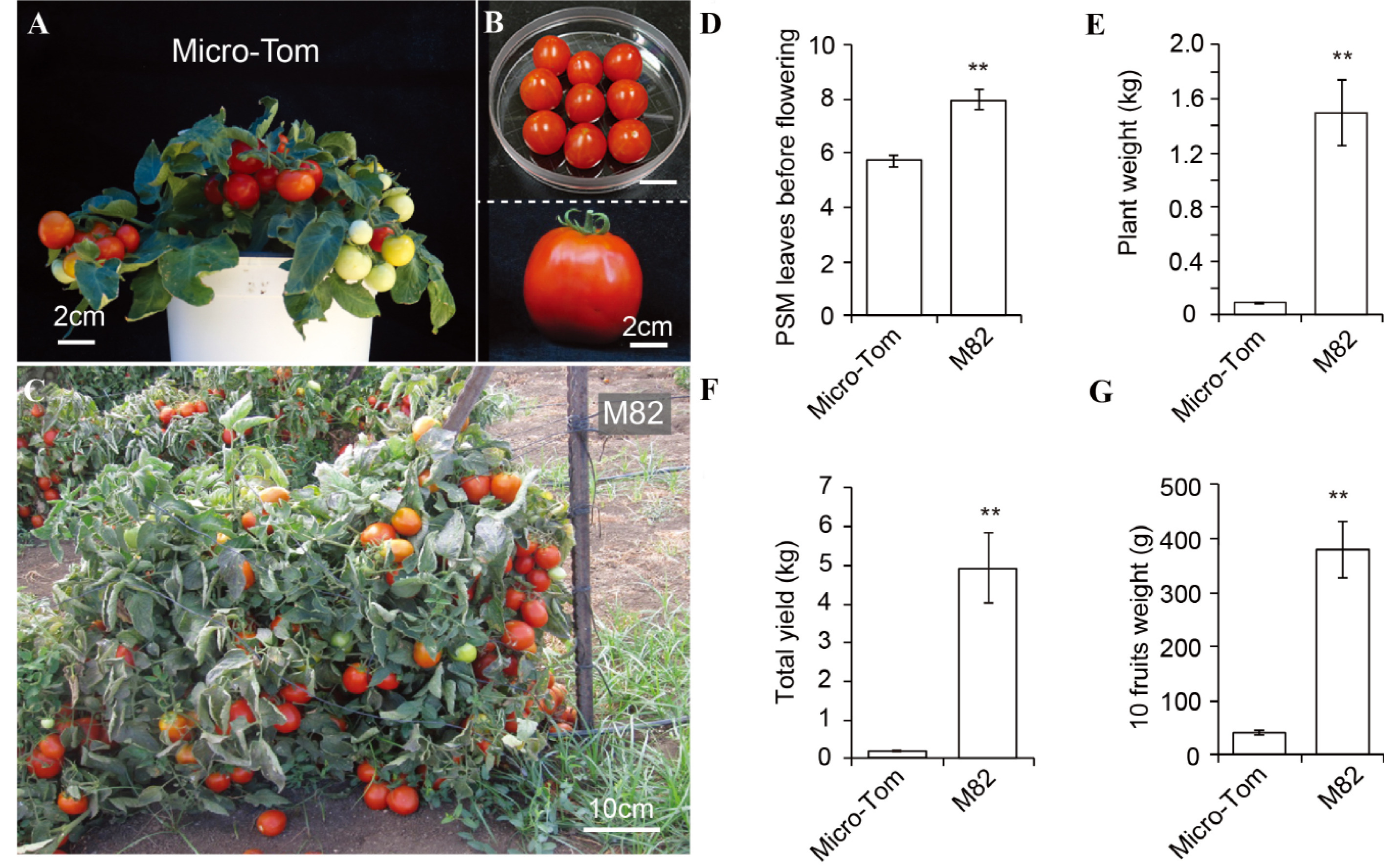
Fig. 2Reciprocal Micro-Tom/M82 hybrids show an intermediate flowering time. (A) Representative main shoot of a Micro-Tom/M82 hybrid plant showing sympodial growth of a five-weeks-old seedling with a magnified image of inflorescences and sympodial shoots. Red arrows in the enlarged shoot apices indicate inflorescences. L, leaves; D, determinate; scale bars, 5 cm. (B) Quantification and comparison of flowering times from primary shoot and successive sympodial shoots of Micro-Tom, reciprocal hybrids (M82/Micro-Tom and Micro-Tom/M82), and M82. Bar graphs show mean values ± s.e. Different letters indicate significant differences between samples according to a one-way ANOVA followed by Student’s t-test (P < 0.05); n, number of replicates.
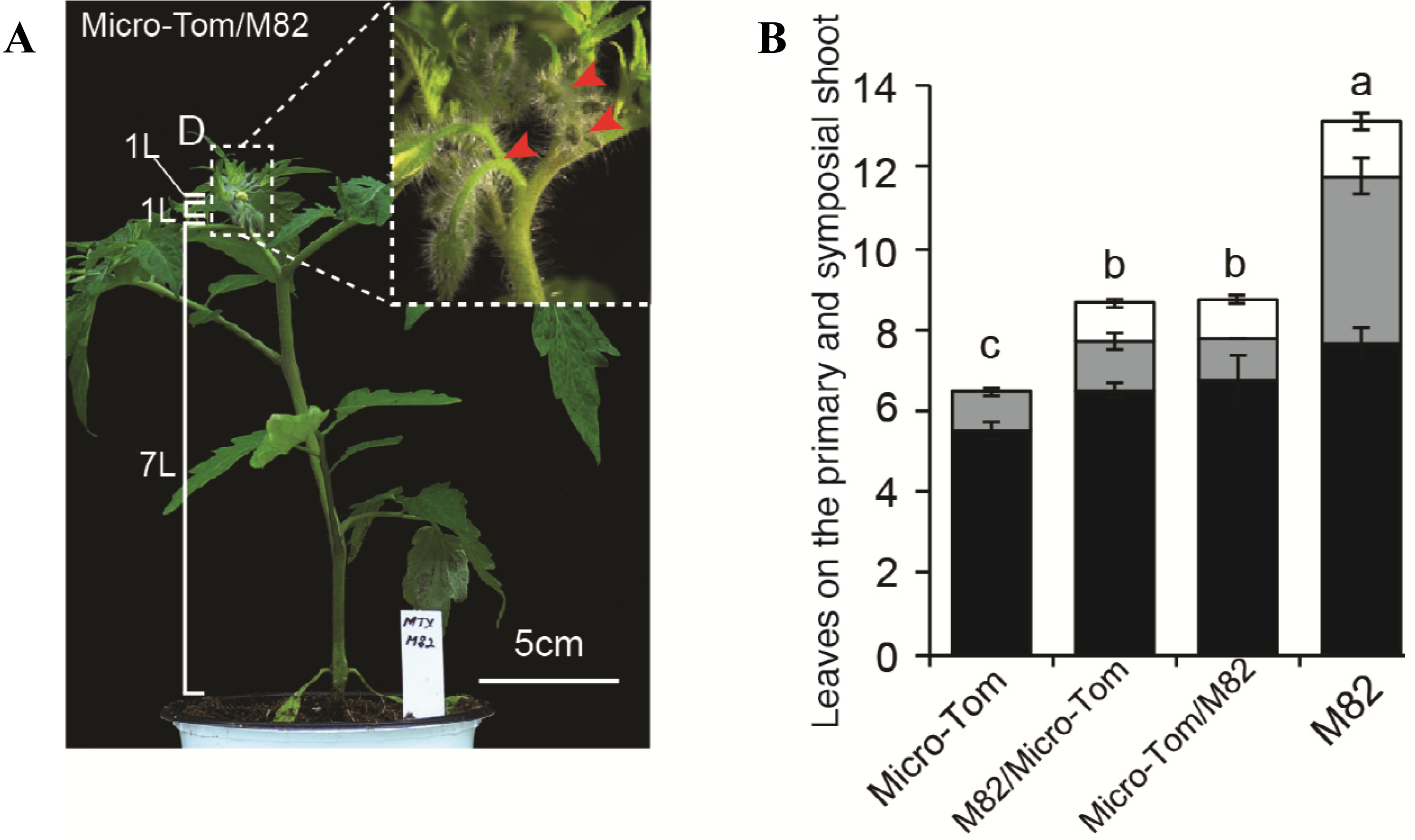
Fig. 3Phenotypic effects of reciprocal hybrids of Micro-Tom and M82 showing additive, overdominant, dominant and underdominant inheritance. (A-C) Quantification and comparison of plant weight (A), 10-fruit weight (B), and total fruit number (C) of Micro-Tom, reciprocal hybrids (M82/Micro-Tom and Micro-Tom/M82), and M82. (D) Representative yields and plants of M82 and M82/Micro-Tom plants. (E and F) Quantification and comparison of total yield (E) and Brix (F) in Micro-Tom, reciprocal hybrids, and M82. Bar graphs show mean values ± s.e. Different letters indicate significant differences between samples according to a one-way ANOVA followed by Tukey’s HSD post-hoc test (P < 0.05).
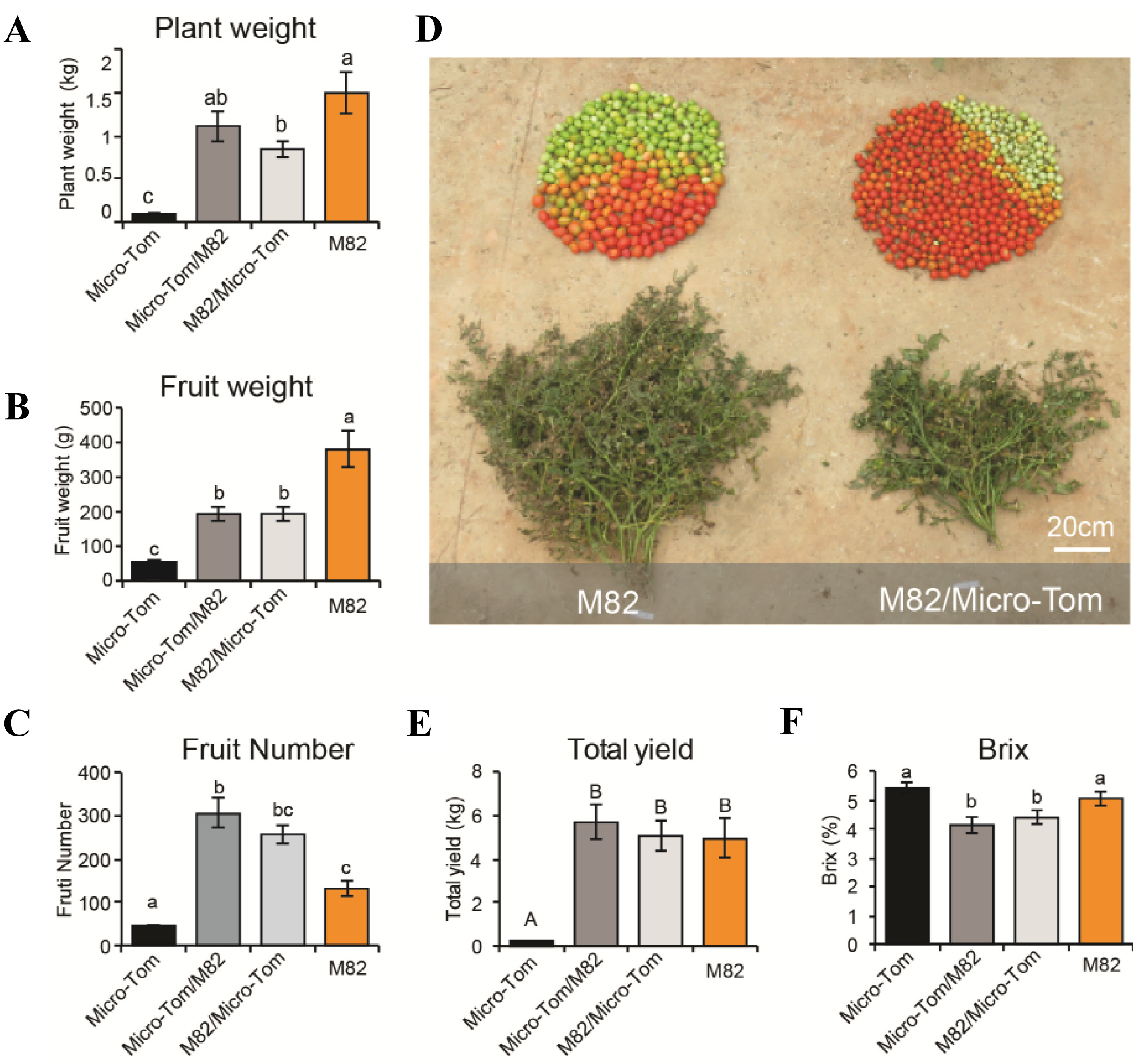
Fig. 4Phenotypic effects of reciprocal hybrids of fh and lp mutants. (A-C) Mature plants of Micro-Tom (A) as wild type control, fh8 as representative of floral homeotic mutants (B), and lp18 as representative large plant mutants (C) with a Micro-Tom background. Inserts indicate inflorescence architectures of Micro-Tom and fh8. The right panel of c shows the plant weight of Micro-Tom and lp18. Scale bar, 2 cm. (D) Yield quantification and comparison of parental cultivars (Micro-Tom and M82, control reciprocal hybrids, and reciprocal fh8/+ hybrids. (E) Representative yield of Micro-Tom/M82 F1and lp18/M82 F1 in the second season screening. (F) Yield quantification of parental cultivars, control reciprocal hybrids, and reciprocal lp18/+ hybrids. Bar graphs show mean values ± s.e. Different letters indicate significant differences between samples according to a one-way ANOVA followed by Tukey’s HSD post-hoc test (P < 0.05).
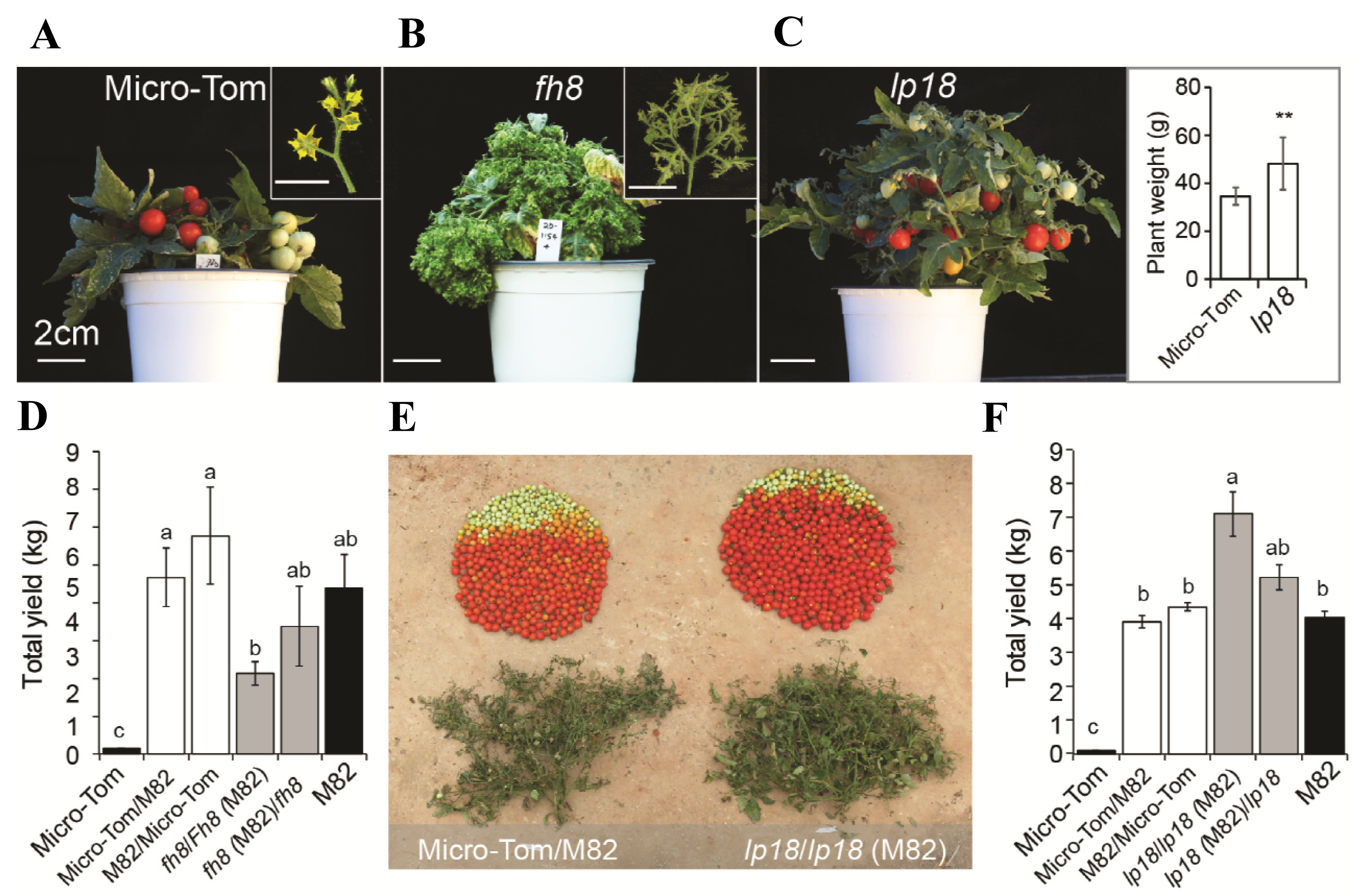
Table 1Yield-related traits, mid-parent heterosis (MPH), and best-parent heterosis (BPH) of wild-type parents and their reciprocal hybrids from two consecutive years.
Table 1
|
Traitz)
|
2018 (1st year) |
2019 (2nd year) |
|
Genotype |
Mean ± SD (n)y)
|
MPH |
BPH |
Mean ± SD (n)y)
|
MPH |
BPH |
|
Flowering time |
Micro-Tom |
5.50 ± 0.67c (12) |
- |
- |
5.67 ± 0.19c (12) |
- |
- |
|
Micro-Tom × M82 |
7.22 ± 0.67b (9) |
‒2% |
‒21% |
7.40 ± 0.30b (5) |
‒5% |
‒25% |
|
M82 × Micro-Tom |
7.50 ± 0.55b (6) |
2% |
‒18% |
7.25 ± 0.24b (8) |
‒6% |
‒26% |
|
M82 |
9.20 ± 0.84a (5) |
- |
- |
9.83 ± 0.27a (6) |
- |
- |
|
Plant weight |
Micro-Tom |
0.03 ± 0.01c (12) |
- |
- |
0.04 ± 0.01c (12) |
- |
- |
|
Micro-Tom × M82 |
0.76 ± 0.36b (9) |
13% |
‒42% |
0.58 ± 0.09b (5) |
10% |
‒43% |
|
M82 × Micro-Tom |
1.04 ± 0.36ab (6) |
55% |
‒21% |
0.80 ± 0.07ab (8) |
53% |
‒21% |
|
M82 |
1.32 ± 0.57a (5) |
- |
- |
1.00 ± 0.08a (6) |
- |
- |
|
Fruit weight |
Micro-Tom |
47.06 ± 8.60c (12) |
- |
- |
n.a. |
n.a. |
n.a. |
|
Micro-Tom × M82 |
187.68 ± 59.51b (9) |
‒10% |
‒49% |
n.a. |
n.a. |
n.a. |
|
M82 × Micro-Tom |
213.45 ± 66.35b (6) |
2% |
‒42% |
n.a. |
n.a. |
n.a. |
|
M82 |
369.58 ± 91.64a (5) |
- |
- |
n.a. |
n.a. |
n.a. |
|
Fruit number |
Micro-Tom |
33.33 ± 16.06b (12) |
- |
- |
n.a. |
n.a. |
n.a. |
|
Micro-Tom × M82 |
241.44 ± 76.24a (9) |
217% |
103% |
n.a. |
n.a. |
n.a. |
|
M82 × Micro-Tom |
258.17 ± 98.87a (6) |
239% |
117% |
n.a. |
n.a. |
n.a. |
|
M82 |
118.80 ± 41.20b (5) |
- |
- |
n.a. |
n.a. |
n.a. |
|
Total yield |
Micro-Tom |
0.14 ± 0.05b (12) |
- |
- |
0.12 ± 0.03c (12) |
- |
- |
|
Micro-Tom × M82 |
4.66 ± 2.28a (9) |
106% |
6% |
2.92 ± 0.41b (5) |
40% |
‒28% |
|
M82 × Micro-Tom |
5.76 ± 3.16a (6) |
154% |
31% |
4.36 ± 0.32a (8) |
109% |
7% |
|
M82 |
4.39 ± 1.98a (5) |
- |
- |
4.06 ± 0.37b (6) |
- |
- |
|
Brix |
Micro-Tom |
4.42 ± 0.40a (12) |
- |
- |
n.a. |
n.a. |
n.a. |
|
Micro-Tom × M82 |
4.53 ± 0.74a (9) |
‒4% |
‒9% |
n.a. |
n.a. |
n.a. |
|
M82 × Micro-Tom |
4.50 ± 0.67a (6) |
‒4% |
‒10% |
n.a. |
n.a. |
n.a. |
|
M82 |
4.98 ± 0.44a (5) |
- |
- |
n.a. |
n.a. |
n.a. |
Table 2Yield-related traits, mid-parent heterosis (MPH), and best-parent heterosis (BPH) of reciprocal hybrids of Micro-Tom mutants and M82 from two consecutive years.
Table 2
|
Traitz)
|
2018 (1st year) |
2019 (2nd year) |
|
Genotype |
Mean ± SD (n)y)
|
MPH |
BPH |
Genotype |
Mean ± SD (n)y)
|
MPH |
BPH |
|
Plant weight |
fh1 × M82 |
0.95 ± 0.86ab (4) |
11% |
‒55% |
fh13 × M82 |
0.54 ± 0.31c (8) |
‒19% |
‒59% |
|
M82 × fh1 |
1.03 ± 0.63ab (4) |
‒4% |
‒52% |
M82 × fh13 |
0.56 ± 0.24c (12) |
‒17% |
‒58% |
|
fh8 × M82 |
0.55 ± 0.25b (5) |
‒48% |
‒74% |
lp18 × M82 |
1.25 ± 0.17ab (3) |
86% |
‒5% |
|
M82 × fh8 |
0.46 ± 0.20b (8) |
‒57% |
‒78% |
M82 × lp18 |
0.62 ± 0.40bc (4) |
‒8% |
‒53% |
|
lp27 × M82 |
1.35 ± 0.75a (5) |
27% |
‒36% |
- |
- |
- |
- |
|
M82 × lp27 |
1.38 ± 0.63a (7) |
29% |
‒35% |
- |
- |
- |
- |
|
Total yield |
fh1 × M82 |
5.72 ± 3.27ab (4) |
96% |
0% |
fh13 × M82 |
3.41 ± 1.51b (8) |
50% |
‒22% |
|
M82 × fh1 |
3.20 ± 1.26b (4) |
10% |
‒44% |
M82 × fh13 |
3.62 ± 1.38b (12) |
60% |
‒18% |
|
fh8 × M82 |
2.56 ± 0.72b (5) |
‒12% |
‒55% |
lp18 × M82 |
7.51 ± 1.22a (3) |
231% |
71% |
|
M82 × fh8 |
3.58 ± 1.10b (5) |
23% |
‒38% |
M82 × lp18 |
5.24 ± 0.74ab (4) |
131% |
19% |
|
lp27 × M82 |
7.30 ± 3.66a (5) |
151% |
27% |
- |
- |
- |
- |
|
M82 × lp27 |
7.01 ± 2.63a (7) |
141% |
22% |
- |
- |
- |
- |
|
Fruit number |
fh1 × M82 |
255.75 ± 177.28ab (4) |
179% |
34% |
fh13 × M82 |
190.13 ± 54.60b (8) |
150% |
60% |
|
M82 × fh1 |
270.50 ± 195.15ab (4) |
195% |
39% |
M82 × fh13 |
194.42 ± 67.79b (12) |
156% |
64% |
|
fh8 × M82 |
123.20 ± 42.04ab (5) |
34% |
‒12% |
lp18 × M82 |
343.00 ± 95.45a (3) |
351% |
189% |
|
M82 × fh8 |
188.00 ± 82.99ab (5) |
105% |
10% |
M82 × lp18 |
291.50 ± 42.35a (12) |
283% |
145% |
|
lp27 × M82 |
389.00 ± 296.82a (5) |
324% |
79% |
- |
- |
- |
- |
|
M82 × lp27 |
371.00 ± 86.65a (7) |
305% |
73% |
- |
- |
- |
- |
|
10 fruit weight |
fh1 × M82 |
178.88 ± 38.77a (4) |
10% |
‒39% |
fh13 × M82 |
176.78 ± 47.54b (8) |
‒15% |
‒52% |
|
M82 × fh1 |
202.64 ± 56.55a (4) |
25% |
‒31% |
M82 × fh13 |
186.44 ± 35.61b (12) |
‒11% |
‒50% |
|
fh8 × M82 |
162.18 ± 25.36a (5) |
0% |
‒45% |
lp18 × M82 |
231.77 ± 74.45b (3) |
11% |
‒37% |
|
M82 × fh8 |
147.61 ± 28.71a (5) |
‒9% |
‒50% |
M82 × lp18 |
181.22 ± 28.29b (12) |
‒13% |
‒51% |
|
lp27 × M82 |
171.64 ± 28.68a (5) |
6% |
‒41% |
- |
- |
- |
- |
|
M82 × lp27 |
184.44 ± 32.04a (7) |
14% |
‒37% |
- |
- |
- |
- |
|
Brix |
fh1 × M82 |
4.58 ± 0.29a (4) |
‒21% |
‒28% |
fh13 × M82 |
4.51 ± 0.77a (12) |
‒4% |
‒9% |
|
M82 × fh1 |
4.08 ± 0.45a (4) |
‒29% |
‒36% |
M82 × fh13 |
4.19 ± 0.38a (12) |
‒11% |
‒16% |
|
fh8 × M82 |
4.78 ± 0.45a (5) |
‒17% |
‒25% |
lp18 × M82 |
4.10 ± 0.70a (3) |
‒13% |
‒18% |
|
M82 × fh8 |
4.74 ± 0.40a (5) |
‒18% |
‒26% |
M82 × lp18 |
4.20 ± 0.44a (12) |
‒11% |
‒16% |
|
lp27 × M82 |
4.80 ± 0.73a (5) |
‒17% |
‒25% |
- |
- |
- |
- |
|
M82 × lp27 |
4.27 ± 0.32a (7) |
‒26% |
‒33% |
- |
- |
- |
- |
References
- Bruce AB. 1910. The Mendelian theory of heredity and the augmentation of vigor. Science. 32(827): 627-628.
- Burgess DJ. 2017. Plant genetics: Branching out for crop improvement. Nat. Rev. Genet.. 18(7): 393
- East EM. 1936. Heterosis. Genetics. 21(4): 375
- Eshed Y. 2014. Florigen and anti-florigen - A systemic mechanism for coordinating growth and termination in flowering plants. Front. Plant Sci.. 5: 465
- Fu D, Xiao M, Hayward A, Jiang G, Zhu L, Zhou Q, et al. 2014. What is crop heterosis: new insights into an old topic. J. Appl. Genet.. 56(1): 1-13.
- Henry Y, Vain P, De Buyser J. 1994. Genetic analysis of in vitro plant tissue culture responses and regeneration ca-pacities. Euphytica. 79(1): 45-58.
- Jiang K, Liberatore KL, Park SJ, Alvarez JP, Lippman ZB. 2013. Tomato Yield Heterosis Is Triggered by a Dosage Sensitivity of the Florigen Pathway That Fine-Tunes Shoot Architecture. PLoS Genetics. 9(12): e1004043
- Jones DF. 1917. Dominance of Linked Factors as a Means of Accounting for Heterosis. Genetics. 2(5): 466
- Kalsy HS, Sharma D. 1972. Study of cytoplasmic effects in reciprocal crosses of divergent varieties of maize (Zea mays L.). Euphytica. 21(3): 527-533.
- Krieger U, Lippman ZB. 2010. The flowering gene SINGLE FLOWER TRUSS drives heterosis for yield in tomato. Nat. Genet. 42(5):pp. 459-463.
- Lewis D. 1955. Gene interaction, environment and hybrid vigour. Proceedings of the Royal Society of London. Series B - Biological Sciences.. 144(915): 178-185.
- Li L, Lu K, Chen Z, Mu T, Hu Z, Li X. 2008. Dominance, overdominance and epistasis condition the heterosis in two heterotic rice hybrids. Genetics. 180(3): 1725-1742.
- Martí E, Gisbert C, Bishop GJ, Dixon MS, García-Martínez JL. 2006. Genetic and physiological characterization of tomato cv. Micro-Tom. J. Exp. Bot.. 57(9): 2037-2047.
- Muhammad A, Yabuno T. 1975. Breeding for Saline-resistant Varieties of Rice : III. Response of F1 Hybrids to Salinity in Reciprocal Crosses between Jhona 349 and Magnolia. Japanese Journal of Breeding. 25(4): 215-220.
- Parant A. 1990. Les perspectives demographiques mondiales. Futuribles. Paris. France.. 141: 49-78.
- Park SJ, Jiang K, Tal L, Vichie Y, Gar O, Zamir D, et al. 2014. Optimization of crop productivity in tomato using in-duced mutations in the florigen pathway. Nat. Genet.. 46(12): 1337-1342.
- Park SJ, Lee YK, Kang MS, Bae JH. 2016. Revisiting Domestication to Revitalize Crop Improvement: The Florigen Revolution. Plant Breed. Biotech.. 4(4): 387-397.
- Rajendran S, Heo J, Kim YJ, Kim DH, Ko K, Lee YK, et al. 2021. Optimization of Tomato Productivity Using Flowering Time Variants. Agronomy. 11(2): 285
- Roudier P, Andersson JCM, Donnelly C, Feyen L, Greuell W, Ludwig F. 2016. Projections of future floods and hydrological droughts in Europe under a +2°C global warming. Clim. Change. 135(2): 341-355.
- Saito T, Ariizumi T, Okabe Y, Asamizu E, Hiwasa-Tanase K, Fukuda N, et al. 2011. TOMATOMA: A novel tomato mutant database distributing micro-tom mutant collec-tions. Plant Cell Physiol.. 52(2): 283-296.
- Semel Y. 2006. Overdominant quantitative trait loci for yield and fitness in tomato. Proc. Natl. Acad. Sci. U.S.A. 103(35):pp. 12981-12986.
- Shikata M, Ezura H. 2016. Micro-tom tomato as an alternative plant model system: Mutant collection and efficient transformation. In Plant Signal Transduction. Humana Press Inc. pp. 47-55..
- Silva GFF, Silva EM, Correa JPO, Vincente MH, Jiang N, Notini MM, et al. 2019. Tomato floral induction and flower development are orchestrated by the interplay between gibberellin and two unrelated microRNA- controlled modules. New Phytol.. 221(3): 1328-1344.
- Smith RJ, Stwalley III RM. 2018. A Scoping Review of Urban Agriculture: Trends, Current Issues, and Future Research. In 2018 ASABE Annual International Meeting. p. 1. American Society of Agricultural and Bio-logical Engineers..
- Soyk S, Lemmon ZH, Oved M, Fisher J, Liberatore KL, Park SJ, et al. 2017. Bypassing Negative Epistasis on Yield in Tomato Imposed by a Domestication Gene. Cell. 169(6): 1142-1155.
- Soyk S, Müller NA, Park SJ, Schmalenbach I, Jiang K, Hayama R, et al. 2017. Variation in the flowering gene SELF PRUNING 5G promotes day-neutrality and early yield in tomato. Nat. Genet.. 49(1): 162-168.
- Soyk S, Lemmon ZH, Sedlazeck FJ, Jiménez-Gómez JM, Alonge M, Hutton SF, et al. 2019. Duplication of a domestication locus neutralized a cryptic variant that caused a breeding barrier in tomato. Nat. Plants. 5(5): 471-479.
- United Nations.2019. World Population Prospects 2019, Department of Economic and Social Affairs. World Population Prospects.
- Watanabe S, Mizoguchi T, Aoki K, Kubo Y, Mori H, Imanishi S, et al. 2007. Ethylmethanesulfonate (EMS) mutagenesis of Solanum lycopersicum cv. Micro-Tom for large-scale mutant screens. Plant Biotechnol.. 24(1): 33-38.
- Xiao J, Li J, Yuan L, Tanksley SD. 1995. Dominance is the major genetic basis of heterosis in rice as revealed by QTL analysis using molecular markers. Genetics. 140(2): 745-754.
- Yu SB, Li JX, Xu CG, Tan YF, Gao YJ, Li XH, et al. 1997. Importance of epistasis as the genetic basis of heterosis in an elite rice hybrid. Proc. Natl. Acad. Sci. U.S.A.. 94(17): 9226-9231.