Abstract
Fragrance is considered one of the most highly valued grain quality traits in rice, yet its genetic basis among Philippine cultivars, especially traditional accessions, is unknown. This study characterized the fragrance gene Betaine aldehyde dehydrogenase isoform 2 (BADH2) in selected Philippine aromatic rice cultivars at the DNA, transcript, and phenotypic level. DNA fragment length analysis showed that eight out of 18 cultivars were positive for badh2.1, an allele responsible for the accumulation of 2-acetyl-1-pyrroline (2AP), the marker compound for fragrance in rice. DNA sequence alignment of nine cultivars confirmed the absence of 8 base pairs (bp) and three single nucleotide polymorphism (SNPs) in exon 7 in Dinorado White, Saigorot, and Salanay, while revealing several other nucleotide variations in other coding regions and immediate upstream region of the gene. The BADH2 gene expression profile showed that aromatic cultivars have varying lower amounts of the BADH2 mRNA than the non-aromatic cultivars. Results in 2AP analysis showed significant discrepancies in 2AP levels among cultivars during wet and dry season, which may be due to some possible factors such as sequence variation in the coding regions of BADH2, affecting gene expression, and environmental factors such as exposure to stress or postharvest processes. Overall, results have shown that aroma production among the Philippine aromatic cultivars was not due to just one genetic mechanism. Further investigation regarding analysis at the protein level, characterization of regulatory mechanisms in gene expression, and finding new genes that may be involved in the production of aroma must be pursued.
-
Key words: Aromatic rice, BADH2, Fragrance gene, Gene expression, 2-acetyl-1-pyrroline
INTRODUCTION
Fragrance is an essential constituent for high-quality rice varieties (
Bhattacharjee et al. 2002). Aromatic rice (
Oryza sativa) comprises a small group of rice cultivars that are considered best in quality (
Singh et al. 2000). They generally cost much higher (
Fitzgerald et al. 2009) as consumers desire them over non-fragrance rice.
The accumulation of 2AP in rice was first suggested to be caused by Maillard reaction, a nonenzymatic reaction of reducing sugars with a-amino acid residues, especially proline during cooking (
Adams and De Kimpe 2006); however, this is only partially true. Gene fine-mapping techniques have shown that rice fragrance is controlled by a single gene in chromosome 8 of the rice genome called betaine aldehyde dehydrogenase 2 gene or
BADH2, which is approximately 7 kilobase pair (kb) and consists of 14 introns and 15 exons (
Sood and Siddiq 1978;
Lorieux et al. 1996;
Jin et al. 2003;
Bradbury et al. 2005;
Chen et al. 2008;
Huang et al. 2008;
Sun et al. 2008). It was found that the lack of fragrance in non-aromatic cultivars is due to the dominant allele. In contrast, the accumulation of 2AP in aromatic cultivars is due to the recessive alleles containing nucleotide polymorphisms and base pair deletion. The gene encodes the enzyme betaine aldehyde dehydrogenase that oxidizesg-aminobutyraldehyde, which exists in equilibrium with Δ1-pyrroline-5-carboxylic acid, a precursor to the synthesis of 2AP (
Yoshihashi et al. 2002;
Chen et al. 2006;
Huang et al. 2008). In the presence of the recessive alleles, the protein function is lost due to premature stop codons or other mutations during protein translation; thus, 2AP accumulates in the vegetative organs of rice (
Chen et al. 2008). So far, there were at least ten
badh2 alleles that have been detected among rice cultivars in Asia (
Kovach et al. 2009), including
badh2.1, which contains 8 bp deletion and 3 SNPs in exon 7, which was identified as the likely cause of fragrance in Jasmine and Basmati style rice (
Bradbury et al. 2005), and
badh2.2 which contains 7 bp deletion in the exon 2 (
Shi et al. 2008).
The most popular cultivars of aromatic rice sold in the international market are Basmati of India and Pakistan and Jasmine of Thailand (
Singh et al. 2000), taking two-thirds of the global market share (
Bairagi et al. 2020). With its increasing demand, a rising gap in the price between fragrant and non-fragrant rice has become more evident since 2014 (
Bairagi et al. 2020).
In Southeast Asia, preferences towards long-slender aromatic grains started in the 1980s (
Unnevehr 1986). Through international influences, the Philippines is considered a major importer of Jasmin and Basmati rice (
Custodio et al. 2016) despite having a large proportion of an ever-increasing number of rice cultivars constituted by traditional aromatic rice. The country has some popular fragrant cultivars, including Azucena, Milagrosa, Malagkit Sungsong, and Dinorado (
de Leon 2005), but their market is incomparable to those of international fragrant rice. This is due to the mainstreaming issues of traditional rice cultivars in the country, which can be further attributed to the scant information on their mechanism of aromaticity.
Characterization of the genetic origins of the aroma in Philippine rice cultivars is essential to identify the specific alleles that control fragrance. This will also help breeders screen fragrance more efficiently using marker-assisted selection (MAS) and ultimately develop more high-quality, aromatic varieties suitable for Philippine climatic conditions.
This study was undertaken to determine the genotypic basis of fragrance in selected Philippine rice cultivars and assess the compound responsible for the fragrance. Specifically, this study aims to: (1) assess the presence of single nucleotide polymorphisms and base pair deletion in selected rice cultivars using DNA analysis; (2) determine the transcript levels of BADH2 from each cultivar using semi-quantitative reverse transcription real-time poly-merase chain reaction (rt-qPCR); and (3) quantify the levels of the fragrance compound, 2-acetyl-1-pyrroline, in each cultivar using gas chromatography.
MATERIALS AND METHODS
Plant materials
A panel of 28 rice cultivars comprised of 8 foreign cultivars, 2 Philippine improved modern type cultivars, and 18 Philippine traditional aromatic cultivars, which are known as aromatic, was used in this study (
Table 1). Nipponbare and IR64 are non-aromatic cultivars that served as negative control for fragrance. In contrast, Khao Dawk Mali 105 is a well-known aromatic cultivar that served as a positive control for fragrance. Dom-sofid, Gaen Magawk, Khao Intok, and IR24 were used as checks to include non-Philippine cultivars in the study, while NSIC Rc 134 (PJ21) and NSIC Rc 146 (PJ7) were used as checks to include non-fragrant but high-quality Japonica-type rice from the Philippines.
The seeds were obtained from PhilRice GeneBank except for five traditional cultivars, namely Burdagol, Mimis, Minerva, Perurutong Magdalena, and Sampaguita, which were acquired from Philippine Rice Research Institute, Los Baños, Laguna. The seeds were grown in the experimental field of PhilRice Central Experiment Station, Maligaya, Science City of Muñoz, Nueva Ecija under irrigated lowland culture.
Survey of nucleotide polymorphisms using PCR and electrophoresis
The leaf tissues were collected in the field at seedling stage (approximately 2-3 weeks old), lyophilized, and ground to a fine powder using Geno/GrinderⒸ Model 2000 (SPEX CertiPrep, Metuchen, NJ). The modified cetyltrimethylammonium bromide (CTAB) method (
Chen et al. 2006) was adopted in DNA extraction. The DNA quality was assessed by loading 3 µL DNA solution added with 3 µL 5% loading dye on 1% agarose gel. The genomic DNA was subjected to PCR amplification to survey length polymorphisms in
BADH2 gene, including the functional nucleotide polymorphisms (FNPs) at exon 7 using oligon-ucleotide primers designed by
Bradbury et al. (2005), and 7 bp deletion at exon 2 using FMbadh2-E2 (
Shi et al. 2008). The total PCR reaction volume was 7.5 µL, containing 1.5 µL 5X Green GoTaq
Ⓡ Flexi Reaction Buffer (Promega Corp., Madison, WI), 0.25 µL 25 mM MgCl2, 0.4 µL 5 mM dNTPs, 0.4 µL of each primer (10 µM), and 0.2 µL 5U/µL
Taq Recombinant DNA polymerase (Vivantis, Inc., Oceanside, CA). The amplifications were performed in Multigene
TM Gradient Thermal Cycler (Labnet International, Inc., Edison, NJ) under the following conditions: (1) initial denaturation at 94℃ for 2 minutes; (2) 35 cycles for run, each followed by denaturation at 94℃ for 45 seconds, annealing at 55℃ for 45 seconds, and extension at 72℃ for 1 minutes; and (3) final extension at 72℃ for 5 minutes.
The PCR products of markers designed by
Bradbury et al. (2005) were separated on 1.5% agarose gel, while PCR products of markers designed by (
Shi et al. 2008) were separated on 8% non-denaturing polyacrylamide gel. Expected product sizes were 580 bp and 250/350 bp for Bradbury markers and 200/207 bp for FMbadh2-E2.
The cultivars Khao Dawk Mali 105, Azucena, Burdagol, Dinorado White, Mimis, Minerva, Saigorot, Salanay, and Sampaguita were selected for DNA sequencing of the
BADH2 gene. A set of nine primer pairs designed by
Shi et al. (2008) was used to amplify the entire length of the gene. The total PCR reaction volume was 60 µL, containing 12 µL 5X Green GoTaq
Ⓡ Flexi Reaction Buffer (Promega Corp., Madison, WI), 2.4 µL 25 mM MgCl2, 2.4 µL 5 mM dNTPs, 4 µL of each primer (10 µM), and 5 µL 5U/µL Max
Taq Recombinant DNA polymerase (Vivantis, Inc., Oceanside, CA). The amplifications were performed in Multigene
TM Gradient Thermal Cycler (Labnet International, Inc., Edison, NJ) under the following conditions: (1) initial denaturation at 94℃ for 2 minutes; (2) 35 cycles running, each followed by denaturation at 94℃ for 45 seconds, annealing at 56℃ for 45 seconds, and extension at 72℃ for 1 minutes; and (3) final extension at 72℃ for 5 minutes. Expected product sizes range from 855 bp to 1,269 bp. The PCR products were purified using QIAquick
Ⓡ Gel Extraction Kit (Qiagen, Valencia, CA) and QIAquick
Ⓡ PCR Purification Kit (Qiagen, Valencia, CA) and submitted to Macrogen, Inc. (Seoul, Korea) for Single-Pass Sequencing on ABI 3730XL (Applied Biosystems, Carlsbad, CA).
The consensus sequence of the forward and reverse amplicons was inferred with BioEdit Sequence Alignment Editor version 7.0.9.0 (
Hall 1999) and queried against the non-redundant nucleotide database of NCBI using Megablast to verify identity. The sequences from the traditional cultivars were aligned with the sequences of Nipponbare and Khao Dawk Mali 105 to find nucleotide polymorphisms in the
BADH2 gene between the cultivars. The distance was estimated by the Maximum Composite Likelihood model.
The leaves of three-week-old seedlings of 22 rice cultivars, including IR64 as non-fragrant control, Khao Dawk Mali 105 as fragrant control, four other negative checks, and 16 traditional cultivars, were collected and immediately immersed in liquid nitrogen to preserve the integrity of the transcriptome during transfer to the laboratory. The samples were ground in a liquid nitrogen-filled mortar, then approximately 0.9 g each was transferred in a pre-cooled 2 mL microcentrifuge tube. The total RNA was extracted from each plant tissue powder using RNeasyⓇ Plant Mini Kit (Qiagen, Valencia, CA). The quantity and purity of RNA were assessed using NanoDropTM 2000 (Thermo Fisher Scientific, Waltham, MA).
An aliquot of the solution containing 100 ng total RNA was used for real-time one-step RT-PCR using Rotor-GeneTM SYBRⓇ Green RT-PCR Kit (Qiagen, Valencia, CA) and Rotor-GeneⓇ 3000 (Corbett Research UK Ltd., Cambridge, UK) thermocycler. The primer pairs used were Badh2-RP Fwd (5’–TTATGGTCTGGCT GGTGCTGT–3’), Badh2-RP_Rev (5’–TGCTTGACGCTT AGGTAGTTGT–3’) and Actin-RP Fwd (5’–GTACAGTG TCTGGATTGGAGGAT–3’), Actin-RP (5’–GGGTCCGA AGAATTAGAAGCA–3’).
Each sample was assayed in triplicate under the following cycling conditions: (1) reverse transcription at 55℃ for 10 minutes; PCR initial activation at 95℃ for 5 minutes; and (2) 40 cycles running, each followed by denaturation at 95℃ for 10 seconds, combined annealing and extension at 60℃ for 20 seconds with simultaneous acquisition of fluorescence signals. The parameters for RT-qPCR analysis, the threshold cycle (CT), and cultivar PCR efficiency (
E = 2 = 100%) were determined using LinRegPCR version 12.10 (Ruijter
et al. 2009). For the negative control, total RNA without reverse transcription was directly used for real-time PCR. With a reference
Actin gene and reference sample IR64, the relative amount of the
BADH2 transcript was calculated using the gene expression’s CT difference (GED) formula (
Schefe et al. 2006).
Test of significance was performed by analysis of variance based on the empirical distribution function using PROC NPAR1WAY in SAS 9.1 (SAS Institute Inc. 2004). This test does not assume that a variable is normally distributed.
Quantification of 2-acetyl-1-pyrroline using gas chromatography
Grains of 20 cultivars were threshed, dried, and dehulled. The resulting brown rice was not subjected to polishing to avoid further loss of volatile components in milled rice. Five grams of milled brown rice was submitted to Grain Quality, Nutrition and Postharvest
Centre, International Rice Research Institute (Los Baños, Laguna, Philippines) for 2-acetyl-1-pyrroline quantification using gas chromatography with protocol adopted from (
Bergman et al. 2000). Flame ionization was the detector used in the separation.
In this study, 0.5 g of coarse-milled rice was dissolved in 1 mL dichloromethane, and the analysis was done in triplicate. The internal control used was 2-acetyl-1-pyrroline extracted from pandan (Pandanus amaryllifolius) leaves, which was previously quantified based on a synthesized 2-acetyl-1-pyrroline. The level of aroma was expressed as the mean microgram 2-acetyl-1-pyrroline per gram coarse-milled rice.
RESULTS
DNA fragment length analysis
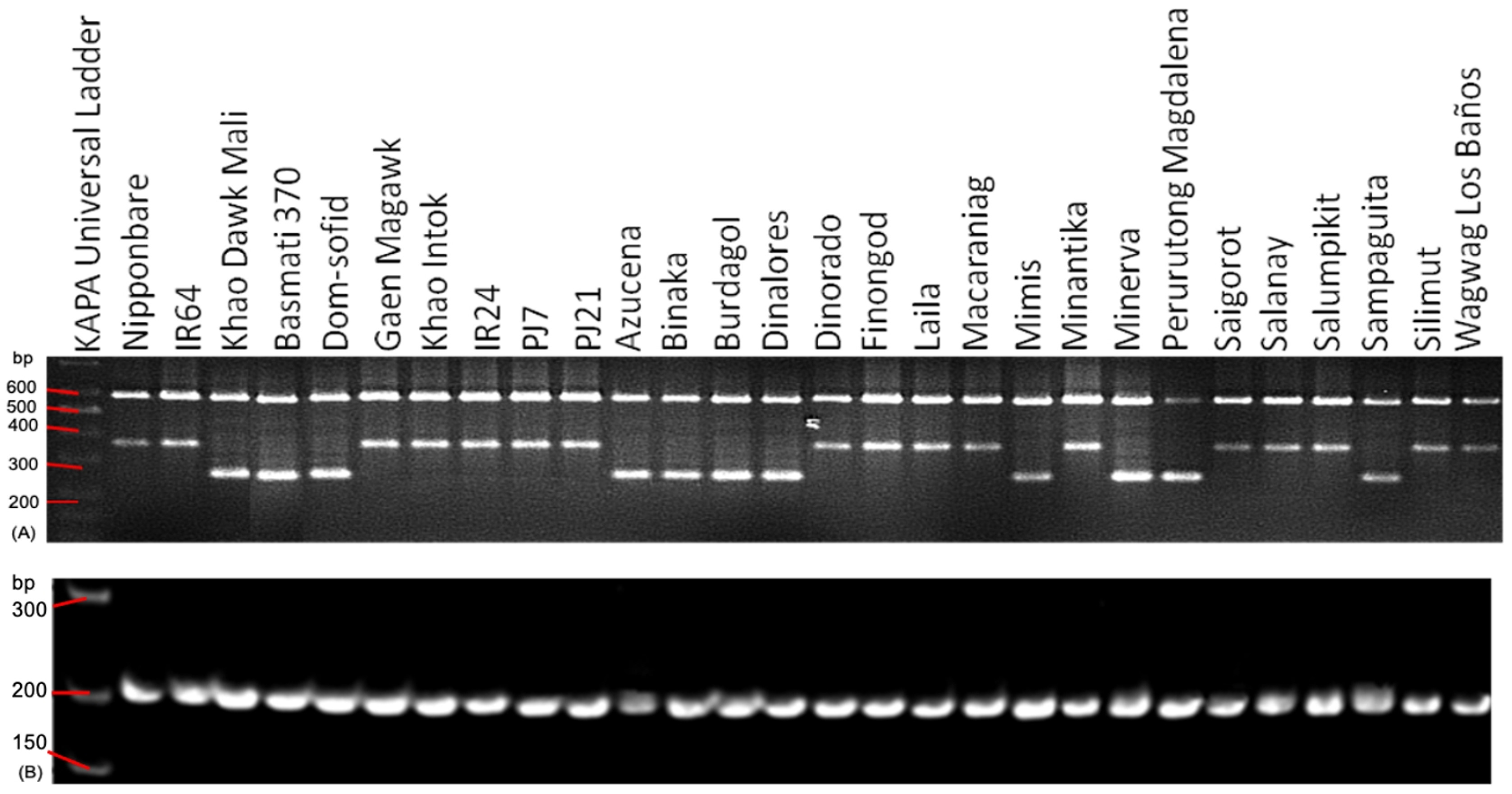
The 28 cultivars were PCR-assayed using single-tube allele-specific markers designed by
Bradbury et al. (2005). There were three bands outcome, as shown in
Fig. 1A. All samples have a common product with a length of approximately 580 bp. Results further showed two varying sizes of amplicons in addition to the common product. Cultivars with an 8 bp deletion and 3 SNPs in exon 7 had a second product of 257 bp in size. With reference to the fragment length sizes of KAPA
TM Universal Ladder (KAPABiosystems, Woburn, MA) in lane 1, the inter-nationally known aromatic varieties (KDML 105 and Basmati 370) produced 257 bp amplicon. Joining them were nine Philippine traditional cultivars (Azucena, Burdagol, Dinalores, Dom-sofid, Mimis, Minerva, Perurutong Magdalena, and Sampaguita). This fragrance allele, however, was absent in Dinorado, Finongod, Laila, Macaraniag, Saigorot, Salanay, Salumpikit, and Wagwag Los Baños, which produced the second band of 355 bp size, a characteristic banding pattern of negative checks (Nipponbare, IR64, PJ7, and PJ21). This result suggests a plausible different genetic mechanism of fragrance for aromatic cultivars producing the same amplicons as non-aromatic checks.
In the PCR assay that employed markers designed by
Shi et al. (2008), all aromatic samples exhibited similar size bands with the non-aromatic checks indicating the absence of allele-specific for exon 2 mutation (
Fig. 1B).
The
BADH2 gene, located in chromosome 8, is approximately 7 kb in length (
Chen et al. 2006), containing 14 introns and 15 exons (
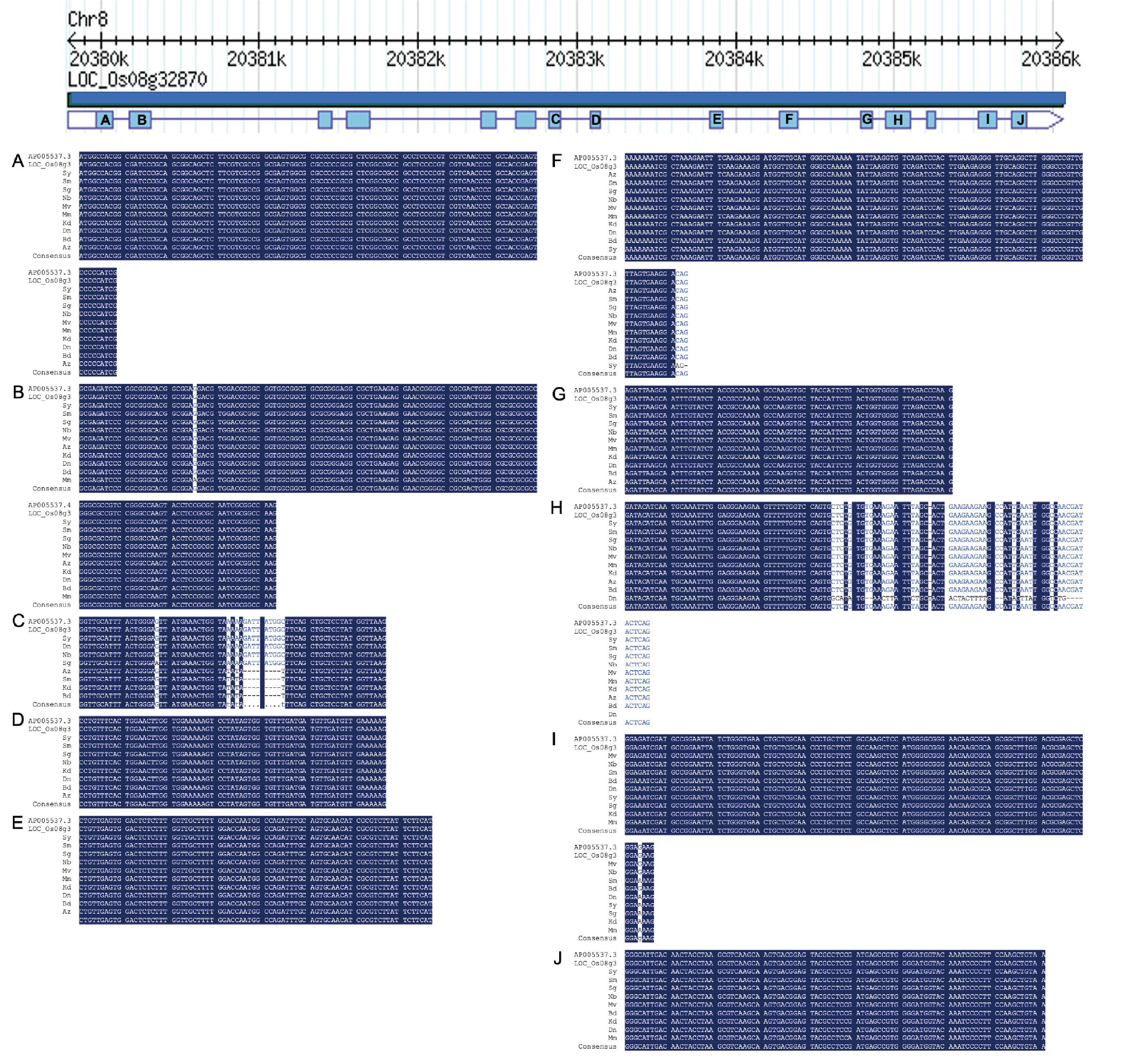
Bradbury et al. 2005). In this study, high-quality DNA sequences of 109 bp long exon 1, 143 bp long exon 2, 67 bp long exon 7, 67 bp long exon 8, 77 bp long exon 9, 114 bp long exon 10, 70 bp long exon 11, 105 bp long exon 12, 107 bp long exon 14, and 91 bp long exon 15 of selected cultivars were analyzed. The multiple sequence alignment analysis (
Fig. 2) revealed two haplotype patterns based on the 3 SNPs and 8 bp deletion in exon 7. The sequence resolution of selected cultivars Azucena, Burdagol, and Sampaguita confirmed the presence of
badh2.1 allele as mutations (8 indel and 3 SNPs) at the same site as that in KDML 105 were detected. This validates the similarity of mechanism for aroma among these cultivars to international check KDML 105. Interestingly, Saigorot showed a single mutation (G→A) in exon 7, which is different from the
badh2.1. Apart from exon 7, several other mutations were observed in other exons. In exon 14, another 2 haplotypes were inferred wherein Sampaguita, Dinorado White, Salanay, Saigorot, KDML 105, and Mimis carried a single mutation (G→A). In exon 2, all cultivars had a similar sequence except for Mimis, which contained one SNP (GAG→GAA). The same case was noted both in exon 10, wherein Salanay showed two SNPs and one indel, and in exon 12, where Dinorado white contained 24 SNPs and 15 indels. Perfect sequence homology was observed in exons 1, 8, 9, 11, and 15.
The presence of multiple variations in addition to 8 bp indel and 3 SNPs in exon 7 may have caused significant variation of
BADH2 transcript and 2AP level among this group. Interestingly, the variation patterns identified above except the 3 SNPs and 8 bp deletion in exon 7 were different from the previously reported variations, such as the
badh2.2 allele consisting of 7 bp deletion in exon 2 (
Shi et al. 2008) and the 803 bp deletion between exons 4 and 5 (
Shao et al. 2011). This could be evidence of different defective
BADH2 gene alleles.
Examination of
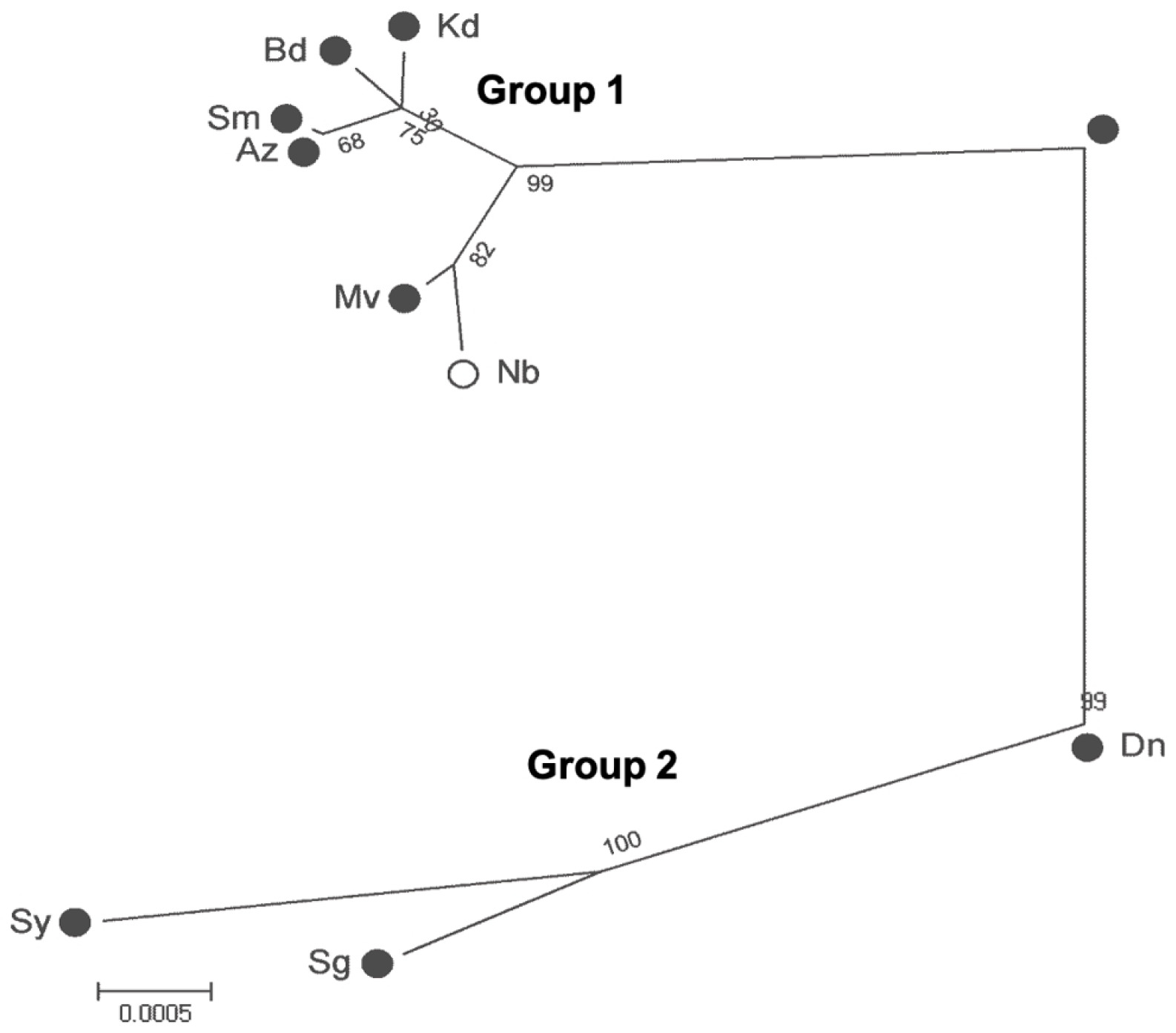
BADH2 sequence for non-fragrance aromatic groups is important to uncover other plausible genetic mechanisms for aroma. In Dinorado White, polymorphism was detected in exons 12 and 14. However, several other mutations were found in the upstream region, including the 5 SNPs and 21 bp deletion shared with Salanay and Saigorot (data not shown). This unique haplotype pattern corroborates with the formation of a non-fragrance group in the phylogenetic tree (
Fig. 3). Despite the absence of
badh2.1, yet significantly low
BADH2 transcript yield was observed among this group. This result supported the assumption that this region containing multiple mutations could be part of a regulatory mechanism controlling gene expression.
To determine the relationship of the nine cultivars, estimates of evolutionary divergence (
Table 2) were com-puted, and a phylogenetic tree (
Fig. 3) was constructed. Distances (d) (number of substitutions per site) based on Maximum Composite Likelihood model are shown below the diagonal, while standard error estimates are shown above the diagonal. Azucena and Sampaguita were found to be very related (value = 0). In contrast, the highest number of polymorphisms was found between Azucena and Salanay (d = 0.0118) and Minerva and Salanay (d = 0.016), implying a more divergent relationship. On average, both Dinorado White and Mimis showed the least evolutionary distance (0.0026) to the group, while Salanay projected the most distant relationship (0.0083) to the group. The tree illustrated that the nine cultivars essentially fell into two groups: six aromatic cultivars with the exon 7 deletion and SNPs and three aromatic cultivars that do not have this mutation. Furthermore, it demonstrated that members of group 1 have a closer relationship than members of group 2. The first group contains the 8 bp deletion starting at position 4230 (
Fig. 2B) flanked by 3 SNPs at 4226, 4228, and 4238 positions, all part of exon 7.
Chen et al. (2008) reported that this mutation leads to loss of function of the
BADH2 most by introducing a premature stop codon or frameshift mutation during translation of the protein.
On the other hand, the second group comprised of Sailanay, Saigorot, and Dinorado White carried a common several base pair long InDels in the immediate upstream region and a common SNP in exon 14, in addition to the unique mutations in several exons, namely a single SNP in the BADH2 exon 7 of Saigorot, 2 SNPs and 1 deletion in exon 10 of Salanay, and 24 SNPs, 14 deletions, and 1 insert in exon 12 of Dinorado White, which could be all part of a regulatory mechanism that controls gene expression. This mutation is shared among group members, suggesting that this allele is identical by descent.
The full-length sequence of the gene of nine cultivars failed to show the 7 bp deletion (badh2.2) in exon 2.
BADH2 gene expression profiling
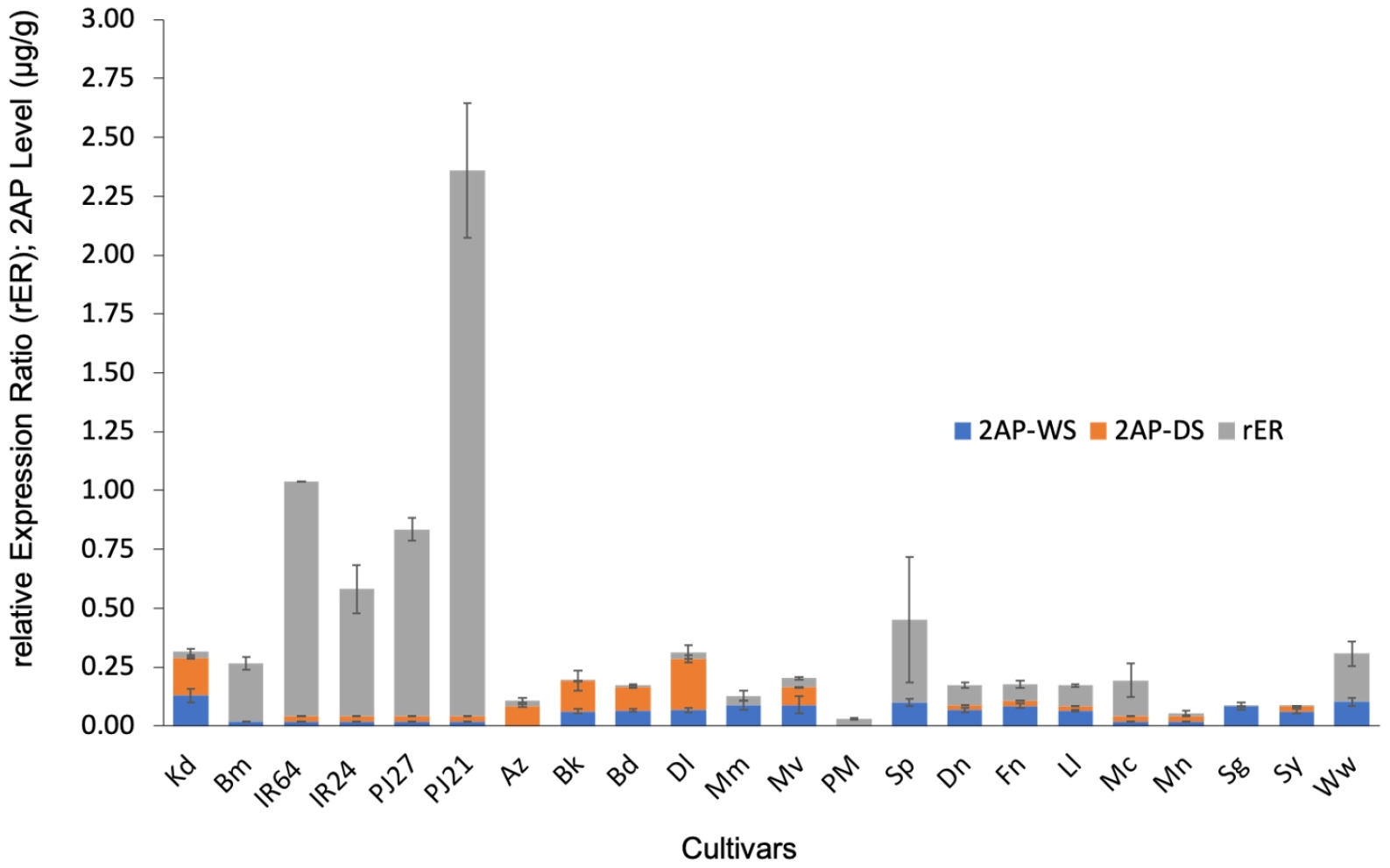
It was found that the gene expression levels were significantly varied in the semiquantitative RT-qPCR analysis using IR64 as the reference sample and
Actin as the reference gene (
Fig. 4). The mean PCR efficiency was 1.290. The lowest rER value (9.441 ± 4.953 × 10
−5) was obtained by Salanay, while the highest rER value (2.321 ± 0.286) was obtained by NSIC Rc134 (PJ21). The relatively abundant levels of
BADH2 transcripts obtained (
Fig. 4) were from the non-fragrant cultivars, namely, IR64, IR24, NSIC Rc146, and NSIC Rc134, whereas significantly lower levels of the transcript were detected in most fragrant cultivars.
To infer the pattern of
BADH2 transcripts profile between
badh2.1 and
non-
badh2.1 allele-containing aromatic cultivar, two groups were formed based on the genotype data. The first group, denoted as fragrance, is comprised of
badh2.1 allele-carrying cultivars (Azucena, Binaka, Burdagol, Dinalores, Mimis, Minerva, Perurutong Magdalena, and Sampaguita) while the second group, denoted as non-fragrance aromatic, is composed of
badh2.1 allele-negative cultivars (Dinorado White, Finongod, Laila, Macaraniag, Minantika, Saigorot, Salanay, and Wagwag Los Baños). Results showed that both groups obtained a comparable amount of copy DNA (cDNA) of the
BADH2 gene. Despite the absence of
badh2.1, the non-fragrance aromatic group produced relatively low
BADH2 transcripts comparable to fragrance group. Interestingly, results in the gene sequence of three members of this group (Dinorado White, Salanay, Saigorot), as discussed above, revealed mutations in exons 7, 10, and 14. This could be evidence of another defective allele of a gene, apart from those identified by (
Bradbury et al. 2005), encoding
BADH2.
By quantifying the transcript level, it was found that aromatic cultivars have low amounts of the
BADH2 mRNA, which indicates the loss of function of the gene due to the polymorphisms and nucleotide deletions found in the 5' untranslated region (UTR) and the coding regions of the gene. Transcription initiation in eukaryotic cells requires the presence of gene regulatory proteins and transcriptional activator proteins. These proteins bind to a specific region consisting of appropriate nucleotide sequences, sometimes located at a distance of several base-pairs long in the upstream region of the gene to help position the RNA polymerase correctly at the promoter region. Changes in the DNA sequence based on the non-parametric analysis of variance showed that the variation in relative expression ratio (rER) among cultivars was highly significant (
Table 3). The p-value of the F statistic was less than 0.01.
The levels of 2-acetyl-1-pyrroline (2-AP) among cultivars evaluated in the field over dry and wet seasons were determined using gas chromatography. Data showed that 2-AP content varied significantly among cultivars, although there was no 2-AP detected in some cultivars (
Fig. 4). The possible reason is that the level was too low and beyond the minimum detectable level (0.02 ppm) of the flame ionization detector used in the Grain Quality, Nutrition, and Postharvest Center at IRRI.
Kovach et al. (2009) and
Fitzgerald et al. (2008) reported the levels of non-aromatic rice such as IR64 to be <0.05 ppm as well using the same equipment. This could be true for other non-aromatic rice included in the aroma analysis, specifically PJ7, PJ21, and IR24.
However, the 2AP level between fragrance and non-fragrance aromatic group across two seasons revealed discrepant figures (
Fig. 4). In fragrance group, an average increase of 0.035 µg/g was observed in dry season (DS), whereas in non-fragrance group, the 2AP level declined from 0.0635 µg/g during wet season (WS) to 0.02 µg/g, the minimum detectable amount, in dry season (DS). Environmental and climatic conditions have been found to influence the 2AP level in rice grains (
Mo et al. 2015).
Yoshihashi et al. (2002) reported that proline is a precursor of 2AP in rice, and gamma-aminobutyric acid (GABA) is the direct precursor to 2AP accumulation via
BADH2. Proline plays an important role in plant stress tolerance (
Szabados and Savouré 2010); furthermore, GABA accumulation has been noted in response to biotic and abiotic stress (
Bouché and Fromm 2004). This implies overlapping pathways were involved in the accumulation of 2AP and stress response (
Mo et al. 2015). The 2AP level variations in non-fragrance group in two seasons may have been complicated by the dry and wet season conditions.
DISCUSSION
The loss of function of the enzyme in aromatic cultivars is due to the nucleotide deletions and polymorphisms usually found in the exons of the gene. The first recessive allele reported was
badh2.1, which consists of eight base-pair deletions and three single nucleotide poly-morphisms in the exon 7, which are collectively called functional nucleotide polymorphisms or FNPs (
Bradbury et al. 2005).
Shi et al. (2008) later discovered the
badh2.2 allele, which consists of seven base-pair deletion in exon 2 detected in some aromatic cultivars from China, while
Kovach et al. (2009) reported eight more additional mutations in the
badh2 gene that were detected in 26 aromatic rice cultivars from different parts of Asia.
Shao et al. (2011) discovered a
badh2 allele containing 803 base-pair deletions between exons 4 and 5 detected in aromatic cultivars from China. Comparing the transcript levels among the dominant and recessive alleles, it was found that recessive alleles produce relatively much lower levels of transcript than dominant alleles produce (
Chen et al. 2008).
In this study, the aroma gene (BADH2) of traditional rice cultivars from the Philippines was characterized at the DNA, transcript, and phenotypic levels. It can be concluded that the aroma in Philippine rice varieties is not just due to one genetic mechanism. Cultivars, namely Azucena, Binaka, Burdagol, Dinalores, Mimis, Minerva, Perurutong Magdalena, and Sampaguita were confirmed to carry the badh2.1 allele similar to the international fragrance rice check Khao Dawk Mali through DNA analysis. Although this allele is absent in Dinorado White, Salanay, and Saigorot, SNPs and InDels were found in other coding regions. BADH2 mutations that are unique in each of these aromatic cultivars include the single SNP (G→A) in exon 7 in Saigorot, 2 SNPs, and 1 InDel in exon 10 in Salanay, and the 24 SNPs and 15 InDels in Dinorado White. Interestingly, despite the absence of badh2.1 allele in these non-fragrance aromatic group, the BADH2 mRNA and the 2AP level during wet cropping season are comparable to the badh2.1 allele-containing aromatic group suggesting that the mutations observed other than the 8 SNPs and 3 deletions in exon 7 could be evidence of different defective BADH2 allele.
Aroma biosynthesis is a gene-controlled complex phenomenon, but external conditions, including climate and cultivation practices, can also regulate the aroma trait in fragrant rice (
Deng et al. 2018). The 2-AP biosynthesis involves three steps which start with glutamate, proline, and ornithine, respectively being converted to P5C by activities of P5Cs, proline dehydrogenase (PDH), and OAT followed by reaction of P5C with methylglyoxal to convert 1-pyrroline, and eventually to 2-AP (
Wakte et al. 2011;
Wakte et al. 2017;
Du et al. 2019). Interestingly, the current study provides varying 2-AP levels of aromatic rice cultivars during dry and wet seasons. Previously, it was reported that water-nitrogen dynamics and moderate soil drying or mild drought conditions substantially affected the 2-AP level in aromatic rice (
Ren et al. 2017;
Deng et al. 2018). Moreover, it has been mentioned that grain filling is a crucial stage for yield and eating quality in fragrant rice, such that alternate drying and wetting during this stage increased the brown rice 2-AP in fragrant rice (Tian 2014). Hence, aside from the sequence variation in the coding regions of
BADH2, the differences in the 2-AP levels of aromatic rice grown in two seasons could also be attributed to environmental conditions such as temperature and exposure to stress.
The mechanism of the aromatic trait of the three cultivars sequenced, Dinorado, Saigorot, and Salanay, but not having the 8-bp deletion in exon 7 of BADH2 gene, is still unknown. Therefore, other objectives that were outside the scope of this study, such as analysis at the protein level, characterization of regulatory mechanisms involved in the production of aroma, finding new genes that may involve in the metabolism of 2-AP via reverse genetics approach, among others should be explored.
ACKNOWLEDGEMENTS
This work was supported by a grant from Philippine Rice Research Institute.
Fig. 1PCR banding pattern of 28 cultivars using markers designed by (A) (
Bradbury et al.. 2005) and (B) (
Shi et al. 2008). In (A), all samples have a common product with a length of approximately 580 bp. Cultivars with an 8-bp deletion and 3 SNPs in exon 7 had a second product of 257 bp in size, whereas cultivars without the deletion and SNP in exon 7 had a second product of 355 bp in size. However, in (B), the 7-bp deletion in exon 2 (badh2.2) was not detected as all cultivars showed bands that are similar to the negative checks.
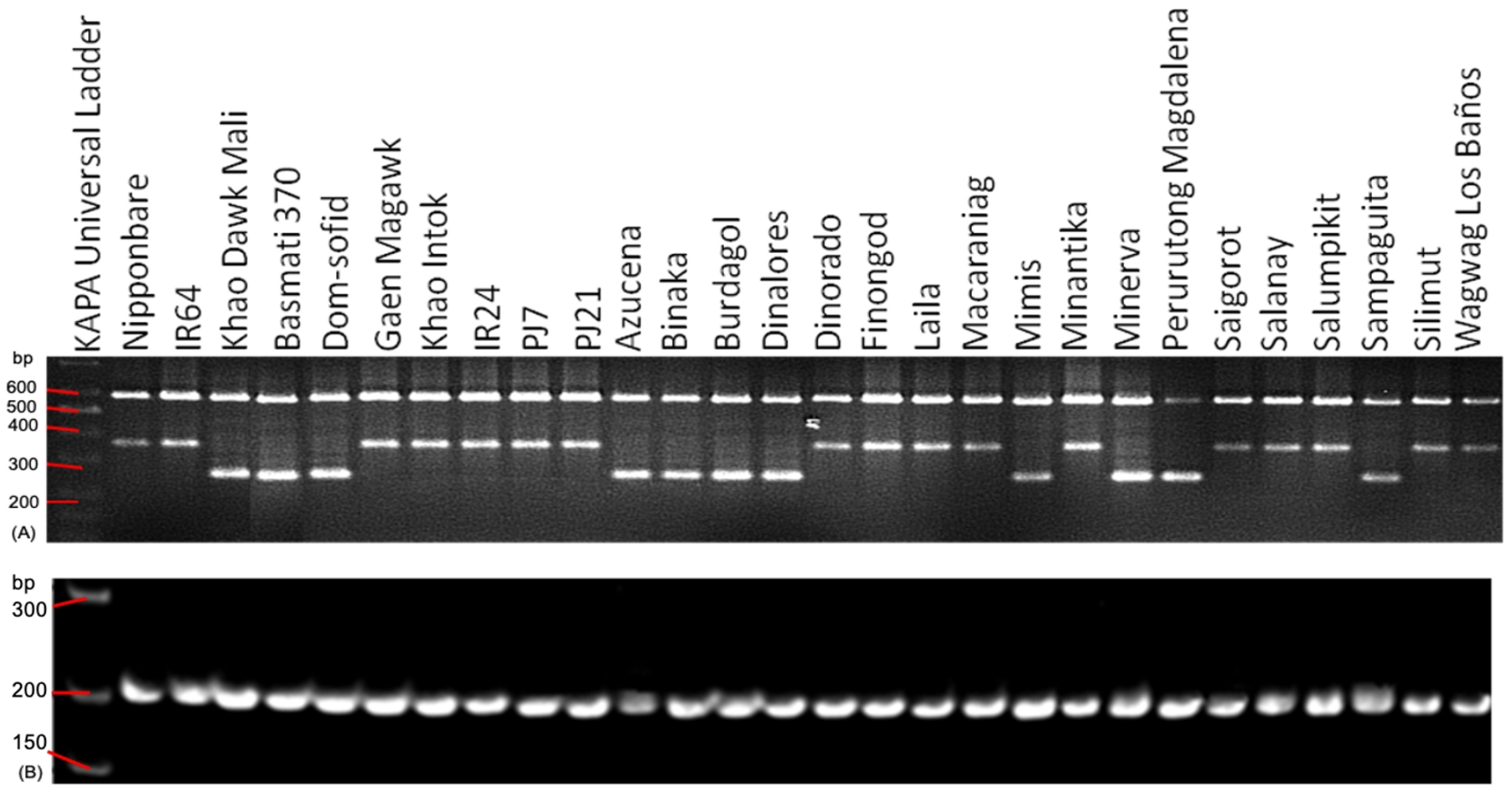
Fig. 2Multiple sequence alignment of BADH2 gene exons 1, 2, 7, 8, 9, 10, 11, 12, 14, and 15 in selected cultivars revealing some SNPs and deletions. The sequences were aligned with BAC clone AP005537.3 and LOC_Os08g 32870. (A) 109-bp long exon 1 of BADH2 gene; (B) 143-bp long exon 2; (C) 67-bp long exon 7 revealing badh2.1 allele showing the mutations at position 4230-4237 flanked by 3 SNPs at position 4226, 4228, and 4238 in Azucena, Burdagol, KDML 105, and Sampaguita; (D) 67-bp long exon 8; (E) 77-bp long exon 9; (F) 114-bp long exon 10; (G) 70-bp long exon 11; (H) 105-bp long exon 12; (I) 107-bp long exon 14; and 91-bp long exon 15.
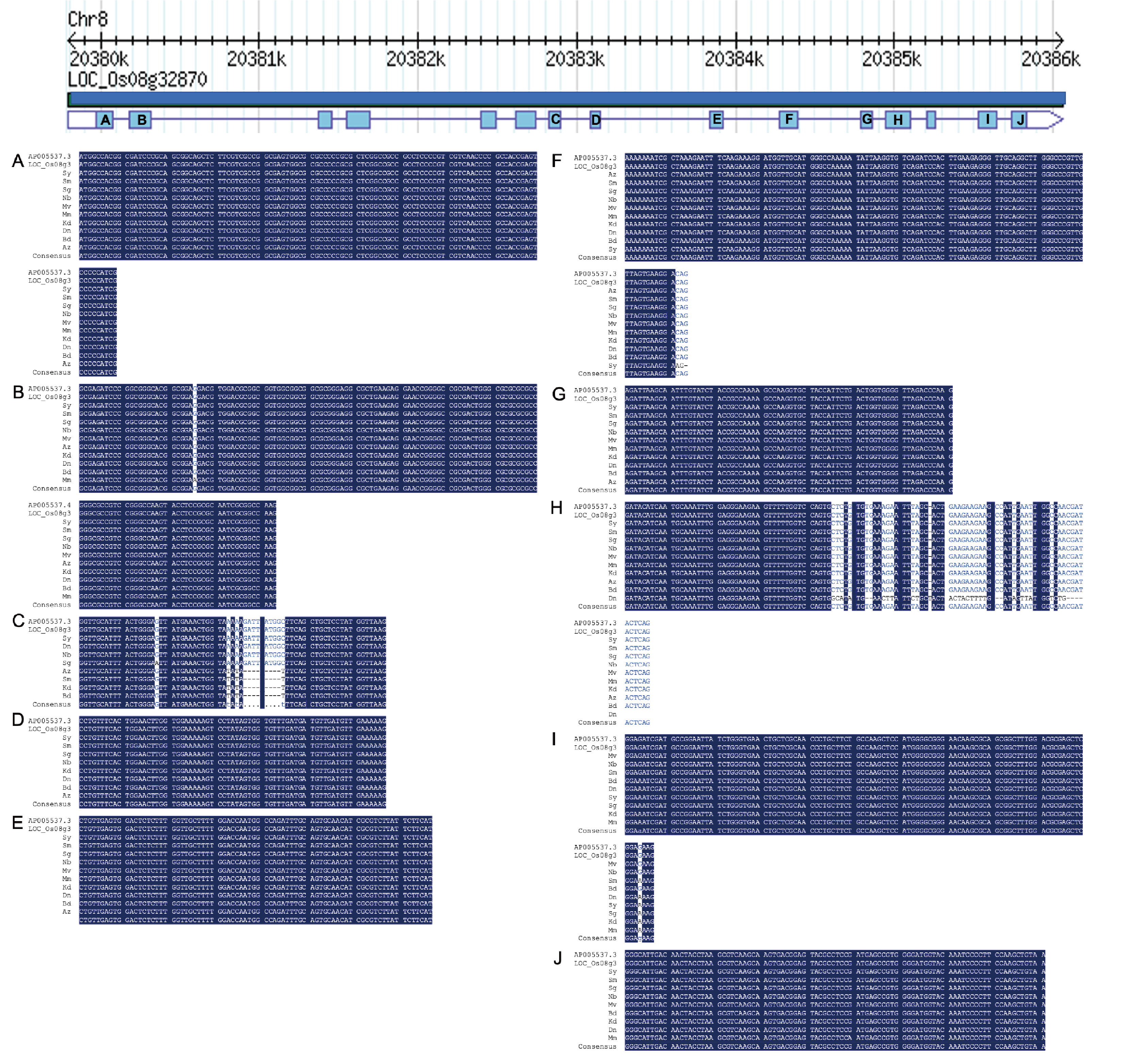
Fig. 3An unrooted neighbor-joining tree showing the relationships of nine cultivars sequenced at the BADH2 region and Nipponbare. Taxa with shaded circles are aromatic (based on prior information), taxon with open circle (Nipponbare) is non-aromatic.
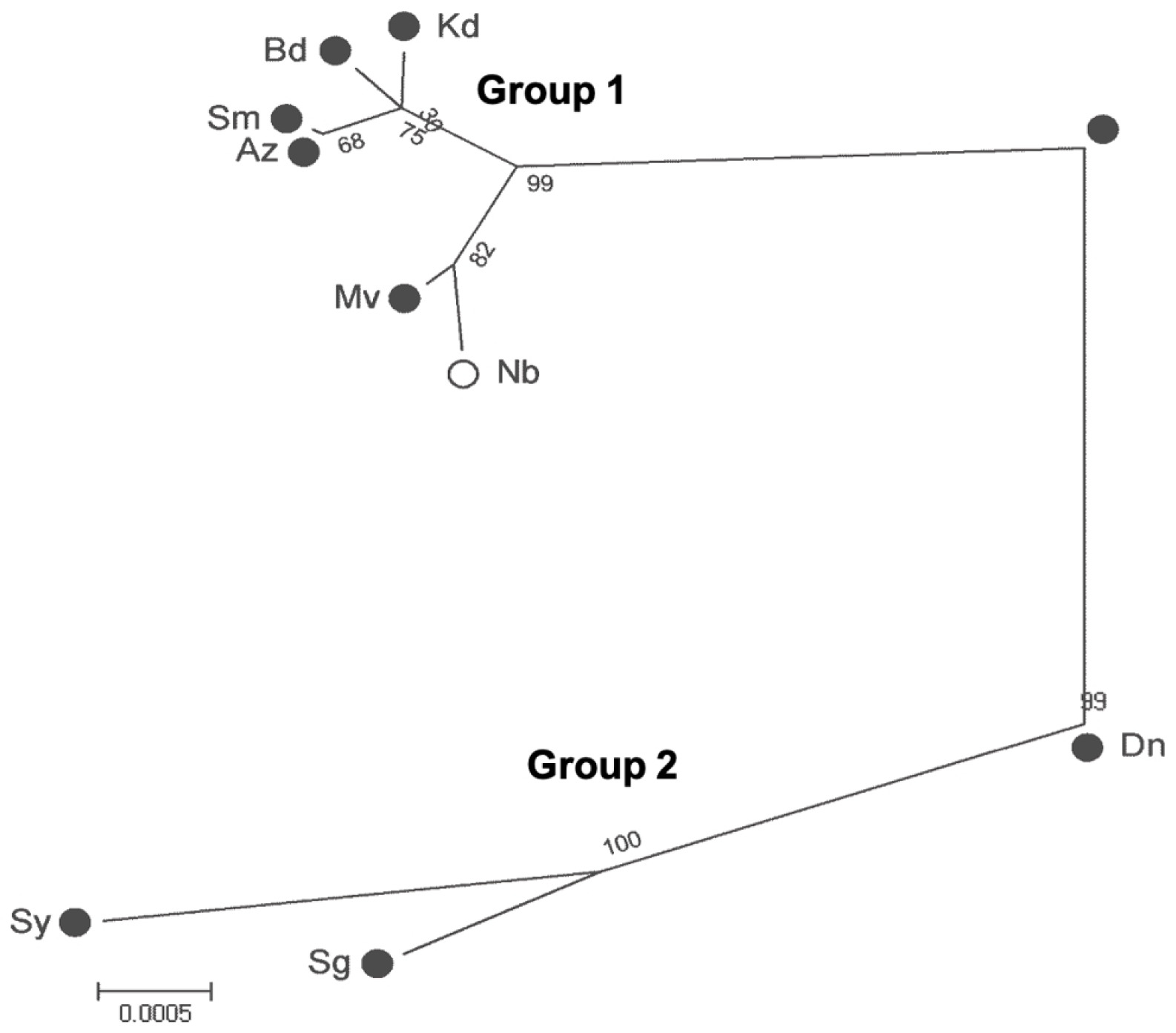
Fig. 4The relative transcript abundance expressed as relative expression ratio (rER) using RT-qPCR (gray bar) and the 2-acetyl-1-pyrroline (2AP) levels in 22 cultivars cultivated during wet season (blue bars) and dry season (orange bars). Error bars represent the standard deviation determined from three replicates.
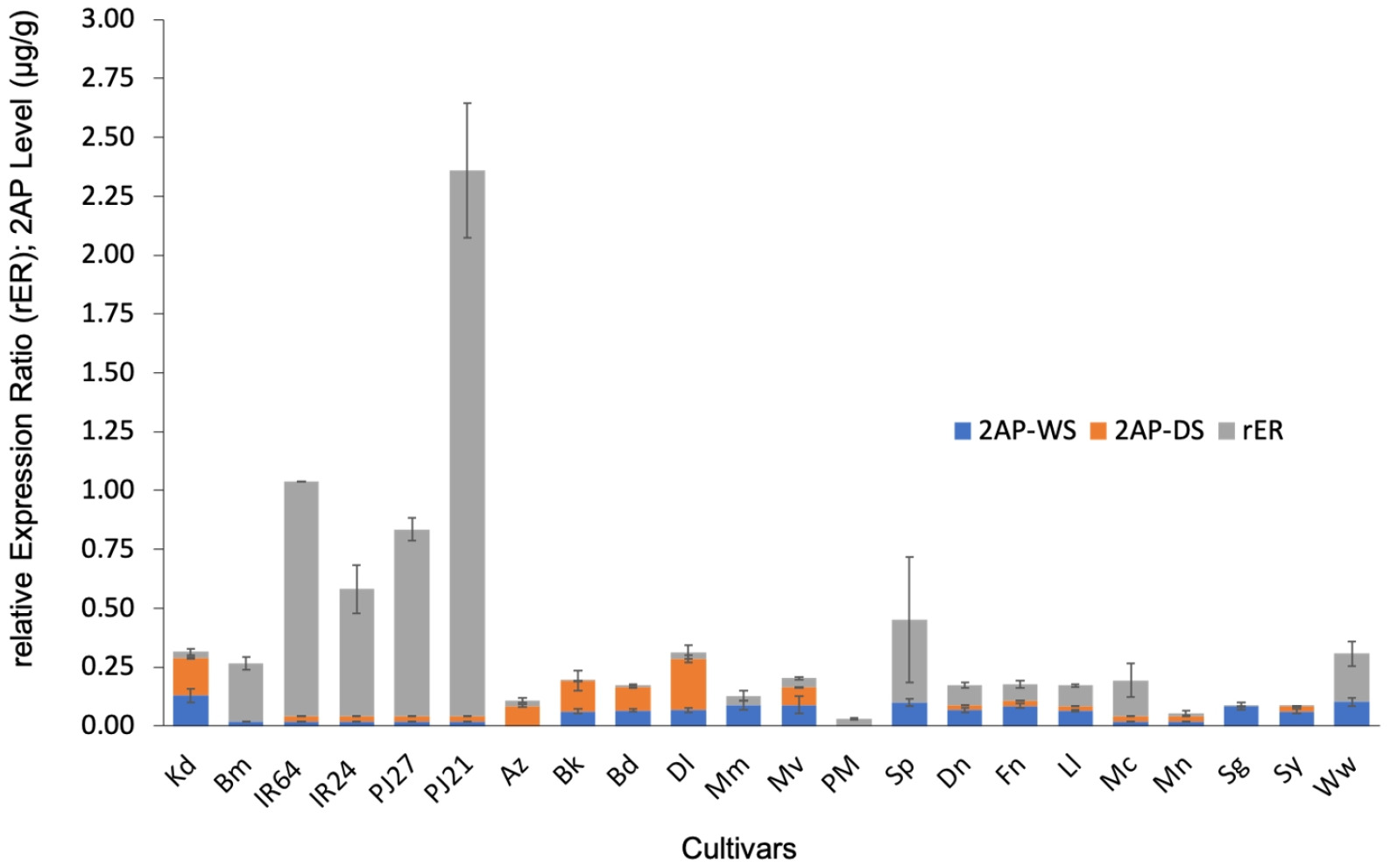
Table 1List of the rice cultivars used in this study and their corresponding attributes.
Table 1
|
Cultivar |
Origin |
Attributes |
IRGC accession number |
|
Nipponbare (Nb) |
Japan |
Nonaromatic, negative control |
IRGC 117274 |
|
IR64 |
IRRI |
Nonaromatic, negative control |
IRGC 66970 |
|
Khao Dawk Mali 105 (Kd) |
Thailand |
Aromatic, positive control |
IRGC 27748 |
|
Basmati 370 (Bm) |
India and Pakistan |
Aromatic |
IRGC 4895 |
|
Dom-sofid (Ds) |
Iran |
Aromatic |
IRGC 12880 |
|
Gaen Magawk (Gm) |
Vietnam |
Aromatic |
IRGC 7269 |
|
Khao Intok (Ki) |
Thailand |
Aromatic |
IRGC 12951 |
|
IR24 |
IRRI |
Nonaromatic |
|
|
NSIC Rc134 (PJ21) |
PhilRice-JICA |
Nonaromatic |
|
|
NSIC Rc146 (PJ7) |
PhilRice-JICA |
Nonaromatic |
|
|
Azucena (Az) |
Philippines |
Aromatic, traditional |
IRGC 328 |
|
Binaka (Bk) |
Philippines |
Aromatic, traditional |
|
|
Burdagol (Bd) |
Philippines |
Aromatic, traditional |
|
|
Dinalores (Dl) |
Philippines |
Aromatic, traditional |
|
|
Dinorado (Dn) |
Philippines |
Aromatic, traditional |
|
|
Finongod (Fn) |
Philippines |
Aromatic, traditional |
|
|
Laila (Ll) |
Philippines |
Aromatic, traditional |
IRGC 34359 |
|
Macaraniag (Mc) |
Philippines |
Aromatic, traditional |
IRGC 44570 |
|
Mimis (Mm) |
Philippines |
Aromatic, traditional |
|
|
Minantika (Mn) |
Philippines |
Aromatic, traditional |
|
|
Minerva (Mv) |
Philippines |
Aromatic, traditional |
|
|
Perurutong Magdalena (PM) |
Philippines |
Aromatic, traditional |
|
|
Saigorot (Sg) |
Philippines |
Aromatic, traditional |
IRGC 44727 |
|
Salanay (Sy) |
Philippines |
Aromatic, traditional |
|
|
Salumpikit (Sl) |
Philippines |
Aromatic, traditional |
|
|
Sampaguita (Sp) |
Philippines |
Aromatic, traditional |
|
|
Silimut (St) |
Philippines |
Aromatic, traditional |
IRGC 43621 |
|
Wagwag Los Baños (Ww) |
Philippines |
Aromatic, traditional |
IRGC 44803 |
Table 2The estimates of evolutionary divergence between BADH2 gene sequences of selected cultivars. Distances (d) (number of substitutions per site) based on Maximum Composite Likelihood model are shown below the diagonal, while standard error estimate(s) are shown above the diagonal. The average divergence value of a cultivar to the rest of the group is also indicated.
Table 2
|
Nb |
Az |
Bd |
Kd |
Mm |
Mv |
Sm |
Dn |
Sg |
Sy |
Ave (d) |
|
Nb |
|
0.0007 |
0.0008 |
0.0007 |
0.0008 |
0.0004 |
0.0008 |
0.0007 |
0.0013 |
0.0016 |
0.0038 |
|
Az |
0.0018 |
|
0.0002 |
0.0002 |
0.0007 |
0.0005 |
0.0000 |
0.0009 |
0.0016 |
0.0017 |
0.0034 |
|
Bd |
0.0021 |
0.0002 |
|
0.0003 |
0.0006 |
0.0006 |
0.0003 |
0.0009 |
0.0013 |
0.0016 |
0.0034 |
|
Kd |
0.0023 |
0.0002 |
0.0005 |
|
0.0005 |
0.0007 |
0.0004 |
0.0009 |
0.0012 |
0.0015 |
0.0033 |
|
Mm |
0.0027 |
0.0015 |
0.0023 |
0.0016 |
|
0.0009 |
0.0009 |
0.0008 |
0.0007 |
0.0009 |
0.0026 |
|
Mv |
0.0006 |
0.0011 |
0.0010 |
0.0017 |
0.0026 |
|
0.0005 |
0.0008 |
0.0016 |
0.0019 |
0.0036 |
|
Sm |
0.0022 |
0.0000 |
0.0007 |
0.0009 |
0.0024 |
0.0013 |
|
0.0008 |
0.0014 |
0.0014 |
0.0035 |
|
Dn |
0.0026 |
0.0032 |
0.0034 |
0.0035 |
0.0029 |
0.0021 |
0.0034 |
|
0.0005 |
0.0006 |
0.0026 |
|
Sg |
0.0091 |
0.0106 |
0.0092 |
0.0090 |
0.0031 |
0.0101 |
0.0095 |
0.0010 |
|
0.0009 |
0.0072 |
|
Sy |
0.0106 |
0.0118 |
0.0107 |
0.0104 |
0.0040 |
0.0116 |
0.0108 |
0.0017 |
0.0032 |
|
0.0083 |
Table 3Analysis of variance for rER based on the empirical distribution function.
Table 3
|
Source of variation |
Degrees of freedom |
Sum of squares |
Mean square |
F value |
Pr (>F) |
|
Replication |
2 |
0.010 |
0.0051 |
0.653 |
0.525 |
|
Cultivar |
22 |
17.960 |
0.8164 |
105.441 |
<2E-16 |
|
Error |
44 |
0.341 |
0.0077 |
|
|
|
Total |
68 |
18.311 |
|
|
|
References
- Adams A, De Kimpe N. 2006. Chemistry of 2-Acetyl-1-pyrroline, 6-Acetyl-1,2,3,4-tetrahydropyridine, 2-Acetyl-2-thiazoline, and 5-Acetyl-2,3-dihydro-4 H -thiazine: Extraordinary Maillard Flavor Compounds. Chem. Rev.. 106(6): 2299-2319.
- Bairagi S, Demont M, Custodio MC, Ynion J. 2020. What drives consumer demand for rice fragrance? Evidence from South and Southeast Asia. British Food Journal. 122(11): 3473-3498.
- Bergman CJ, Delgado JT, Bryant R, Grimm C, Cadwallader KR, Webb BD. 2000. Rapid Gas Chromatographic Technique for Quantifying 2-Acetyl-1-Pyrroline and Hexanal in Rice (Oryza sativa L.). Cereal Chem. J.. 77(4): 454-458.
- Bhattacharjee P, Singhal RS, Kulkarni PR. 2002. Basmati rice: a review. Int. J. Food Sci. Technol.. 37(1): 1-12.
- Bouché N, Fromm H. 2004. GABA in plants: just a metabolite? Trends Plant Sci.. 9(3): 110-115.
- Bradbury LMT, Fitzgerald TL, Henry RJ, Jin Q, Waters DLE. 2005. The gene for fragrance in rice. Plant Biotechnol J.. 3(3): 363-370.
- Bradbury LMT, Henry RJ, Jin Q, Reinke RF, Waters DLE. 2005. A Perfect Marker for Fragrance Genotyping in Rice. Molecular Breeding. 16(4): 279-283.
- Bullard RW, Holguin G. 1977. Volatile components of unprocessed rice (Oryza sativa L.). J. Agric. Food Chem.. 25(1): 99-103.
- Buttery RG, Ling LC, Juliano BO, Turnbaugh JG. 1983. Cooked rice aroma and 2-acetyl-1-pyrroline. J. Agric. Food Chem.. 31(4): 823-826.
- Chen S, Yang Y, Shi W, Ji Q, He F, Zhang Z, et al. 2008. Badh2 , Encoding Betaine Aldehyde Dehydrogenase, Inhibits the Biosynthesis of 2-Acetyl-1-Pyrroline, a Major Component in Rice Fragrance. The Plant Cell.. 20(7): 1850-1861.
- Chen WY, Hai-Rui C, Jin-Song B, Xiang-Sheng Z, Qing-Yao S. 2006. A Simplified Rice DNA Extraction Protocol for PCR Analysis. Rice Sci.. 13(1): 67-70.
- Custodio MC, Demont M, Laborte A, Ynion J. 2016. Improving food security in Asia through consumer-focused rice breeding. Global Food Security. 9: 19-28.
- Deng QQ, Ashraf U, Cheng SR, Sabir SR, Mo ZW, Pan SG, et al. 2018. Mild Drought in Interaction with additional Nitrogen Dose at Grain Filling STage Modulates 2 Acetyl-1-Pyrroline Biosynthesis and Grain Yield in Fragrant Rice. Appl. Ecol. Environ. Res.. 16(6): 7741-7758.
- Du P, Luo H, He J, Mao T, Du B, Hu L. 2019. Different tillage induces regulation in 2-acetyl-1-pyrroline biosynthesis in direct-seeded fragrant rice. BMC Plant Biol.. 19(1): 1-10.
- Fitzgerald MA, McCouch SR, Hall RD. 2009. Not just a grain of rice: the quest for quality. Trends Plant Sci.. 14(3): 133-139.
- Fitzgerald MA, Sackville Hamilton NR, Calingacion MN, Verhoeven HA, Butardo VM. 2008. Is there a second fragrance gene in rice? Plant Biotechnol. J.. 6(4): 416-423.
- Hall TA. 1999. BioEdit: a user-friendly biological sequence alignment editor and analysis program for Windows 95/98/NT. Nucleic Acids Symp. Ser.. 41: 95-98.
- Huang TC, Teng CS, Chang JL, Chuang HS, Ho CT, Wu ML. 2008. Biosynthetic Mechanism of 2-Acetyl-1-pyrroline and Its Relationship with Δ 1 -Pyrroline-5-carboxylic Acid and Methylglyoxal in Aromatic Rice (Oryza sativa L.) Callus. J. Agric. Food Chem.. 56(16): 7399-7404.
- Jin Q, Waters D, Cordeiro GM, Henry RJ, Reinke RF. 2003. A single nucleotide polymorphism (SNP) marker linked to the fragrance gene in rice (Oryza sativa L.). Plant Sci.. 165(2): 359-364.
- Kovach MJ, Calingacion MN, Fitzgerald MA, McCouch SR. 2009. The origin and evolution of fragrance in rice (Oryza sativa L.). Proc. Natl. Acad. Sci. U.S.A.. 106(34): 14444-14449.
- de Leon J. 2005. Rice that Filipinos grow and eat. PIDS Disccusion Paper Series. 1: 1-41.
- Lorieux M, Petrov M, Huang N, Guiderdoni E, Ghesquière A. 1996. Aroma in rice: genetic analysis of a quantitative trait. Theor. Appl. Genet.. 93(7): 1145-1151.
- Mo Z, Li W, Pan S, Fitzgerald TL, Xiao F, Tang Y, et al. 2015. Shading during the grain filling period increases 2-acetyl-1-pyrroline content in fragrant rice. Rice.. 8(1): 1-10.
- Niu X, Tang W, Huang W, Ren G, Wang Q, Luo D, et al. 2008. RNAi-directed downregulation of OsBADH2 results in aroma (2-acetyl-1-pyrroline) production in rice (Oryza sativa L.). BMC Plant Biol.. 8(1): 1-10.
- Ren Y, Ashraf U, He LX, Mo ZW, Wang F, Wan XC, et al. 2017. Irrigiation and Nitrogen Management Practices Affect Grain Yield and 2-Acetyl-1-Pyrroline Content in Aromatic Rice. Appl. Ecol. Environ. Res.. 15(4): 1447-1460.
- Ruijter JM. 2009. Amplification efficiency: linking baseline and bias in the analysis of quantitative PCR data. Nucleic Acids Res.. 37(e45): SAS Institute Inc. 2004. SAS OnlineDocⓇ 913 Cary, NC SAS Inst Inc.
- Schefe JH, Lehmann KE, Buschmann IR, Unger T, Funke-Kaiser H. 2006. Quantitative real-time RT-PCR data analysis: current concepts and the novel "gene expression's C T difference" formula. J. Mol. Med.. 84(11): 901-910.
- Shao GN, Tang A, Tang SQ, Luo J, Jiao GA, Wu JL, et al. 2011. A new deletion mutation of fragrant gene and the development of three molecular markers for fragrance in rice. Plant Breed.. 130(2): 172-176.
- Shi W, Yang Y, Chen S, Xu M. 2008. Discovery of a new fragrance allele and the development of functional markers for the breeding of fragrant rice varieties. Mol. Breed.. 22(2): 185-192.
- Singh RK, Singh US, Khush GS. 2000. Aromatic Rices. Oxford and IBH Publishing Co. Pvt., Ltd.. New Delhi, India: pp. 155-178.
- Sood BC, Siddiq SE. 1978. A rapid technique for scent determination in rice. Indian J. Genet. Plant Breed.. 38: 268-271.
- Sun SX, Gao FY, Lu XJ, Wu XJ, Wang XD, Ren GJ, et al. 2008. Genetic analysis and gene fine mapping of aroma in rice (Oryza sativa L. Cyperales, Poaceae). Genet. Mol. Biol.. 31(2): 532-538.
- Szabados L, Savouré A. 2010. Proline: a multifunctional amino acid. Trends Plant Sci.. 15(2): 89-97.
- Thimmaraju R, Bhagyalakshmi N, Narayan M, Venkatachalam L, Ravishankar G. 2005. In vitro culture of Pandanus amaryllifolius and enhancement of 2-acetyl-1-pyrroline, the major flavouring compound of aromatic rice, by precursor feeding of L-proline. J. Sci. Food Agric.. 85(15): 2527-2534.
- Tian H, Pan SG, Duan MY, Chen SJ, Tang XR. 2014. Effects of water treatment on aroma content, yield and quality of aromatic rice. J. Irrig. Drain.. 33(3): 130-132.
- Unnevehr LJ. 1986. Consumer Demand for Rice Grain Quality and Returns to Research for Quality Improve-ment in Southeast Asia. American J. of Agri. Econ.. 68(3): 634-641.
- Wakte KV, Kad TD, Zanan R. 2011. Mechanism of 2-acetyl-1-pyrroline biosynthesis in Bassia latifolia Roxb. flowers. Physiol. Mol. Biol. Plants.. 17(3): 231-237.
- Wakte K, Zanan R, Hinge V, Khandagale K, Nadaf A, Henry R. 2017. Thirty-three years of 2-acetyl-1-pyrroline, a principal basmati aroma compound in scented rice (Oryza sativa L.): a status review. J. Sci. Food Agric.. 97(2): 384-395.
- Widjaja R, Craske JD, Wootton M. 1996. Comparative studies on volatile components of fragrant and non-fragrant rices. J. Sci. Food Agric.. 70: 151-161.
- Yajima I, Yanai T, Nakamura M, Sakakibara H, Hayashi K. 1979. Volatile Flavor Components of Cooked Kaorimai (Scented Rice, O. sativa japonica). Agr. Biol. Chem.. 43(12): 2425-2429.
- Yang DS, Lee KS, Jeong OY, Kim KJ, Kays SJ. 2008. Characterization of Volatile Aroma Compounds in Cooked Black Rice. J. Agric. Food Chem.. 56(1): 235-240.
- Yoshihashi T, Huong NTT, Inatomi H. 2002. Precursors of 2-Acetyl-1-pyrroline, a Potent Flavor Compound of an Aromatic Rice Variety. J. Agric. Food Chem.. 50(7): 2001-2004.