Abstract
Glutinous rice is a key grain quality trait occupying an important part during rice processing in most rice growing areas. In this study, a gene pyramiding approach was used to introduce two dull genes, responsible for low amylose content, for glutinous rice breeding using marker assisted selection (MAS). The genotyping results revealed that rice cultivar Milyang319 carries both dull genes on chromosome 6, derived from cv. Milky-queen (Wx-mq) and cv. LGS-soft (du12(t)), respectively. Milyang319 had a significantly low amylose content (9.0%) compared to those observed in donor parents Milky-queen (15.7%) and LGS-soft (14.5%). In addition, the amylogram analysis of Milyang319 showed a similar pattern of glutinous rice. Originally, Milyang319 had a low hardness and more stickiness compared to those recorded in cooked rice of both dull parental lines. Therefore, Milyang319 is proposed as a promising candidate rice cultivar that could be used as a new source of waxy germplasms with same physicochemical features of glutinous rice in further breeding programs.
-
Key words: Amylose, Dull, Gene pyramiding, Glutinous, Rice
INTRODUCTION
Rice, like wheat and maize, is one of the most important staple foods in the world, feeding more than 50% of the global population. Crop production needs to increase by 50% due to the rapid world population growth, which is projected to reach about 9.8 billion people by 2050 (
Khush 2001;
Khush 2003). However, recently, a dramatic decrease of rice consumption was observed in a few countries, such as Japan and Korea, despite being the staple food. In recent years, a growing interest has been observed in rice processing-oriented breeding programs that promote the improvement of glutinous rice for making rice cakes, and high amylose containing rice for making rice noodles in order to reverse the trend of the declining rice consumption.
Rice starch is composed of amylopectin and amylose molecules. The synthesis of endosperm amylose is controlled by the
Waxy (Wx) gene, which encodes a granule-bound starch synthase (GBSS). The GBSS alleles Wx
a and Wx
b were found to regulate the amylose content (
Wang et al. 1995). Amylose content in rice is one of the major components that determine the cooking and processing qualities. Several reports related to amylose content analysis and genetic studies were released after the
waxy (glutinous) gene in rice was unveiled to be located on chromosome 6 (
Iwata and Omura 1971).
Wang et al. (1995) first reported that a loss-of-function mutation in the gene Wx
a encoding GBSS resulted in significant reduction in amylose content. The two alleles Wx
a and Wx
b were found to regulate the quantitative level of amylose content. The low amylose and glutinous rice were characterized as the Wx
b allele based on the G to T base substitution, causing 23 bp insertion and subsequently depresses GBSS expression in glutinous mutants (
Isshiki et al. 1998;
Wanchana et al. 2003).
The dull mutant was found to be a low amylose containing line based on the determination of amylose content in endosperm starch using the iodine amperometric ti-tration (
Okuno 1976). Furthermore, following the report of a few low amylose varieties in Japan, such as cv. Aya and cv. Milky Queen (
Kunihiro et al. 1993;
Sato et al. 1996;
Sato et al. 2001), properties of low amylose rice cultivar were widely investigated (
Noda et al. 2003). A mutant line named
NM391 derived from gamma irradiation–induction showed a 50% reduction in amylose content compared to its parental line, Nihonmasari (
Kinoshita and Kikuchi 1987). The dull gene of
NM391 led to the development of several low amylose containing varieties, such as LGC soft (
Shuichi and Yoishihiro 2004). Another dull gene named
Wx-mq located on the waxy locus on chromosome 6 was identified in cv. Milky-Queen (
Sato et al. 2002).
Kiswara et al. (2014) reported that
du12(t) gene was co-segregated by RM3765 and RM176 on the long arm of chromosome 6 using F
2 and F
3 population of Baegokchal/Milyang262 (Geunyang2) where Milyang262 was derived from a cross of Junam (Normal) and LGC-soft (LGC1/NM391).
Rice has been established as the model plant for monocots (
Sasaki et al. 2005). Thus, numerous molecular markers have been developed, and have been considered as a reliable strategy for selection work targeting specific genes and for the screening of interesting characters. Therefore, effective identification of agronomically important quantitative trait loci (QTLs) or closely linked markers were followed by pyramiding of such particular QTLs or interesting target genes (
Huang et al. 1997;
Ashikari and Matsuoka 2006;
Fukuoka et al. 2015).
Considering the fact that amylose content is directly related to the organoleptic qualities, more efforts to promote rice consumption have been made, focusing on rice varieties with low amylose content. The rice cultivars Baegjinju and Geunyang2 are low amylose containing varieties, released by Korean breeding programs (
Hong et al. 2012;
Kiswara et al. 2014). In this study, we developed a new glutinous like low amylose rice line Milyang319 through the conventional pedigree breeding program where two low amylose genes were combined following marker assisted selection (MAS). In addition, we investigated the phenotype of agronomically important characters and apparent amylose content as well as its physicochemical features.
MATERIALS AND METHODS
Plant materials and field cultivation
Rice lines with diverse levels of amylose content were cultivated in the experimental field of the National Institute of Crop Science (NICS), Department of Southern Area Crop Science, Rural Development Administration (RDA), Miryang, Korea (
Table 1). The rice cultivars Shinseonchal for glutinous, LGC-soft, Milky Queen, Geunyang2, Baegjinju, Milyang320 were used for their low amylose content, Nampyeong and LGC1 as check varieties for common amylose content, and Milyang319, the pyramiding line carrying two dull genes derived from a cross between Milyang241 and LGC-soft. The rice lines were subjected to field and physicochemical studies. The seeds were sown on April 30 and transplanted on May 30, 2015 in summer season. The planting density was 22.2 m
2 (15 cm × 30 cm), and plants were fertilized with N-P
2O
5-K
2O (90–45–57 kg/ha).
The rice cultivar Milyang319 carrying both
Wx-
mq and
du12 (t) dull genes, and Nampyeong (Check variety) were planted in plot containing eight-rows with 200 plants, with the spacing between and within the lines of 30 cm × 15 cm following the randomized complete block design (RCBD). The agronomic traits were evaluated in triplicate, using the standard evaluation method of rice (
RDA 2015). For each rice line, three to ten plants pulled from the middle rows were used to determine heading date, culm length, panicle length, panicle number, number of grains per panicle, grain filling ratio. Grain yield and milling features per plot was evaluated based on the grain harvest of 100 plants in the central rows of each plot.
To investigate physicochemical properties of the genetic materials, amylose content was determined by the relative absorbency of starch-iodine color following the method of
Juliano (1971) with slight modifications. In addition, the nitrogen content of rice grains was measured by Micro-Kjeldahl method (2300 Kjeltec Analyzer, Foss). The estimation of the protein content was done by multiplying grain nitrogen content value by 5.95, the nitrogen–protein conversion factor. A 1.4% KOH digestion, α-amylase (Megazyme kit: Mega-Calc Alpha-Amylase), and rapid viscosity analysis (RVA Super 4, Newport Scientific, Australia) were also studied. The texture of cooked rice was also measured (RHS 1A, Satake, Japan). Palatability characteristics of the rice samples were measured using a TOYO meter (MB-90A and MA-90B, Toyo Co.) to determine the glossiness of the cooked rice. The grain appearance of brown and milled rice was measured by single grain rice inspector (RN600, Kett. Co.).
Seven simple sequence repeat (SSR) markers tightly linked to
du12(t) gene (
Kiswara et al. 2014), and four primers (W1, W2, W3 and W4) for
Wx-mq (
Sato et al. 2002) were used to confirm the presence of the two dull genes in marker assisted selection (MAS). Polymerase chain reaction (PCR) was performed using the ABI 9700 Thermocycler (Germany) with a total reaction volume of 20 μL. The PCR amplification condition was with one cycle of denaturation at 95℃ for 5 minutes, followed by 40 cycles at 95℃ for 30 seconds, 55-69℃ for 30 seconds and 72℃ for 1 minutes, with a final extension at 72℃ for 10 minutes. After determining the amplification success, PCR product was detected using 6% acrylamide and 3% agarose gel electrophoresis with recommended staining.
The Duncan’s multiple range test (DMRT) was used for multiple mean comparisons using the SAS statistical software (version 8.2; SAS Institute, Cary, NC).
RESULTS
Agronomic traits of two dull genes pyramid Milyang319
The field performances of Milyang319 carrying two dull genes were evaluated in 2015. The heading date of Milyang319 observed on August 16 showed a similar record with Nampyeong, the mid–late maturing ecotype. Milyang319 recorded a culm length of 83 cm, and the average panicle length of 19 cm. Moreover, the average number of grains per panicle of Milyang319 (89) was similar to that of Nampyeong. The thousand grain weight (TGW) of brown rice was 22.2 g. The grain filling and brown rice ratio of Milyang319 were 80% and 81%, respectively. Furthermore, Milyang319 recorded a low yield value (4.54 mt/ha) of milled rice compared to the check variety, Nampyeong (5.03 mt/ha). Also, Milyang319 exhibited a susceptible phenotype to major field diseases and insect attacks (
Table 2,
3).
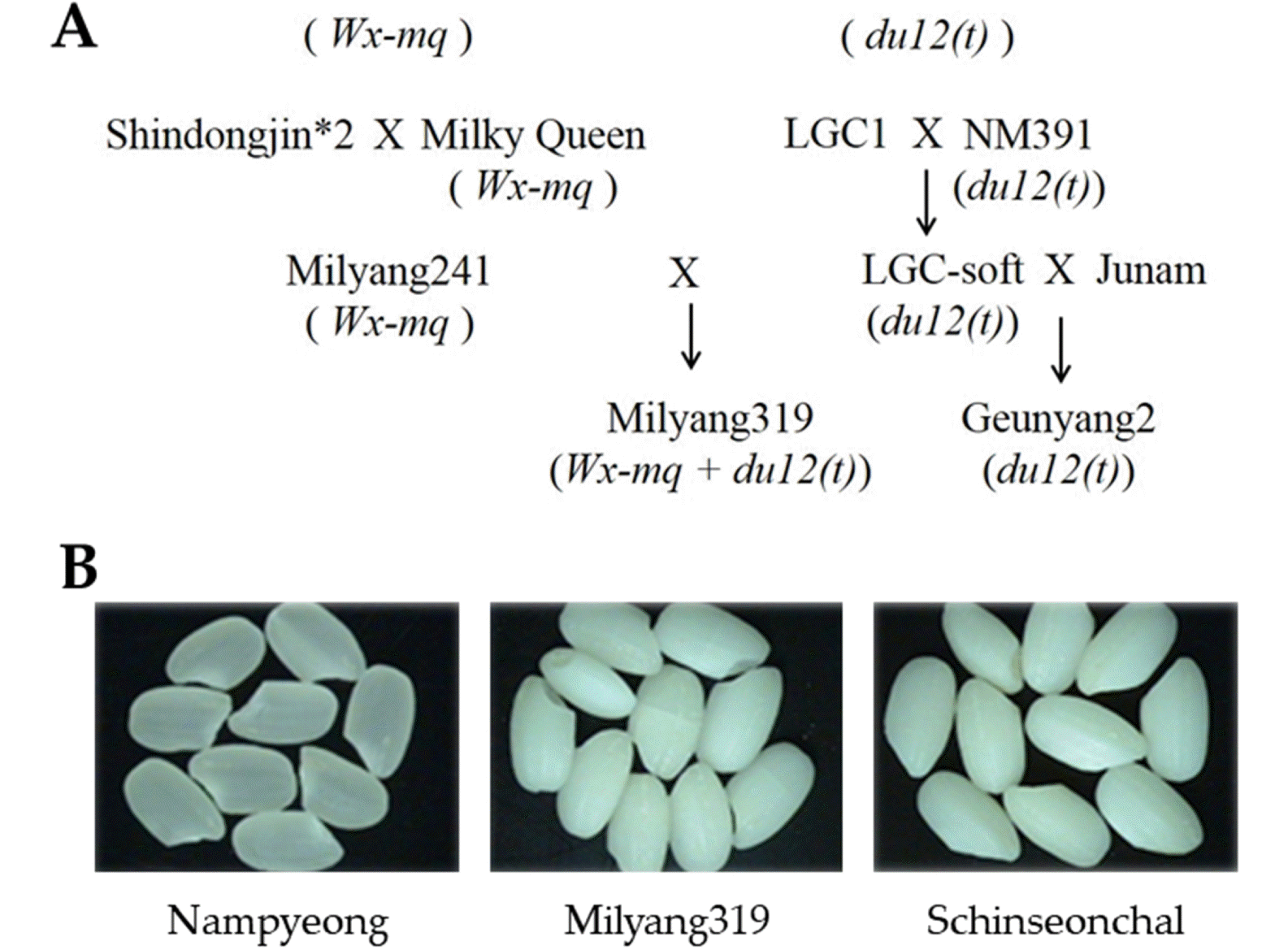
The rice cultivar Milyang319 that carries
Wx-mq and
du12(t) genes resulted from a cross between Milyang241 and LGC-soft rice cultivars. Milyang241 was developed from a cross between Shindongjin and Milky-Queen carrying
Wx-mq dull gene, while LGC-soft (Chugoku 173) was obtained from a cross between LGC1/NM391 carrying
du12(t) dull gene (
Fig. 1). In order to detect the
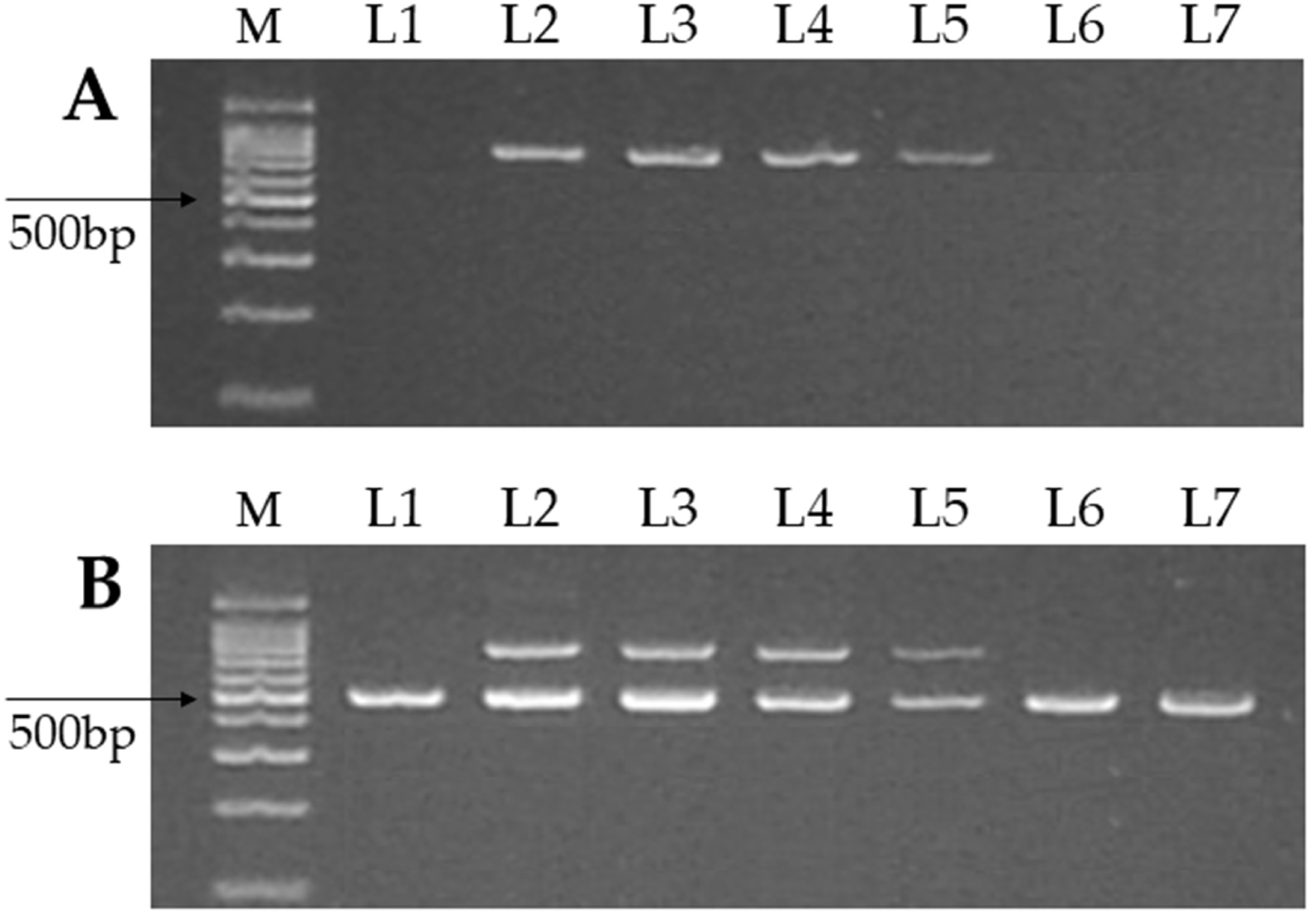
Wx-mq dull gene in Milyang319, we used the combination of four PCR primers W1, W2, W3, and W4 as described by
Sato et al. (2002).
The primers W1 and W2 amplified 741 bp bands size of
Wx-mq genomic DNA originated from Milky-Queen, located on chromosome 6 in Milyang319 and Milyang241 (
Fig. 2). For the detection of
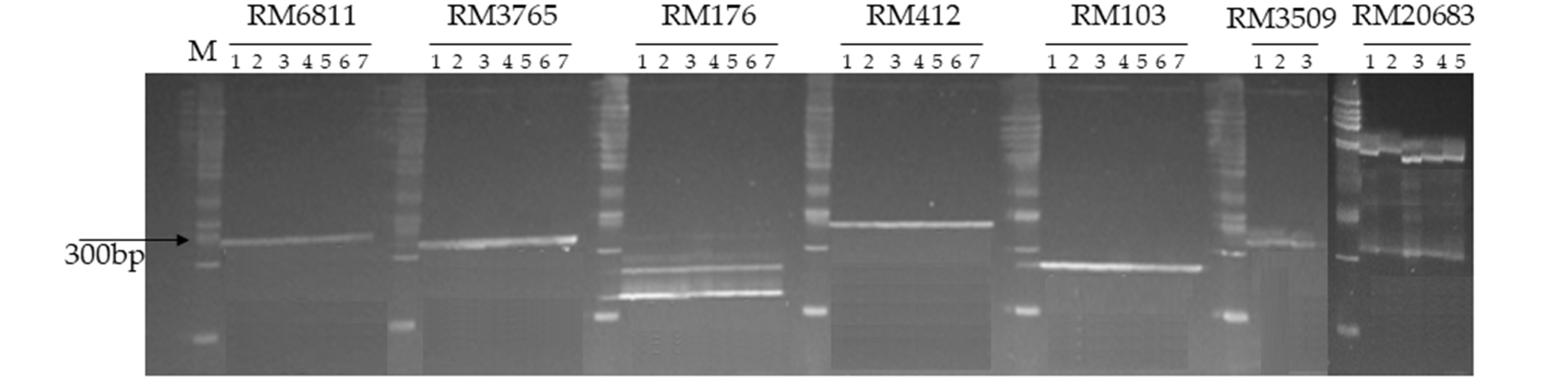
du12(t) genes, we used seven SSR primers, including RM20683 previously reported by
Kiswara et al. (2014). Among the tested SSR markers, RM20683 only showed polymorphism and generated about 322 bp bands size, which is believed to be closely linked to
du12(t) originating from NM391 (
Fig. 3). Thus, the results of the genotyping showed that the two dull genes,
Wx-mq and
du12(t), were successfully pyramided in Milyang319.
Amylose content and other physicochemical features
The physicochemical properties, such as amylose and protein contents, alkali digestion of eight rice lines are shown in
Table 4. The recorded amylose content of Milyang319 (9.0%) carrying two dull genes was similar to that of the glutinous rice Shinseonchal (8.6%), whereas the donor lines of Milyang319 had 15.7% (Milky-Queen) and 14.5% (LGC-soft). The low amylose containing rice lines, Baegjinju and Geunyang2, harboring a single dull gene recorded about 12.2 to 14.1% amylose contents, respectively. Interestingly, in 1.4% KOH digestion value, Milyang319 showed a high value of 6.0, which was similar to that observed in the glutinous rice Shinseonchal, while in Nampyeong and other single dull gene lines, the recorded values ranged from 5.0 to 5.5. In addition, Milyang319 had the lowest protein content (4.7%) compared to other rice lines. In palatability characteristics of the rice samples, the value of glossiness of the cooked rice were not much different among the dull lines.
The head rice ratio, Rapid viscosity analysis (RVA) of starch and texture of cooked rice
Except Nampyeong, the whole (normal) grain ratio of brown and milled rice were obscure among the lines due to the white hazy endosperm appearance that falls between opaque white translucent in dull and glutinous rice grains (
Table 5). Compared to the values recorded in rice lines carrying a single dull gene, the break-down of Milyang319 was as low as 92.1 and other characters of Milyang319, such as final viscosity and set back were more closed to the one observed in the glutinous rice Shinseonchal rather than single dull gene lines in rapid viscosity analysis (RVA) study (
Table 5). The texture of cooked rice of Milyang319 showed the lowest hardness value, while the balance (stickiness/hardness) was as high as 0.20, similar to Baegjinju and Shinseonchal. In springiness, however, there was significant difference between the lines, the difference was not much high as shown in hardness and stickiness (
Table 6).
DISCUSSION
Developing diverse endosperm starch, particularly for angiosperm species, such as rice, is essential not only for consumption but also for processing raw materials that would give an added-value and beneficial outcomes for the consumers and the market. Gluten-free cereal-based products of rice become more popular with a more concerns on health (
Gallaghera et al. 2004). In the tendency of those rice subproducts, glutinous endosperm starch plays a major part in the processing industry.
Previously, a few rice varieties containing low amylose level, developed through mutations and conventional breeding strategies, were released in Japan and Korea (
Sato et al. 2001;
Shuichi and Yoishihiro 2004;
Hong et al. 2012;
Kiswara et al. 2014). However, no report using gene pyramiding of different dull genes for a new source of glutinous rice breeding was found. The current study investigated the origin of each dull gene
Wx-mq and
du12(t) that were used in cross parents of Milyang319. The introgression of
Wx-mq dull gene originated from Milky-Queen on chromosome 6 as shown in
Fig. 2, using set primers reported by
Sato et al. (2002).
The confirmation of
du12(t) dull gene in Milyang319 was done using SSR markers according to
Kiswara et al. (2014). However, we did not detect polymorphic marker among them. Therefore, we expanded our investigations using
in silico study and exploring the available online Oryzabase (
http://shigen.nig.ac.jp/rice/oryzabase/marker/detail/), and we identified RM20683 (position: 31,031,982 bp-31,036,155 bp) that showed polymorphism nearby the RM3765 (position: 30,599,823 bp-30,601,396 bp) and RM176 (position: 31,142,617 bp-31,144,398 bp), which were observed to be co-segregated with
du12(t) on long arm of chromosome 6. In this study, we generate about 322 bp band size that coincided with Geunyang2 carrying
du12(t) gene (
Fig. 3). Thus, the genotyping results have shown that the two dull gene,
Wx-mq and
du12(t), were successfully pyramided in Milyang319. Additionally, the physicochemical properties showed that the amylose content recorded in Milyang319 (9.0%) was similar to that of glutinous rice Shinseonchal (8.6%), whereas the donor lines had 15.7% (Milky-Queen) and 14.5% (LGC-soft) (
Table 4). Moreover, Milyang319 and Shinseonchal (glutinous rice) exhibited a similar pattern of grain appearance (
Fig. 1B).
The endosperm is a triploid tissue having one dose of paternal alleles and two doses of the maternal alleles. Previous studies reported the dosage effects of amylose content in rice endosperm. In general, amylose content increases with the increase in gene dosage, however not in a linear way (
Okuno 1978;
Kumar and Khush 1986). Owing to the above, with three low amylose content doses in endosperm, the level of Wx protein producing higher amylose may not be high causing glutinous like amylose content in Milyang319.
Milyang319 showed a high alkali digestion value of 6.0 as glutinous rice of Shinseonchal in 1.4% KOH digestion. In addition, protein and palatability were not clearly classified between rice lines (
Table 4). Moreover, the grain appearance compared to normal grain, glutinous, and in low amylose content rice showed a high immature and chalky scores of brown and milled rice due to the opacity in the endosperm (
Table 5). The rapid viscosity analysis revealed that Milyang319 recorded the lowest hardness score of 2.41 among the cooked rice, and a similar pattern with the glutinous rice, compared to the single dull gene rice (
Table 6). Thus, it was shown that the Milyang319, which harbors
Wx-mq and
du12(t) dull genes could be classified into the category of glutinous rice with regard to its physicochemical, texture and viscosity properties.
The waxy rice was derived from diverse cross combinations. The results revealed that the studied agronomically important traits and physicochemical properties of Milyang319, which carries both
Wx-mq and
du12(t) dull genes, such as heading date was August 16, coincided with a mid-late maturing ecotype. No significant defects were observed in major traits except a slightly low yield capacity in milled rice (4.54 mt/ha) and high susceptible to major disease and insects (
Table 2,
3). Therefore, Milyang319 could be utilized in breeding program as a potential source of glutinous rice for diet and raw material for industry.
ACKNOWLEDGEMENTS
This work was supported by the Rural Development Administration (Project title: Development of functional rice variety for fusion and complex of valuable characteristics, Project No.: PJ01428202), Republic of Korea.
Fig. 1Schematic representation of the crossing flow. (A) Crossing flow for development of Milyang319. (B) Appearance of milled grain of Nampyeong, Milyang319 and Shinseonchal.
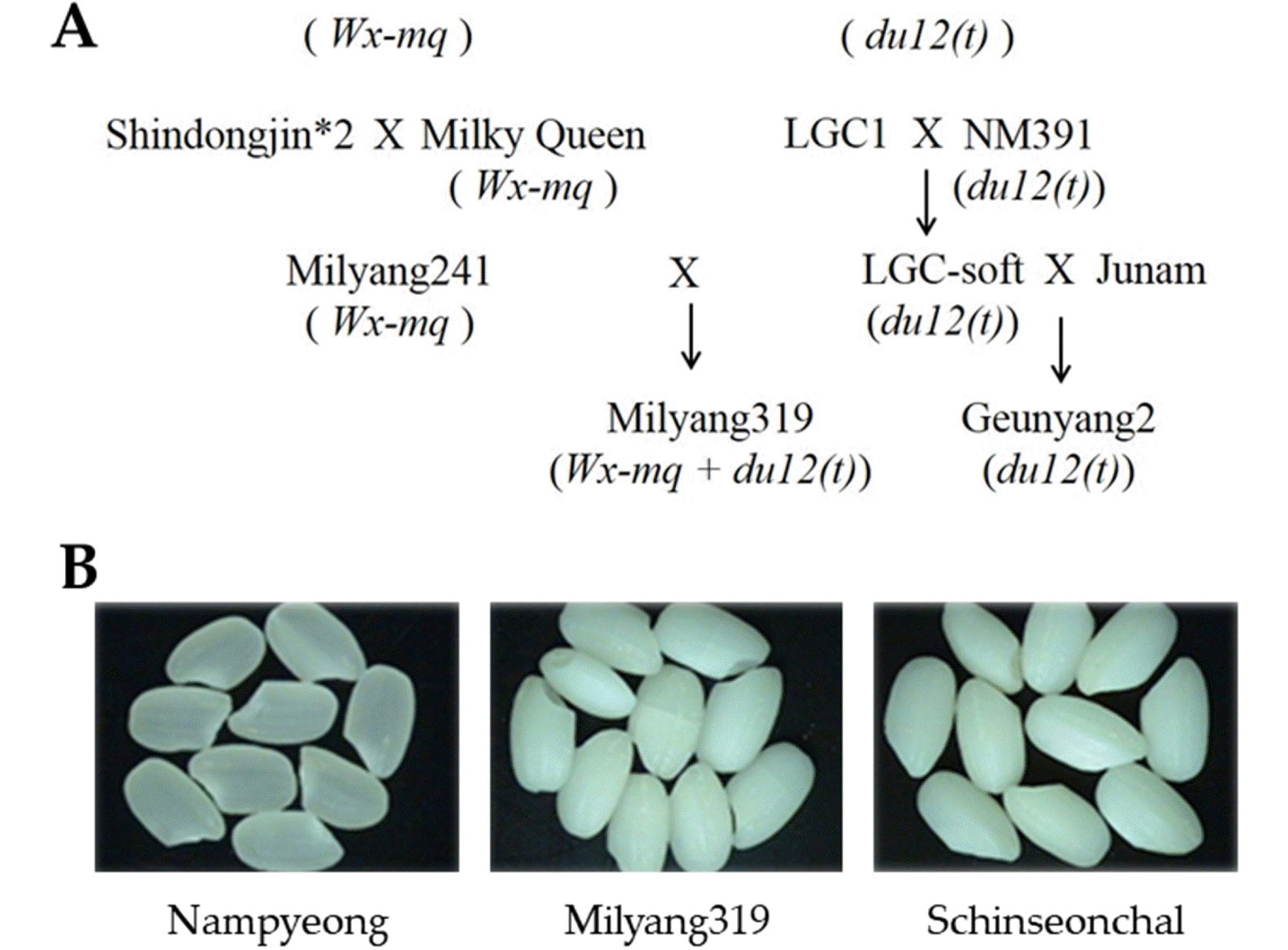
Fig. 2Detection of the presence of Wx-mq genes in rice lines. (A) Amplification of W1 + W2 primers showing a banding size of 741 bp. Rice genotypes are 1:Geunyang2, 2:Milyang241, 3:Milky Queen, 4 and 5:Milyang319, 6 and 7:Milyang320. (B) Amplification of tetra primers (W1 + W2 + W3 + W4) showing polymorphic bands in L2, L3, L4, and L5. M: 100 bp DNA ladder marker, L1-7: lanes indicating individual rice lines.
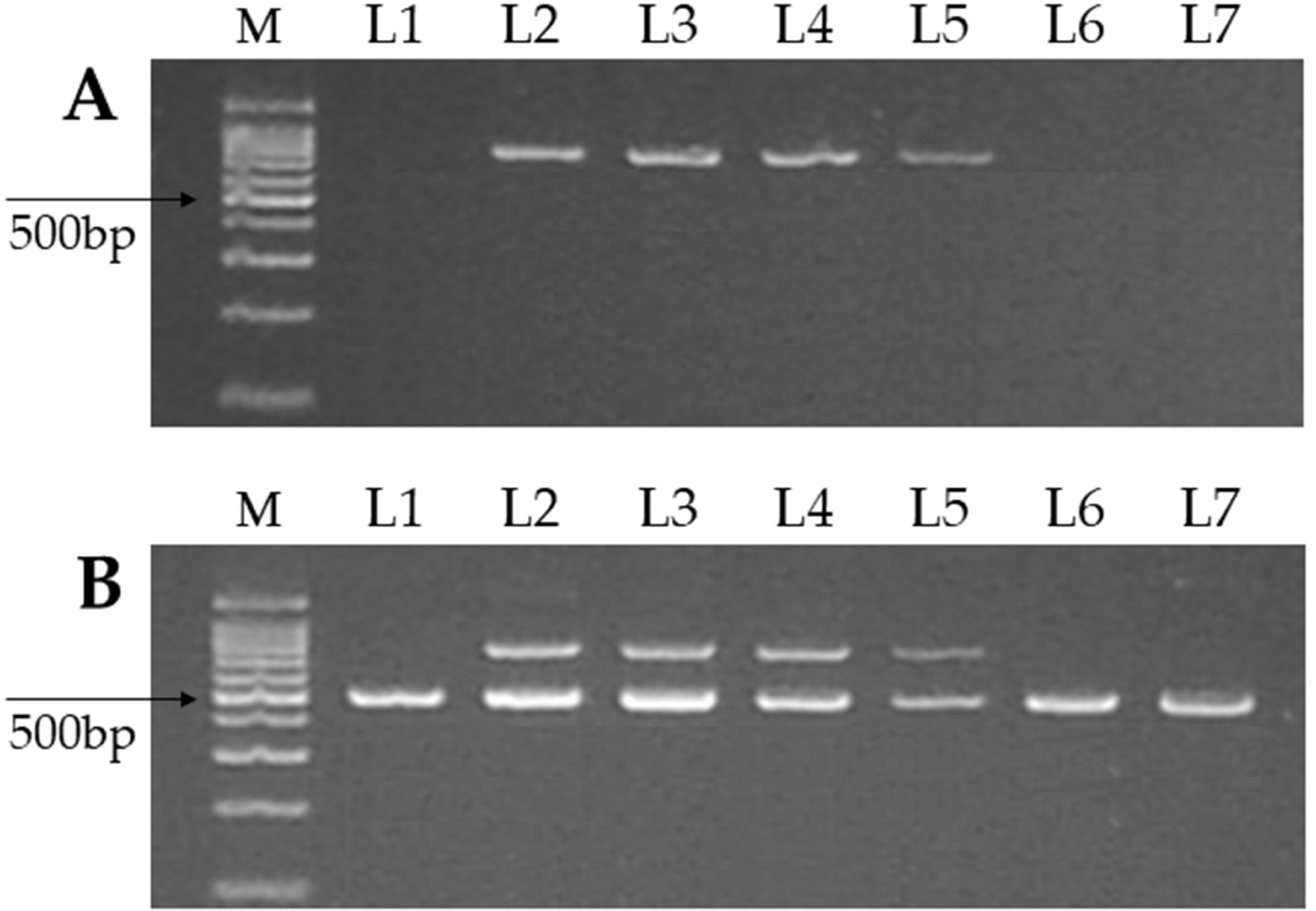
Fig. 3Amplification of adjacent markers located near the du12(t) gene. Lanes 1-7 are rice lines 1:Geunyang2, 2:Milyang241, 3:Milky-Queen, 4 and 5:Milyang319, 6 and 7:Milyang320.
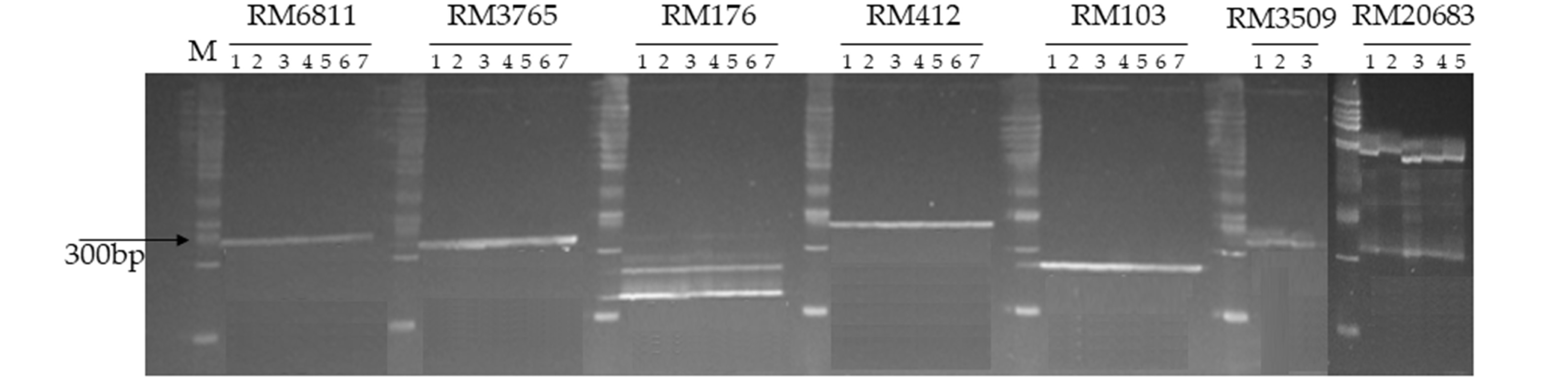
Table 1List of rice lines used in the pedigree study for dull genes.
Table 1
|
Rice lines |
Starch properties |
Gene designation |
Origin of dull gene |
|
Nampyeong |
Normal |
- |
- |
|
Milky Queen |
dull |
Wx-mq
|
Koshihikari mutant |
|
LGC-soft |
dull |
du12(t)
|
NM391 |
|
LGC1 |
Normal |
- |
- |
|
Baegjinju |
dull |
- |
Ilpumbyeo mutant |
|
Geunyang2 |
dull |
du12(t)
|
NM391, LGC soft |
|
Milyang241 |
dull |
Wx-mq
|
Milky Queen |
|
Milyang320 |
dull |
du12(t)
|
Geunyang2 |
|
Milyang319 |
dull |
Wx-mq + du12(t)
|
Koshihikari mutant, NM391 |
|
Shinseonchal |
glutinous |
- |
- |
Table 2Agronomic traits and disease and insect response of Milyang319.
Table 2
|
Designation |
DHz)1 (days) |
CL2 (cm) |
3 (cm) |
NP4
|
NGP5
|
GFR6 (%) |
GW7
|
HR8 (%) |
GY9 (mt/ha) |
Index of GY(%) |
|
Milyang319 |
8.16y)
|
83 |
19 |
15 |
89 |
80.0 |
22.2 |
81.0 |
4.54 |
90 |
|
Nampyeong |
8.17 |
77 |
18 |
15 |
87 |
86.7 |
21.8 |
81.9 |
5.03 |
100 |
Table 3Disease and insect response of ‘Milyang319’.
Table 3
|
Designation |
Diseasez)
|
Bphy)
|
|
|
Blast |
BB |
RSV |
|
Milyang319 |
S |
S |
S |
S |
|
Nampyeong |
M |
S |
R |
S |
Table 4The physicochemical properties of eight rice lines.
Table 4
|
Lines |
Protein (%) |
Amylose (%) |
1.4% KOH (1-7) |
α-amylase (Units/g) |
Palatability (Toyo value) |
|
Nampyeong |
5.5b z)
|
21.6b
|
5.5 |
0.0336c
|
78.2a
|
|
Milky-Queen |
5.1c
|
15.7c
|
5.0 |
0.0223f
|
78.6a
|
|
LGC-soft |
5.6b
|
14.5d
|
5.5 |
0.0379b
|
72.6bc
|
|
LGC1 |
5.0c
|
22.9a
|
6.5 |
0.0249e
|
64.4d
|
|
Baegjinju |
5.4b
|
12.2f
|
5.5 |
0.0343c
|
73.6b
|
|
Geunyang2 |
6.2a
|
14.1e
|
5.5 |
0.0566a
|
71.1c
|
|
Milyang319 |
4.7c
|
9.0g
|
6.0 |
0.0290d
|
73.9b
|
|
Shinseonchal |
5.5b
|
8.6h
|
6.0 |
0.0348c
|
65.2d
|
Table 5The grain appearance of brown and milled rice in eight lines.
Table 5
|
Lines |
Grain quality of brown rice (mass %) |
|
Grain quality of milled rice (mass %) |
|
|
|
Whole |
Cracked |
Immature |
Damaged |
Colored |
Dead |
Normal |
Chalky |
Broken |
Damaged |
Cracked |
Objectionable seeds |
|
Nampyeong |
68.5a z)
|
11.9d
|
15.6e
|
3.0c
|
0.4ab
|
0.5bcd
|
|
83.9a
|
3.0g
|
2.8d
|
0.4d
|
7.3d
|
2.7b
|
|
Milky Queen |
33.0c
|
40.5a
|
17.7e
|
8.5b
|
0.2b
|
0.1cd
|
|
33.0c
|
22.5e
|
18.3a
|
1.7c
|
24.4b
|
0.0c
|
|
LGC soft |
32.7c
|
14.7c
|
47.6d
|
4.1c
|
0.8a
|
0.1cd
|
|
35.5c
|
39.0d
|
10.1b
|
3.2b
|
12.1c
|
0.1c
|
|
LGC1 |
47.6b
|
32.6b
|
15.3e
|
3.8c
|
0.4ab
|
0.2cd
|
|
44.1b
|
9.5f
|
10.9b
|
1.7c
|
33.7a
|
0.0c
|
|
Baegjinju |
4.0ef
|
1.4fg
|
83.3a
|
9.7b
|
0.5ab
|
1.1bcd
|
|
0.4e
|
78.8b
|
17.2a
|
3.2b
|
0.4e
|
0.0c
|
|
Geunyang2 |
27.0d
|
6.4e
|
61.3c
|
4.7c
|
0.5ab
|
0.0d
|
|
26.3d
|
61.7c
|
6.3c
|
3.2b
|
2.5e
|
0.0c
|
|
Milyang319 |
7.0e
|
1.6f
|
77.1b
|
13.3a
|
0.2b
|
0.7bc
|
|
0.8e
|
87.6a
|
9.3bc
|
1.5c
|
0.5e
|
0.2c
|
|
Shinseon-chal |
2.5f
|
0.1g
|
85.2a
|
8.5b
|
0.4ab
|
3.2a
|
|
0.1e
|
75.4b
|
6.1c
|
4.7a
|
0.0e
|
13.6a
|
Table 6The texture of cooked rice and Rapid viscosity analysis (RVA) of starch in eight rice lines.
Table 6
|
Lines |
Texture |
|
Rapid viscosity analysis (RVA) |
|
|
|
Hardness (g/cm) |
Stickiness |
Balance (Stick./Hard.) |
Springness |
Peak 1 |
Trough 1 |
Breakdown |
Final Visc. |
Setback |
Pasting Temp |
Peak Time |
|
Nampyeong |
4.45b z)
|
0.60b
|
0.13c
|
0.72d
|
|
219.6b
|
154.7a
|
64.9c
|
251.8a
|
32.2a
|
70.9ab
|
6.5a
|
|
Milky Queen |
4.06c
|
0.60a
|
0.15b
|
0.70bcd
|
|
300.3a
|
127.8a
|
172.5a
|
177.8c
|
‒122.5d
|
71.3a
|
5.6c
|
|
LGC soft |
3.42d
|
0.50ab
|
0.15b
|
0.69d
|
|
215.1b
|
64.0cd
|
151.1a
|
103.4d
|
‒111.7d
|
70.3ab
|
5.2d
|
|
LGC1 |
5.09a
|
0.42b
|
0.08c
|
0.71abcd
|
|
240.5b
|
126.2b
|
114.3b
|
228.8b
|
‒11.7b
|
69.9bc
|
6.0b
|
|
Baegjinju |
3.00e
|
0.58a
|
0.19a
|
0.72ab
|
|
164.2c
|
58.1d
|
106.1b
|
89.8e
|
‒74.4c
|
69.4c
|
5.2d
|
|
Geunyag2 |
3.58d
|
0.58a
|
0.16b
|
0.71abcd
|
|
215.9b
|
65.2c
|
150.7a
|
105.9d
|
‒110.1d
|
69.5c
|
5.3d
|
|
Milyang319 |
2.41f
|
0.48ab
|
0.20a
|
0.72abc
|
|
121.3d
|
29.3e
|
92.1b
|
50.8f
|
‒70.5c
|
67.0d
|
3.8e
|
|
Shinseonchal |
3.09e
|
0.62a
|
0.20a
|
0.73a
|
|
72.0e
|
30.5e
|
41.5c
|
38.6g
|
‒33.4b
|
68.9c
|
3.4f
|
References
- Ashikari M, Matsuoka M. 2006. Identification, isolation and pyramiding of quantitative traits loci for rice breeding. Trends Plant Sci.. 11: 344-350.
- Fukuoka S, Saka N, Mizukami Y, Koga H, Yamanouchi U, Yoshioka Y, et al. 2015. Gene pyramiding enhances durable blast disease resistance in rice. Sci. Rep.. 5: 1-7.
- Gallaghera E, Gormleya TR, Arendt EK. 2004. Recent advances in the formulation of gluten-free cereal-based products. Trends Food Sci. Techol.. 15: 143-152.
- Hong HC, Choi HC, Hwang HG, Kim YG, Moon HP, Kim HY, et al. 2012. New cultivar developed: A lodging-tolerance and dull rice cultivar 'Baegjinju'. Korean J. Breed. Sci.. 44: 51-56.
- Huang N, Angels ER, Domingo J, Magpantay G, Singh S, Zhang G, et al. 1997. Pyramiding of bacterial blight resistance genes in rice: marker-assisted selection using RFLP and PCR. Theor. Appl. Genet.. 95: 313-320.
- Isshiki M, Morino K, Nakajima M, Okagaki RO, Wessler SR, Izawa T, et al. 1998. A naturally occurring functional allele of the rice waxy locus has a GT to TT mutation at the 5' splice site of the first intron. Plant J.. 15: 133-138.
- Iwata N, Omura T. 1971. Linkage analysis by reciprocal translocation method in rice plant (Oryza sativa L.). II Linkage groups corresponding to the chromosome 5, 6, 8, 9, 10 and 11, Sci. Bull. Fac. Agric. Kyushu Univ. 25: 137-153.
- Juliano BO. 1971. A simple assay for milled rice amylose. Cereal Sci. Today. 16: 334-360.
- Khush GS. 2003. Productivity improvements in rice. Nutr. Rev.. 61: S114-116.
- Khush GS. 2001. Challenges for meeting the global food and nutrient needs in the new millennium. Proc. Nutr. Soc.. 60: 15-26.
- Kinoshita T, Kikuchi H. 1987. Inheritance of amylose content in crosses of low amylose mutants. Rice Genet. Newsl.. 4: 83-84.
- Kiswara G, Lee JH, Hur YJ, Cho JH, Lee JY, Kim SY, et al. 2014. Genetic analysis and molecular mapping of low amylose gene du12(t) in rice (Oryza sativa L.). Theor. Appl. Genet.. 127: 51-57.
- Kumar BI, Khush GS. 1986. Gene dosage effects of amylose content in rice endosperm. Jpn. J. Genet.. 61: 559-568.
- Kunihiro Y, Ebe Y, Shinbashi N, Kikuchi H, Tanno H, Sugawara K. 1993. A new paddy rice variety 'Aya' with good eating quality due to low amylose content developed by anther culture breeding. Jpn. J. Breed.. 43: 155-163. (in Japanese).
- Noda T, Nishiba Y, Sato T, Suda I. 2003. Properties of starches from several low-amylose rice cultivars. Cereal Chem.. 80: 193-197.
- Okuno K. 1976. A low amylose mutant of rice. Div. Genet. Natl. Inst. Agric. Sci. Jpn. Ann. Rep.. 1: 28-29.
- Okuno K. 1978. Gene dosage effect of waxy alleles on amylose content in endosperm starch of rice. Jpn. J. Genet.. 53: 219-222.
- RDA (Rural Development Administration).2015. Manual for standard evaluation method in agricultural experiment and research. RDA. Suwon, Korea: pp. 838.
- Sasaki T, Matsumoto T, Antonio BA, Nagamura Y. 2005. From mapping to sequencing, post-sequencing and beyond. Plant Cell Physiol.. 46: 3-13.
- Sato H, Suzuki Y, Okuno K, Hirano HY, Imbe T. 2001. Genetic analysis of low amylose content in a rice variety, 'Milky Queen'. Breed. Res.. 3: 13-19. (in Japanese).
- Sato H, Suzuki Y, Sakai M, Imbe T. 2002. Molecular cha-racterization of Wx-mq, a novel mutant gene for low-amylose content in endosperm of rice (Oryza sativa L.). Breed. Sci.. 52: 131-135.
- Sato M, Ando I, Numaguchi K, Horisue N. 1996. Breeding of low amylose content paddy rice variety 'Milky Queen' with good eating quality. Jpn. J. Breed.. 46: 221. (in Japanese).
- Shuichi I, Yoishihiro S. 2004. A new rice cultivar with good eating quality (low amylose) and low glutelin protein, "LGC soft". Bull. Natl. Agr. Res. Center Western Region. 3: 57-74.
- Wanchana S, Toojinda T, Tragoonrung S, Vanavichit A. 2003. Duplicated coding sequence in the waxy allele of tropical glutinous rice (Oryza sativa L.). Plant Sci.. 165: 1193-1199.
- Wang ZY, Zheng FO, Shen GZ, Gao JP, Snustad DP, Li MG, et al. 1995. The amylose content in rice endosperm is related to the post-transcriptional regulation of the waxy gene. Plant J.. 7: 613-622.