Abstract
Low-temperature germinability (LTG) is an important trait for rice direct seeding at temperate and high-altitude region. Previously, five QTLs (quantitative trait loci) for LTG were detected using an interspecific cross population between the Korea japonica cultivar Hwaseong and Oryza rufipogon (IRGSP#105491). O. rufipogon alleles at all loci increased the germination rate at the 13°C condition. In this study, we tried to confirm and fine-map qLTG1 located on the short arm of chromosome 1. To map the qLTG1, two introgression lines, TR5 and TR20 were crossed to Hwaseong to develop F2:3 populations. QTL analysis confirmed the existence of the qLTG1 and it explained 55.5% and 29.9% of phenotypic variation in two populations, respectively. Substitution mapping using informative recombinant lines indicated that qLTG1 was located in 167-kb region between two SSR markers RM10310 and RM10326. This segment harbored 18 genes with nine of them were annotated with specific gene function. In addition, the O. rufipogon introgression in this region was associated with an increase in spikelets per panicle in the Hwaseong background. The results strongly indicate that the O. rufipogon alleles will be a valuable source of genes in improving japonica rice for low-temperature germinability and yield. To our knowledge, this is the first report to fine-map qLTG1 associated with LTG in rice considering that no QTL for LTG has not been reported near this QTL region from other biparental populations.
-
Key words: QTL, Low-temperature germinability, Rice, Interspecific cross
INTRODUCTION
Rice is one the most important cereal crops in Asian countries. Rice production system in rice has mainly been conducted by transplanting seedlings into irrigated paddy fields (
Hyun et al. 2015). Although transplanting system is stable in seedling stage, this system is very resource-intensive (
Hyun et al. 2015). Compared with transplanting method, direct seeding rice cultivation system has some advantages such as less labor, water-saving, and energy-efficient (
Kumar and Ladha 2011). Low-temperature germinability (LTG) is one of the essential factors for direct seeding. In temperate regions and high-altitude areas, low-temperature stress at germination stage affects stable seedling which is a major deterrent for direct seeding of rice (
Farooq et al. 2006;
Lou et al. 2007). LTG allows stable establishing of rice during germination and seedling stage where optimal temperature is from 25°C to 35°C (
Fujino et al. 2004). Therefore, improvement of LTG is necessary for germination vigor, stable seedling growth, and yield stability.
Genome-wide association study (GWAS) was also employed to search for LTG QTL (
Hyun et al. 2015;
Fujino et al. 2015;
Wang et al. 2018a;
Wang et al. 2018b). A total of 53 LTG QTLs were detected using a rice diversity panel (RDP1) with 413 rice accessions collected from 82 countries (
Wang et al. 2018b). One of these QTLs was identified as
Stress-Associated Protein 16 (
OsSAP16) gene which encodes a zinc finger domain protein. Loss of function in
OsSAP16 locus reduces germination rate while greater expression of
OsSAP16 enhances germination at low temperature (
Wang et al. 2018b).
Fujino et al. (2015) screened 63 Hokkaido local accessions at 15°C and 17 QTLs were detected for LTG based on GWAS (
Fujino et al. 2015). These QTLs were located on a total of 10 chromosomes except chromosomes 9 and 11. Among these QTLs, 13 QTLs were newly identified in this local population (
Fujino et al. 2015).
Hyun et al. (2015) evaluated a germplasm panel of 180
japonica rice accessions from temperate Asian regions for LTG and analyzed association between single nucleotide polymorphism (SNP) genotype data generated from 1) previously reported QTL regions which are overlapping two or more QTLs and 2) reduced representation sequencing data using the RESCAN method (
Hyun et al. 2015). Eight SNP markers located on chromosomes 1, 2, 4, 6, and 8 were found to be significantly associated with LTG (
Hyun et al. 2015).
Wild relatives of rice are important sources of genetic diversity for rice improvement (
McCouch et al. 2007). However, the effect of deleterious genes masks these favorable genes in wild rice (
Xiao et al. 1996). Therefore, breeders have tried to introgress useful genes or alleles of wild species to modern cultivars. To transfer favorable chromosomal segments of wild rice to modern varieties, chromosome segment substitution lines (CSSLs) and backcross inbred lines (BILs) have been developed. A number of QTLs for yield, biotic stress, and abiotic stress have been identified using these CSSLs and BILs (
Xiao et al. 1998;
Septiningsih et al. 2003;
Ali et al. 2010). However, few attempts have been made to utilize wild rice as sources to improve LTG.
Despite the importance of LTG especially in direct seeding in rice, understanding of genetic and molecular mechanism of LTG is still poor. We previously mapped the
qLTG1 QTL using advanced backcross lines from an inter-specific cross population (
Nguyen et al. 2012). No other QTLs have not been reported near
qLTG1 locus from biparental populations. In this study, we focused on confirming and fine-mapping the
qLTG1 QTL. Molecular markers linked to the
qLTG1 QTL will be useful in selecting lines with enhanced low-temperature germin-ability in breeding programs.
MATERIALS AND METHODS
Plant materials
Two introgression lines TR5 and TR20 were used as parents for fine-mapping of
qLTG1 locus which was derived from
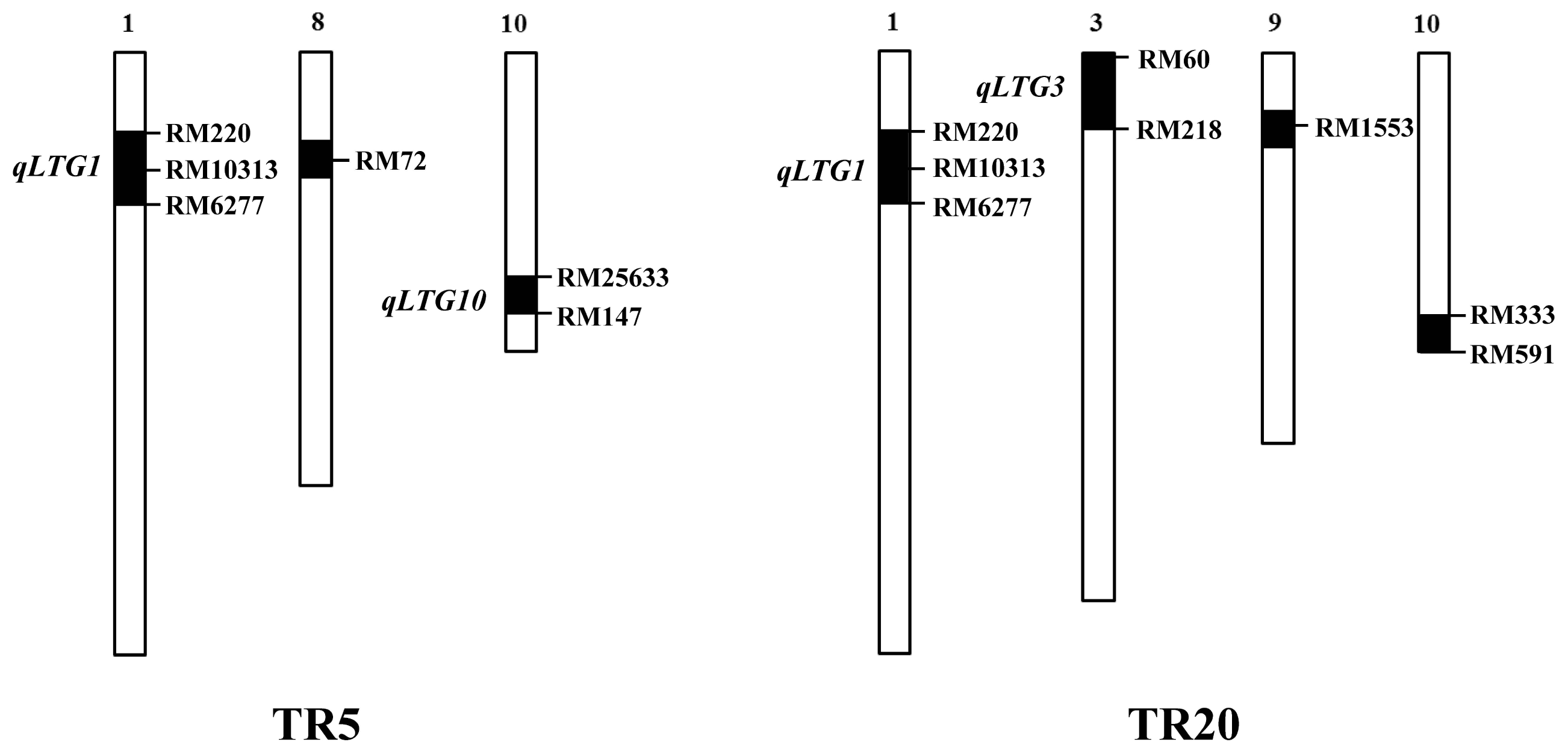
O. rufipogon. TR5 has the introgression segment for
O. rufipogon on chromosome 1, 8, and 10 while TR20 has the residual segments from
O. rufipogon on chromosome 1, 3, 9, and 10 (
Fig. 1). Two F
2 populations were developed by a cross between Hwaseong and TR5, and Hwaseong and TR20. Background selection was conducted on the 210 TR5/Hwaseong F
2 plants, and 769 TR20/Hwaseong F
2 plants on chromosome 8 and 10 and 3, 9, 10 with SSR markers, respectively. Foreground selection was conducted on selected plants from background selection on the
qLTG1 locus. Finally, 11 and 17 plants which are homozygous for
O. rufipogon and Hwaseong alleles, respectively, on the
qLTG1 locus were selected from TR5/Hwaseong population and advanced to F
3 lines. From TR20/Hwaseong population, ten plants each which are Hwaseong and
O. rufipogon homozygous, and Hwaseong/
O. rufipogon heterozygous for
qLTG1, respectively. These selected plants were used for LTG test. For substitution mapping, F
2 plants with different recombination breakpoints in the target region on chromosome 1 were selected from the F
2 population from the cross between TR5 and Hwaseong and self-pollinated to produce F
3 progeny. Plant materials used in this experiment were cultivated in the experimental paddy field at the Chungnam National University, Daejeon, Korea. Germinated seeds were sown in the middle of April, and 30-day-old seedlings were transplanted in the paddy field. Each F
3 line was grown in a single row of 25 plants with 30 × 15 cm interval in a completely randomized block design. To compare agronomic traits, parental lines were grown in the experimental fields at Chungcheongnam-do Agricultural Research and Extension Services (CNARES) from 2007 to 2013 (
Yun et al. 2016). Germinated seeds were sown in the middle of April, and 30-day-old seedlings were trans planted in the experimental paddy field. Each line was represented by a single row of 33 plants with 30 × 15 cm spacing in a completely randomized block design.
Fresh leaves were sampled to extract DNA and extraction was followed as described in
Causse et al. (1994). PCR was performed as described in
Panaud et al. (1996) with minor modifications: 95°C for 5 minutes, followed by 35 cycles of 95°C for 30 seconds, 55°C for 30 seconds, and 72°C for 30 seconds, and 5 minutes at 72°C of final extension. PCR products were separated on 3% metaphor agar stained with StaySafe Nucleic Acid Gel Stain (RBC, Taiwan) or on 4% polyacrylamide denaturing gel stained with Silver Staining Kit (Bioneer, Korea).
Seeds were collected 45 days after flowering. Harvested seeds were dried in greenhouse for 2 weeks and stored in 55°C dry-oven for 3 days to break the seed dormancy. To confirm the breakage of seed dormancy, 20 healthy seeds were germinated at the optimal germination temperature (30°C). For low-temperature germination, 20 healthy seeds were placed in a 5 cm petri dish with filter paper and 5 ml of distilled water was filled. Seeds were incubated in a growth chamber at 13°C under dark condition. Germinated seeds were counted and calculated as germination rate (%). Two biological replications were used for 30°C germination test and three biological replications were used for 13°C low-temperature germination test. All germination experiments were repeated two times under the same conditions.
Statistical analysis and QTL analysis
For one-way ANOVA and Tukey’s test, Minitab 16.2.4 software was used. Student’s t-test was conducted using Microsoft Excel. QTLs were determined by single-marker analysis, when the phenotype was associated with marker genotype at P < 0.05 in one-way ANOVA.
RESULTS
Comparison of low-temperature germinability between parental lines
Germination rate of parental lines (Hwaseong,
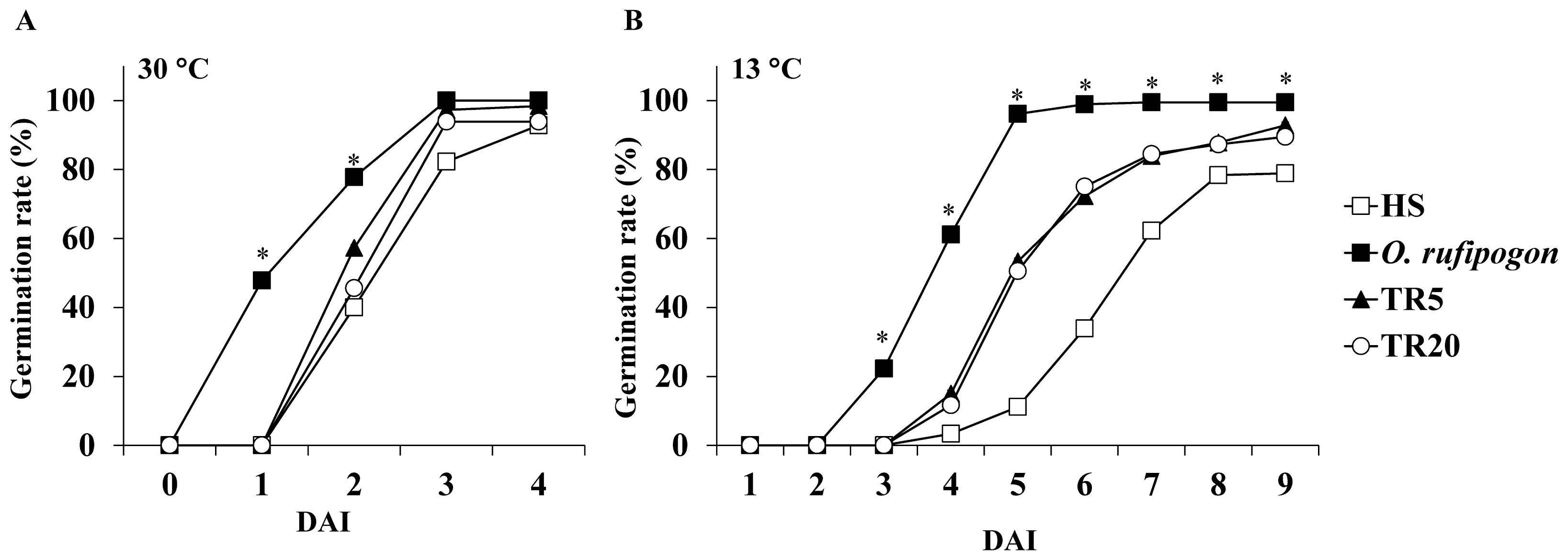
O. rufipogon, TR5, and TR20) was compared at optimal condition (30°C) and low-temperature (13°C) condition (
Fig. 2A).
O. rufipogon showed about 47% of germination rate at 1 day after incubation (DAI) at 30°C, while the germination rate was about 0% in Hwasoeng, TR5, and TR20. Four lines showed over 90% of germination rate at 4 DAI at 30°C, indicating that seeds of four lines are normal and healthy with high germination ability at optimal condition. At low-temperature condition,
O. rufipogon showed the highest germination rate among four parental lines (
Fig. 2B). TR5 and TR20 showed similar germination rate at 13°C and their germination rate was significantly higher than Hwaseong and lower than
O. rufipogon. At 5 days after incubation,
O. rufipogon, TR5, TR20, and Hwaseong showed about 95%, 53%, 50%, and 11% of germination rate at 13°C, respectively. These results indicate that the
O. rufipogon chromosome segments introgressed into TR5 and TR20 increased LTG at low-temperature condition.
We confirmed the
qLTG1 QTL using 28 F
3 lines and 30 F
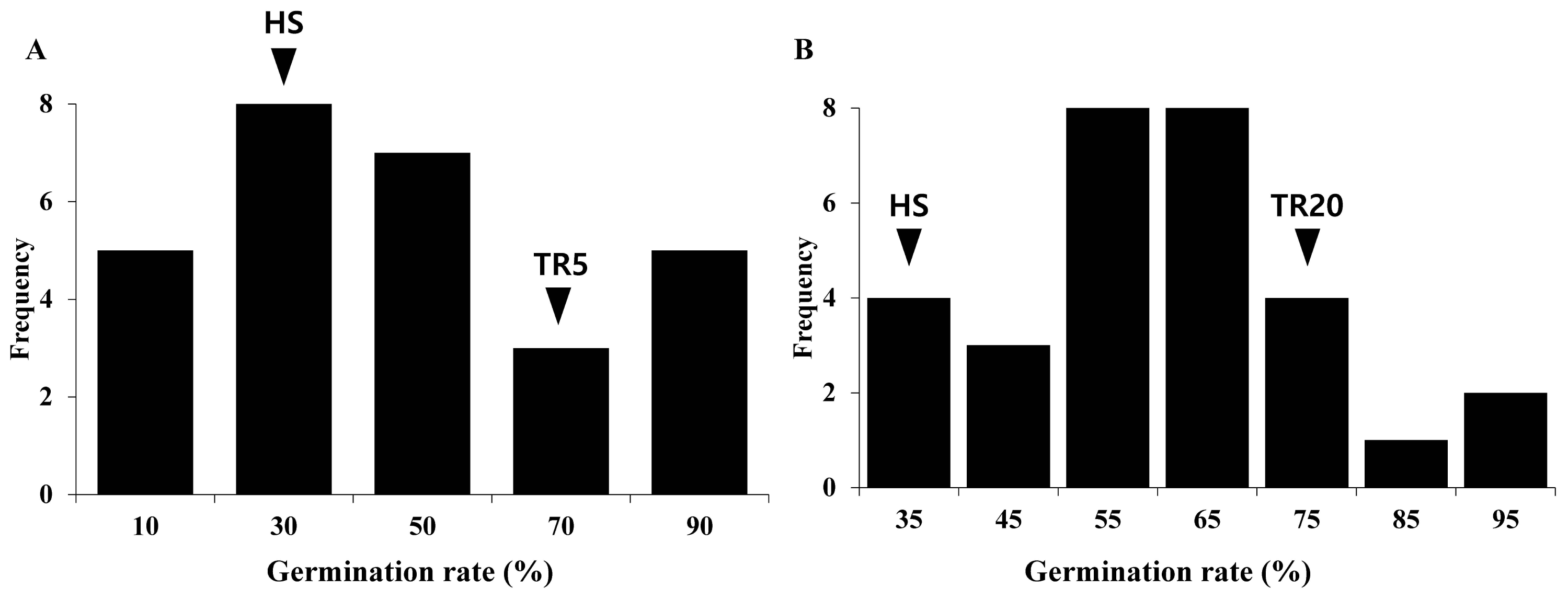
2 plants selected from two crosses TR5/Hwaseong and TR20/Hwaseong, respectively. In the TR5/Hwaseong population, germination rate ranged from 13.3% to 93.3% and histogram showed weak bimodal distribution, indicating the presence of a major QTL (
Fig. 3). TR20/Hwaseong F
2 population showed from 36.6% to 93.3% of germination rate at 13°C. A major QTL of LTG was identified between RM220 and RM6277 on chromosome 1 in TR5/Hwaseong F
3 population (
Table 1). This QTL explained 55.5% of the phenotypic variation with the additive effect of 19.5% and the
O. rufipogon allele increased germination rate at 13°C. In the TR20/Hwaseong F
2 population, a significant QTL was detected near the marker interval between RM220 and RM10313 at all measured DAI from 5 to 8. Coefficient of determination ranged from 20.4 (5 DAI) to 29.9% (7 DAI) suggesting that the difference in germination rate was maximum at 7 DAI. These results indicate the presence of the
qLTG1 in the Hwaseong/
O. rufipogon population.
To know whether the
O. rufipogon segment in the Hwaseong background had any effects to other agronomic traits, we evaluated TR5 and TR20 for 7 traits of agronomic importance in Yesan. Phenotypic evaluation was conducted for 7 years for days to heading, culm length, and panicle length and 5 years for spikelets per panicle, grain fertility, 1000-grain weight, and grain yield per plant. Field trials indicated that TR5 and TR20 showed significant difference in culm length, spikelets per panicle, 1,000-grain weight, and yield per plant compared to Hwaseong (
Table 2). TR5 and TR20 showed higher culm length, spikelets per panicle, 1000 grain weight, and grain yield than Hwaseong, indicating that the
O. rufipogon segment was associated with the increase in these four traits.
To narrow down the location of the
qLTG1, we screened recombinant plants between two markers, RM220 and RM6277. Three F
2 plants with different recombinant breakpoints in the target region were observed in TR5/Hwaseong population. Three F
2 plants were advanced to F
4 lines. From each line, F
4 plants Hwaseong or
O. rufipogon homozygous for the marker loci within the interval between RM220 and RM6277 were selected. The F
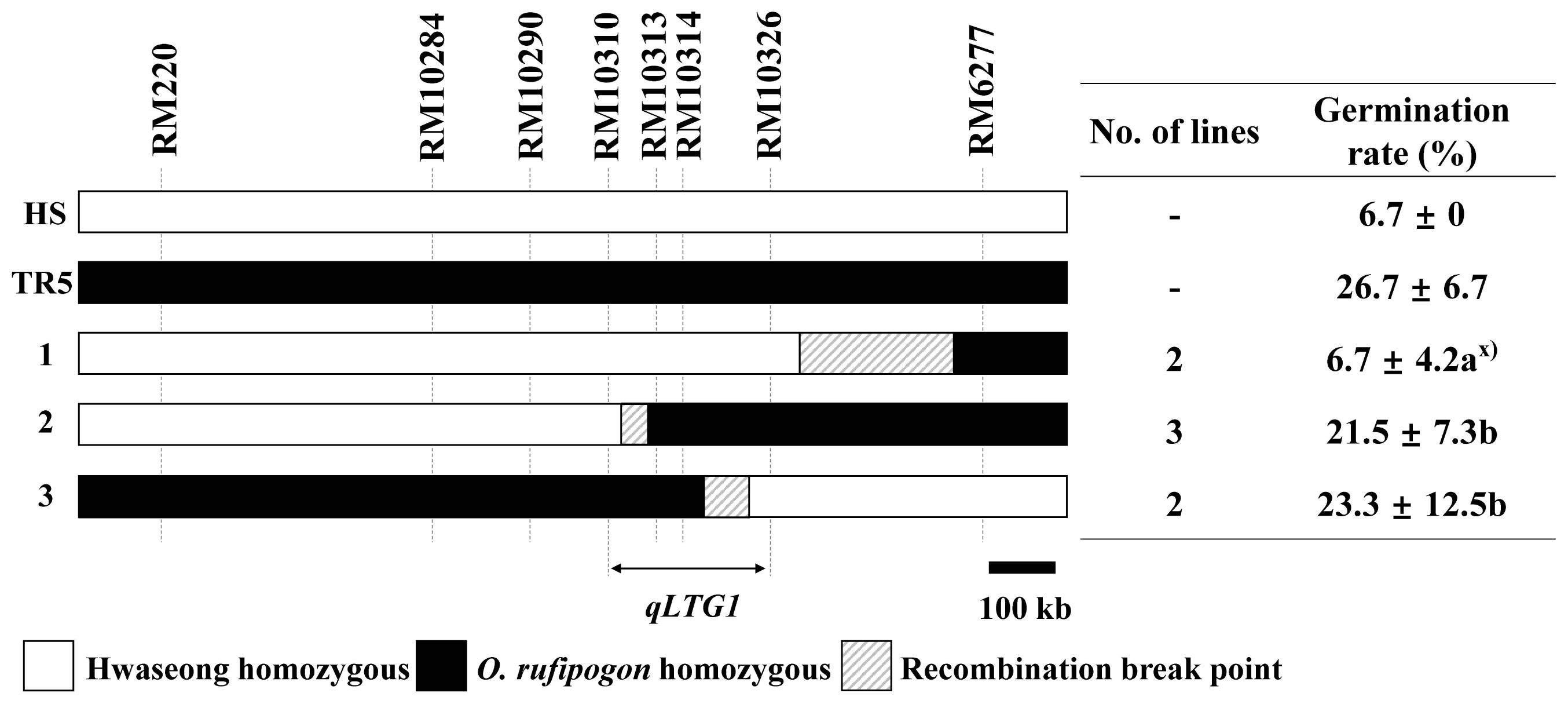
5 seeds were used for LTG test and substitution mapping (
Fig. 4). The recombinant plant 1 with the
O. rufipogon segment between RM10314 and RM6277 showed 6.7% of germination rate at 13°C, whereas the recombinant 2 with the
O. rufipogon chromosome segment between RM10310 and RM6277 showed germination rate of 21.5%. The recombinant 3 with the
O. rufipogon introgression between RM220 and RM10326 displayed germination rate of 23.3%. Tukey’s test revealed that recombinants 2 and 3 were significantly higher in the germination rate than recombinant 1 plant. Two recombinant lines showed similar level of germination rate to TR5. From these results,
qLTG1 is located within the marker interval between RM10310 and RM10326 which are 167-kb apart (5,201,956–5,369,405; based on RAP-DB,
https://rapdb.dna.affrc.go.jp).
In the 167-kb
qLTG1 region, a total of 18 candidate genes were annotated based on RAP-DB (IRGSP 1.0) (
Table 3). Among them, nine genes are annotated with specific gene functions including the prenylated rab acceptor PRA1 family protein (Os01g0196500) and 260 kDa major acidic fibroblast growth factor-stimulated phosphoprotein (Os01g0196600). The other 9 genes are hypothetical proteins or predicted proteins including Os01g0196800 and Os01g0197150.
DISCUSSION
Low-temperature germinability is a complex trait controlled by polygenes having relatively small phenotypic effects (
Challam et al. 2013). In this study,
qLTG1 was confirmed using F
3 lines and F
2 population from crosses between two introgression lines (TR5 and TR20) and Hwaseong. Two introgression lines have three and four
O. rufipogon chromosome segments in the Hwaseong background, respectively. TR5 and TR20 showed higher germination rate at 13°C and the biggest difference of germination rate was observed at 5 days after incubation between two introgression lines and Hwaseong.
O. rufipogon showed the highest germination rate at 30°C and 13°C, indicating that
O. rufipogon has additional QTLs associated with LTG and not introgressed into the two NILs, TR5 and TR20 (
Nguyen et al. 2012). QTL analysis revealed that
qLTG1 explained 55.5% and 29.9% of the phenotypic variation in the F
3 and F
2 population, respectively. The high value of R
2 in this population indicates that
qLTG1 is the single informative QTL segregating in the population in the Hwaseong genetic background.
Previously, two studies reported QTL for LTG near the
qLTG1 locus from the genome-wide association analysis. A total of 17 QTLs for LTG were identified in genome-wide association mapping employing the local population (
Fujino et al. 2015). Among these QTLs,
qLTG1a tightly linked with RM6451 (physical position; 4,797,375 bp) was detected on chromosome 1. An SSR marker RM6451 showed two alleles in this Hokkaido rice collection and low-temperature germination rate of allele A group (40.6%) was higher than allele group B (20.0%) at 6 days after incubation at 15°C. The
qLTG1a was about 500-kb apart in physical distance from
qLTG1 detected in this present study. Eight SNP markers for LTG were identified from association analysis using a germplasm panel of 180
japonica rice accessions from temperate Asia regions (
Hyun et al. 2015). These SNP markers were located on chromosomes 1, 2, 4, 6, and 8. On chromosome 1, the SNP marker LTG_1-1 on the physical location 5,189,870, showed a close linkage with
qLTG1. It is not clear whether
qLTG1 in this study is allelic to any of the two markers and further study is needed to clarify their allelic relationship. Based on the location,
qLTG1 appears to be a new gene for LTG.
To examine the effect of the
O. rufipogon introgression segments on agronomic traits, we compared seven agronomic traits between two isogenic lines (TR5 and TR20) and Hwaseong in Yesan for 5 to 7 years. A total of four traits displayed significant difference in culm length, spikelets per panicle, 1000-grain weight, and grain yield per plant. Culm length of TR5 and TR20 plants was higher over 10 cm than Hwaseong. Spikelets per panicle, 1000-grain weight, and grain yield per plant were significantly higher in TR5 and TR20 than Hwaseong. Spikelets per panicle in TR20 was higher than TR5 while the difference of thousand grain weight and grain yield were not significant. Previously, QTLs for spikelets per panicle (
qSPP1) and 1000-grain weight (
qTGW1) were identified on chromosome 1 using introgression lines derived from a cross between Hwaseong and
O. rufipogon (IRGSP#105491) and the
O. rufipogon allele enhanced spikelets per panicle and 1000-grain weight (
Yeo et al. 2014). These QTLs were located in a region between RM220 and RM10398, which overlaps with the introgessed segment into TR5 and TR20 on chromosome 1. Agronomic traits of progenies from TR5/Hwaseong and TR20/Hwaseong cross were not examined in this study. To know whether the
qLTG1 is segregating with
qSSP1 and
qTGW1, further study will be conducted. In addition, the
qSPP1 locus harbors previously cloned QTL
Gn1a associated with grain number (
OsCKX2, Os01g0197700) (
Ashikari et al. 2005) suggesting that the variation of spikelets per panicle in TR5 and TR20 is possibly associated with
Gn1a. These results indicate that the
O. rufipogon segment in the target region is associated with the variation in LTG as well as spikelets per panicle.
For fine-mapping, recombinant plants were selected and their LTG was tested (
Fig. 4). Three recombinant plants were identified, and genotyping was conducted using additional SSR markers. Substitution mapping result indicates that
qLTG1 region was narrowed down to a 167-kb region which harbors 18 candidate genes (Chr. 1: 5,201,956–5,369,405). Among 18 candidate genes, 9 genes were annotated with specific function. It is not clear which gene(s) is responsible for the variation of LTG in this interspecific cross progeny. A few genes might be potential genes for LTG. Cytokinin has permissive role in seed germination (
Khan, 1971). Os01g0197700, which is known as
OsCKX2, belongs to the cytokinin oxidase/dehydrogenase and functions in the degradation of phytohormone cytokinin (
Ashikari et al. 2005). Reduced expression of
OsCKX2 leads to cytokinin accumulation in inflorescence meristems and enhances the number of reproductive organs, resulting in increased grain yield (
Ashikari et al. 2005). However, the function of this gene has not been reported as cold stress or germination-related traits. Os01g0196600 has been reported as an orthologous of
ZmNPP gene encoding maize nucleotide pyrophosphatase/phosphodiesterase (
Hluska et al. 2017).
ZmNPP enzyme showed the zeatin
cis-trans isomerase activity which produce
cis-zeatin from
tranzeatin. However, we cannot rule out the possibility that genes encoding proteins with unknown functions in the 175.3-kb region might also be associated with the variation of LTG at
qLTG1.
Low-temperature germinability is an important trait for breeding of direct seeding variety (
Farooq et al. 2006,
Kumar and Ladha, 2011). LTG allows vigorous seedling and establishment, leading to stable yield at temperate and high-altitude area. The
O. rufipogon alleles of the
qLTG1 segment increased LTG and spikelets per panicle. These results show that
O. rufipogon is important for increasing genetic diversity for rice improvement in not only in yield-related traits but also abiotic stress tolerance. Further breeding studies are necessary to narrow down the
qLTG1 region by using a subset of NILs from the cross between TR5 and Hwaseong, and to clone the gene to understand the molecular mechanism for LTG variation. We intend to use transgenic approaches to confirm the effect of the candidate genes. Moreover, SSR markers linked to
qLTG1 will be helpful to develop
japonica breeding lines with enhanced LTG.
ACKNOWLEDGEMENTS
This study was financially supported by research fund of Chungnam National University in 2017.
Fig. 1Graphical genotypes of two NILs, TR5 and TR20. The white bar and black bar indicate chromosome segments of Hwaseong and O. rufipogon.
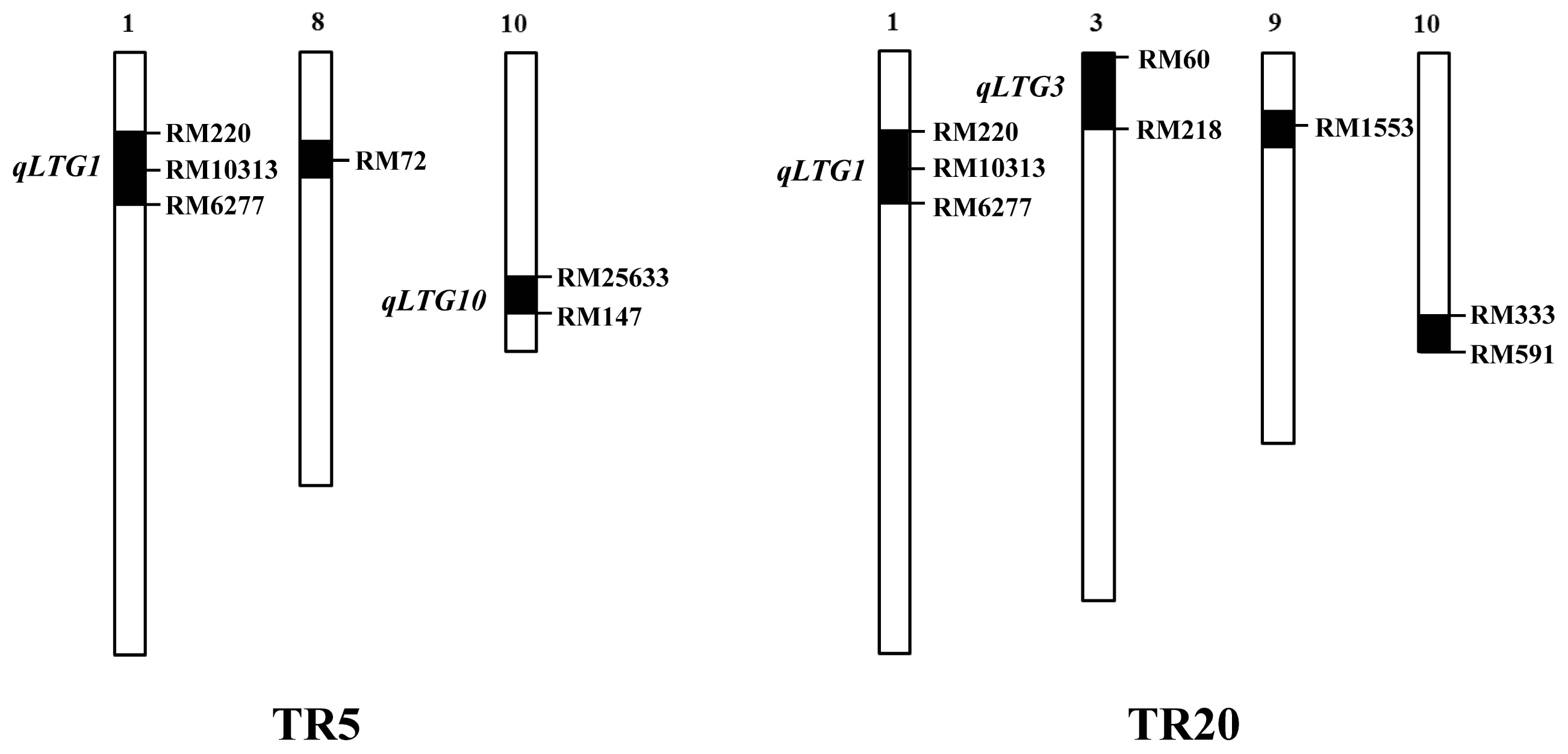
Fig. 2Comparison of germination rate in Hwaseong, O. rufipogon, TR5 and TR20 at 30°C (A) and 13°C (B). *indicates that means of four groups are significantly different at P < 0.05 based on ANOVA. Error bars represent standard error of three biological replications. DAI: days after incubation.
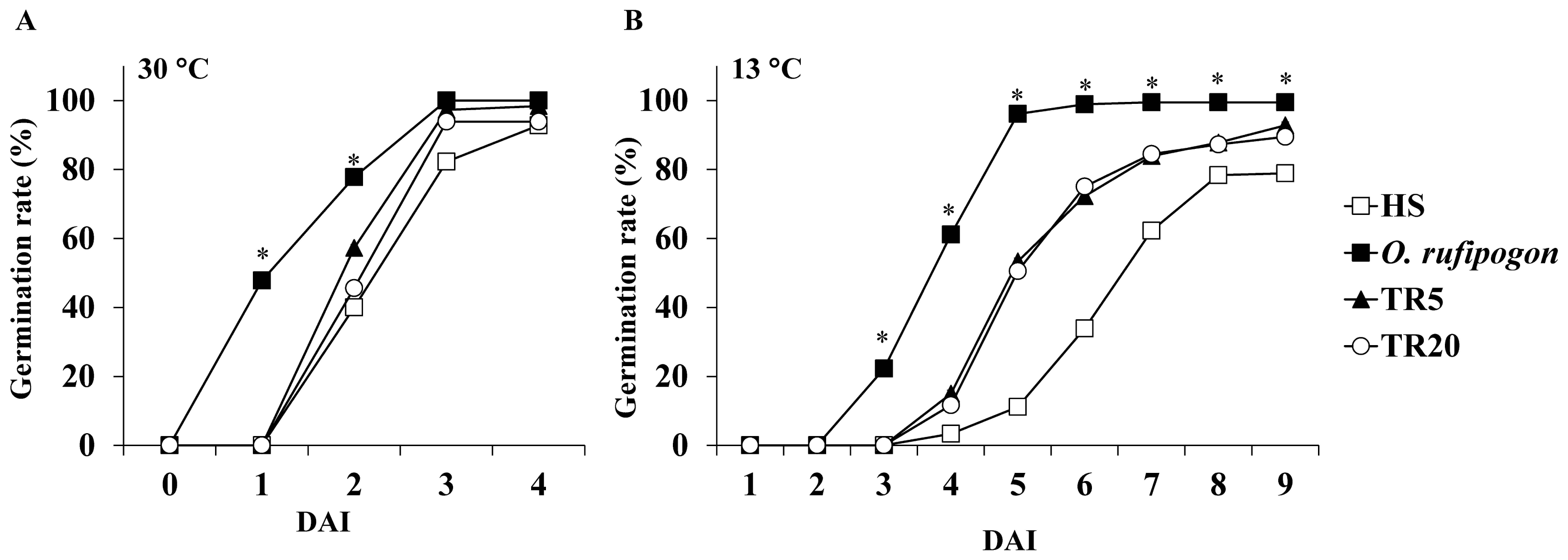
Fig. 3Frequency distribution of germination rate in TR5/Hwaseong (A) and TR20/Hwaseong (B) populations at 13°C. Germination rate was measured at 8 days after incubation.
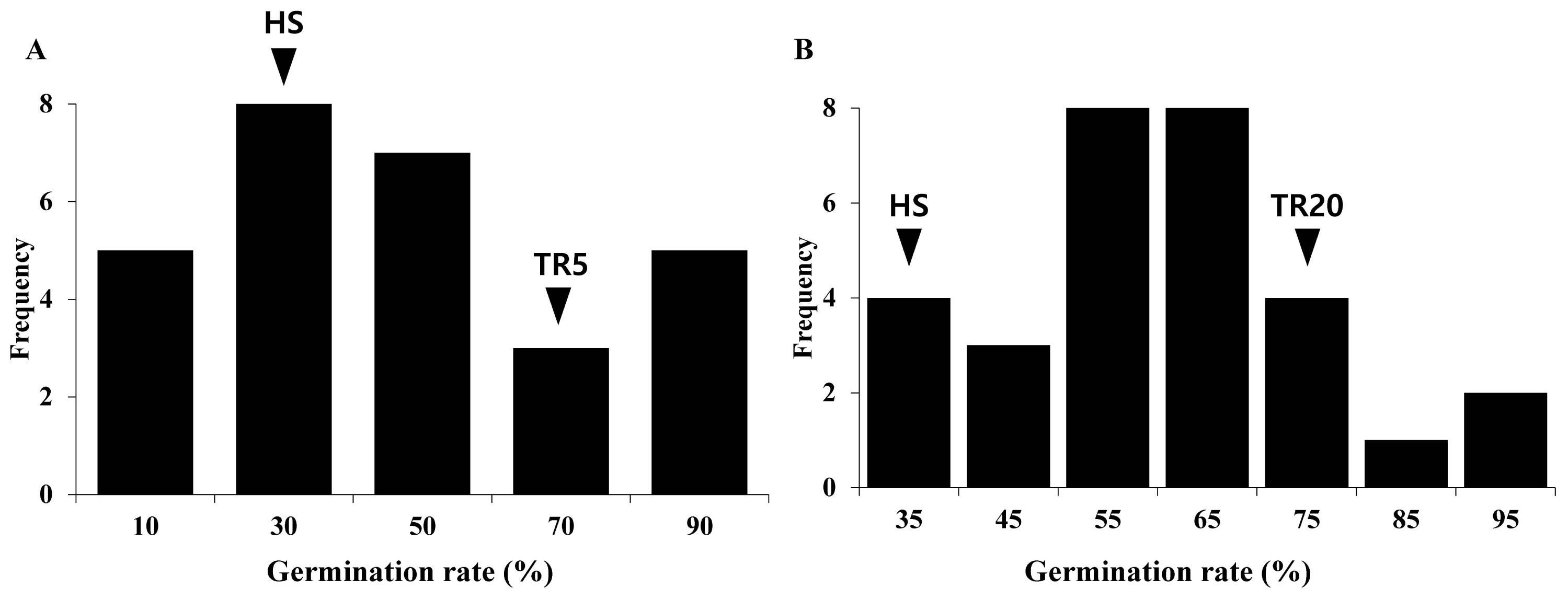
Fig. 4Substitution mapping of qLTG1 region and germination rate at 13°C of 6 days after incubation. Data to the right table are presented as mean ± standard error. x)Means followed by the same letter in each column are not significantly different among 3 groups at P = 0.05 based on Tukey’s test.
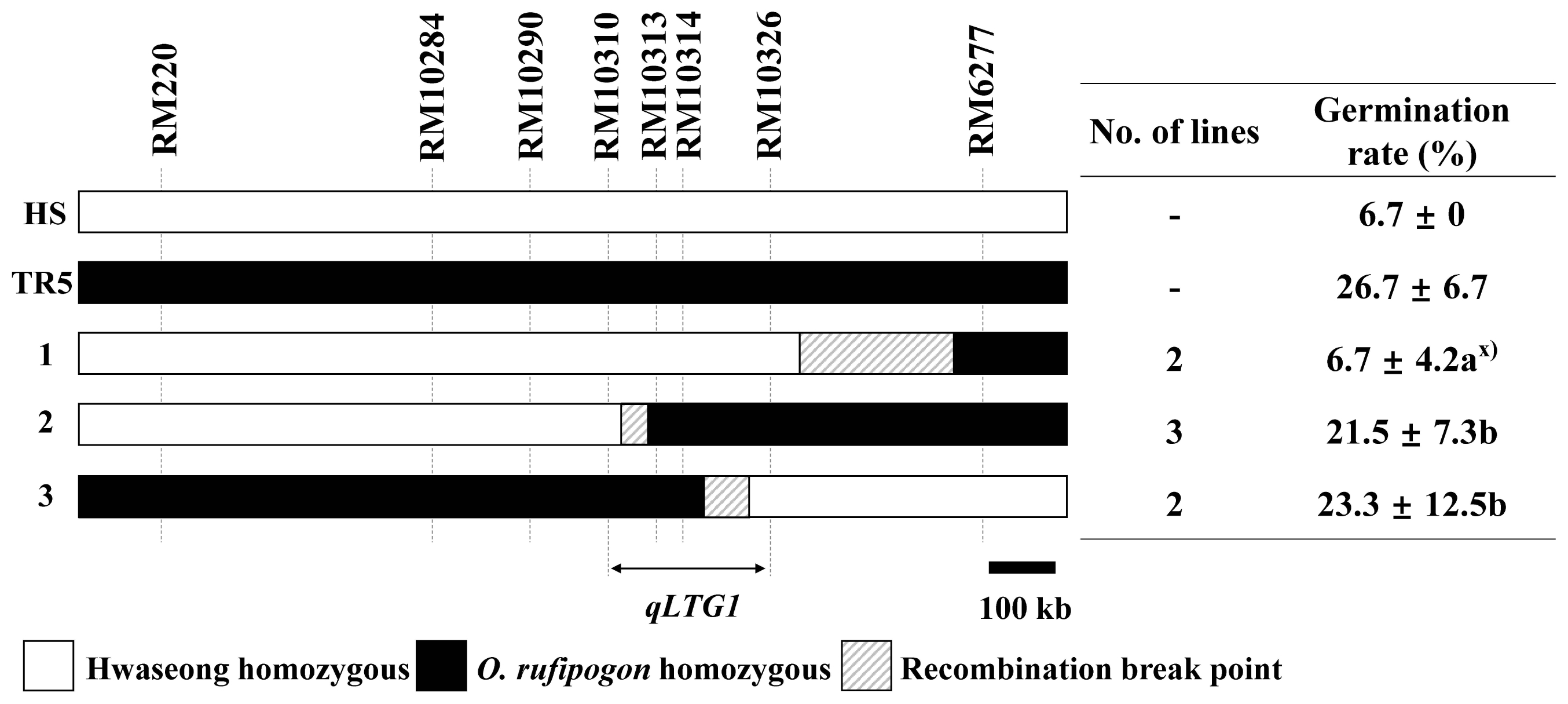
Table 1QTLs for low-temperature germinability in the F3 and F2 population.
Table 1
|
Population |
Trait |
QTL |
Chr. |
Marker |
P-value |
R2z) (%) |
AEy)
|
|
TR5/HSx) F3
|
8 DAI |
qLTG1
|
1 |
RM220-RM6277 |
0.000 |
55.5 |
19.5 |
|
TR20/HS F2
|
5 DAI |
qLTG1
|
1 |
RM220-RM10313 |
0.018 |
20.4 |
2.6 |
|
6 DAI |
qLTG1
|
1 |
|
0.009 |
24.1 |
6.2 |
|
7 DAI |
qLTG1
|
1 |
|
0.003 |
29.9 |
11.0 |
|
8 DAI |
qLTG1
|
1 |
|
0.007 |
26.0 |
11.3 |
Table 2Comparison of four agronomic traits between two introgression lines (TR5 and TR20) and Hwaseong in Yesan.
Table 2
|
Culm length (cm) |
SPPz) (no.) |
TGWy) (g) |
Grain yield (kg/10a) |
|
Hwaseong |
81.1 ± 1.7 |
101.9 ± 2.0 |
24.0 ± 0.2 |
461.7 ± 4.9 |
|
TR5 |
91.6 ± 2.6**x)
|
112.2 ± 1.4** |
25.0 ± 0.1** |
542.0 ± 32.3* |
|
TR20 |
94.8 ± 1.5*** |
138.3 ± 7.3*** |
25.1 ± 0.1** |
512.2 ± 18.2* |
Table 3List of candidate genes in the qLTG1 region.
Table 3
|
Gene ID |
Gene description |
Gene start (bp) |
Gene end (bp) |
|
Os01g0196500 |
Prenylated rab acceptor PRA1 family protein |
5,213,979 |
5,216,701 |
|
Os01g0196600 |
Similar to 260 kDa major acidic fibroblast growth factor-stimulated phosphoprotein (Fragment) |
5,218,573 |
5,220,335 |
|
Os01g0196800 |
Hypothetical protein |
5,227,044 |
5,229,966 |
|
Os01g0197100 |
Cytochrome P450, Brassinosteroids biosynthesis |
5,236,623 |
5,244,520 |
|
Os01g0197150 |
Hypothetical protein |
5,236,643 |
5,243,998 |
|
Os01g0197200 |
Similar to predicted protein |
5,247,340 |
5,251,192 |
|
Os01g0197350 |
Hypothetical gene |
5,256,634 |
5,257,053 |
|
Os01g0197400 |
Conserved hypothetical protein |
5,258,298 |
5,260,964 |
|
Os01g0197450 |
Pentatricopeptide repeat domain containing protein |
5,261,189 |
5,263,102 |
|
Os01g0197500 |
Similar to predicted protein |
5,264,691 |
5,266,158 |
|
Os01g0197700 |
Similar to Cytokinin dehydrogenase 2 |
5,270,449 |
5,275,585 |
|
Os01g0197900 |
RNA-dependent RNA polymerase, eukaryotic-type domain containing protein |
5,288,136 |
5,292,958 |
|
Os01g0198000 |
RNA-dependent RNA polymerase, eukaryotic-type domain containing protein |
5,307,415 |
5,317,280 |
|
Os01g0198100 |
RNA-dependent RNA polymerase, eukaryotic-type domain containing protein |
5,320,625 |
5,324,478 |
|
Os01g0198200 |
Similar to Casein kinase-like protein. |
5,329,063 |
5,335,518 |
|
Os01g0198250 |
Hypothetical gene |
5,330,676 |
5,333,955 |
|
Os01g0198500 |
Conserved hypothetical protein |
5,352,505 |
5,353,607 |
|
Os01g0198702 |
Conserved hypothetical protein |
5,361,440 |
5,362,677 |
References
- Ali ML, Sanchez PL, Yu SB, Lorieux M, Eizenga GC. 2010. Chromosome Segment Substitution Lines: A Powerful Tool for the Introgression of Valuable Genes from Oryza Wild Species into Cultivated Rice (O. sativa). Rice (N Y). 3: 218-234.
- Ashikari M, Sakakibara H, Lin SY, Yamamoto T, Takashi T, Nishimura A, et al. 2005. Cytokinin oxidase regulates rice grain production. Science. 309: 741-745.
- Causse MA, Fulton TM, Cho YG, Ahn SN, Chunwongse J, Wu KS, et al. 1994. Saturated Molecular Map of the Rice Genome Based on an Interspecific Backcross Population. Genetics. 138: 1251-1274.
- Challam C, Kharshing GA, Yumnam JS, Rai M, Tyagi W. 2013. Association of qLTG3-1 with germination stage cold tolerance in diverse rice germplasm from the Indian subcontinent. Plant Genet Resour. 11: 206-211.
- Farooq M, Barsa SMA, Wahid A. 2006. Priming of fieldsown rice seed enhances germination, seedling establishment, allometry and yield. Plant Growth Regul. 49: 285-294.
- Fujino K, Obara M, Shimizu T, Koyanagi KO, Ikegaya T. 2015. Genome-wide association mapping focusing on a rice population derived from rice breeding programs in a region. Breed Sci. 65: 403-410.
- Fujino K, Sekiguchi H, Matsuda Y, Sugimoto K, Ono K, Yano M. 2008. Molecular identification of a major quantitative trait locus, qLTG3-1, controlling low-temperature germinability in rice. Proc Natl Acad Sci USA. 105: 12623-12628.
- Fujino K, Sekiguchi H, Sato T, Kiuchi H, Nonoue Y, Takeuchi Y, et al. 2004. Mapping of quantitative trait loci controlling low-temperature germinability in rice (Oryza sativa L.). Theor Appl Genet. 108: 794-799.
- Hluska T, Sebela M, Lenobel R, Frebort I, Galuszka P. 2017. Purification of Maize Nucleotide Pyrophosphatase/Phosphodiesterase Casts Doubt on the Existence of Zeatin Cis-Trans Isomerase in Plants. Front Plant Sci. 8: 1473
- Hyun DY, Lee GA, Kang MJ, Burkart-Waco D, Kim SI, Kim JY, et al. 2015. Development of low-temperature germinability markers for evaluation of rice (Oryza sativa L.) germplasm. Mol Breed. 35: 104
- Ji SL, Jiang L, Wang YH, Zhang WW, Liu X, Liu SJ, et al. 2009. Quantitative trait loci mapping and stability for low temperature germination ability of rice. Plant Breeding. 128: 387-392.
- Jiang L, Liu SJ, Hou MY, Tang JY, Chen LM, Zhai HQ, et al. 2006. Analysis of QTLs for seed low temperature germinability and anoxia germinability in rice (Oryza sativa L.). Field Crops Res. 98: 68-75.
- Khan AA. 1971. Cytokinins: permissive role in seed germination. Science. 171: 853-859.
- Kumar V, Ladha JK. 2011. Direct Seeding of Rice: Recent Developments and Future Research Needs. Adv Agron. 111: 297-413.
- Li LF, Liu X, Xie K, Wang YH, Liu F, Lin QY, et al. 2013. qLTG-9, a stable quantitative trait locus for low-temperature germination in rice (Oryza sativa L.). Theor Appl Genet. 126: 2313-2322.
- Lou QJ, Chen L, Sun ZX, Xing YZ, Li J, Xu XY, et al. 2007. A major QTL associated with cold tolerance at seedling stage in rice (Oryza sativa L.). Euphytica. 158: 87-94.
- McCouch SR, Sweeney M, Li JM, Jiang H, Thomson M, Septiningsih E, et al. 2007. Through the genetic bottleneck: O. rufipogon as a source of trait-enhancing alleles for O. sativa. Euphytica. 154: 317-339.
- Miura K, Lin SY, Yano M, Nagamine T. 2001. Mapping quantitative trait loci controlling low temperature germinability in rice (Oryza sativa L.). Breed Sci. 51: 293-299.
- Nguyen HN, Park IK, Yeo SM, Yun YT, Ahn SN. 2012. Mapping quantitative trait loci controlling low-temperature germinability in rice. Korean Journal of Agricultural Science. 39: 477-482.
- Panaud O, Chen X, Mccouch SR. 1996. Development of microsatellite markers and characterization of simple sequence length polymorphism (SSLP) in rice (Oryza sativa L.). Mol Gen Genet. 252: 597-607.
- Septiningsih EM, Prasetiyono J, Lubis E, Tai TH, Tjubaryat T, Moeljopawiro S, et al. 2003. Identification of quantitative trait loci for yield and yield components in an advanced backcross population derived from the Oryza sativa variety IR64 and the wild relative O. rufipogon. Theor Appl Genet. 107: 1419-1432.
- Teng S, Zeng DL, Qian Q, Yasufumi K, Huang DI, Zhu LH. 2001. QTL analysis of rice low temperature germinability. Chinese Sci Bull. 46: 1800-1804.
- Wang H, Lee AR, Park SY, Jin SH, Lee J, Ham TH, et al. 2018a. Genome-wide association study reveals candidate genes related to low temperature tolerance in rice (Oryza sativa) during germination. 3 Biotech. 8: 235
- Wang X, Zou BH, Shao QL, Cui YM, Lu S, Zhang Y, et al. 2018b. Natural variation reveals that OsSAP16 controls low-temperature germination in rice. J Exp Bot. 69: 413-421.
- Xiao JH, Grandillo S, Ahn SN, Mccouch SR, Tanksley SD, Li JM, et al. 1996. Genes from wild rice improve yield. Nature. 384: 223-224.
- Xiao JH, Li JM, Grandillo S, Ahn SN, Yuan LP, Tanksley SD, et al. 1998. Identification of trait-improving quantitative trait loci alleles from a wild rice relative, Oryza rufipogon. Genetics. 150: 899-909.
- Yeo SM, Yun YT, Kim DM, Chung CT, Ahn SN. 2014. Validation of QTLs associated with spikelets per panicle and grain weight in rice. Plant Genet Resour. 12: S151-S154.
- Yun YT, Chung CT, Lee YJ, Na HJ, Lee JC, Lee SG, et al. 2016. QTL Mapping of Grain Quality Traits Using Introgression Lines Carrying Oryza rufipogon Chromosome Segments in Japonica Rice. Rice (N Y). 9: 62