Abstract
CRISPR (clustered regularly interspaced short palindromic repeats) gene-edited (GEd) crops have demonstrated significant potential to enhance global food security in the face of escalating climate challenges and rapid population growth. Since 2019, for regulatory purposes, the United States (U.S.) and several other countries have recognized transgene-free, genome-edited lines as equivalent to conventionally bred varieties. Notably, the first genome-edited food product, Calyno™ soybean oil, was commercialized in the U.S. and marketed as a non-genetically modified organism (GMO) item. Recently, regulatory frameworks, such as the enactment of the Precision Breeding Law in the United Kingdom, the European Union’s New Genomic Techniques (NGT) legislation, and the repeal of the SECURE Rule in the United States, have further established guidelines permitting the use of genome-edited lines in agriculture similar to with conventionally bred crops, provided that these lines are free of transgenic elements. In Korea, researchers and policymakers are actively engaging in discussions to establish a preliminary review committee for GEd crops to align regulatory practices with international trade standards. Thus, this study aimed to evaluate two gene-edited rice lines for generational stability in terms of molecular characteristics, focusing on edited nucleotide sequences, gene expression, target phenotypes, the presence of transgene elements, and potential off-target effects across multiple generations. Additionally, several technical challenges in nucleotide editing tracing emerged during the evaluation process that warrant further attention. The findings presented in this study are expected to offer valuable insights for shaping the regulatory framework in Korea for CRISPR-based gene-edited crops.
-
Key words: Gene-edited, Rice, Molecular characterization, Generational stability
Introduction
Human activities, including the excessive use of fossil fuels, the increased application of fertilizers, and various forms of environmental degradation, have led to a significant increase in greenhouse gas emissions, which, in turn, have contributed to changes in the average surface temperatures of the Earth. These climate-related changes, combined with increased variability in weather patterns, more frequent extreme weather events, and shifting outbreaks of pests and diseases, have promoted substantial declines in both crop yields and nutritional quality. Indeed, according to the Food and Agriculture Organization (FAO), around 900 million people worldwide experienced severe food insecurity in 2022 (FAO 2023). Thus, various biotechnological approaches have been employed to promote sustainable agronomic development to address these challenges. Since the commercialization of biotech crops began in 1996, genetically modified (GM) varieties, including soybean, cotton, maize, and canola, have been cultivated on 190.4 million hectares across 29 countries (Isaaa 2019). Although GM crops currently provide more than 10% of the global food supply, these crops remain subject to more stringent regulatory oversight than conventional breeding methods or mutation breeding. Meanwhile, gene editing (GE) technologies, including zinc finger nucleases (ZFNs), transcription activator-like effector nucleases (TALENs), and CRISPR-Cas systems, have emerged as precise and efficient tools for modifying plant genomes over the past decade. Subsequently, these GE technologies have been applied to introduce targeted genetic changes that enhance important traits in a wide range of crops, such as rice, tomato, maize, wheat, soybean, barley, potato, sorghum, apple, grapefruit, and orange. By improving yield, quality, and resistance to environmental stresses, often without the integration of foreign DNA, GE holds great promise for strengthening global food and nutritional security regarding climate change (Sturme et al. 2022). However, learning from the regulation of GM crops, a major challenge lies in establishing clear, internationally aligned, and science-based regulatory frameworks for gene-edited (GEd) crops.
Indeed, regulatory responses have varied considerably across jurisdictions as GEd products increasingly continue to enter commercial markets. A primary axis of divergence lies in techniques employing the treatment of different site-directed nucleases (SDNs). Products derived from SDN-1 modifications, which involve the induction of small insertions or deletions without the use of a repair template, are generally exempt from biosafety regulation in many countries due to their similarity to naturally occurring or conventionally bred mutations. In contrast, techniques involving SDN-2, which utilize a short homologous repair template to introduce precise nucleotide changes, often fall into a regulatory grey area. The use of a repair template raises regulatory concerns regarding the potential introduction of foreign genetic material, even if the resulting organism does not contain any transgenes. Subsequently, case-by-case evaluations are conducted depending on the national regulatory framework (Schmidt et al. 2020). Nonetheless, despite the regulatory divergence, a clear trend toward convergence in the regulation of GEd crops is emerging, as many governments increasingly align with one of two predominant regulatory frameworks. In some jurisdictions, such as Argentina, Japan, India, and the Philippines, regulations require developers to notify authorities and obtain confirmation, even when the product is not formally classified as a genetically modified organism (GMO). In contrast, countries such as China, the United Kingdom, and potentially Food Standards Australia New Zealand (FSANZ) have implemented more flexible oversight, applying less stringent requirements than those used for conventional GMOs, even when the product is technically considered a GMO. Meanwhile, several countries, including New Zealand, regulate all products developed using new breeding techniques (NBTs) under existing GMO legislation. Conversely, regulatory agencies such as the United States Department of Agriculture (USDA) and the Office of the Gene Technology Regulator (OGTR) in Australia consider GEd products comparable to those produced through conventional breeding; thus, these products are exempt from notification or approval requirements (Tachikawa et al. 2024). Moreover, on February 7, 2024, the European Parliament adopted amendments (P9 TA(2024)0067) to the regulation concerning plants developed using certain new genomic techniques (NGTs), as well as their associated food and feed products. Notably, under this framework, Category 1 NGT plants are largely exempted from regulatory oversight (Winter 2024).
Meanwhile, a growing number of genome-edited products have received regulatory approval since 2019 and entered commercial markets across various countries. Notable examples include Calyno™ soybean oil and extended-shelf-life lettuce in the United States, high-amylopectin waxy maize in Canada, high-GABA (ɣ-aminobutyric acid) tomatoes, red seabream, and fast-growing pufferfish in Japan, as well as non-browning bananas in the Philippines (BONEA 2024). Moreover, the Ministry of Health, Labour and Welfare (MHLW) in Japan introduced a dedicated regulatory framework for genome-edited products, known as the Food Hygiene Handling Procedure, along with a pre-submission consultation and notification system, which came into effect on October 1, 2019 (Kondo et al. 2022). As part of the presubmission consultation process, the developers submitted comprehensive technical data addressing multiple regulatory criteria. These included detailed molecular characterizations of the genomic alterations, verification of the absence of vector-derived transgenic sequences through Southern blotting, polymerase chain reaction (PCR), or next-generation sequencing (NGS), and evidence demonstrating that no novel proteins with potential toxicity or allergenicity were produced using BLAST, UniProt, COMPARE, and FARRP databases. Developers were also required to assess potential alterations in metabolic pathways when the edited gene was incorporated into the complex metabolic network, considering its possible effects on multiple related genes (Jones et al. 2022; Kondo et al. 2022). The first GEd product in Japan to be approved under this framework was a high-GABA tomato that was developed using CRISPR-Cas9 technology, which was commercialized on September 15, 2021, by Sanatech Seed Co., Ltd. (Ezura 2022). In addition to fulfilling the standard notification requirements, the developers also submitted data demonstrating the genetic stability of the edited trait over three successive generations. Furthermore, the developers conducted an off-target analysis of 55 predicted sites, combining
in silico predictions generated by CRISPRdirect (
https://crispr.dbcls.jp) and Cas-OFFinder (
http://www.rgenome.net/cas-offinder/) with experimental validation through PCR amplification and Sanger sequencing (
https://www.mhlw.go.jp/content/11120000/000828873.pdf; in Japanese).
Different countries have adopted varying approaches to assessing the potential off-target effects of GEd plants. In the United States, the Animal and Plant Health Inspection Service (APHIS) under the USDA has concluded that regulating off-target effects in GEd crops is unnecessary (
https://www.federalregister.gov/documents/2020/05/18/2020-10638/movement-of-certain-genetically-engineered-organisms). This decision is based on two key considerations: First, the frequency of off-target mutations caused by genome editing is significantly lower than the background mutation rate associated with conventional breeding; second, any unintended changes are likely to be eliminated through standard breeding and selection processes. In comparison, under the amendments adopted by the European Parliament (P9_TA(2024)0067), there is no provision requiring the evaluation of off-target effects for Category 1 NGT plants and their products, as these modifications are generally regarded as presenting no relevant safety risks (Winter 2024). However, some countries continue to require off-target data to be submitted as part of their regulatory assessment frameworks for GEd plants.
In Korea, the GEd products are currently regulated under the existing Transboundary Movement, etc. of Living Modified Organisms Act (LMO Act), which governs GM products. Thus, the enactment of new amendments or regulations would be required to exempt GEd products from this regulatory framework. Therefore, this study aimed to investigate two CRISPR-Cas9-GEd rice lines to evaluate the generational stability of molecular characteristics across multiple successive generations. The assessment focused on edited nucleotide sequences, gene expression profiles, target phenotypic traits, the presence of transgenic elements, and potential off-target effects. During the evaluation, several technical challenges were identified, highlighting the need for further methodological refinement and regulatory consideration. The results of this study are expected to contribute valuable evidence in support of the development of science-based regulatory policies for CRISPR-derived GEd crops.
Materials and Methods
Plant materials
Two GEd rice lines, OsSKS-2 and OsGNL2-2, were generated through CRISPR-Cas9-mediated editing of the
Os01g0816700 and
Os04g0117300 genes, respectively. The OsSKS-2 line carried a mutation with 181-base pair (bp) deletion and a single nucleotide substitution (A to G) at the 3' end at the on-target locus. This mutation led to the deletion of 55 bp from the 5' UTR and 126 bp from the first exon, disrupting gene function (
Supplementary ig. 1A). In the OsGNL2-2 line, a 13 bp on-target deletion beginning at the second nucleotide downstream of the protospacer adjacent motif (PAM) site resulted in a frameshift mutation (
Supplementary Fig. 1B). The T
2 to T
5 generations of both GEd lines were used to evaluate the stability of the edited mutations.
Field trials were conducted in 2023 (T3 generation) and 2024 (T4 generation) at the GM experimental field in Gunwi (Facility registration no.: RDA-2015-049), Kyungpook province, South Korea, to assess the phenotypic stability. Rice seedlings were transplanted on May 27, 2023, and May 25, 2024, with a spacing of 15 cm between plants and 30 cm between rows. Each rice line was grown in a single block, consisting of eight lines with 10 plants per line. Nipponbare, the maternal control, was also cultivated in a separate block. All three blocks were arranged adjacently with a 60 cm interval between blocks. The heading and harvest dates were recorded on August 15 and October 20 in 2023, and on August 17 and October 25 in 2024, respectively. Because phenotypic traits such as in vitro pollen germination are generally influenced by weather conditions (e.g., rainfall), an additional set of plots was established with the same layout at four-week intervals after the initial transplanting date. These rice plants typically headed about one week later than those in the first cultivation. According to sampling requirements, genotyping and pollen germination analyses were performed.
DNA and RNA extractions
Leaf samples were collected from young seedlings of each independent plant from both GEd rice lines. Genomic DNA was extracted using the cetyltrimethylammonium bromide (CTAB) method, as described by Chen et al. (1999). For RNA preparations, rice anther samples at the mature pollen stage (anther length > 8 mm) were collected into 2 mL microcentrifuge tubes containing grinding beads, flash-frozen in liquid nitrogen, and stored at –80℃. The frozen anther tissues were ground using a tissue grinder, and total RNA was extracted using the MiniBEST Plant RNA Extraction kit (TaKaRa Bio Inc., Shiga, Japan) according to the manufacturer's instructions.
PCR analysis, gene cloning, and sequencing
PCR reactions were performed in a 50 µL volume containing 1 µL of DNA, 1 unit of high-fidelity polymerase KOD-Plus-Neo (TOYOBO Co., Ltd, Osaka, Japan), 5 µL of dNTPs (2 mM), 3 µL of MgSO4 (25 mM), 5 µL of 10 × buffer, and 10 pmol each of forward and reverse primers. Allele-specific PCR was performed using two forward allele-specific primers (5 pmol each) and a common reverse primer (10 pmol). The PCR cycling conditions were as follows: initial denaturation at 94℃ for 2 minutes, followed by 35 cycles of denaturation at 94℃ for 15 seconds, annealing at 55℃ to 60℃ (depending on the primers) for 30 seconds, and extension at 68℃ for 30–60 seconds. PCR products were analyzed by electrophoresis on 1%–4% agarose gels. PCR products were either purified directly or gel-extracted before TA cloning using the pGEM-T Easy vector (Promega Corporation, Madison, WI, USA). Positive clones were identified by colony PCR, and plasmid DNA was extracted using the HiGene™ Plasmid Mini Prep kit (BIOFACT Co., Ltd, Daejeon, South Korea). Sequencing of PCR products or positive colonies was performed using specific primers by a custom Sanger sequencing service (Cosmo Genetech, Seoul, South Korea).
Analysis of edited nucleotide alterations and transgene elements across generations
Edited nucleotide mutations in OsSKS-2 rice lines were analyzed using allele-specific PCR with specific primers targeting: the wild-type allele, 5ʹ-ACGGGAGGATCAGTGCAACAAG-3ʹ; the edited allele, 5ʹ-CGTACGTCACGTGGCCCAG-3ʹ; the reverse primer, 5ʹ-CAGTTGAAGAGGAGGGGATGGT-3ʹ. Theoretically, if the rice genome possesses a homozygous edited allele, then allele-specific PCR should amplify only a single 132 bp band. However, the presence of both a 306 bp band (wild-type allele) and a 132 bp band (edited allele) indicates that the target gene in the rice genome is heterozygous. For the OsGNL2-2 rice lines, both PCR product-based Sanger sequencing and short-range PCR were performed to evaluate the edited nucleotide alterations across generations. Amplification of the target gene yielded an amplicon of approximately 530 bp using the primer pair 5ʹ-GGAGCCATATCTGCAAACAAAA-3ʹ and 5ʹ-ATCTTGAGCACCGACGACAG-3ʹ, which was used directly for Sanger sequencing analysis. Additionally, to confirm editing in the progeny lines more efficiently and cost-effectively, short-range PCR was performed with an alternative primer pair (5ʹ-TCCGACGACGACGACGATGG-3ʹ and 5ʹ-CCACCTCGGTGTTGAGCATGC-3ʹ), and the resulting PCR products were resolved on 4% agarose gels. The presence of a single 96 bp band indicates a homozygous edited OsGNL2 allele. In contrast, the simultaneous presence of both 109 bp and 96 bp bands, or bands of different sizes, indicates a heterozygous or differently edited OsGNL2 allele.
Two transgene elements, consisting of the
hygromycin resistance gene (
hpt) as a selection marker and the
CRISPR-associated protein 9 (
Cas9), were used to confirm the presence or absence of the T-DNA vector. For each target, two sets of specific primers were designed, and a long amplicon for
hpt was utilized to minimize non-specific amplification. The primer sequences and information are listed in
Supplementary Table 1.
Total RNA was reverse-transcribed using a DiaStar™ RT kit (SolGent, Seoul, Korea) according to the manufacturer's instructions. qPCR analysis was performed using the THUNDERBIRD™ SYBR® qPCR Mix (TOYOBO Co., Ltd, Osaka, Japan) on a CFX Connect Real-Time PCR Detection System (Bio-Rad Laboratories, Inc., California, USA). Three biological replicates were collected from individual plants for RNA extraction and subsequent cDNA synthesis. Each sample was analyzed in technical triplicate, and relative gene expression levels were quantified using
Nipponbare as the reference control. Expression levels were normalized to the rice housekeeping gene
OsUBQ5 (LOC_Os01g22490). Primer sequences for the target genes and the housekeeping gene are listed in
Supplementary Table 1.
Pollen was collected between 11:00 AM and 12:00 PM from August 19 to 28, depending on weather conditions. Since environmental factors closely influence pollen germination, the donor wild-type variety, Nipponbare, was included in each collection. Pollen was collected from six independent plants per gene-edited rice line, and germination rates were evaluated by counting pollen grains under a microscope (Eclipse E100, Nikon, Japan). Pollen grains were fixed onto microscope slides with solid medium (20% (w/v) sucrose, 10% polyethylene glycol (PEG) 4000, 3 mM calcium nitrate, 40 mg/L boric acid, 10 mg/L vitamin B1, pH 6.8–7.0, and 1% agarose). Slides containing pollen grains were incubated in dark, humid conditions for five hours before microscopic observation. In vitro pollen germination rate (%) was calculated using the formula:
The total number of pollen grains included germinated, ungerminated, and ruptured grains. Herein, a pollen grain was considered germinated when its tube length exceeded 50 µm, whereas grains with tube elongation arrested at less than 50 µm were classified as ruptured.
Seed harvesting was carried out in mid-October. Five panicles from each plant were collected into seed envelopes, then dried in a 30℃ drying chamber for one week. Seed setting rate (%) was calculated using the formula:
Potential off-target site predictions and sequence analysis
Potential off-target sites for guide RNAs targeting the
OsSKS and
OsGNL2 genes (
Supplementary Fig. 1) were identified using the online tool Cas-OFFinder (
http://www.rgenome.net/cas-offinder/). The predicted off-target regions located within or spanning exons and introns were manually examined by PCR amplification and sequencing using specific primers (
Supplementary Table 1). High-fidelity PCR was performed to amplify these putative off-target sites from selected T
3 gene-edited rice plants, followed by TA cloning of the PCR products. All positive clones for each target site were sequenced to confirm potential nucleotide changes. For the T2 and T4 gene-edited rice plants, genomic DNA was purified and normalized to 50 ng/µL. DNA pools were then prepared by mixing equal amounts of DNA from up to ten individual plants, thereby maintaining a minimum concentration of 5 ng/µL per pooled sample to ensure reliable PCR amplification and minimize amplification bias. The resulting PCR products were subjected to direct sequencing to detect potential nucleotide alterations. When sequence chromatograms revealed variation within the target region, TA cloning was performed to further confirm the presence of DNA mutations.
Results
Characterization of edited genes and associated loss-of-function phenotypes in rice
The late-stage pollen-specific genes Os01g0816700 and Os04g0117300 play important roles in pollen tube germination and growth, affecting rice fertility. The Os01g0816700 gene, annotated as ascorbate oxidase 6, shares a sequence identity of > 60% with members of the Skewed5 (SKU5) Similar (SKS) family (Duan et al. 2022; Zhang et al. 2022); thus, the Os01g0816700 gene was designated as OsSKS in this study. Another gene, Os04g0117300, encodes a guanine nucleotide exchange factor for ARF7 containing a Sec7 domain, and shows homology to the GNOM-LIKE 2 gene in Arabidopsis (Jia et al. 2009). Accordingly, Os04g0117300 was designated as OsGNL2 in this study. Meanwhile, this study utilized two CRISPR-Cas9-edited rice lines: OsSKS-2, which contained a large nucleotide deletion that disrupted gene function, and OsGNL2-2, which featured a frameshift mutation that introduced a premature stop codon. Both lines exhibited impaired pollen tube germination and reduced seed setting rates, indicating partial male sterility compared to the wild-type donor variety, Nipponbare.
To assess the inheritance and stability of these mutations across generations, field evaluations were initiated with T
3 generation plants: OsSKS-2, which has a 181 bp deletion and a 1 bp substitution, and OsGNL2-2, which has a 13 bp deletion (
Supplementary Figs. 1a and
1b). Additional assessments were conducted in the T
2 and T
5 generations as needed. Furthermore, analysis using RiceVarMap v2.0 (
https://ricevarmap.ncpgr.cn/) revealed that the two GEd rice lines harbored distinct mutation types and positions compared to known natural variations within a 1 kb region surrounding the edited sites (
Supplementary Figs. 1c and 1d).
OsSKS-2 rice exhibits heritable stability of targeted mutations
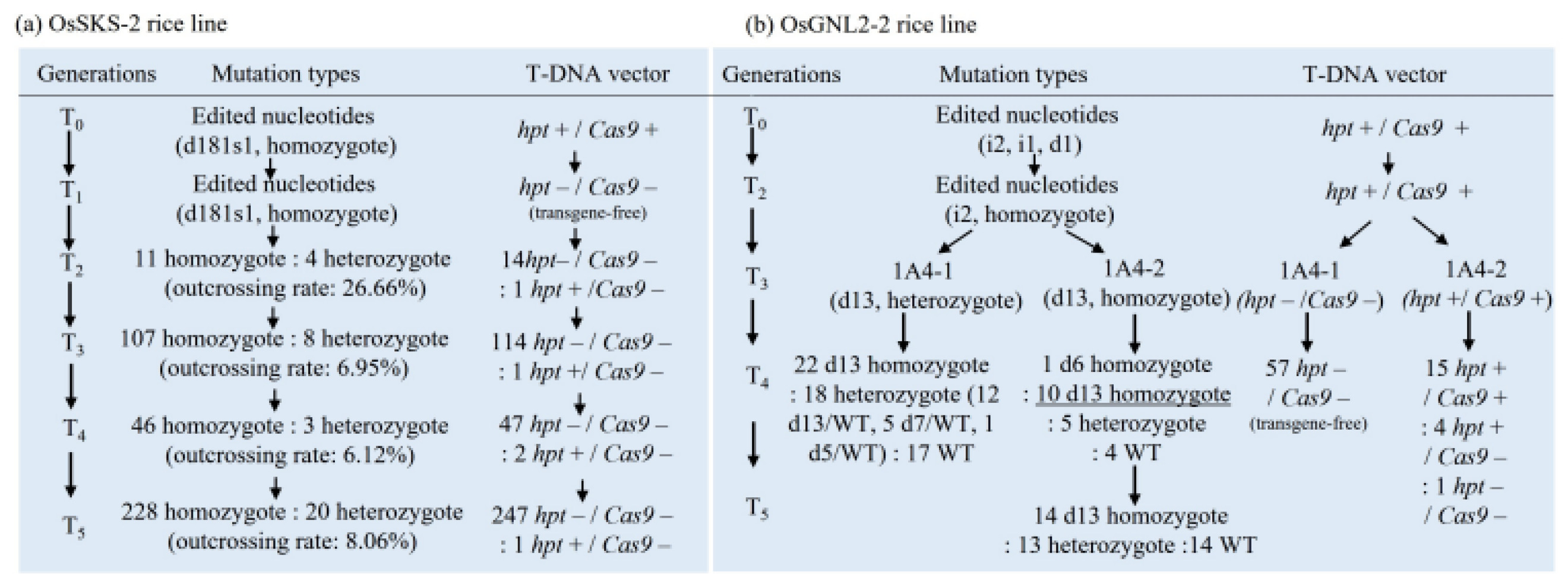
The OsSKS-2 rice line exhibited stable and heritable transmission of the edited nucleotides from the T
2 to T
5 generations (
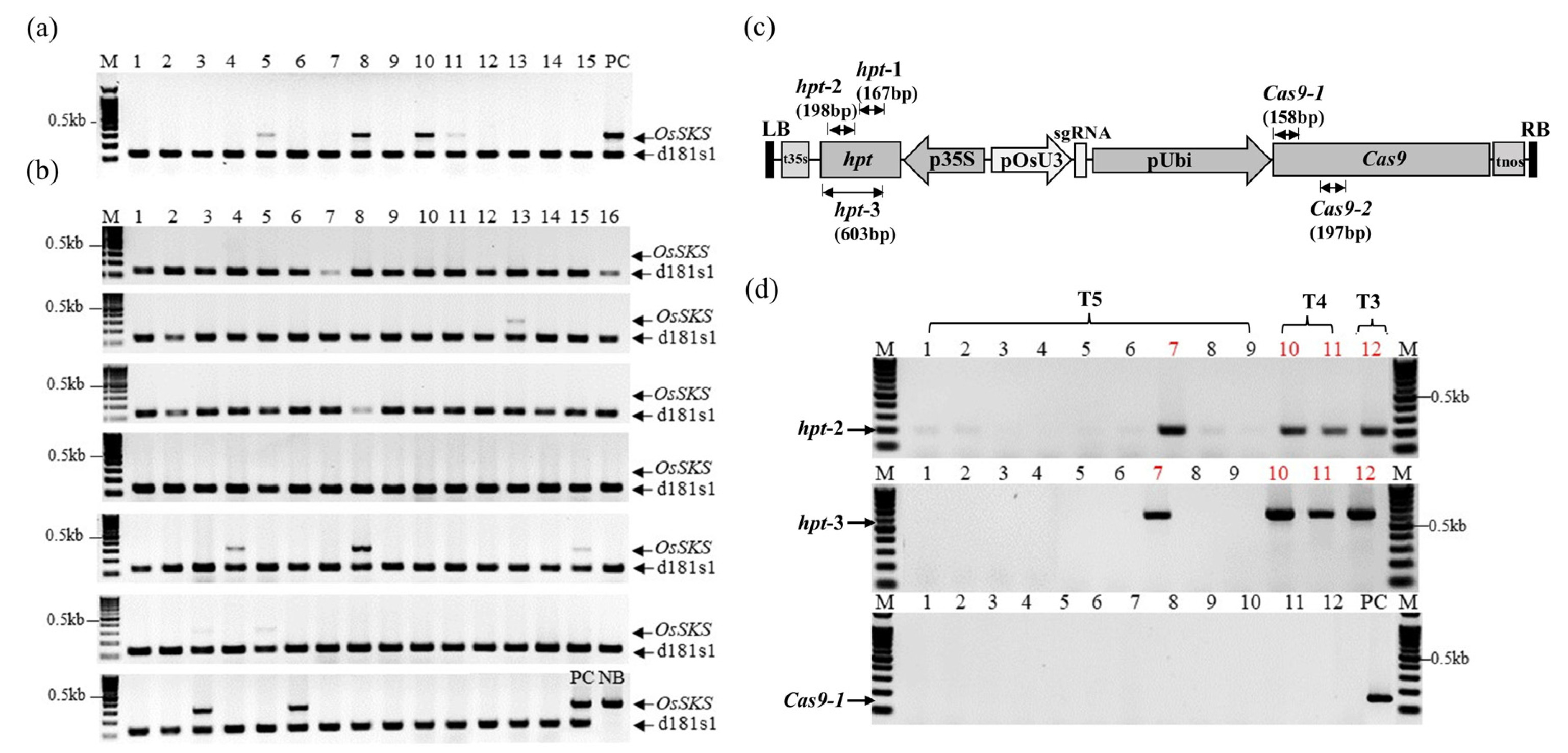
Fig. 1a). Allele-specific PCR using gene-specific primers was conducted on 15 T
2 plants, of which 11 exhibited a single 132 bp band, corresponding to the edited allele; meanwhile, four presented two bands of 132 bp and 306 bp, indicating the presence of both the wild-type and edited alleles (
Fig. 2a). In the subsequent T
3, T
4, and T
5 generations, 107 out of 115, 46 out of 49, and 228 out of 248 plants, respectively, displayed only the edited allele. However, 8, 3, and 20 plants in each respective generation exhibited both wild-type and edited alleles (
Figs. 1a and
2b). Notably, due to defective pollen tube germination, the OsSKS-2 rice line exhibited partial male sterility, leading to the acceptance of viable pollen from neighboring rice plants. Furthermore, consistent outcrossing events were observed from the T
2 to T
5 generations, with outcrossing rates ranging from 6.12% to 26.66%. In comparison, a T-DNA insertion mutant in the
OsSKS gene promoted increased outcrossing rates, reaching 23.20% in 2023 and 17.5% in 2024. To verify that these heterozygous plants were produced by outcrossing, we cloned PCR products from three heterozygous plants in the T
4 generation. For each plant, 16 positive colonies were selected for sequencing, and the results revealed the presence of only two allele types, the wild-type allele and the edited allele, in all colonies, confirming the occurrence of outcrossing events. Despite these outcrossing events, PCR and sequencing consistently confirmed the presence of an identical mutation—a 181 bp deletion accompanied by a 1 bp substitution—across five generations, demonstrating the stable inheritance of the edited allele.
The CRISPR-Cas9 transformation vector was constructed with three key components: a
hpt selection marker cassette, a
Cas9 expression cassette, and a guide RNA driven by the rice RNA polymerase III promoter (OsU3), as shown in
Fig. 2c (Xie et al. 2015). To account for potential partial insertions and non-specific amplification, various primer combinations targeting both short and long fragments of the
hpt and
Cas9 genes were tested to maximize the detection of any residual transgene elements. The presence of
hpt and
Cas9 was confirmed in T
0 plants of the OsSKS-2 rice line, and transgene-free individuals were selected to advance to the T
1 and subsequent generations (
Fig. 1a). However, the
hpt gene fragment was found at low frequencies across generations, with detection in 1 out of 15 T
2 plants, 1 out of 115 T
3 plants, 2 out of 49 T
4 plants, and 1 out of 248 T
5 plants. To further confirm the presence of the
hpt gene, a long fragment (603 bp) corresponding to the
hpt gene was successfully amplified from four
hpt-positive plants in the T
3, T
4, and T
5 generations, followed by Sanger sequencing (
Fig. 2d). The sequencing results confirmed that all amplified fragments matched the
hpt gene sequence, thereby verifying its presence in these plants. Among the four
hpt-positive plants, three were homozygous for the targeted mutation in the
OsSKS gene (
Supplementary Tables 2 to 5). The introduction of the
hpt gene via outcrossing required the rare circumstance in which rice mutants carrying
hpt, or OsSKS-2 plants containing the T-DNA vector, were growing in close proximity. Additionally, an alternative explanation is that the
hpt gene originated from partial T-DNA insertions inherited from earlier generations. These insertions may have gone undetected in previous screenings due to the presence of a low-frequency allele or tissue chimerism in plants that were previously considered transgene-free.
Two genotypes from the T
3 generation of the OsGNL2-2 rice line were selected for further advancement (
Fig. 1b). Both carried a confirmed 13 bp deletion at the target site. The 1A4-1 line was heterozygous and transgene-free, while line 1A4-2 was homozygous for the mutation and tested positive for both
hpt and
Cas9. Sequencing analysis of 57 T
4 plants derived from the heterozygous line 1A4-1 revealed a diverse segregation pattern at the target site of the
OsGNL2 gene. Among them, 22 plants were homozygous for the 13 bp deletion; meanwhile, 18 were heterozygous, comprising 12 individuals with both the 13 bp deletion and the wild-type allele, five with a 7 bp deletion and the wild-type allele, and one with a 5 bp deletion and the wild-type allele. The remaining 17 plants presented the wild-type genotype at the
OsGNL2 locus. Notably, all tested T
4 plants were confirmed to be transgene-free (
Fig. 1b).
Furthermore, 20 T
4 progeny derived from the homozygous T
3 plant 1A4-2, which possessed both transgene elements (
hpt and
Cas9), were analyzed for nucleotide mutations at the targeted
OsGNL2 locus (
Fig. 1b). These results revealed a range of genotypes, including 10 plants that were homozygous for the original 13 bp deletion, one plant that was homozygous for a 6 bp deletion, five heterozygous plants, and four wild-type plants. Segregation of the transgene cassette was also observed among the T
4 progeny: 15 plants were positive for both transgene elements (
hpt and
Cas9), four plants retained only the
hpt gene, and one plant was completely transgene-free. To further investigate this unexpected variation, 41 T
5 plants that were grown from seeds of a homozygous 13 bp deletion T
4 plant (transgene-positive) were examined. These findings are not readily explained by Mendelian inheritance. First, the presence of four distinct genotypes among the T
4 progeny suggests that the T
3 parent was not truly homozygous, despite initial genotyping results. It is also possible that the presence of the transgene cassette (specifically,
Cas9) contributed to the generation of new mutations, as evidenced by the detection of alternative alleles. Second, the segregation of multiple genotypes in the T
5 generation from a supposedly homozygous T
4 plant further supports the possibility that the T
4 plant was not homozygous. Instead, the T
4 plant may have been a genetic chimera, with undetected wild-type or alternative alleles present at low frequencies or restricted to tissues not sampled during initial genotyping. Such mosaicism could lead to misleading results in PCR and sequencing-based genotyping.
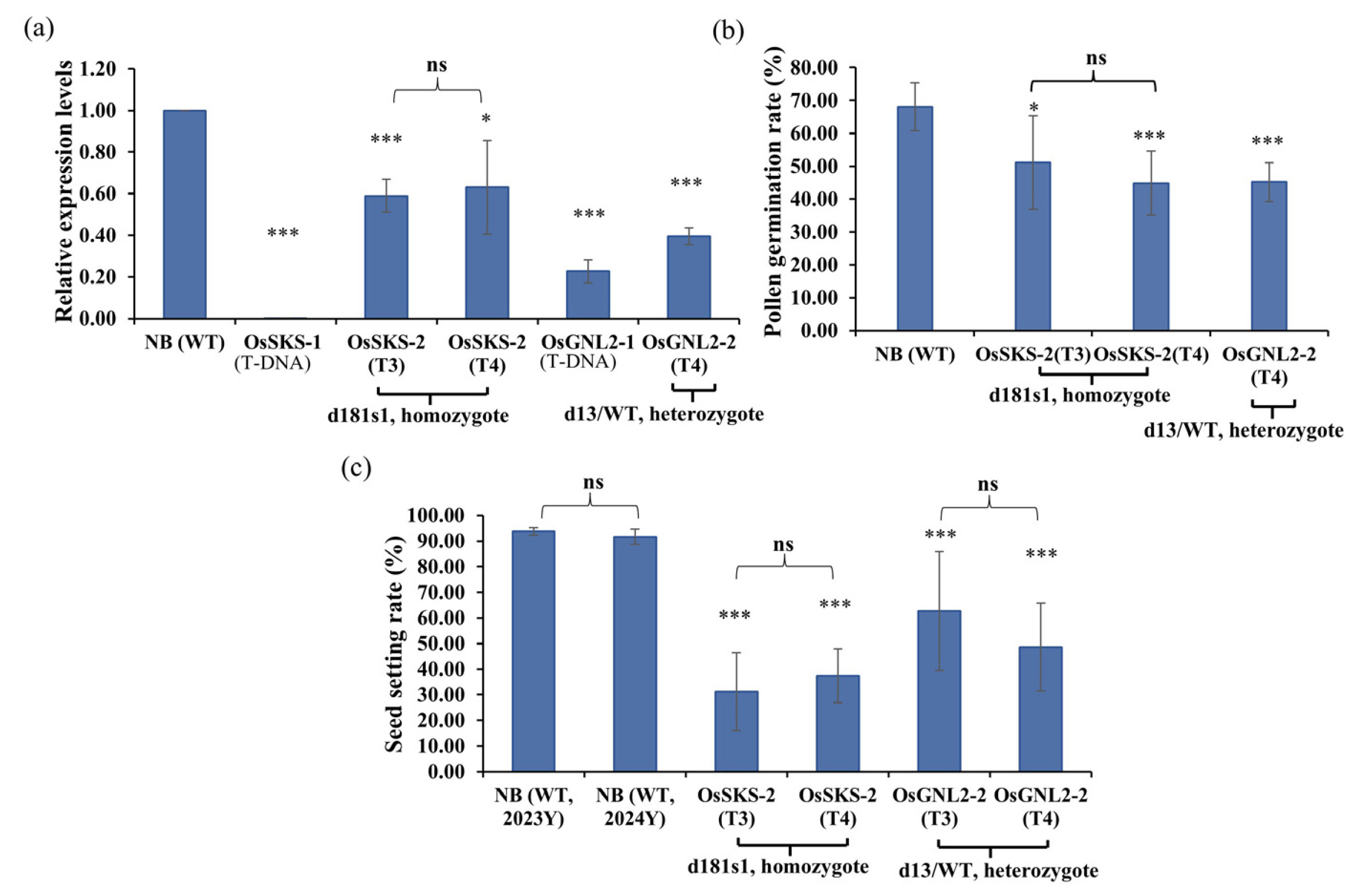
In the rice anther RNA transcriptomes, the
OsSKS and
OsGNL2 gene expressions were significantly downregulated in the CRISPR-Cas9-edited rice lines OsSKS-2 (
p < 0.001 in T
3;
p < 0.05 in T
4) and
OsGNL2-2 (
p < 0.001), respectively, compared to the wild-type donor variety
Nipponbare (
Fig. 3a). Although the large standard deviation suggests considerable variability in expression levels within the T
4 population, the overall expression level of
OsSKS remained consistent between the T
3 and T
4 generations of the OsSKS-2 line, with no observed significant differences. In contrast to the complete loss of
OsSKS expression observed in the OsSKS-1 T-DNA mutant, which possessed a promoter-region insertion, the CRISPR-edited OsSKS-2 line maintained approximately 59–63% of the wild-type
Nipponbare expression level. These results indicate that the edited gene expression in OsSKS-2 is both stable and heritable across generations.
Moreover, in vitro pollen germination rates of the OsSKS-2 and OsGNL2-2 lines were significantly reduced in both gene-edited lines compared to the wild-type variety
Nipponbare, which exhibited an average germination rate of 68.14±9.72% (n = 6). The OsSKS-2 line exhibited average germination rates of 51.10±14.22% in the T
3 generation (n = 5) and 44.83±9.72% in T
4 (n = 8), while the OsGNL2-2 line showed 45.20±5.87% in T
4 (n = 8) (
Fig. 3b). Although greater variability was observed among T
3 OsSKS-2 plants, both generations displayed consistently lower germination rates compared to the wild-type
Nipponbare. Additionally, the absence of a statistically significant difference between T
3 and T
4 generations indicates that the reduced pollen germination phenotype is stable and heritable.
As shown in
Fig. 3c, the seed setting rates of both gene-edited rice lines were significantly reduced in the T
3 and T
4 generations compared to the donor wild-type variety,
Nipponbare (
p < 0.001). While the wild-type variety consistently exhibited a high average seed setting rate of 92.90±2.52%, the
OsSKS-2 line showed markedly lower rates of 31.21±15.20% in T
3 and 37.42±10.51% in T
4. Similarly, the OsGNL2-2 line displayed reduced seed setting rates of 62.27±23.19% in T
3 and 48.61±17.17% in T
4. Although the GEd lines, particularly OsGNL2-2 in T
3, exhibited relatively large standard deviations, no statistically significant differences were observed between the T
3 and T
4 generations within each line. These results suggest that the phenotypic effects of the gene edits on seed setting were relatively stable across generations.
The guide RNA sequences from both CRISPR-Cas9 gene-editing vectors were used to perform an analysis
in silico to identify potential off-target sites in the rice genome. For the OsSKS-2 rice lines, the search was conducted using parameters that allowed up to three mismatches, a DNA bulge size of 2, and an RNA bulge size of 1. Subsequently, a total of 26 potential off-target sites spanning 13 loci on rice chromosomes were identified. Based on the rice genome database, ten of the identified loci were located in intergenic regions of rice chromosomes, while only three were positioned within intronic or exonic regions of genes. Since nucleotide alterations within exons or introns pose a greater risk of disrupting native gene function, changes occurring in intergenic regions are generally considered safer and less likely to produce unintended genetic or phenotypic effects. Accordingly, the three intronic/exonic loci were analyzed in detail to evaluate potential nucleotide alterations. We analyzed these loci in pooled DNA samples as follows: four pools from 40 T
2 plants (10 plants per pool), six pools from 58 T
4 transgene-free plants (five pools of 10 plants and one pool of 8 plants), and six pools from 57 T
4 transgene-carrying plants (five pools of 10 plants and one pool of 7 plants). Furthermore, PCR fragments targeting these loci on chromosomes 2, 3, and 4 were amplified from T
3 plants selected for progeny advancement. The resulting amplicons were subjected to TA cloning, and 10, 16, and 14 individual colonies, respectively, were sequenced for each locus (
Table 1). No sequence alterations were detected in any of the samples, indicating the absence of potential off-target effects induced by CRISPR-Cas9 in the generation of OsSKS-2 rice lines.
For the OsGNL2-2 rice lines, potential off-target sites were identified using two
in silico parameter settings: (1) two mismatches with a bulge size of 2, and (2) three mismatches with a bulge size of 1. The first setting identified 14 potential off-target sites across six genomic loci, while the second yielded 31 sites across 11 loci. Of these, four loci from each condition were located within intronic or exonic regions and were selected for sequence analysis (
Table 1). Each of the 7, 15, 8, and 14 colonies from the four loci on chromosomes 5, 6, 8, and 12, respectively, was screened by sequencing, although no sequence changes were detected in the selected T
3 plants. In the T
4 generation, we analyzed six DNA pools representing 57 transgene-free plants (five pools of 10 plants and one pool of 7 plants), seven pools from 69 transgene-carrying plants (six pools of 10 plants and one pool of 9 plants), and two pools from 20 dwarf plants used as references (10 plants per pool), which carried a 66 bp deletion at the
OsGNL2 target site. No additional sequence alterations were detected in any of the pools (
Supplementary Fig. 2). These results indicate that no off-target effects induced by the guide RNA occurred in either of the GEd rice lines, including the dwarf plants.
PCR bias promoted misinterpretation of the edited sequences
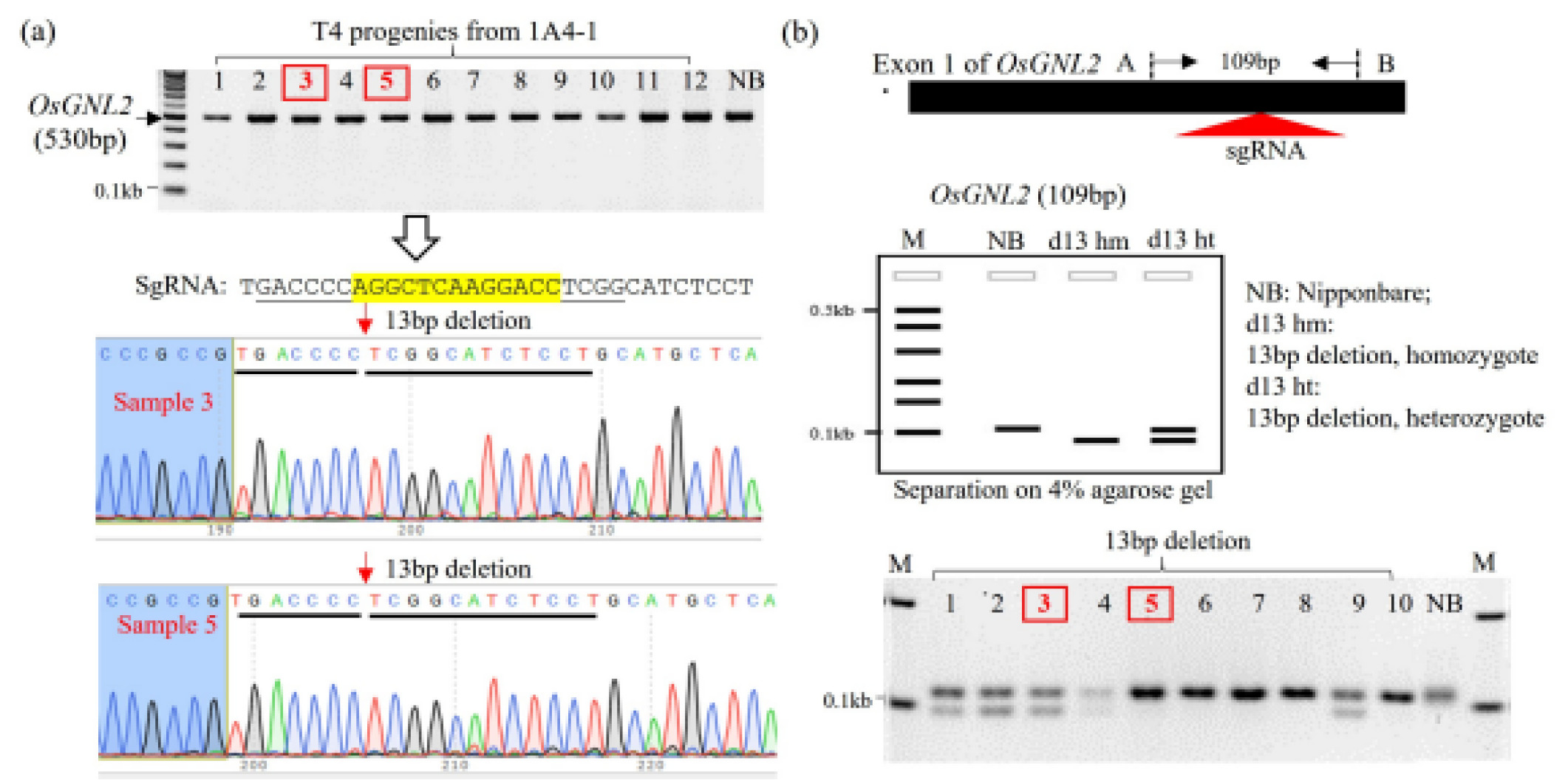
Several important issues arose during this study, which investigated the stable inheritance of CRISPR-Cas9-induced edits in the OsGNL2-2 rice line. The targeted edits in the
OsGNL2 gene were initially confirmed by PCR, which produced the expected 530 bp amplicon, followed by Sanger sequencing. Both samples 3 and 5 displayed a 13 bp deletion and appeared to be homozygous mutants (
Fig. 4a), as indicated by the clean and uniform Sanger chromatograms. Meanwhile, to reduce analysis costs for large progeny populations, short-range PCR was performed using specific primers designed to amplify a 109 bp fragment, enabling discrimination among wild-type (109 bp), homozygous 13 bp deletion (96 bp), and heterozygous genotypes (both bands) (
Fig. 4b). Contrary to the Sanger sequencing results, sample 3 displayed a heterozygous banding pattern, while sample 5 exhibited only the wild-type band. These discrepancies highlight the limitations of standard PCR-based genotyping and underscore the impact of amplification bias on accurately determining the zygosity of edited alleles.
Variation in editing outcomes depends on the employed sequence analysis method
Two T
3 generation plants, 1A4-1 and 1A4-2, derived from the OsGNL2-2 rice line, were analyzed for nucleotide edits using PCR and Sanger sequencing (
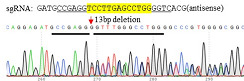
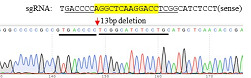
Table 2). Chromatogram analysis indicated that 1A4-1 carried a heterozygous mutation, while 1A4-2 exhibited a homozygous genotype. To further validate the CRISPR-Cas9-induced nucleotide edits, Sanger sequencing chromatogram files from both lines were analyzed using four bioinformatics tools to interpret mixed sequencing data: CRISPR-ID (
https://gbiomed.kuleuven.be/english/research/50488876/51819059/crisp-id), Tracking of insertion and deletions by DEcomposition (TIDE,
https://apps.datacurators.nl/tide/), Deconvolution of Complex DNA Repair (DECODR,
https://decodr.org/login), and Inference of CRISPR Edits (ICE,
https://ice.editco.bio/#/). In the case of the 1A4-1 line, CRISPR-ID and DECODR identified two genotypes from the sequencing trace: a wild-type and a genotype with a 13 bp deletion. In contrast, TIDE and ICE detected three genotypes, which included the same wild-type and 13 bp deletion, along with an additional 7 bp deletion. Further analysis of 20 T
4 progenies from the 1A4-1 line revealed diverse segregation patterns of genotypes. The observed genotypes included wild-type, homozygous 13 bp deletion, and heterozygous combinations of the wild-type with 13 bp, 7 bp, or 5 bp deletions, occurring at a ratio of 4:10:4:1:1, respectively. Notably, both the T
3 plant and its T
4 progenies were confirmed to be transgene-free.
In contrast, another homozygous T3 line, 1A4-2, harboring transgene elements, produced inconsistent genotyping outcomes. All four bioinformatics tools (CRISPR-ID, TIDE, DECODR, and ICE) consistently identified only a homozygous 13 bp deletion from the T3 Sanger sequencing data. However, genotypic analysis of 20 T4 progenies revealed segregation into multiple genotypes, including a homozygous 6 bp deletion, a homozygous 13 bp deletion, a wild-type, and heterozygotes combining the wild-type and 13 bp deletion. The observed segregation ratio was 1:10:5:4, respectively. These results suggest that the T3 plant 1A4-2 was not truly homozygous. Considering the possibility that PCR-based Sanger sequencing may fail to detect low-frequency alleles, TA cloning of the PCR product was performed, and 32 positive colonies were selected for sequencing. The results revealed that only one colony exhibited a heterozygous genotype containing both the 13 bp deletion and the wild-type allele, whereas all other colonies displayed the homozygous 13 bp deletion genotype. These findings suggest that a low level of residual wild-type alleles persisted in the genome of the T3 plant 1A4-2, and the presence of the Cas9 transgene may have facilitated additional editing events in the T4 generation, resulting in the emergence of a novel 6 bp deletion allele.
Different mutation types possibly occurred in various tissues of the OsSKS-2 edited rice line
Persistent heterozygous plants were observed across successive generations when evaluating the genetic stability of the OsSKS-2 rice line. Thus, we sequenced all of the heterozygous individuals to investigate this phenomenon further. Each plant was found to carry only the wild-type and edited alleles at the targeted
OsSKS gene, with no evidence of new or unintended mutations. This consistent allelic pattern suggests that the observed heterozygosity is most likely due to outcrossing, rather than somatic mosaicism or editing-induced instability. Interestingly, during the transition from the T
1 to T
2 generation, a similar pattern was observed in a separate GEd line targeting
Os01g0956500, an uncharacterized gene that may be involved in partial sterility. The T
1 plant of this edited line was confirmed to be homozygous for a 116 bp deletion at the target locus, as determined by PCR amplification, target site cloning, and Sanger sequencing. Among the 43 T
2 progenies analyzed, only one individual was identified as heterozygous; meanwhile, the remaining plants were homozygous for the same 116 bp deletion (
Supplementary Fig. 3a). Subsequently, the PCR amplicon was cloned to investigate the underlying allelic diversity in the heterozygous plant, and 16 positive colonies were subjected to colony PCR. The resulting amplicons showed size variation, suggesting the presence of multiple edited alleles (
Supplementary Fig. 3b). Consequently, eight colonies were selected for Sanger sequencing, which revealed four distinct types of nucleotide edits: a 1 bp insertion, and deletions of 5 bp, 21 bp, and 116 bp (
Supplementary Fig. 3c). However, some of the nucleotide edits (except for 116 bp deletion) identified in the T
2 progenies were not detected in the T
1 plant, suggesting the occurrence of tissue mosaicism. This phenomenon may be explained by the presence of different edited alleles in various tissues, such as the root, stem, or panicle, which were not captured during genotyping, as DNA extraction was typically performed from leaf tissue.
Discussion
This study utilized two CRISPR-Cas9-GEd rice lines, OsSKS-2 and OsGNL2-2, both of which carry mutations in genes associated with pollen tube germination and growth that promote partial male sterility. The OsSKS-2 line harbored an on-target mutation in the OsSKS gene, characterized by a large 181-nucleotide deletion and a single-nucleotide substitution that affected the PAM region. The OsGNL2-2 line carried an on-target mutation in the OsGNL2 gene, characterized by a 13-nucleotide deletion within the seed region adjacent to the PAM sequence, which resulted in a frameshift and the introduction of a premature stop codon. We evaluated the generational stability of molecular characteristics for the two GEd lines under both field cultivation and laboratory conditions, focusing on several aspects, including the inheritance of edited nucleotides up to the T5 generation, gene expression profiles, phenotypic effects of the on-target mutations, and the detection of potential off-target mutations. Using subsequent generations of both lines, we confirmed that the edited OsSKS gene was stably inherited through the T5 generation. Although limited plant material led to unintended outcrossing events, nucleotide sequence analysis consistently verified the stable transmission of the edited allele.
However, an unexpected issue arose in the progeny of the OsSKS-2 line regarding the presence of the T-DNA vector. In each generation, one or two plants that derived from the transgene-free mother plants were unexpectedly positive for the hpt gene. Meanwhile, among the four hpt-positive plants analyzed, only one T3 plant was heterozygous for the edited OsSKS gene. In contrast, the remaining three displayed homozygous mutations at the OsSKS target site. One possible explanation is that a low-frequency partial insertion of the T-DNA may have occurred in the original transgene-free T1 plant, resulting in tissue mosaicism for the hpt gene that PCR of leaf-derived DNA did not detect. Thus, the frequency of hpt segregation was low in subsequent generations. Alternatively, the partial male sterility observed in OsSKS-2 rice lines could have increased the likelihood of outcrossing. Despite cultivation of this line in a separate block with a 60-cm isolation distance from other rice mutants within the same field plot, the possibility remains that OsSKS-2 plants might have acquired hpt-carrying pollen from adjacent mutants. While male sterility is uncommon, it provides valuable insights for biosafety assessment and field cultivation of GEd rice lines. In addition, this study focused exclusively on PCR-based detection of the selection marker hpt and the Cas9 gene to assess the presence or absence of transgenic elements. However, the situation described above suggests that incorporating NGS-based vector and backbone sequence analyses at early generations would be beneficial for identifying transgene-free plants and facilitating the advancement of subsequent generations (Qin et al. 2017).
Additionally, the T-DNA detection results in the OsGNL2-2 rice line showed that the T3 transgene-free plants produced entirely transgene-free T4 progeny. In contrast, the T3 plants carrying the transgene exhibited a distorted segregation pattern of the hpt gene, suggesting the presence of at least two T-DNA insertion loci, with the possibility that one of the loci contains a partial T-DNA construct. The OsGNL2-2 rice line exhibited a relatively complex pattern of edited allele inheritance across generations. A T3 transgene-free heterozygous plant, harboring both the 13 bp deletion and wild-type alleles, produced diverse genotypic segregations in the T4 progeny. Meanwhile, novel mutations were detected in addition to the expected edits. Similarly, T3 transgene-carrying homozygous plants with the 13 bp deletion generated new mutations in the T4 generation, suggesting continued Cas9 activity, potentially targeting residual wild-type alleles. However, it is worth noting that the complexity of these results may be partly attributed to inherent limitations in the genotyping methods, which primarily rely on PCR-based sequencing or cloning. Although PCR-based sequencing is a cost-effective and widely used approach for analyzing edited nucleotides, this method is prone to PCR bias, which often leads to preferential amplification of dominant alleles in a DNA sample. Thus, this method potentially overlooks low-frequency alleles, resulting in a misinterpretation of genotyping outcomes. Sentmanat et al. (2018) evaluated genome editing efficiencies of the CRISPR-Cas9 system in mammalian cells using four PCR-based assays: the T7 endonuclease I (T7E1) mismatch detection assay, targeted NGS, TIDE, and Indel detection by amplicon analysis (IDAA). Notably, the T7E1 assay yielded editing efficiency estimates that differed from those obtained by NGS. Moreover, TIDE and IDAA were prone to allele miscalling, largely due to limitations associated with PCR-based methods, including preferential amplification of smaller amplicons and constraints imposed by the limited number of amplification cycles. In our study, discrepancies were observed in the OsGNL2-2 line for some samples between the short-range PCR results and those obtained from PCR-based sequencing; thus, it was challenging to accurately determine the genotypes at the edited site. Such inconsistencies can affect the identification of homozygous plants and the evaluation of their progeny. Furthermore, the extraction of mutation nucleotides from Sanger sequencing chromatograms relies on bioinformatics tools. Indeed, variations in the results were observed when four online programs, consisting of TIDE, CRISPR-ID, DECODR, and ICE, were applied to the same Sanger sequencing file (Bloh et al. 2021; Brinkman et al. 2014; Conant et al. 2022; Dehairs et al. 2016). In the case of the T3 homozygous plant, 1A4-2, the edited region of the target gene was amplified using high-fidelity Taq polymerase and cloned to identify potential mutations. Among 32 sequenced positive colonies, 31 possessed an identical 13 bp homozygous deletion, while one clone displayed a heterozygous sequence pattern. No additional mutation types were detected, and these results were largely consistent with the PCR-based Sanger sequencing data analyzed using four different deconvolution tools. Interestingly, analysis of the T4 progeny revealed not only homozygous and heterozygous mutant alleles but also wild-type sequences and a novel 6 bp deletion. These findings suggest the presence of low-frequency wild-type alleles in the T3 parent, likely in a chimeric form, which may have been below the detection threshold of conventional cloning and sequencing methods. Alternatively, this observation suggests that the OsGNL2 gene may be essential for normal plant development, such that complete loss-of-function alleles are either negatively selected or actively repaired. Therefore, these findings suggest that upon the generation of homozygous edited alleles, the plant may activate its endogenous repair mechanisms to restore partial gene function and ensure viability.
Consistently, several studies have previously reported unexpected inheritance patterns from T
0 to T
1 generations in rice (Xu et al. 2015; Zhang et al. 2014). The distorted segregation observed in T
1 generations may have contributed to the underestimation of mutation frequency or the failure to detect mutated alleles using PCR-based methods. Indeed, one possible explanation is tissue chimerism, where mutations occur in tissues other than those sampled (typically leaves). For example, Zhang et al. (2014) analyzed both leaf tissue and mixed samples consisting of shoots, panicle branches, and glumes in T
0 plants. Zhang et al. (2014) found that some mutations detected in T
1 generations were already present in non-leaf tissues of the original T
0 plants, but were undetectable in the corresponding leaf samples. Our findings are consistent with the conclusion that CRISPR-Cas-induced mutations can be stably transmitted to subsequent generations. Moreover, whereas most previous studies have focused on assessing mutation stability up to the T
2 generation, our findings extend this analysis to the T
5 generation, confirming the stable inheritance of the edited mutation in the OsSKS-2 line. Nonetheless, the continued low-frequency presence of the
hpt gene cannot be entirely attributed to outcrossing events. An alternative explanation may involve tissue chimerism arising from mosaic or incomplete T-DNA integration. Because T
0 and T
1 generation samples for the OsSKS-2 line were unavailable, we instead examined another gene-edited T
1 line targeting
Os01g0956500. This T
1 line carried a 116 bp deletion at the sgRNA target site induced by CRISPR-Cas9, similar to the alteration observed in OsSKS-2. We analyzed this T
1 plant, which was homozygous for the deletion, along with its T
2 progeny (
Supplementary Fig. 3). Notably, a T-DNA insertion mutant of
Os01g0956500 displayed partial male sterility, and segregation analysis of reciprocal crosses showed a male transmission rate of only 27.3%. These results suggest that
Os01g0956500 may function as a male sterility gene. Based on this, we initially suspected that the appearance of a heterozygous plant in the T
2 generation was due to an outcrossing event, similar to the pattern observed in the OsSKS-2 line. However, cloning and sequencing revealed four different edited alleles: in addition to the 116 bp deletion found in the T
1 plant, we also identified a 21 bp deletion, a 5 bp deletion, and a 1 bp insertion. These findings indicate that the heterozygosity, initially presumed to result from an outcrossing event, was due to tissue chimerism, which was undetected in the T
1 leaf DNA sample but segregated in the T
2 generation. Notably, only a single T
2 plant possessed all four edited alleles, demonstrating a highly distorted segregation pattern and further confirming the presence of tissue chimerism. However, as shown in the OsSKS-2 rice line, this tissue chimerism phenomenon can be effectively eliminated through selection in subsequent generations.
The unexpected outcomes encountered during the analysis of edited nucleotide stability across generations highlight the critical importance of confirming genome edits over multiple generations. To minimize such occurrences, we propose the following recommendations: First, when validating nucleotide mutations in target genes using PCR-based methods, Sanger sequencing should be conducted with both forward and reverse reading directions. Due to the limitations of Sanger sequencing, the same PCR product can sometimes yield different sequence reads depending on the direction of sequencing. Second, PCR cloning of the target gene is a valuable approach for comprehensively identifying diverse mutation types. However, high-fidelity DNA polymerases should be used for target amplification to enhance accuracy and minimize the introduction of errors by Taq polymerase. Third, the use of multiple deconvolution tools (e.g., TIDE, ICE, DECODR, CRISPR-ID) is recommended to increase the reliability of Sanger sequencing analysis. Nevertheless, unexpected results may still arise due to the presence of low-frequency mutant alleles in the genome, which might escape detection in earlier generations. Targeted NGS could serve as a more comprehensive approach to detect all possible alleles at the target site; however, the high costs of this technique often limit its routine application. Importantly, multi-generational genotyping provides an opportunity to detect unintended editing outcomes that might otherwise go unnoticed. Therefore, it is recommended that edited plants be monitored over at least two successive generations and that a larger number of individuals be analyzed in each generation, as certain mutations undetectable in early generations may only become apparent over time. In the case of the OsSKS-2 rice line, although the edited nucleotides were heritable and stable, complete removal of transgenic elements was not achieved across five generations, likely due to limited starting material and unsuccessful selection for transgene-free individuals in the early generations.
Presently, various approaches have been developed to identify potential off-target sites following CRISPR/Cas9, including computational predictions based on sequence alignment or scoring models, as well as experimental methods that utilize cell-free systems, cell cultures, or in vivo assays (Guo et al. 2023). Indeed, Zhang et al. (2014) predicted five putative off-target sites for a guide RNA targeting the OsYSA gene, each containing between 1 and 7 bp mismatches. These predicted sites were then compared with SNPs and insertions/deletions (indels) identified from whole-genome resequencing data. At one locus with a 1 bp mismatch located outside the seed region of the OsYSA target site, off-target mutations were detected in 7 out of 72 rice plants. Similarly, Xu et al. (2015) identified a potential off-target site for a guide RNA targeting the OsBEL gene, where a 1 bp mismatch occurred alongside a compatible PAM sequence. Subsequently, Xu et al. (2015) used gene-specific primers to amplify the region in both T0 and transgene-free T1 rice plants, followed by sequencing; however, no sequence alterations were observed in those samples. Nonetheless, off-target mutations were found in 2 out of 60 transgene-positive rice plants derived from a different T0 plant (Xu et al. 2015). In another study, Feng et al. (2014) conducted an off-target analysis in Arabidopsis by predicting putative off-target sites based on the most critical 12 bp seed region and the full 20 bp guide RNA sequence, respectively. The sequencing reads carrying PAM sequences (e.g., NGG or other variants) were specifically selected and compared with SNP and indel datasets to identify potential off-target mutations. No off-target mutations were observed in either the T1 or T2 generations. Zhang et al. (2020) selected 12 sgRNAs based on the presence of morphological defects observed in one or more mutant tomato lines. Using both Cas-OFFinder and Geneious R11, Zhang and co-authors predicted 18 potential off-target sites. These sites were examined in 12 T0, 68 T1, and 44 T2 plants using PCR and Sanger sequencing, and no alterations were detected at any of the predicted off-target sites. In a separate study, Tang et al. (2018) conducted whole-genome resequencing on 34 Cas9-edited rice T0 and T1 plants at a coverage depth of 45×. Interestingly, only one off-target mutation was identified in T0 plants at a site predicted by the computational tools Cas-OFFinder and CRISPOR, under conditions allowing up to three mismatches with the guide RNA. In contrast, an average of 102 single-nucleotide variations (SNVs) and 32 indels per plant were detected, most of which were attributed to somaclonal variation induced by tissue culture or spontaneous mutations, as revealed by comparison with wild-type control plants. The results of this study, along with prior findings, highlight the high specificity of CRISPR-Cas9 in inducing targeted mutations in rice. While off-target events were occasionally detected, these events were typically confined to sites that had been predicted in silico, within a ≤ 3 bp mismatch threshold, and did not persist across generations. Currently, no heritable transmission of off-target mutations has been reported in later generations, including T2. Nonetheless, transformation-induced structural variations such as chromosomal rearrangements and translocations may arise during the editing process. These alterations can be effectively identified using long-read sequencing platforms, such as Nanopore (Kondo et al. 2022). However, given the high cost and technical demands of such methods, the combined use of generational advancement and rigorous selection or backcrossing is generally sufficient to eliminate these abnormalities during routine breeding (Authority et al. 2021). Modrzejewski et al. (2020) conducted a binary logistic regression analysis to evaluate five factors influencing off-target effects: mismatch number, mismatch position, GC content of the target sequence, nuclease variants, and delivery methods. Their study drew on 180 publications covering 6,416 potential off-target sites. The analysis revealed that increasing mismatches between the on-target and potential off-target sequences substantially reduced the likelihood of off-target activity, with the observed rate decreasing from 59% for a single mismatch to nearly 0% when four or more mismatches were present. In line with earlier reports, our study employed Cas-OFFinder to predict potential off-target sites in silico, using guide RNA sequences targeting the OsSKS and OsGNL2 genes with a maximum mismatch allowance of three bases. We selected candidate off-target sites located within intron or exon regions for further analysis using T3 and T4 generation plants. In the T3 generation, PCR-based cloning was employed, while pooled DNA from up to ten plants was used in the T4 generation. Sanger sequencing was conducted in both cases to detect potential sequence alterations. To evaluate the association between transgene presence and off-target effects, plants were categorized into two groups: transgene-carrying and transgene-free. Additionally, dwarf lines derived from the OsGNL2 GEd line were included to determine whether the observed phenotype was linked to CRISPR-Cas9-induced off-target mutations. Our results revealed no true off-target mutations in either GEd line, including transgene-carrying plants and phenotypically dwarf individuals.
Our study evaluated gene expression and target phenotypes in CRISPR-Cas9-edited rice lines, with a particular focus on the OsSKS-2 line. This line demonstrated heritable stability, as both gene expression patterns and associated phenotypes remained consistent across two successive generations. However, notable variation was observed among individual OsSKS-2 plants in gene expression levels and phenotypic traits, particularly in in vitro pollen germination rates. While no statistically significant differences were found between the T3 and T4 generations overall, the observed individual variability may reflect differences in developmental stage at the time of sampling or environmental conditions, such as temperature and humidity, which are known to affect in vitro pollen germination. In addition, the limited sample size likely contributed to the large variation observed. The observed phenotypic variability among individuals may also reflect inherent characteristics of the target gene, including whether the gene has redundant homologs or whether a loss-of-function mutation leads to prolonged instability in anther transcriptomes. Nevertheless, the population-level stability, as reflected in the standard deviation of trait values, should fall within the typical range of variation observed among widely cultivated commercial rice varieties. Notably, no unintended effects are expected for non-target traits, including heading date, plant height, panicle length, tiller number, grain weight, spikelet number, and pollen viability. In our study, pollen-specific gene editing is unlikely to affect these agronomic traits, which are theoretically expected to remain comparable to those of the donor variety, Nipponbare. However, transcriptome analysis of anthers revealed alterations in gene expression related to multiple plant hormone biosynthesis pathways. Although the effects of these changes on overall vegetative and reproductive development remain to be fully elucidated, we propose that evaluating the extent of individual variation in targeted phenotypic traits, within the expected range observed in conventional varieties, is essential to confirm the stability and uniformity of gene-edited lines. Furthermore, assessing the equivalence of non-target traits compared to the donor variety is also important for comprehensive characterization.
Conclusion
The present study utilized two CRISPR-Cas9-GEd rice lines to evaluate the stability of gene editing across generations. Thus, these data could provide valuable study-based insights for the development of a preliminary review committee for GEd crops in Korea, ensuring regulatory alignment with international trade standards. A GEd homozygous rice line OsSKS-2, harboring a 181 bp deletion and a 1 bp substitution at the target gene OsSKS, exhibited heritable stability in edited nucleotides, gene expression, and targeting phenotypes across multiple generations. Another line, OsGNL2-2, which harbors a 13 bp deletion of OsGNL2 gene, showed evidence of genetic chimerism in nucleotide editing across generational analysis. This case highlights key challenges associated with PCR-based approaches for tracing edited nucleotides, including PCR amplification bias, limitations in variant deconvolution tools, and the presence of tissue chimerism. Based on these findings, we propose several considerations to minimize misinterpretation during the evaluation of editing outcomes, particularly for the accurate identification of homozygous lines and the reliable propagation of edited progeny. Furthermore, the incomplete elimination of transgenic elements over five successive generations, likely attributable to limited initial plant material and suboptimal PCR-based selection using leaf-derived DNA for identifying transgene-free individuals in early generations, highlights the critical importance of monitoring transgenic elements across at least two successive generations and performing comprehensive analysis of a large population in each generation to ensure complete segregation. Moreover, off-target analysis showed that combining in silico prediction using Cas-OFFinder, based on sgRNA sequences with a mismatch threshold of ≤ 3 bp and a bulge size of ≤ 2 bp, with PCR-based sequencing of predicted sites, is an effective strategy for detecting CRISPR-Cas-induced off-target mutations. No true off-target mutations were detected in the genomes of the OsSKS-2 and OsGNL2-2 lines, regardless of the present transgene, across both the T3 and T4 generations. These results, together with evidence from previous studies, suggest that off-target validation can be reliably performed as early as the T2 generation.
Acknowledgments
This work was carried out with the support of "Studies for supporting risk assessment of agricultural biotech organisms (Project No. RS-2024-00398319)", Rural Development Administration, Republic of Korea.
Fig. 1Stability of CRISPR-Cas9-edited nucleotides, and absence or presence of transgene elements over multiple generations of two gene-edited rice lines, OsSKS-2 (a) and OsGNL2-2 (b). d181s1 denotes a 181 bp deletion and a 1 bp substitution; hpt-/Cas9- and hpt+/Cas9+ indicate absence or presence of hygromycin resistant gene and Cas9, respectively. i2, i1, d1, d13, and d6 represent a 2 bp insertion, a 1 bp insertion, a 1 bp deletion, a 13 bp deletion, and a 6 bp deletion, respectively.
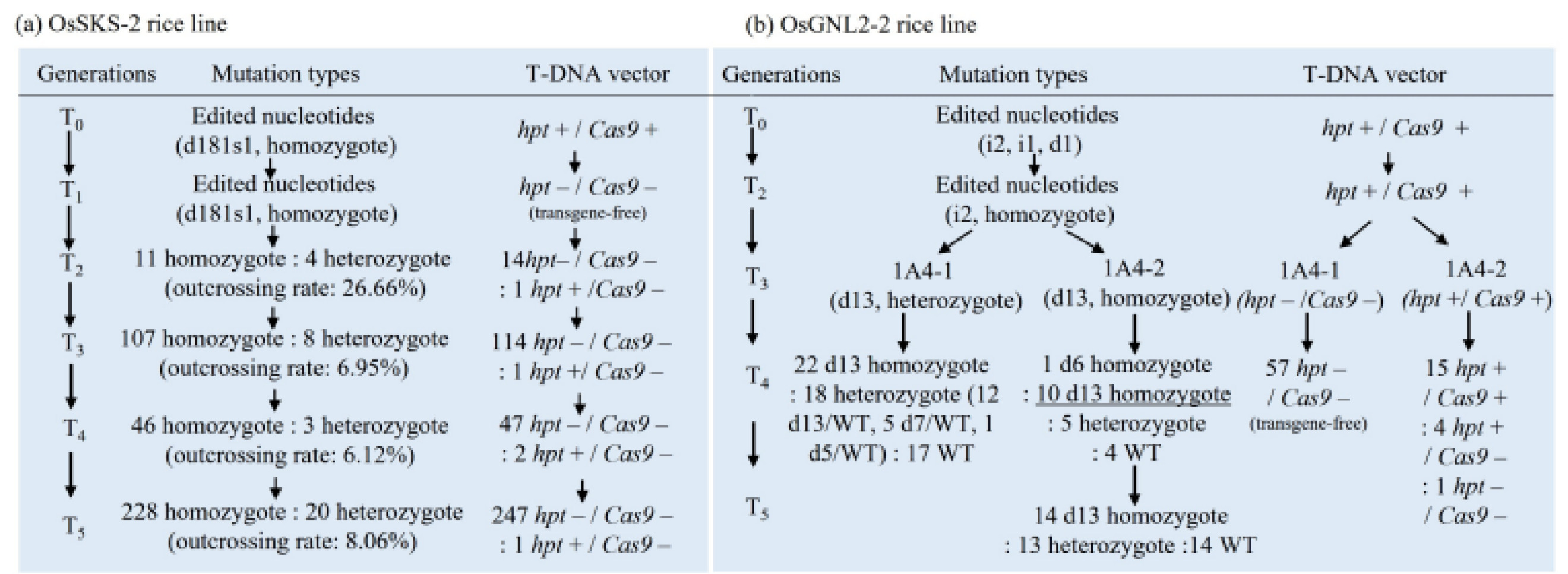
Fig. 2Genotypic characterization of the edited OsSKS gene and transgene analysis of the OsSKS-2 edited rice line across generations. (a, b) Confirmation of OsSKS gene mutations in T2 and T3 generations of the OsSKS-2 edited line. d181s1: 181bp deletion and 1bp substitution of OsSKS gene; PC: positive control, DNA mixture of wild-type Nipponbare and OsSKS-2 line. (c) Schematic of the CRISPR/Cas9 vector and PCR strategy used to detect transgene elements. (d) Reconfirmation of transgene elements to assess their presence in OsSKS-2 rice lines. Lane number marked by red letter: PCR product sequencing; PC: transformation vector (positive control).
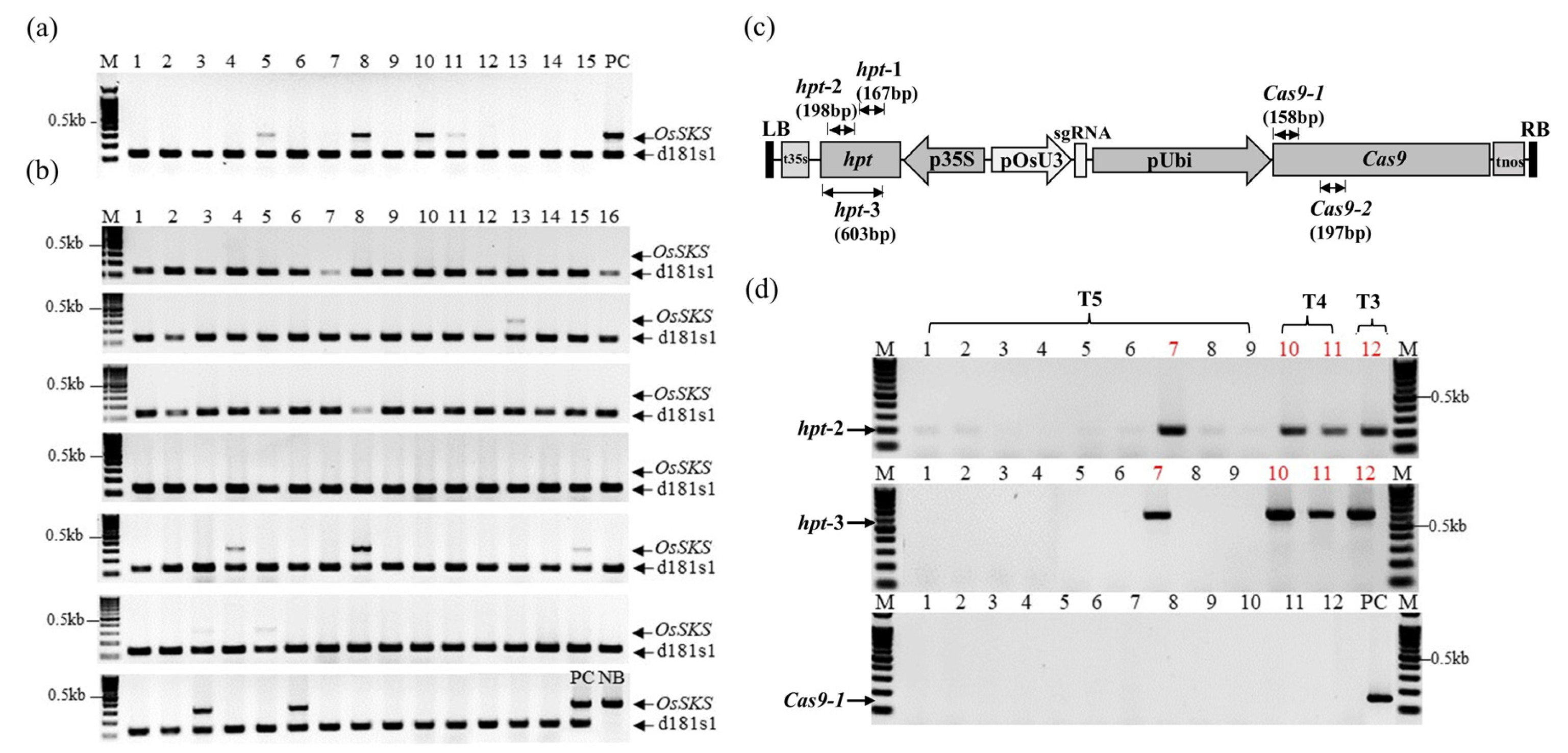
Fig. 3Morphological and reproductive phenotypes associated with gene editing in two CRISPR-Cas9-edited rice lines compared with the donor wild-type (Nipponbare). (a) Relative expression levels of the target genes in edited lines. OsSKS-1: T-DNA insertion mutant of the OsSKS gene; OsSKS-2: CRISPR-Cas9-edited mutant of the OsSKS gene carrying a 181-bp deletion and a 1-bp substitution in a homozygous background (d181s1); OsGNL2-1: T-DNA insertion mutant of the OsGNL2 gene; OsGNL2-2: CRISPR-Cas9-edited mutant of the OsGNL2 gene carrying a 13-bp deletion in a heterozygous background (d13/WT). (b) In vitro pollen germination rates (%). (c) Seed-setting rates (%). Asterisks (*) and (***) denote statistically significant differences at p < 0.05 and p < 0.001, respectively, compared with the wild type (WT). “ns” indicates no significant difference.
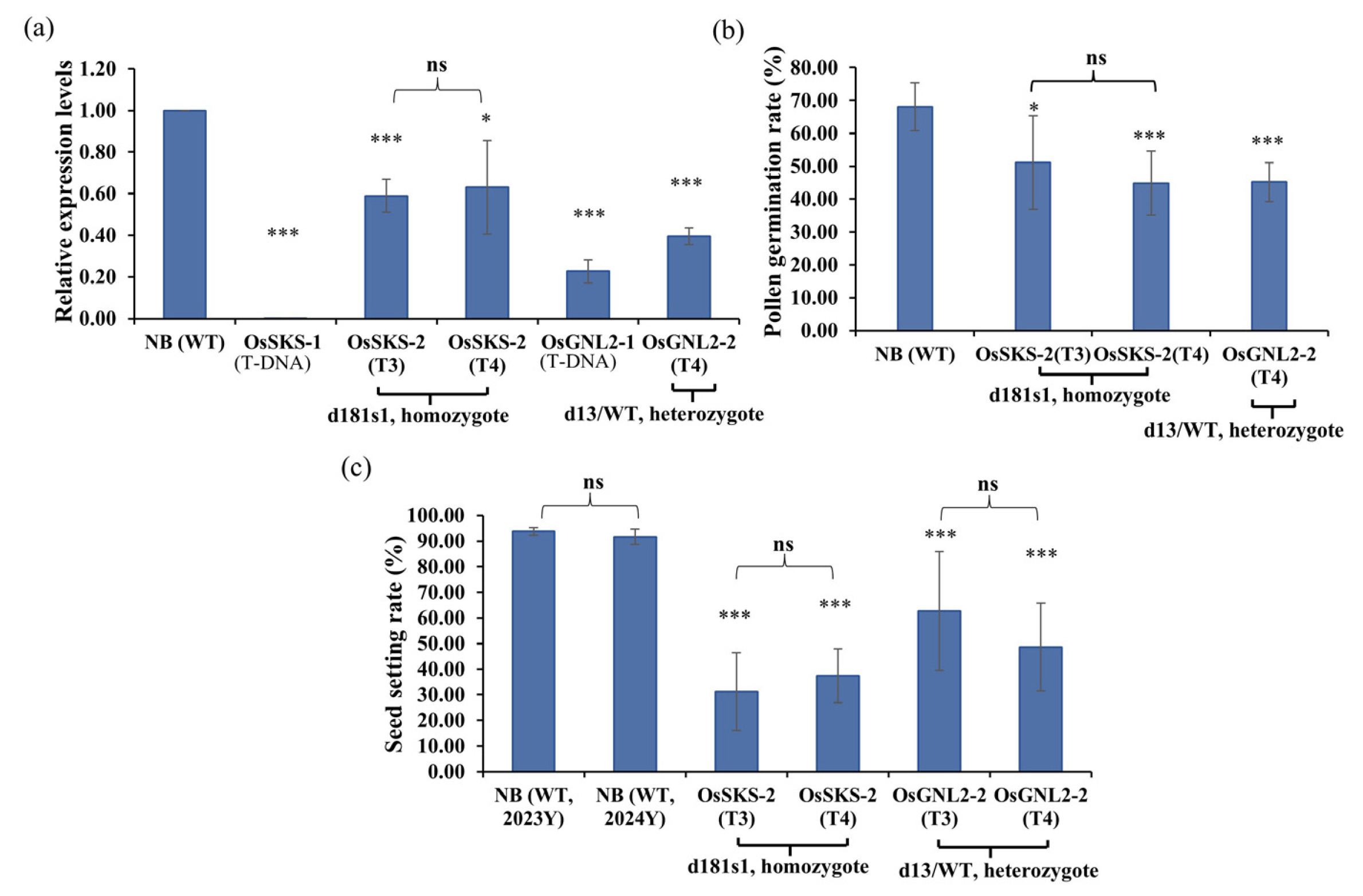
Fig. 4PCR strategies used to identify edited mutations in the T4 OsGNL2-2 rice lines. (a) A 530 bp PCR product was amplified from the target gene region and analyzed via Sanger sequencing; representative chromatograms are shown. (b) Short-range PCR amplification targeting specific mutations was performed, and the products were resolved on a 4% agarose gel. Samples highlighted with red rectangles indicate discrepancies observed in the same DNA samples between the two methods.
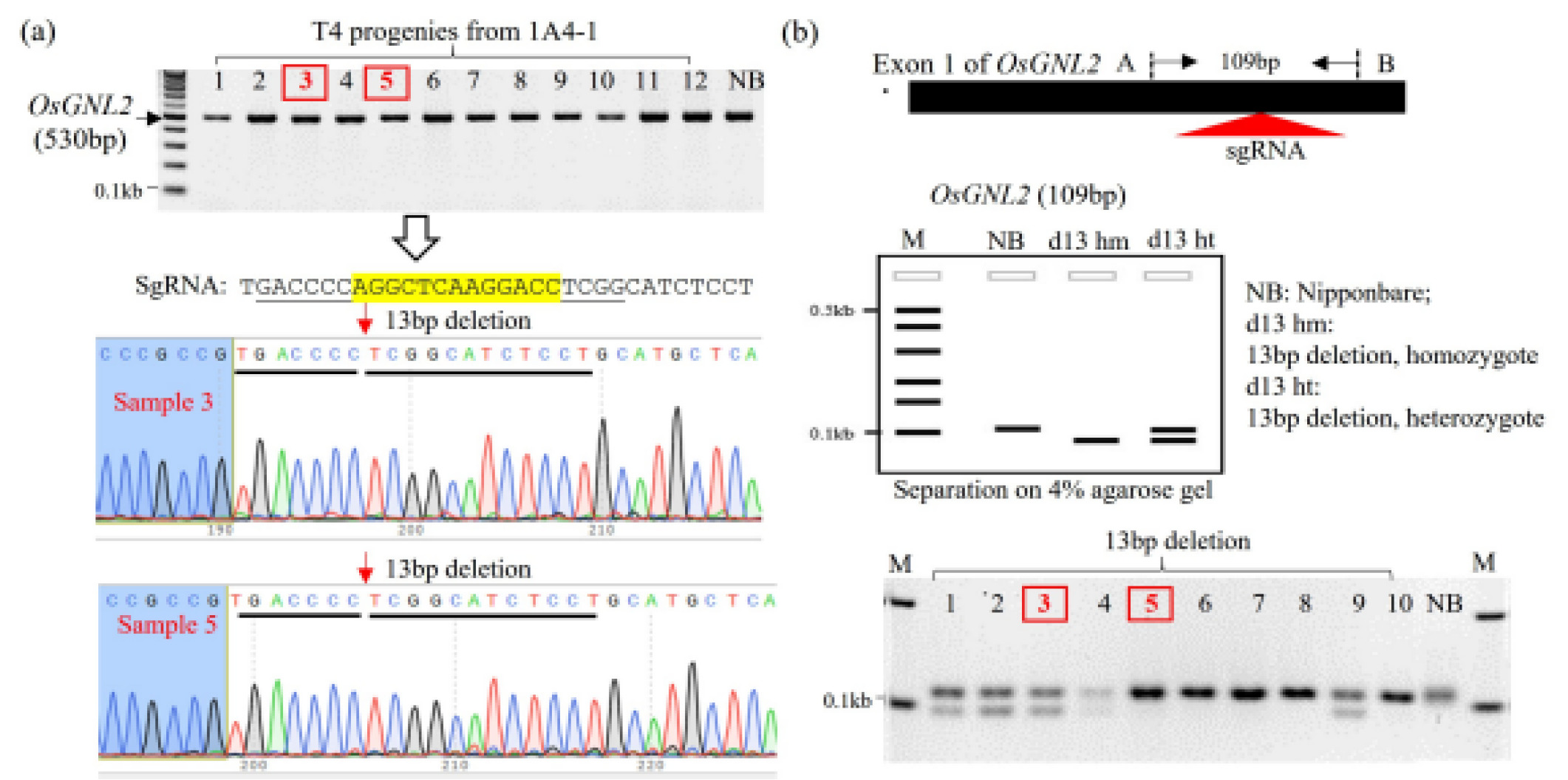
Table 1Potential off-target sites for examination based on the sgRNA of targeted genes across generations of two CRISPR-Cas9-edited rice lines: OsSKS-2 and OsGNL2-2.
Table 1
|
Putative off-target loci |
Sequence of the putative off-target sites |
No. of mismatches/Bulge size |
Putative involved genes and genome sites |
No. of off-target sites
(No. of colonies or test plants) |
OsSKS (LOC_Os01g60080)
Chr. 1: 3,477,147–34,747,168 |
sgRNA (on-target site)
GTACGGGACCAGGACGATTATGG z)
|
0 |
Similar to L-ascorbate oxidase homolog precursor |
T2 |
T3 y)
|
T4 (transgene-free) |
T4 (transgene-carrying) |
|
|
Chr. 2: 35,039,038–35,039,062 |
GcACcGACCAGGACGATcAGGG |
3/1 |
Intron of Os02g0816900, OSMYOXIB |
0 (40) |
0 (10) |
0 (58) |
0 (57) |
|
Chr. 4: 27,002,482–27,002,506 |
GTACGGtACAGGACtAaTACGG |
3/1 |
Intron of Os04g0539500, OsGATA5 |
0 (40) |
0 (14) |
0 (58) |
0 (57) |
|
Chr. 3: 1,948,958–1,948,984 |
cgACGGGAaCAGGACGATCTACGG |
3/1 |
Exon of Os03g0135100, glutathione S-transferase GSTF15 |
0 (40) |
0 (16) |
0 (58) |
0 (57) |
|
OsGNL2 (LOC_Os04g02690)
Chr. 4: 1,026,238–1,026,216 |
sgRNA (on-target site)
GACCCCAGGCTCAAGGACCTCGG |
0 |
SEC7-like domain-containing protein |
T3 y)
|
T4 (transgene-free) |
T4 (transgene-carrying) |
T4 (dwarf) |
|
|
Chr. 8: 15,211,736–15,211,758 |
GACCAcGCTCAAGGACCcCGG |
2/2 |
Exon of Os08g0338200, transcription initiation factor TFIIH |
0 (8) |
0 (57) |
0 (69) |
0 (20) |
|
Chr. 5: 13,115,639–13,115,659 |
GACCCCtGGCTCAAGCCgCGG |
2/2 |
Exon of Os05g0295900, conserved hypothetical protein |
0 (7) |
0 (57) |
0 (69) |
0 (20) |
|
Chr. 12: 27,375,210–27,375,231 |
ctCCCCAGGCTCAAGGCCTGGG |
2/1 |
Exon of Os12g0638400, conserved hypothetical protein |
0 (14) |
0 (57) |
0 (69) |
0 (20) |
|
Chr. 6: 6,095,378–6,095,398 |
GACtCCAGGCTCAgGCCTTGG |
2/2 |
Intron of Os06g0218500, OsMCM9 family protein |
0 (15) |
0 (57) |
0 (69) |
0 (20) |
|
Chr. 1: 23,352,752–23,352,778 |
cACCCCAGAGCTCAAGGtgCTCGG |
3/1 |
Exon of Os01g0595725, hypothetical protein |
- |
0 (57) |
0 (69) |
0 (20) |
|
Chr. 1: 21,815,050–21,815,074 |
aACgCC-GGCTCcAGGACCTCGG |
3/1 |
Exon of Os01g0569200, unknown function of DUF1618 domain |
- |
0 (57) |
0 (69) |
0 (20) |
|
Chr. 6: 4,333,828–4,333,852 |
G-CaCCAGcCTCAAGGAgCTCGG |
3/1 |
Exon of Os06t0186100-01, LRR-receptor-like kinase (LRR-RLK) family protein |
- |
0 (57) |
0 (69) |
0 (20) |
|
Chr. 6: 7,786,572–7,786,596 |
GAtCCCA-GCTCAAcGACgTAGG |
3/1 |
Exon of Os06t0250000-00, conserved hypothetical protein |
- |
0 (57) |
0 (69) |
0 (20) |
Table 2Analysis of CRISPR-Cas9-induced nucleotide edits in OsGNL2-2 rice lines using Sanger sequencing and bioinformatic sequence deconvolution tools.
Table 2
|
OsGNL2-2 rice lines |
Sequence extraction methods |
Mutation types of edited nucleotides |
Bioinformatic references |
Chromatograph of Sanger sequencing |
1A4-1
(T3 progeny) |
PCR–Sanger sequencing
|
Heterozygote |
|
|
|
|
CRISPR-ID |
WT / d13 z)
|
Dehairs J. et al. 2016 |
|
TIDE y) |
WT (31.7%); d13 (34.7%); d7 (6.7%) |
Brinkman E. et al. 2014 |
|
DECODR x) |
WT (57.1%); d13 (42.9%) |
Bloh K. et al. 2021 |
|
ICE w)
|
WT (48%); d13 (39%); d7 (3%) |
Conant D. et al. 2022 |
|
|
T4 progenies |
PCR–Sanger sequencing
(20 plants) |
d13 10/20; WT/ d13 4/20; WT / d5 1/20; WT / d7 1/20;
WT 4/20 |
|
1A4-2
(T3 progeny) |
PCR–Sanger sequencing
|
Homozygote |
|
|
|
|
CRISPR-ID |
d13 |
Dehairs J. et al. 2016 |
|
TIDE |
d13 (88.5%) |
Brinkman E. et al. 2014 |
|
DECODR |
d13 (100%) |
Bloh K. et al. 2021 |
|
ICE |
d13 (99%) |
Conant D. et al. 2022 |
|
|
T4 progenies |
PCR–Sanger sequencing
(20 plants) |
d6 1/20; d13 10/20; WT / d13 5/20; WT 4/20 |
References
- Authority EFS, Paraskevopoulos K, Federici S. 2021. Overview of EFSA and European national authorities' scientific opinions on the risk assessment of plants developed through New Genomic Techniques. EFSA. 19(4): e06314
- Bloh K, Kanchana R, Bialk P, Banas K, Zhang Z, Yoo B-C, et al. 2021. Deconvolution of complex DNA repair (DECODR): establishing a novel deconvolution algorithm for comprehensive analysis of CRISPR-edited sanger sequencing data. CRISPR J. 4(1): 120-131.
- BONEA D. 2024. Genome-edited foods available on the market. Ann. Univ. Craiova - Agric. Montanol. Cadastre Ser. 54(1): 48-54.
- Brinkman EK, Chen T, Amendola M, Van Steensel B. 2014. Easy quantitative assessment of genome editing by sequence trace decomposition. Nucleic Acids Res. 42(22): e168
- Chen D-H, Ronald P. 1999. A rapid DNA minipreparation method suitable for AFLP and other PCR applications. Plant Mol. Biol. Rep. 17(1): 53-57.
- Conant D, Hsiau T, Rossi N, Oki J, Maures T, Waite K, et al. 2022. Inference of CRISPR edits from Sanger trace data. CRISPR J. 5(1): 123-130.
- Dehairs J, Talebi A, Cherifi Y, Swinnen JV. 2016. CRISP-ID: decoding CRISPR mediated indels by Sanger sequencing. Sci. Rep. 6(1): 28973
- Duan Y, Wang L, Li X, Wang W, Wang J, Liu X, et al. 2022. Arabidopsis SKU5 Similar 11 and 12 play crucial roles in pollen tube integrity, growth and guidance. Plant J. 109(3): 598-614.
- Ezura H. 2022. The world's first CRISPR tomato launched to a Japanese market: the social-economic impact of its implementation on crop genome editing. P.C.P. 63(6): 731-733.
- FAO.2023. The state of food security and nutrition in the world 2023. Urbanization, agrifood systems transformation and healthy diets across the rural-urban continuum. FAO. Rome.
- Feng Z, Mao Y, Xu N, Zhang B, Wei P, Yang D-L, et al. 2014. Multigeneration analysis reveals the inheritance, specificity, and patterns of CRISPR/Cas-induced gene modifications in Arabidopsis. PNAS. 111(12): 4632-4637.
- Guo C, Ma X, Gao F, Guo Y. 2023. Off-target effects in CRISPR/Cas9 gene editing. Front. Bioeng. Biotechnol. 11: 1143157
- Isaaa.2019. Global status of commercialized biotech/GM crops in 2019: Biotech crops drive socio-economic development and sustainable environment in the new frontier. ISAAA Ithaca. NY.
- Jia DJ, Cao X, Wang W, Tan XY, Zhang XQ, Chen LQ, et al. 2009. GNOM‐LIKE 2, encoding an adenosine diphosphate‐ribosylation factor‐guanine nucleotide exchange factor protein homologous to GNOM and GNL1, is essential for pollen germination in Arabidopsis. J. Integr. Plant Biol. 51(8): 762-773.
- Jones MG, Fosu-Nyarko J, Iqbal S, Adeel M, Romero-Aldemita R, Arujanan M, et al. 2022. Enabling trade in gene-edited produce in Asia and Australasia: The developing regulatory landscape and future perspectives. Plants. 11(19): 2538
- Kondo K, Taguchi C. 2022. Japanese regulatory framework and approach for genome-edited foods based on latest scientific findings. Food Safety. 10(4): 113-128.
- Modrzejewski D, Hartung F, Lehnert H, Sprink T, Kohl C, Keilwagen J, et al. 2020. Which factors affect the occurrence of off-target effects caused by the use of CRISPR/Cas: a systematic review in plants. Front. Plant Sci. 11: 574959
- Qin Y, Woo H-J, Shin K-S, Lim M-H, Cho H-S, Lee S-K. 2017. Flanking sequence and copy-number analysis of transformation events by integrating next-generation sequencing technology with southern blot hybridization. P.B.B. 5(4): 269-281.
- Schmidt SM, Belisle M, Frommer WB. 2020. The evolving landscape around genome editing in agriculture: many countries have exempted or move to exempt forms of genome editing from GMO regulation of crop plants. EMBO Rep. 21(6): e50680
- Sentmanat MF, Peters ST, Florian CP, Connelly JP, Pruett-Miller SM. 2018. A survey of validation strategies for CRISPR-Cas9 editing. Sci. Rep. 8(1): 888
- Sturme MH, van der Berg JP, Bouwman LM, De Schrijver A, de Maagd RA, Kleter GA, et al. 2022. Occurrence and nature of off-target modifications by CRISPR-Cas genome editing in plants. ACS Agric. Sci. Technol. 2(2): 192-201.
- Tachikawa M, Matsuo M. 2024. Global regulatory trends of genome editing technology in agriculture and food. Breed. Sci. 74(1): 3-10.
- Tang X, Liu G, Zhou J, Ren Q, You Q, Tian L, et al. 2018. A large-scale whole-genome sequencing analysis reveals highly specific genome editing by both Cas9 and Cpf1 (Cas12a) nucleases in rice. Genome Biol. 19(1): 84
- Winter G. 2024. The European Union's deregulation of plants obtained from new genomic techniques: a critique and an alternative option. Environ. Sci. Eur. 36(1): 47
- Xie K, Minkenberg B, Yang Y. 2015. Boosting CRISPR/Cas9 multiplex editing capability with the endogenous tRNA-processing system. PNAS. 112(11): 3570-3575.
- Xu R-F, Li H, Qin R-Y, Li J, Qiu C-H, Yang Y-C, et al. 2015. Generation of inheritable and "transgene clean" targeted genome-modified rice in later generations using the CRISPR/Cas9 system. Sci. Rep. 5(1): 11491
- Zhang H, Zhang J, Wei P, Zhang B, Gou F, Feng Z, et al. 2014. The CRISPR/C as9 system produces specific and homozygous targeted gene editing in rice in one generation. Plant Biotechnol. J. 12(6): 797-807.
- Zhang MJ, Zhao TY, Ouyang XK, Zhao X-Y, Dai X, Gao X-Q. 2022. Pollen-specific gene SKU5-SIMILAR 13 enhances growth of pollen tubes in the transmitting tract in Arabidopsis. J. Exp. Bot. 73(3): 696-710.
- Zhang N, Roberts HM, Van Eck J, Martin GB. 2020. Generation and molecular characterization of CRISPR/Cas9-induced mutations in 63 immunity-associated genes in tomato reveals specificity and a range of gene modifications. Front. Plant Sci. 11: 10