Abstract
Cadmium (Cd) contamination in rice poses significant health risks to consumers. This study aimed to reduce Cd accumulation in the elite Vietnamese rice variety TBR225 (TBR225) by editing the Natural Resistance-Associated Macrophage Protein 5 (OsNRAMP5) gene using Clustered Regularly Interspaced Short Palindromic Repeats (CRISPR)/CRISPR- associated 9 (Cas9) technology. We successfully generated OsNRAMP5 knockout mutants through Agrobacterium-mediated transformation. Sequencing analysis revealed various mutation types, including deletions, insertions, and substitutions, all resulting in premature stop codons or frameshift mutations. Three homozygous, transgene-free mutant lines were selected for further analysis. These lines exhibited significantly reduced Cd accumulation in roots (78.4-84.5%), shoots (72.3-83.8%), and grains (50.5-66.0%) compared to wild-type plants when exposed to different Cd concentrations. Importantly, the OsNRAMP5 mutations did not adversely affect major agronomic traits, including growth time, plant height, tiller number, grain yield, or amylose content. Additionally, the accumulation of essential micronutrients such as Fe and Zn remained unaffected in the mutant lines. Our results demonstrate the potential of CRISPR/Cas9-mediated OsNRAMP5 editing as an effective strategy for developing low-Cd accumulating rice varieties without compromising agronomic performance or nutritional quality. This approach could significantly contribute to enhancing food safety in regions facing Cd contamination challenges.
-
Key words: Cadmium, CRISPR/Cas9, Knock-out gene, OsNRAMP5, TBR225
Introduction
Rice, a staple food crop, is a key agricultural product in many countries, including Vietnam. However, rapid industrialization has led to heavy metal contamination of arable land, posing a significant risk to rice and other agricultural products (
Bernard 2008). Cd a byproduct of numerous industrial processes, is one of the most toxic heavy metals to human health. It can accumulate in plants grown in contaminated soil and water, subsequently entering the human food chain. Once absorbed, Cd persists in the human body for extended periods, adversely affecting multiple organ systems, including cardiovascular, respiratory, nervous, reproductive, and digestive systems (
Bernard 2008). Conventional soil remediation methods for Cd removal are often costly, time-consuming, and may reduce crop productivity, rendering them impractical as long-term solutions. Therefore, developing rice varieties with low Cd accumulation presents an economically viable strategy, enabling rice production on Cd-contaminated soils while mitigating health risks (
Chen et al. 2023).
The elite rice variety TBR225 is a staple in Northern Vietnam (
Bao et al. 2016), prized for its short growing time, high yield, and superior quality. However, the region's agricultural landscape, characterized by a mix of heavy industrial zones and rice fields, poses a significant risk of heavy metal contamination, particularly Cd, in rice products, including TBR225.
In recent years, CRISPR/Cas9 gene editing technology has emerged as a powerful tool for improving important crop varieties, including rice. This system operates by leveraging the precise double-stranded DNA cutting ability of the sgRNA-Cas9 complex, coupled with the host cell's DNA repair mechanism, to introduce desired changes in target genes with high accuracy. Through this method, researchers have successfully enhanced various valuable agronomic traits in rice, such as abiotic and biotic stress tolerance, yield, and quality (
Chen et al. 2024).
Cd uptake, transport, and accumulation in rice are regulated by several protein families, including NRAMP, Heavy Metal ATPase (HMA), Iron-regulated Transporter (IRT), Low-Affinity Cation Transporter (LCT), and Metal Tolerance Protein (MTP) (
Chen et al. 2023). Among these,
OsNRAMP5, a member of the
NRAMP family, has been identified as playing a crucial role in Cd uptake by roots (
Chen et al. 2023;
Ishimaru et al. 2012). Several studies have successfully created low-Cd rice varieties using CRISPR/Cas9 gene editing technology (
Tang et al. 2017;
Wang et al. 2019;
Yang et al. 2019), demonstrating its significant potential for improving rice varieties cultivated in areas at risk of Cd contamination.
In a recent publication, we investigated the expression pattern of
OsNRAMP5 in the TBR225 rice variety and designed a CRISPR/Cas9 vector to edit the
OsNRAMP5 gene. Our goal was to develop an improved TBR225 variety with reduced Cd accumulation, addressing the risks associated with arable land pollution in Vietnam (
Anh et al. 2022). While this previous research focused on designing the CRISPR/Cas9 vector and analyzing OsNRAMP5 gene expression patterns in TBR225, the present study builds upon this work by generating and comprehensively evaluating
OsNRAMP5 mutant TBR225 rice lines.
In this study, we focus on the TBR225 rice variety, a crucial cultivar in Northern Vietnam, valued for its short growing time, high yield, and superior quality. We utilize the CRISPR/Cas9 system to generate OsNRAMP5 mutant TBR225 rice lines and evaluate the effects of these mutations on metal accumulation and key agronomic characteristics of the target rice variety. This marks the first application of CRISPR/Cas9 gene editing on TBR225 to reduce cadmium accumulation. We not only assess the impact of mutations on cadmium accumulation but also examine their effects on other important agronomic traits, ensuring that the improved variety maintains its desirable characteristics.
The present study builds upon this work, utilizing the CRISPR/Cas9 system to generate OsNRAMP5 mutant TBR225 rice lines. We evaluated the effects of these mutations on metal accumulation and key agronomic characteristics of the target rice variety. This research contributes to broader efforts in Vietnam to develop elite rice varieties from popular cultivars using gene editing technology. By focusing on reducing Cd accumulation in the widely-grown TBR225 variety, our work aims to enhance food safety and agricultural sustainability in regions facing heavy metal contamination challenges. The results of this study could significantly contribute to improving food security and environmental health in areas affected by industrial pollution, offering a practical solution to a pressing agricultural and public health concern.
Materials and Methods
Plant growth and treatment
The rice variety TBR225, a pure line commercial cultivar (
Bao et al. 2016), was obtained from ThaibinhSeed Corporation in Vietnam. This original TBR225 variety was used for genetic transformation experiments and as the wild-type control in all subsequent experiments.
Plants were cultivated in a controlled net-house environment, with temperatures maintained between 28℃ and 32℃, and relative humidity between 75% and 80%. Rice was grown in 20 cm diameter pots, which were half-submerged in water trays. For metal treatment experiments, pots containing two-week-old plants were transferred to new trays and partially submerged in CdCl2 solutions at concentrations of 0 (control), 30 µM, or 300 µM. After 2 months of metal exposure, root and stem samples were collected, while seed samples were harvested after 3 months. Roots were washed thoroughly thrice with deionized water, separated from shoots, and analyzed for metal concentration as described in subsequent methods. Each treatment was conducted with three biological replicates.
Bacteria culture
Escherichia coli TOP10 strains were obtained from Thermo Fisher Scientific. The National Key Lab for Plant Cell Technology (Agricultural Genetics Institute, Vietnam) provided the Agrobacterium tumefaciens EHA105 strains. For culturing the bacteria, E. coli was grown in Luria-Bertani (LB) medium at 37℃, whereas A. tumefaciens was cultivated in YEM medium at 28℃. Both culture media were supplemented with appropriate antibiotics as required by the specific experimental protocols.
Rice transformation
The pCas9/sgRNA-OsNRAMP5 vector (
Anh et al. 2022) was introduced into
A. tumefaciens EHA105 using the heat shock method. TBR225 rice transformation was performed following a modified protocol based on a previously described protocol (
Duy et al. 2021). Briefly, 7-day-old calli derived from mature embryos were infected with
Agrobacterium and co-cultivated on medium supplemented with 100 µM acetosyringone for 3 days. Transformed calli were selected three times on medium containing 30 mg/L hygromycin before transfer to regeneration medium (MS medium supplemented with 1.0 mg/L NAA, 2.0 mg/L Kinetin, 20% coconut water, and 20 mg/L hygromycin). Calli were cultured at 28℃ under continuous light on regeneration medium, with subculturing every 10 days until shoot regeneration occurred. Regenerated shoots were transferred to root induction medium. Plants with fully formed tillers and roots were subjected to PCR analysis.
PCR screening of regenerated plants for transgenic lines utilized specific primer pairs: Ubi-F/Cas9-R (5'-CC CTGCCTTCATACGCTATT-3'/5'-GCCTCGGCTGTCTCGCCA-3') for Ubiquitin::Cas9, HPT-F/HPT-R (5'-AAACTGTG ATGGACGACACCGT-3'/5'-GTGGCGATCCTGCAAGCTCC-3') for the
HPT marker gene, and gRNA1-F/gRNA2-R (GCATCAGCTGGAGAGCTAGTG/TCATTAGCAGCTGATCATC) for sgRNA expression cassettes (
Duy et al. 2021). These same primer pairs were utilized to identify transgene-free plants in the T
1 generation, with
OsActin (5'-TGATGGTGTCAGCCACACT-3'/5'-TGGTCTTGGCAGTCTCCATT-3') serving as the PCR control.
To identify mutations at the target site, the OsNRAMP5 fragment was amplified from T
0 and T
1 plants for sequencing analysis. Genomic DNA was extracted from transgenic T0 plant leaves using the CTAB method. PCR amplification was conducted using 50 ng of extracted DNA as template and the OsNRAMP5-specific primer pair NRAMP5-F/NRAMP5-R (5'-GGTGTGGCTTGAGAGTTCGT-3'/ 5'-CATGGTGACAGTGGAGTGCT-3') (
Anh et al. 2022). The resulting PCR products were submitted for Sanger sequencing at a DNA Sequencing Company in Vietnam. To detect mutations, the sequences from wild-type and transgenic plants were analyzed comparatively using CRISP-ID v1.1 (
Dehairs et al. 2016).
Shoots, roots, and brown rice samples were dried at 60℃ for 3 days, then ground into powder. The powdered samples were digested in an acid mixture (69% HNO3 and 30% H2O2, 5:1 v/v) using a high performance microwave digestion system ETHOS One (Milestone, Italy) at 165℃, 10 bar pressure, and 1500W for 40 minutes. After cooling, the residues were diluted with deionized water (1:10, v/v) and filtered. Metal concentrations were determined using an iCAP RQ ICP-MS system (Thermo Scientific, Germany), with each sample measured in triplicate.
Amylose content measurement
Amylose content in rice grains was determined using the iodine colorimetric method (Juliano, 1971) with minor modifications. Defatted rice flour samples were gelatinized in NaOH, mixed with acetic acid and iodine solution, and absorbance was measured at 620 nm. Amylose content was calculated using a standard curve prepared with pure potato amylose and amylopectin mixtures. Each sample was analyzed in triplicate.
Results
Characterization of OsNRAMP5 mutation in transgenic plants
We successfully transformed TBR225 rice with an
OsNRAMP5 double-target CRISPR/Cas9 vector construct (
Supplementary Fig. 1) using
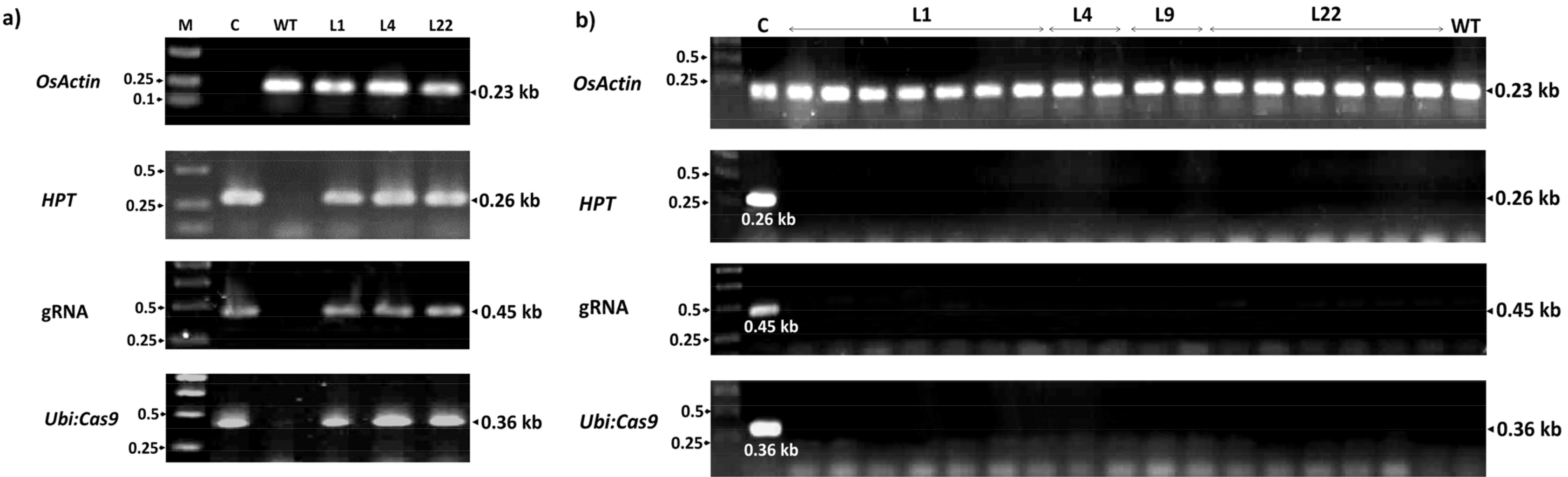
Agrobacterium-mediated transformation. Out of 134 regenerated TBR225 rice plants analyzed by PCR, 49 T
0 rice plants (36.57%) showed positive results for all three primer pairs specific for the
HPT selection gene, Cas9, and gRNA expression constructs (
Table 1,
Fig. 1(a)), confirming successful T-DNA integration.
We identified
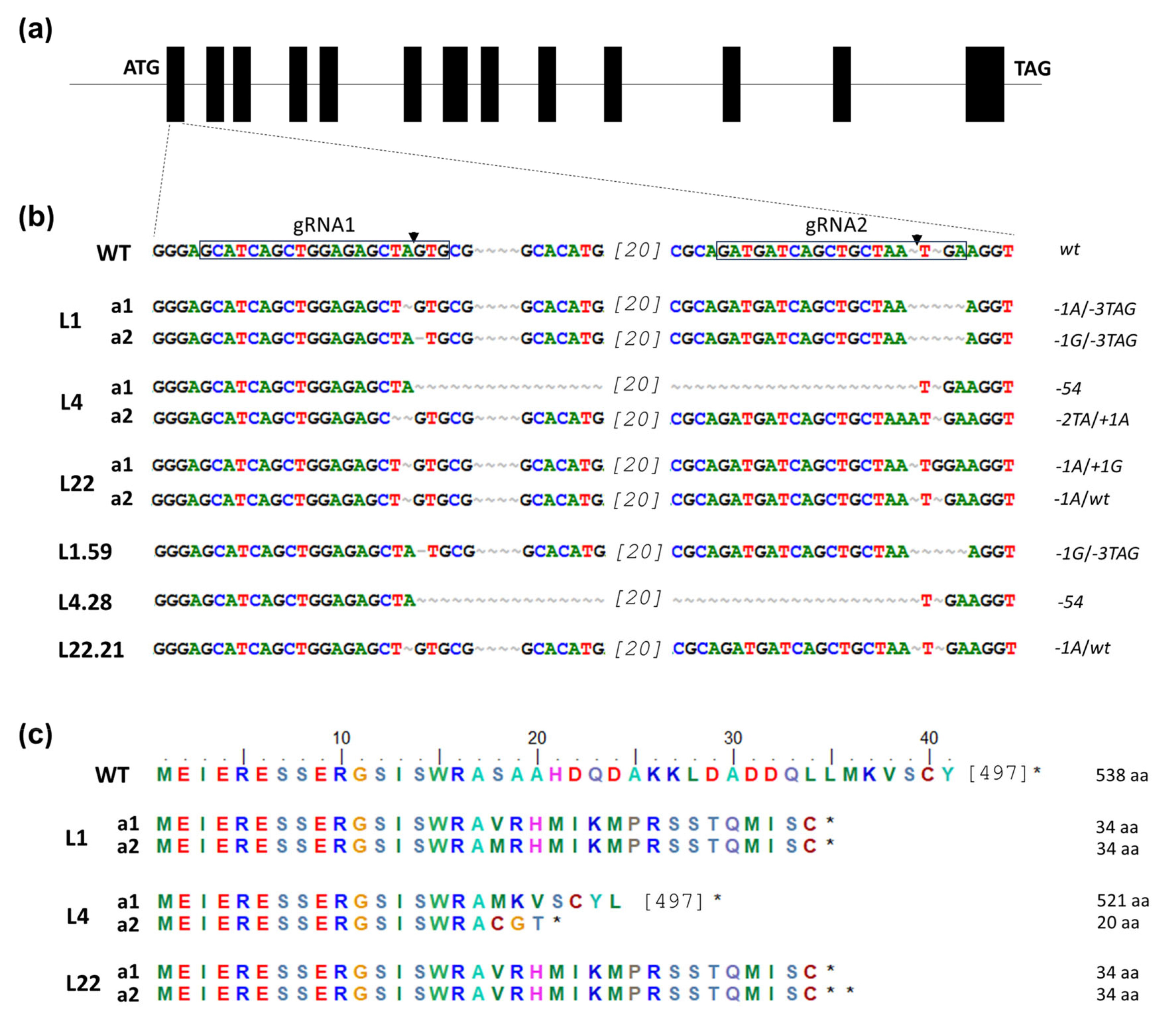
OsNRAMP5 editing at both gRNA target sites (
Fig. 2). An
OsNRAMP5 fragment (
Fig. 2(a)) containing the two CRISPR/Cas9 complex target sites was amplified from 20 randomly selected T
0 transgenic plants and analyzed by sequencing. Mutations were observed in 7 transgenic plants (
Fig. 2(b)), with 35% (7/20) and 30% (6/20) of plants carrying mutations at the first and second target sites, respectively (
Table 2), demonstrating the effective operation of both gRNAs. The mutant genotypes included heterozygous, homozygous, and biallelic variants (
Table 2). Analysis of the entire sequenced DNA region (
Supplementary Fig. 2) revealed 6 transgenic plants (30%) with mutations at both target sites, comprising 1 heterozygous mutant (L10), 1 homozygous mutant (L7), and 4 biallelic mutant plants (L1, L4, L9 and L22) (
Table 2).
Further analysis of the obtained mutations revealed three types: nucleotide deletion, insertion, and substitution (
Table 3,
Supplementary Fig. 2). At the gRNA1 target site, 85.21% of alleles were nucleotide deletions, 7.14% were nucleotide substitutions, and 7.14% remained wild type. At the gRNA2 target site, 50% of alleles were nucleotide insertions, 25% were nucleotide deletions, and 25% remained wild type (
Table 3). Notably, line L4 contained an allele with a 54 bp deletion spanning from the first to the second double-strand break (DSB) site. This observation demonstrates that the CRISPR/Cas9 system can be effectively used to remove DNA segments from the host plant genome when combining two or more closely positioned gRNAs.
Our primary objective was to knockout
OsNRAMP5 to reduce Cd accumulation in TBR225 rice plants. We analyzed the deduced amino acid sequences of the
OsNRAMP5 mutants from the seven gene-edited plant lines obtained (
Fig. 2(c)). Remarkably, all mutations resulted in premature stop codons, leading to truncated protein products or frameshift mutations that altered the amino acid sequence compared to the wild-type
OsNRAMP5 protein. These results further demonstrate the effectiveness of CRISPR/Cas9 in knocking out target genes for both gene function research and crop genetic improvement purposes.
The presence of T-DNA structures in the genome can cause genetic disturbances, leading to undesirable effects on the phenotype of gene-edited rice lines (
Gelvin 2003). Therefore, we screened self-pollinated T
1 rice plants derived from the obtained mutant T
0 rice lines. T
1 populations from five T
0 double-mutant
OsNRAMP5 rice lines that produced many filled grains (
Supplementary Table 1) were analyzed by PCR with three primer pairs specific for the T-DNA structure (
Table 4,
Fig. 1(b)). As a result, a total of 52 plants were identified as lacking T-DNA in their genomes, showing negative PCR results with all three tested primer pairs. The genetic segregation ratio of T-DNA in each T
1 population was consistent with Mendelian inheritance (χ
2<3.841), with a ratio of 3:1 (lines L1, L4, L10, and L22) or 15:1 (line L9).
Among the transgene-free plants, 17 were identified as
OsNRAMP5 homozygous mutants by sequencing analysis. These plants exhibited a homozygote : heterozygote (L10) or homozygote : biallelic (L1, L4, L9, L22) segregation ratio of approximately 1:1, consistent with Mendelian segregation (χ
2<3.841) (
Table 4). Furthermore, sequence analysis confirmed that the mutant T
1 rice plants only carried mutant alleles inherited from their parents (
Fig. 2(b),
Supplementary Table 2) without any new mutations. These results indicate that the mutations induced by CRISPR/Cas9 are stably and persistently inherited across generations. All homozygous T
1 transgene-free rice lines were grown under green-house condition to obtain T
2 seeds. Three lines, L1.59, L4.28, and L22.21, were selected for further experiments primarily based on their high grain production (
Supplementary Table 2), which provided sufficient T
2 seeds for comprehensive phenotypic evaluations. These lines also happened to exhibit different types of
OsNRAMP5 mutations (
Supplementary Table 2,
Fig. 2(b)), although this was not the primary selection criterion.
To examine the effects of
OsNRAMP5 mutation on Cd accumulation, 2-week-old seedlings of three homozygous mutant lines (L1.59, L4.28, and L22.21) and the wild-type (WT) were grown under greenhouse conditions with 0, 30, and 300 µM CdCl
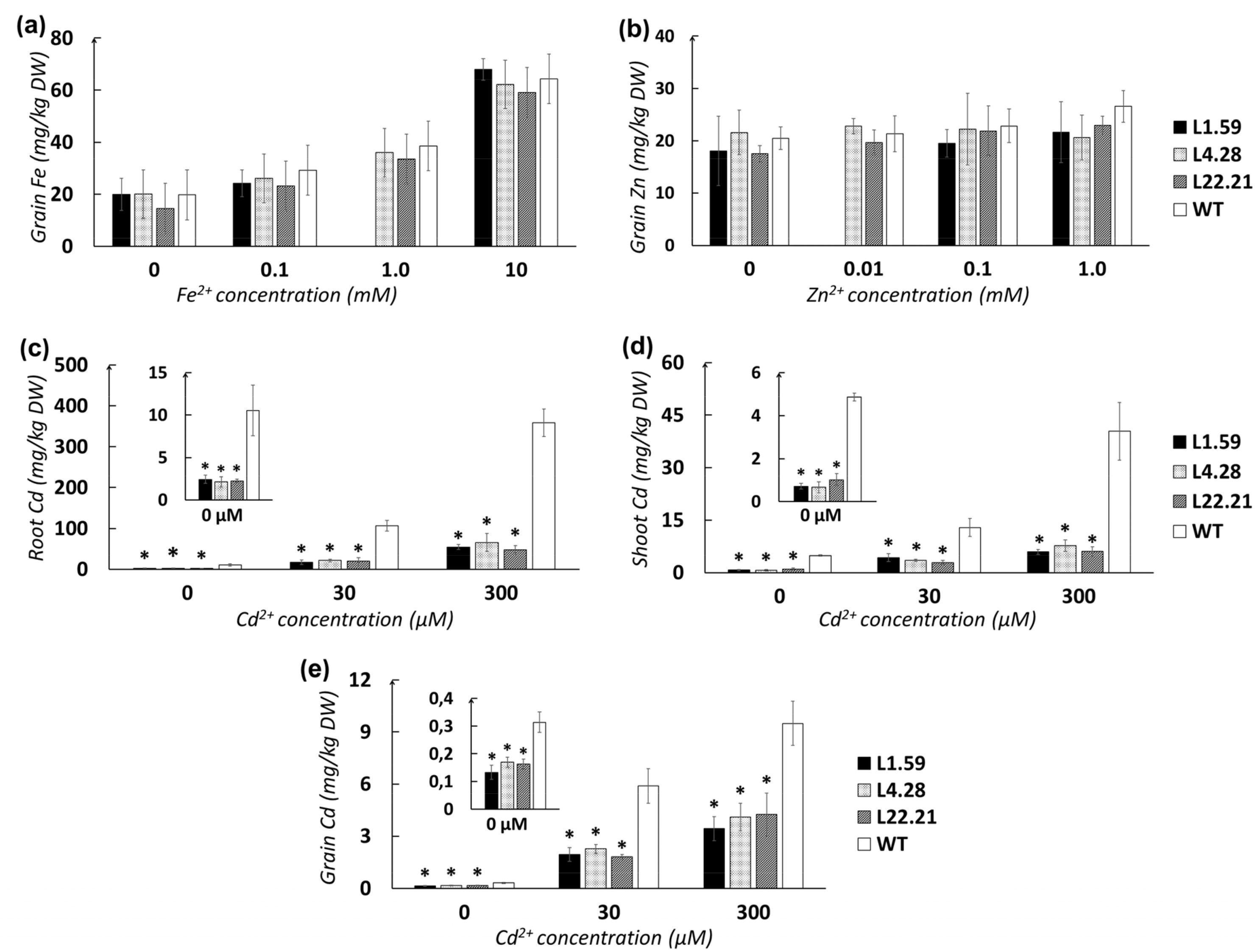
2 treatments. Cd content in roots, shoots, and seeds of all rice plants, including both gene-edited lines and WT, increased significantly compared to control conditions (
Figs. 3(c)-3(e)). These results demonstrate that Cd absorption and accumulation in the TBR225 rice variety are highly dependent on environmental Cd levels, highlighting the importance of breeding TBR225 for reduced Cd accumulation. Notably, analysis revealed that all three gene-edited rice lines exhibited significantly reduced Cd accumulation compared to the non-edited control line (
Figs. 3(c)-3(e)), despite no visually observable differences in growth and reproductive characteristics (
Supplementary Fig. 3). Cd accumulation decreased by 78.4-84.5% in roots (
Fig. 3(c)), 72.3-83.8% in shoots (
Fig. 3(d)), and 50.5-66.0% in grains (
Fig. 3(e)). These findings indicate that the genetic mutations created in
OsNRAMP5 have a substantial effect on reducing Cd accumulation in the TBR225 rice variety. Furthermore, our results corroborate previous studies on the crucial role of
OsNRAMP5 in Cd absorption, transport, and distribution in rice plants.
The three gene-edited rice lines analyzed carried different mutant genotypes: a four-nucleotide deletion (creating truncated protein products), a one-nucleotide deletion (creating truncated protein products), and a 54-nucleotide deletion (altering the amino acid sequence) (
Fig. 3). Interestingly, all three rice lines responded similarly to Cd treatment (
Figs. 3(c)-3(e)), as evidenced by the statistically indistinguishable Cd content accumulated in roots, shoots, and grains. This suggests that the three mutations created in
OsNRAMP5 have comparable effects, demonstrating the efficacy of CRISPR/Cas9 as a powerful tool for gene editing to improve plant traits.
To evaluate the effects of
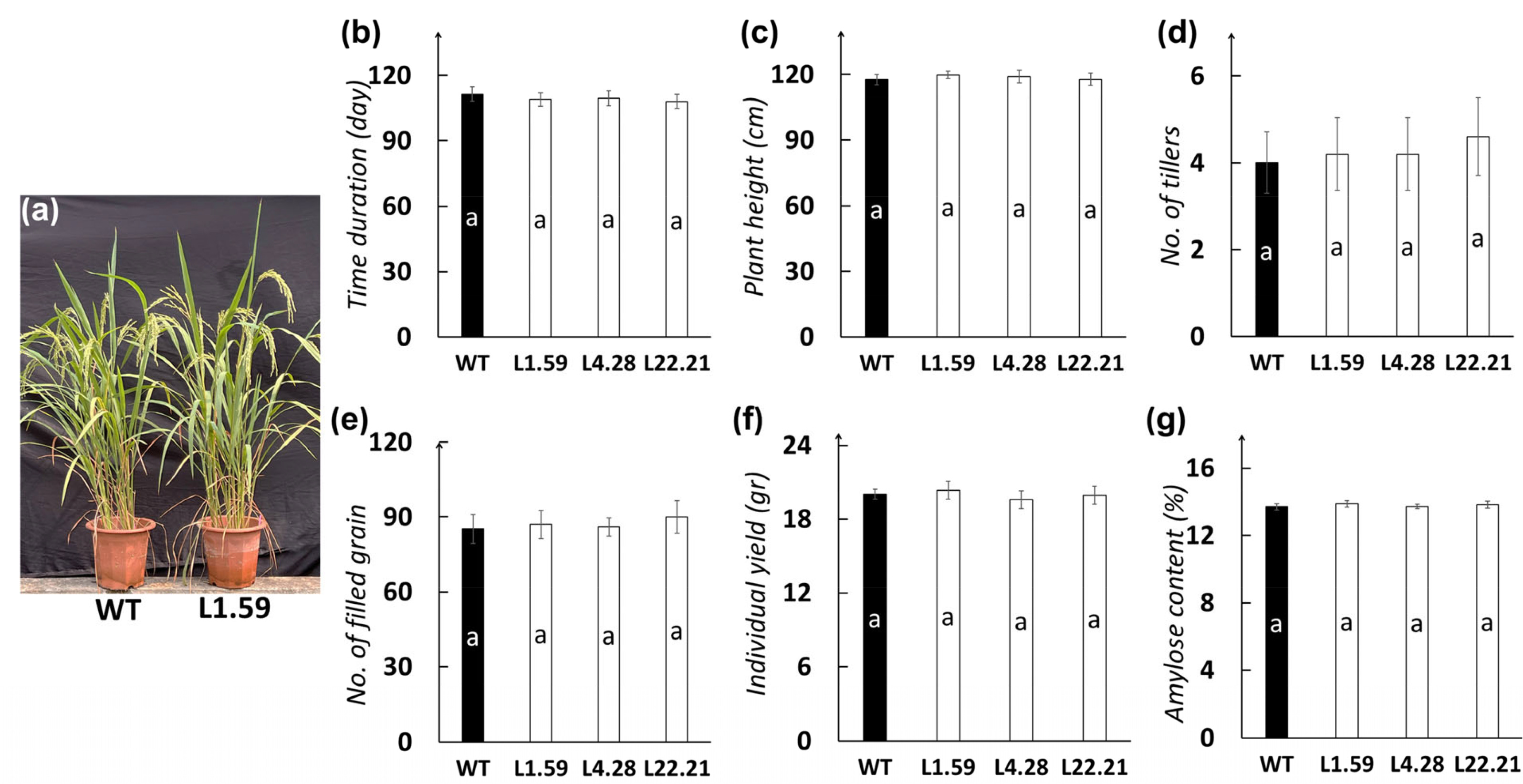
OsNRAMP5 mutation on agronomic characteristics of TBR225 rice, progeny of three lines (L1.59, L4.28, and L22.21) were cultivated under normal greenhouse conditions alongside wild-type (WT) plants. Phenotypic comparison revealed no detectable differences in growth time, plant height, and tiller number between the mutant lines and control plants (
Figs. 4(a)-4(d)). Similarly, all four analyzed rice lines showed no statistically significant differences in yield characteristics such as number of filled grains per panicle and individual yield. Additionally, analysis of amylose content in the endosperm demonstrated that the
OsNRAMP5 knock-out mutation did not significantly alter this characteristic in TBR225 rice (
Fig. 4(g)).
To determine whether mutating the
OsNRAMP5 gene, which is involved in Cd transport and accumulation, affects other micronutrient components in the grain, gene-edited rice lines and WT were grown under different metal supply conditions. Results indicated that grain accumulation of both assessed micronutrients, Fe and Zn, was not statistically different between the three gene-edited rice lines and the WT rice line under all metal treatment conditions (
Figs. 3(a)-3(b)). Furthermore, Fe and Zn contents in the roots and shoots of all rice lines were similar (
Supplementary Fig. 3). These findings suggest that
OsNRAMP5 does not play a significant role in the absorption, transport, and accumulation of Fe and Zn in TBR225 rice variety.
Discussion
Efficiency of gene editing in TBR225 rice
The success of gene editing in crops, particularly in rice, is heavily dependent on the gene transfer process.
Indica rice varieties, including TBR225, which is widely cultivated in Vietnam, often exhibit lower gene transfer efficiency compared to
japonica varieties due to genetic differences (
Liu et al. 2024). Our previous studies have established Agrobacterium-mediated gene transfer protocols for TBR225 using both immature (
Phuong et al. 2019) and mature embryos (
Duy et al. 2021;
Hang et al. 2021), with efficiencies ranging from 5% to 21%. However, in the current study, we observed a significantly lower efficiency of 1.13%. This discrepancy highlights the critical influence of vector structure and gene transfer material on the transformation efficiency in TBR225, ultimately affecting the overall gene editing process. These findings underscore the importance of developing optimized gene transfer protocols for each commercially important rice variety to enhance rice improvement programs using genetic engineering techniques.
The efficiency of gene editing is also contingent on the performance of the CRISPR/Cas9 complex, particularly the designed gRNA sequences. In this study, both gRNAs demonstrated relatively high editing efficiencies (30-35%) (
Table 2), although these rates were lower than those reported in previous studies using similar Cas9 expression vector constructs (>90%) (
Duy et al. 2021;
Zhou et al. 2014). This observation emphasizes the crucial role of gRNA design in gene editing experiments and suggests that combining bioinformatics tools for gRNA design with experimental validation of gRNA performance prior to gene transfer could significantly enhance gene editing efficiency.
NRAMP family are known for their multifunctional roles in metal uptake, transport, and distribution (
Hussain et al. 2024). Previous studies have demonstrated
OsNRAMP5's involvement in the accumulation of various metals in rice, including Fe (
Ishimaru et al. 2012), Cd (
Chang et al. 2020;
Luo et al. 2023;
Tang et al. 2017;
Wang et al. 2019;
Yang et al. 2019), Mn (
Ishimaru et al. 2012;
Tang et al. 2017;
Wang et al. 2019;
Yang et al. 2019), and Cobalt (
Huang et al. 2025). Our findings align with previous research, showing that knockout mutations in
OsNRAMP5 (
Wang et al. 2019;
Yang et al. 2019) significantly reduce Cd uptake and accumulation without affecting Fe and Zn. In our study, all three
OsNRAMP5 knockout mutant TBR225 rice lines exhibited lower Cd accumulation in roots, shoots, and grains compared to the control line (
Fig. 3). Interestingly, previous study has reported that overexpression of
OsNRAMP5 can lead to reduced Cd accumulation in stems and grains of both
indica (W4) and
japonica (Zhonghua 11) varieties, while increasing Cd uptake in W4 roots (
Chang et al. 2020). Furthermore, mutations in the regulatory region of
OsNRAMP5 in the
japonica rice variety NanJing 46 did not change the transcription level but reduced the translation of
OsNRAMP5, leading to reduced Cd accumulation (
Luo et al. 2023). These contrasting results suggest that Cd uptake, transport, and accumulation processes are complex and likely involve multiple genes beyond
OsNRAMP5. Therefore, variety-specific studies, including those on TBR225, are essential for the successful application of
OsNRAMP5 modifications to improve commercially important rice varieties.
A primary concern in developing low-Cd rice lines through
OsNRAMP5 mutagenesis using CRISPR/Cas9 is the potential for adverse effects on agronomic and quality traits. Our study on
OsNRAMP5 mutation in the indica variety TBR225 revealed no significant differences in yield-related phenotypic traits between the mutants and the wild type (
Fig. 4), aligning with some previous studies but contrasting with others.
Previous studies have reported varied outcomes.
OsNRAMP5 knockout in the
indica variety Huazhan (
Tang et al. 2017) and translational reduction in the
japonica variety NanJing 46 (
Luo et al. 2023) did not affect plant growth or yield. Conversely, different
OsNRAMP5 mutations in Huanghuazhan (
Wang et al. 2019) and Nanjing 46 (
Yang et al. 2019) significantly reduced growth and yield, possibly due to decreased Mn uptake. Interestingly, overexpression of
OsNRAMP5 in the indica variety W4 did not negatively impact growth but reduced grain yield (
Chang et al. 2020).
Several factors may contribute to these contrasting results across studies. The distinct genetic backgrounds of the rice varieties used could lead to varying compensatory mechanisms or genetic interactions influencing the impact of OsNRAMP5 mutation, particularly between indica and japonica subspecies. Experimental conditions, including specific Cd concentrations and exposure durations, may affect plant responses. Growth environments (greenhouse vs. field trials) can influence plant development and trait expression. The nature of the mutations, including specific alterations in the OsNRAMP5 gene, could lead to different functional consequences. Lastly, the lack of significant changes in our TBR225 mutants could suggest the presence of effective compensatory mechanisms, possibly involving other metal transporters or physiological adaptations.
Some studies have shown that high Cd conditions negatively impact rice plant growth, and
OsNRAMP5 mutations can restore normal phenotypes under these conditions (
Tang et al. 2017). In our study, we conducted experiments under both normal and high-Cd conditions. Despite the high Cd concentration, we observed no significant phenotypic differences between the gene-edited lines and the control in either condition (
Fig. 4,
Supplementary Fig. 3). This lack of observable phenotypic differences under varying Cd levels suggests that TBR225 may have inherent tolerance to Cd stress, which warrants further investigation.
Our results demonstrate that OsNRAMP5 mutation in TBR225 can potentially reduce Cd accumulation without compromising agronomic performance. The absence of significant changes in yield-related traits under different Cd conditions suggests that TBR225 may possess inherent Cd tolerance mechanisms. However, the contrasting outcomes observed across different rice varieties emphasize the complex nature of metal homeostasis in rice and the need for variety-specific approaches in crop improvement strategies. These findings provide a foundation for further research and development of low-Cd accumulating rice varieties, particularly for regions where TBR225 is widely cultivated.
Future directions and implications
Our findings underscore the promise of CRISPR/Cas9-mediated OsNRAMP5 mutation in developing TBR225 rice lines with low Cd accumulation while maintaining agronomic performance. However, the varied results across rice varieties highlight the necessity for variety-specific studies. Future research directions should encompass long-term field trials to evaluate the stability of the low-Cd trait under diverse conditions, investigations into the impact of OsNRAMP5 mutations on other essential minerals (particularly Mn), exploration of potential compensatory mechanisms in mutants, detailed molecular studies on the gene network involved in Cd dynamics in TBR225, and assessment of combining OsNRAMP5 mutations with other genetic modifications to further enhance Cd exclusion or tolerance.
In conclusion, our study demonstrates the successful application of CRISPR/Cas9 technology to create low-Cd accumulating TBR225 rice lines. While the results are promising, they also underscore the complexity of metal homeostasis in rice and the importance of variety-specific optimization in crop improvement strategies. The development of these improved TBR225 lines represents a significant step towards enhancing food safety and reducing health risks associated with Cd contamination in rice, particularly in regions where TBR225 is widely cultivated.
Acknowledgments
We extend our sincere appreciation to the Vietnam Ministry of Science and Technology for funding the project "Research on micronutrient biofortification in rice using biotechnology" (Code: NĐT/CN/21/24). We are grateful to our colleagues at the Institute of Agricultural Genetics for their invaluable assistance with rice transformation experiments. We also thank Thaibinh Seeds Corporation for providing the rice accession. These contributions were essential to the success of our research.
Fig. 1PCR analysis of transgene integration in T0 (a) and T1 (b) generations using specific primer pairs for OsActin (endogenous control), HPT (marker gene), gRNA, and Ubiquitin::Cas9 expression cassette. C: positive control (pCas9/sgRNA-OsNRAMP5 in T0; parental DNA in T1); WT: wild-type plant; M: 1.0 kb ladder.
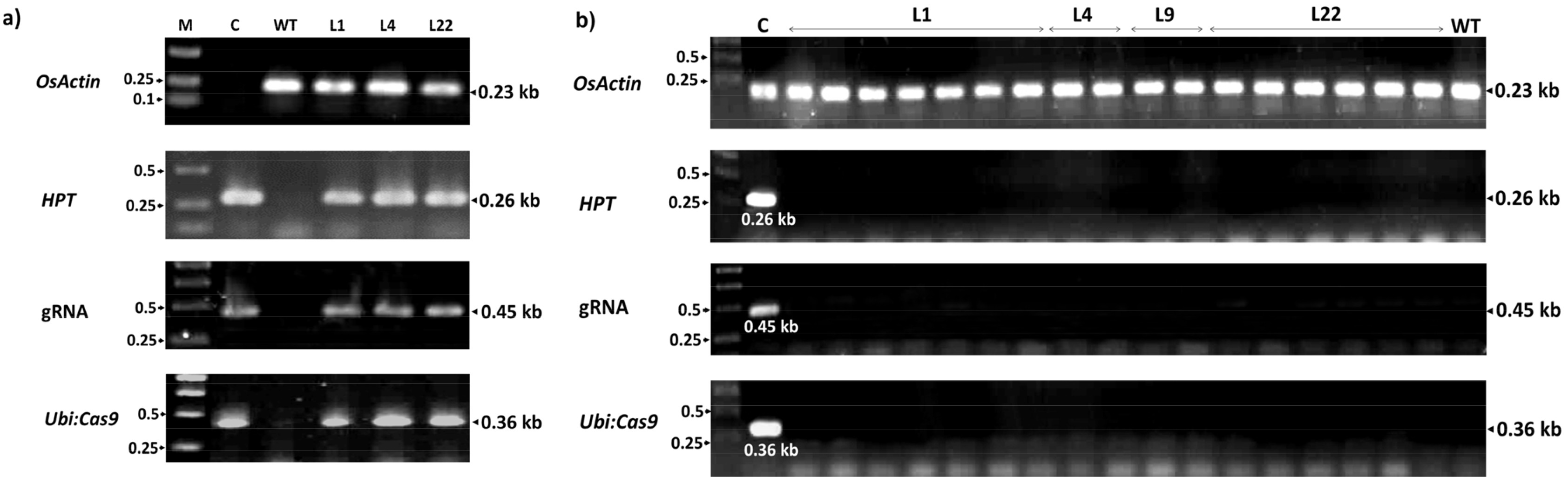
Fig. 2Analysis of CRISPR/Cas9-induced mutations in TBR225 OsNRAMP5. (a) Schematic diagram of OsNRAMP5 gene structure showing two target sites on exon 1. Black rectangles: exons; lines: introns and UTRs. (b) OsNRAMP5 allele alignment of T0 lines (L1, L4, L22) and their T1 progeny (L1.59, L4.28, L22.21) in the target region. (c) Predicted amino acid sequences of OsNRAMP5 mutant alleles. Boxes: gRNA target sites; arrows: predicted CRISPR/Cas9-induced DSBs; asterisks: stop codons. Left column: rice line names (a1, a2: allele 1, 2; WT: wild-type). Right column in (b): genotype (+/-: insertions/deletions; numbers: modified nucleotide count; capital letters: altered nucleotides; wt: wild-type). Right column in (c): polypeptide length. []: base pair or amino acid counts.
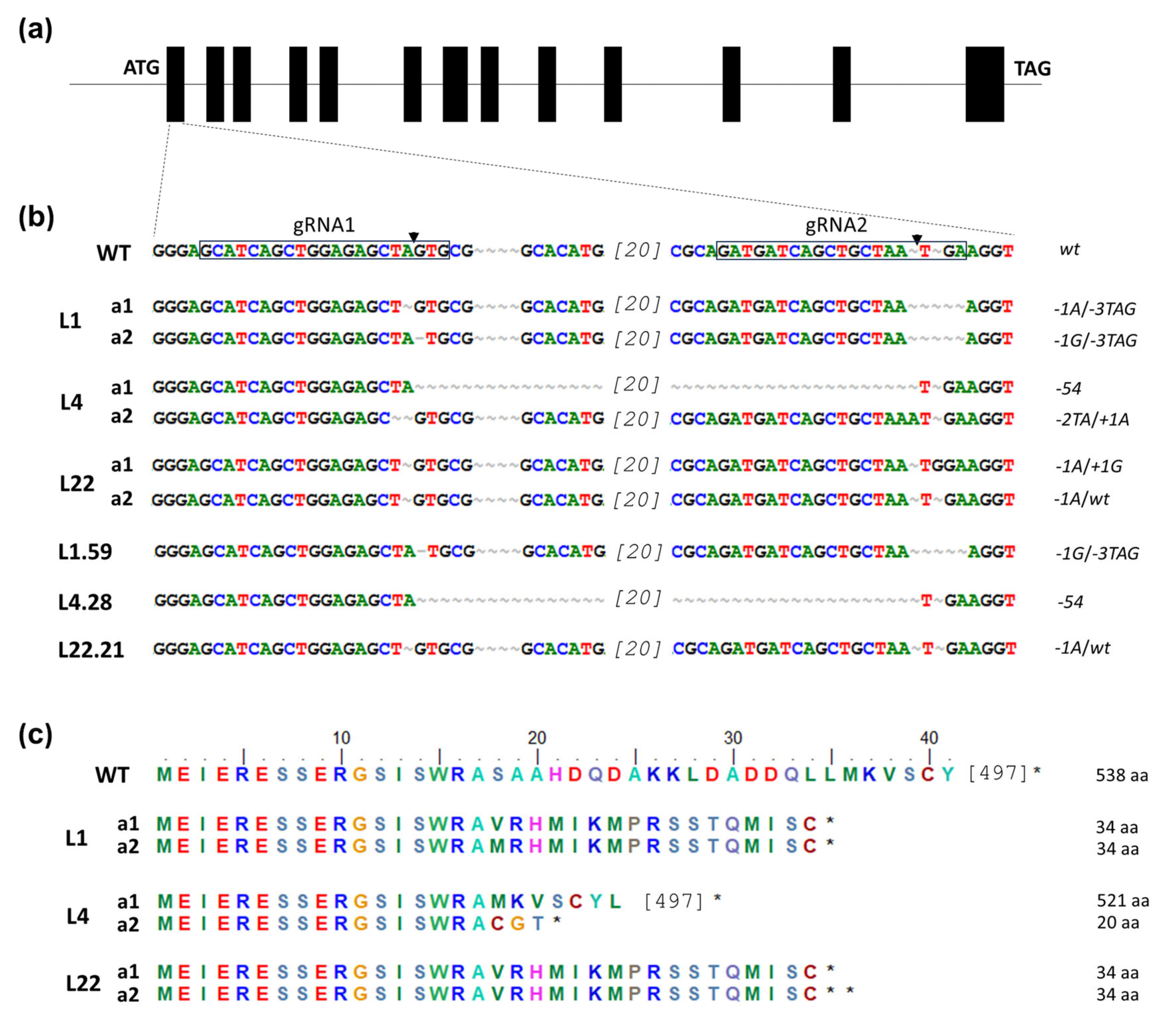
Fig. 3Metal accumulation in OsNRAMP5-edited TBR225 rice lines under different metal treatments. Plants were exposed to various metal concentrations for 2 months (a-d) or 3 months (e). (a) Fe concentrations in grain after treatments with 0, 0.1, 1.0, and 10.0 mM FeCl2. (b) Zn concentrations in grain after treatments with 0, 0.01, 0.1, and 1.0 mM ZnCl2. (c-e) Cd concentrations in root (c), shoot (d), and grain (e) after treatments with 0, 30, and 300 µM CdCl2. Bars represent mean±SD from 3 biological replicates. WT: wild-type plant. Asterisks indicate significant differences compared to WT (Tukey's HSD test; p<0.05).
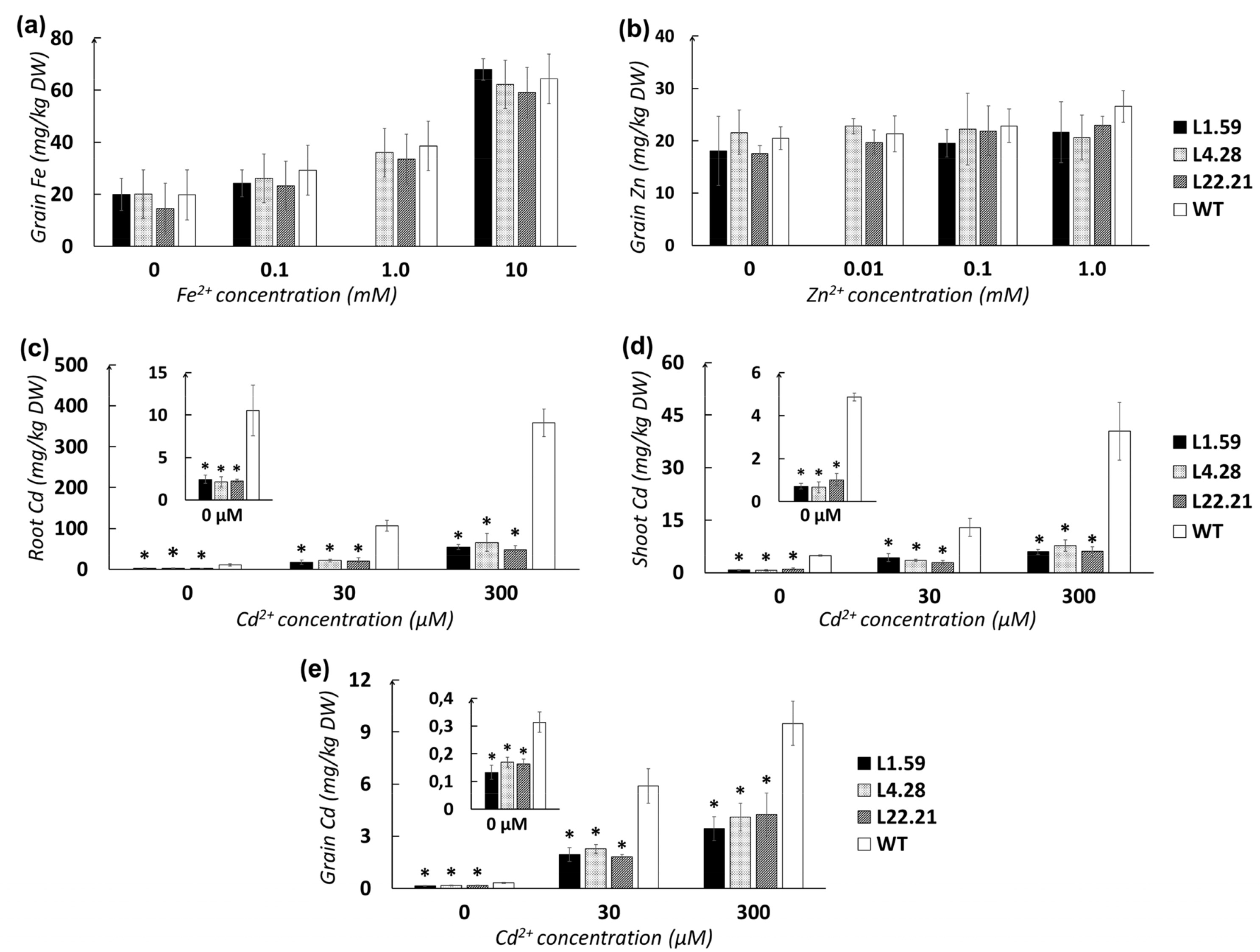
Fig. 4Agronomic trait analysis of OsNRAMP5 mutants. Three mutant lines (L1.59, L4.28, and L22.21) and WT plants were cultivated in green-house condition. (a) Plant morphology. (b) Time duration. (c) Plan height. (d) Number of tilters per plant. (e) Number of filled grains per panicle. (f) Individual grain yield. (g) Amylose content in grain. Data are means±SD. There is no significant difference between WT and mutant lines (Tukey's HSD test; p<0.05).
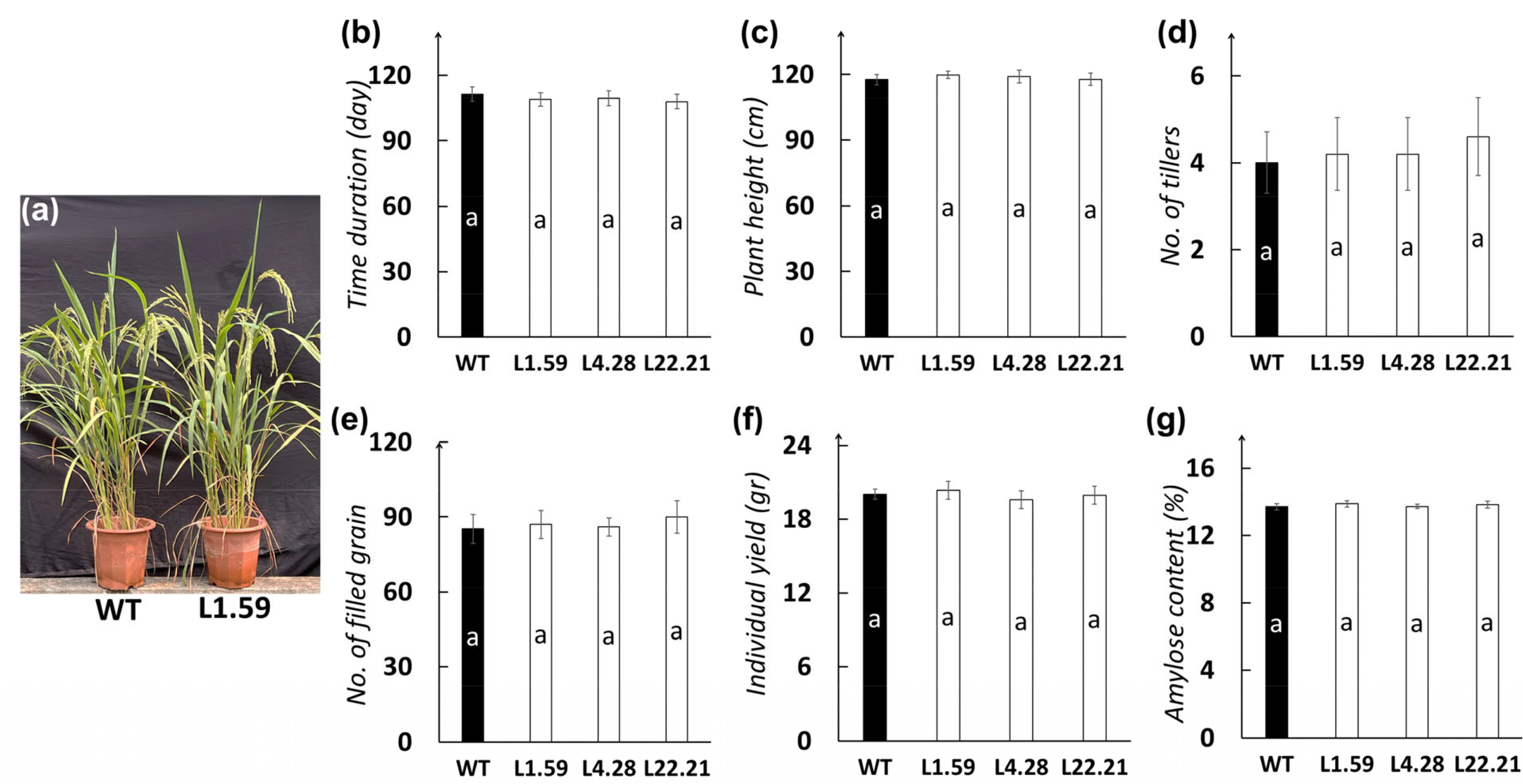
Table 1Result of TBR225 rice transformation
Table 1
|
Experiment |
No. sample |
Ratio (%)z
|
|
Agrobacterium-innoculated callus |
5063 |
- |
|
Hygromycin-resistant callus |
1598 |
36.71 |
|
Regenerated plant |
134 |
3.08 |
|
Plant with positive OsActin PCR |
134 |
3.08 |
|
Plant with positive HPT PCR |
49 |
1.13 |
|
Plant with positive gRNA PCR |
49 |
1.13 |
|
Plant with positive Cas9 PCR |
49 |
1.13 |
Table 2Frequency of OsNRAMP5 mutant genotypes in T0 transgenic plants
Table 2
|
Location |
Mutant genotype ratiosz
|
|
|
Heterozygous |
Homozygous |
Bialellic |
wt |
|
gRNA1 |
1/20 |
2/20 |
4/20 |
13/20 |
|
gRNA2 |
3/20 |
2/20 |
1/20 |
14/20 |
|
gRNA1-gRNA2 |
1/20 |
1/20 |
5/20 |
13/20 |
Table 3Frequency of OsNRAMP5 mutation types in T0 transgenic plants
Table 3
|
Location |
Mutant type ratiosz
|
|
|
Deletion |
Insertion |
Substitution |
|
gRNA1 |
12/14 |
0/14 |
1/14 |
|
gRNA2 |
3/12 |
6/12 |
0/12 |
Table 4Segregation of T-DNA in T1 generation
Table 4
|
T0 plant |
Genotypez
|
No. of T1 plants tested |
T-DNA inheritance |
|
Mutation inheritance |
No. of T-DNA-free mutant plantsx
|
|
|
|
No. of T-DNA-free plants |
χ2 (3:1)y
|
χ2 (15:1)y
|
No. of homozygous plants |
χ2 (1:1)y
|
|
L1 |
Bialellic |
60 |
11 |
1.422 |
14.951 |
|
37 |
3.267 |
7 |
|
L4 |
Bialellic |
60 |
19 |
1.422 |
66.151 |
|
24 |
2.400 |
2 |
|
L9 |
Bialellic |
60 |
3 |
12.8 |
0.16 |
|
31 |
0.067 |
2 |
|
L10 |
Heterozygous |
37 |
8 |
0.225 |
14.921 |
|
13w
|
3.270 |
0 |
|
L22 |
Bialellic |
60 |
11 |
1.422 |
14.951 |
|
35 |
1.667 |
6 |
References
- Anh NTV, Minh NA, Hang PT, Ngoc PP, Mai LQ, Hoi PX, et al. 2022. Design of a CRISPR/Cas9 system for knocking out OsNRAMP5 related to cadmium accumulation in rice variety TBR225. VJAS. 20: 1220-1229.
- Bao TM, Hop TT, Tiec TT, Nhung NT, Hoan NV. 2016. Results of breeding TBR225 rice cultivar. VJAS. 14: 1360-1367.
- Bernard A. 2008. Cadmium & its adverse effects on human health. Indian J Med Res. 128: 557-564.
- Chang JD, Huang S, Konishi N, Wang P, Chen J, Huang XY, et al. 2020. Overexpression of the manganese/cadmium transporter OsNRAMP5 reduces cadmium accumulation in rice grain. J Exp Bot. 71: 5705-5715.
- Chen G, Du R, Wang X. 2023. Genetic regulation mechanism of cadmium accumulation and its utilization in rice breeding. Int J Mol Sci. 24: 1247
- Chen J, Miao Z, Kong D, Zhang A, Wang F, Liu G, et al. 2024. Application of CRISPR/Cas9 technology in rice germplasm innovation and genetic improvement. Genes (Basel). 15: 1492
- Dehairs J, Talebi A, Cherifi Y, Swinnen JV. 2016. CRISP-ID: Decoding CRISPR mediated indels by Sanger sequencing. Sci Rep. 6: 28973
- Duy PN, Lan DT, Pham Thu H, Thi Thu HP, Nguyen Thanh H, Pham NP, et al. 2021. Improved bacterial leaf blight disease resistance in the major elite Vietnamese rice cultivar TBR225 via editing of the OsSWEET14 promoter. PLoS One. 16: e0255470
- Gelvin SB. 2003. Agrobacterium-mediated plant transformation: the biology behind the "gene-jockeying" tool. Microbiol Mol Biol Rev. 67: 16-37.
- Hang PT, Dai TL, Cuu NV, Van PT, Hanh DT, Hoi PX, et al. 2021. A protocol for Agrobateruim-mediated transformation into a TBR225 rice variety. Vietnam Journal of Agriculture & Rural Development. 18: 66-73.
- Huang H, Yamaji N, Huang S, Ma JF. 2025. Uptake and accumulation of Cobalt is mediated by OsNramp5 in rice. Plant Cell Environ. 48: 3-14.
- Hussain Q, Ye T, Shang C, Li S, Khan A, Nkoh JN, et al. 2024. NRAMP gene family in Kandelia obovata: genome-wide identification, expression analysis, and response to five different copper stress conditions. Front Plant Sci. 14: 1318383
- Ishimaru Y, Bashir K, Nakanishi H, Nishizawa NK. 2012. OsNRAMP5, a major player for constitutive iron and manganese uptake in rice. Plant Signal. Behav. 7: 763-766.
- Liu S, Wang K, Geng S, Hossain M, Ye X, Li A, et al. 2024. Enemies at peace: Recent progress in Agrobacterium-mediated cereal transformation. Crop J. 12: 321-329.
- Luo Z, Liu CL, Yang X, Zhu JK, Huang CF. 2023. Mitigating cadmium accumulation in rice without compromising growth via modifying the regulatory region of OsNRAMP5. Stress Biol. 3: 34
- Phuong ND, Hang PT, Huong PTT, Hoi PX. 2019. Genetic transformation of TBR225 rice variety with SWEET14-editing t-DNA construct. VJBT. 17: 65-73.
- Tang L, Mao B, Li Y, Lv Q, Zhang L, Chen C, et al. 2017. Knockout of OsNramp5 using the CRISPR/Cas9 system produces low Cd-accumulating indica rice without compromising yield. Sci Rep. 7: 14438
- Wang T, Li Y, Fu Y, Xie H, Song S, Qiu M, et al. 2019. Mutation at different sites of metal transporter gene OsNramp5 affects Cd accumulation and related agronomic traits in rice (Oryza sativa L.). Front Plant Sci. 10: 1081
- Yang CH, Zhang Y, Huang CF. 2019. Reduction in cadmium accumulation in japonica rice grains by CRISPR/Cas9- mediated editing of OsNRAMP5. J. Integr. Agric. 18: 688-697.
- Zhou H, Liu B, Weeks DP, Spalding MH, Yang B. 2014. Large chromosomal deletions and heritable small genetic changes induced by CRISPR/Cas9 in rice. Nucleic Acids Res. 42: 10903-10914.