Abstract
Understanding the genetics underlying heading date and yield-related traits is essential in wheat breeding for maximizing productivity under different environments. Using doubled haploid lines derived from two Korean wheat cultivars, we identified seven stable quantitative trait loci (QTLs) for yield-related traits, i.e., days to heading date (QDhd.jbnu-3B, QDhd.jbnu-6B, and QDhd.jbnu-7D), culm length (QCl.jbnu-6A), thousand kernel weight (QTkw.jbnu-6A), kernels per spike (QKps.jbnu-3B) and test weight (QTw.jbnu-1A). Compared to the lines carrying the allele for late heading, those carrying the allele for early heading at QDhd.jbnu-3B, QDhd.jbnu-6B, and QDhd.jbnu-7D headed 3.1, 2.0, and 1.7 days earlier, respectively. Interestingly, when the alleles for early heading at the three QTLs were accumulated, heading date was accelerated by approximately one week, indicating that these QTLs provide useful genetic resources to fine-tune heading date. However, as the alleles for early heading at all three QTLs were associated with decreased kernels per spike, caution is required when deploying them to minimize the negative impacts on yield. Our study provides useful information for developing wheat cultivars with optimal heading date and enhanced productivity.
-
Key words: Yield, Heading date, QTL mapping, Wheat
INTRODUCTION
Wheat (
Triticum aestivum L.) is one of the most impor-tant staple crops, providing approximately 20% of the dietary calorie intake for the world population (FAO 2023). While the wheat production in many developing countries almost doubled during the Green Revolution in the 1960s, productivity has been stagnated over the recent few decades (
Hazell 2009;
Ray et al. 2012). To meet the demand of a rapidly growing world population, at least a 15% increase in wheat production is required by 2050 (
Gupta et al. 2020). Therefore, improving yield is an essential goal of wheat breeding programs to meet the rising food demand and overcome yield stagnation. Wheat yield is a complex trait determined by the major yield component traits (i.e., tillers per unit area, kernels per spike, and kernel weight) and affected by other physiolo-gical traits including heading date and culm length as well as various environmental factors such as day length and temperature (
Chen et al. 2012). As the final crop yield is a product of numerous genetic and environmental factors inter-related to each other, genetic studies on yield are generally conducted on individual yield components such as tillers per unit area, spikelets per spike, kernels per spikelet, and kernel weight that are less affected by the environment and have higher heritability than yield itself (
Cui et al. 2014;
Wu et al. 2014;
Assanga et al. 2017;
Zhang et al. 2018;
Deng et al. 2019;
Liu et al. 2019).
Dissecting the genetic loci underlying culm length and days to heading date (DHD) is also crucial to maximize yield, as the major genes controlling these traits affect yield components (
Tshikunde et al. 2019;
Cao et al. 2020). During the Green Revolution, adopting the semi-dwarfing alleles (i.e.,
Rht-B1b and
Rht-D1b) provided substantial benefits on improving yield by conferring lodging tole-rance under high fertilization and increasing the harvest index (
Peng et al. 1999). However, as these alleles reduce seedling vigor and coleoptile length as well as the final plant height, their applicability is limited in warm and dry conditions where deep sowing is required (
Rebetzke et al. 1999). Therefore, researchers have been searching for alternative genes that can better adapt to suboptimal areas and maintain grain yield under low input conditions. (
Thomas 2017;
Pearce 2021;
Xiong et al. 2022). Opti-mizing heading date is also essential for adaption across various environments, as the yield performance is influ-enced by the duration of the vegetative phase, floret development, and maturity (
Zhang et al. 2021). For exam-ple, early heading may help avoid heat and drought stress during anthesis and grain filling, thereby enabling high yield in hot and dry regions (
Bentley et al. 2013; Mondal
et al. 2016). Therefore, understanding the genetic architecture underlying heading date is crucial for breeding cultivars with proper heading dates in a given environment. The main genetic factors controlling wheat heading date include genes related to vernalization (
Vrn), photoperiod (
Ppd), and earliness per se (
Eps) (
Herndl et al. 2008).
Vrn genes such as
VRN1,
VRN2, and
VRN3 regulate vernaliza-tion sensitivity (
Herndl et al. 2008,
2006), and
Ppd genes including
PPD1 and
PPD2 mainly control the photoperiod response (
Law et al. 1978;
Scarth and Law 1983;
Khlestkina et al. 2009).
Eps is known to be responsible for the flowering time differences after the vernalization and photoperiod requirements are met (Kato
et al. 1999a, 1999b;
Kamran et al. 2014).
EARLY FLOWERING 3 (
ELF3), a circadian clock regulator gene, was identified as the candidate gene for
Eps (
Alvarez et al. 2016).
In Korea, wheat is mostly cultivated as a secondary crop in rice-wheat double cropping practices. Therefore, late heading causes wheat harvesting without sufficient grain filling in order to sow the main crop such as rice in an optimal planting season, resulting in a decrease in wheat yield and quality (
Cho et al. 2015a). Also, the maturation stage of late-heading wheat cultivars often overlaps with the rainy season, which increases the risk of pre-harvest sprouting and deteriorates end-use quality (
Shin et al. 2013). Therefore, developing early-heading cultivars re-mains one of the most important goals for Korean wheat breeders since the 1970s (
Cho et al. 2015b). However, previous studies showed that the major heading date genes such as
VRN1 and
PPD1 exhibit highly limited allelic variation in Korean wheat cultivars and landraces, neces-sitating research on other genes affecting heading date (
Lee et al. 2014;
Cho et al. 2015a, 2015b, 2018). As early heading often accompanies a decrease in yield due to reduced vegetative growth, it is also important to evaluate the effects of heading date genes on yield and its com-ponents. In this study, we aimed to identify quantitative trait loci (QTLs) for yield-related traits including DHD, using doubled haploid lines derived from the cross between two Korean cultivars, Keumkang and Olgeuru. We also evaluated the impact of the DHD QTLs on major yield- related traits and discussed the potential application of them in breeding programs.
MATERIALS AND METHODS
Plant materials and field trials
A population of 94 doubled haploid lines was produced from the cross between Korean wheat cultivars, Keumkang and Olgeuru, using the wheat × maize system described by Inagaki and Mujeeb-Kazi (1995). Keumkang is a popular cultivar with good milling, end-use quality and early matu-rity (
Song 1998). Olgeuru exhibits a higher yield than Keumkang (
Nam 1994). The doubled haploid lines were grown at the Upland Crop Experimental Farm of the National Institute of Crop Science, Rural Development Administration (Iksan, Korea) for seed multiplication in 2009. Field trials were performed in upland condition at Jeonbuk National University (35°85΄N 127°13΄E) in Jeonju, South Korea, during three growing seasons (2017, 2018, and 2019). The seeds were sown in late October, and each plot consisted of three 2 m rows spaced 25 cm apart. The plots were combine-harvested in mid-June. The field management was conducted according to the standard wheat cultivation manual of Rural Development Admini-stration (RDA), South Korea (RDA 2012).
A total of eight yield-related traits were evaluated: DHD, culm length (CL), spike length (SL), kernels per spike (KPS), tiller number per m2 (TN), test weight (TW), thousand kernel weight (TKW), and yield (YD). DHD was recorded as the number of days from sowing date to heading date when 50% of the plants in each plot showed the emergence of spikes from the stem. CL was determined by measuring the length from the ground to the base of the spike and SL was measured as the length of the spike excluding awns. KPS was measured as the number of kernels per main spike. CL, SL, and KPS were measured from the main culms of ten plants randomly selected in each plot at maturity. TN was counted as the number of stems per m2. TW, TKW, and YD were measured after harvesting and drying the grains at 14% moisture content. TW and TKW were evaluated by weighing one liter of grain and 1,000 kernels, respectively. YD was recorded by weighing the grains from each plot and converting the value in kg/10a.
QTL mapping and statistical analysis
Genomic DNA was extracted from young leaf tissue using a DNA extraction kit (Solgent, South Korea) according to the manufacturer’s instruction. The 94 dou-bled haploid lines and the parental cultivars were geno-typed using Axiom
TM 35K Wheat Breeder’s Genotyping Array (ThermoFisherScientific, Applied Biosystems
TM, US). QTL mapping was performed using IciMapping program version 4.2 (
Meng et al. 2015). Out of 35,042 SNPs, 3,325 were polymorphic between Keumkang and Olgeuru. After filtering the SNPs with more than 10% missing data and those with overlapping genetic positions using the ‘BIN’ function, 641 SNPs were finally used to construct a linkage map by the ‘MAP’ function. QTL analy-sis was performed by the inclusive composite interval mapping with the LOD threshold of 3.0, and those identi-fied in at least two of the three years were declared as stable QTLs. Statistical analyses including ANOVA and correlation analysis were performed using R (The R Project for Statistical Com-puting version 4.2.0,
https://www.r-project.org). Three-way ANOVAs and Tukey’s Honestly Significant Difference (HSD) test were conducted using the “agricolae” package (de Mendiburu 2023).
RESULTS
Phenotypic variation and correlations among yield-related traits
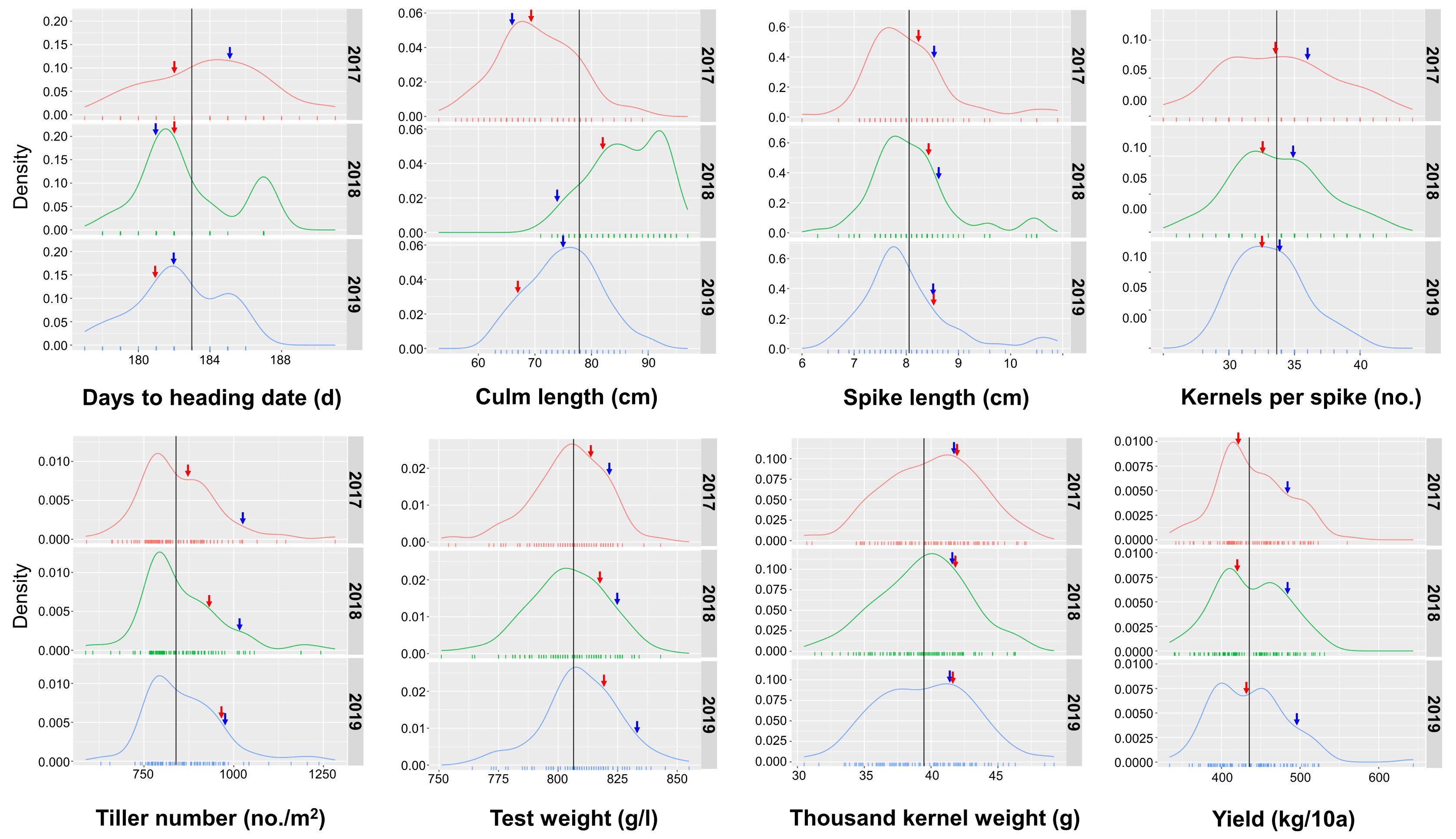
Distribution of the eight yield-related traits (DHD, CL, SL, KPS, TN, TW, TKW, and YD) in the 94 doubled haploid lines and their parents evaluated in three years are illustrated in
Fig. 1 and
Supplementary Table S1. The average KPS (33.6) and YD (437.3 kg/10a) of the doubled haploid lines were between the values of Keumkang (33.4 and 427.1 kg/10a) and Olgeuru (35.1 and 485.7 kg/10a) in three years, while the average SL (8.1 cm), TN (851.6/m
2), TW (806.0 g/l), and TKW (39.7 g) were lower than the values of both Keumkang (8.4 cm, 940.3/m
2, 815.7 g/l and 42.4 g) and Olgeuru (8.6 cm, 1008.4/m
2, 827.0 g/l, 41.4 g) in three years. The parental values for DHD and CL showed inconsistent patterns (Keumkang headed earlier than Olgeuru in 2017 and 2019, while Olgeuru headed earlier in 2018; Keumkang was taller than Olgeuru in 2017 and 2018, while Olgeuru was taller in 2019). Transgressive segregation was observed for all investigated traits.
The correlations among the yield-related traits are sum-marized in
Supplementary Figs. S1-S3. Thirteen pairs of traits showed sig-nificant correlations in all three years. While the DHD-CL (r = 0.33-0.45), DHD-SL (r = 0.36-0.46), DHD-KPS (r = 0.55-0.74), CL-SL (r = 0.22-0.45), CL-TKW (r = 0.31-0.46), SL-KPS (r = 0.44-0.48) correlations were signifi-cantly positive in all three years, the DHD-TN (r = ‒0.38 to ‒0.21), DHD-TW (r = ‒0.45 to ‒0.29), SL-TN (r = ‒0.31 to ‒0.25), SL-TW (r = ‒0.47 to ‒0.34), KPS-TN (r = ‒0.41 to ‒0.25), KPS-TW (r = ‒0.50 to ‒0.35), and TN-TKW (r = ‒0.40 to ‒0.27) correlations were significantly negative in all three years. However, YD did not exhibit such consis-tent correlation with any other trait across three years, reflecting its complex nature affected by different yield components and environmental factors.
A linkage map covering 2639.0 cM was constructed using 641 SNPs with unique genetic positions out of the 3,325 polymorphic SNPs. The average chromosome length was 125.7 cM, ranging from 7.9 cM (6D) to 288.7 cM (5A). Chromosome 5B had the greatest number of markers (76), while chromosome 5D had the smallest number of markers (3). The overall SNP density was 4.39 cM, with the highest density on 6D (1.3 cM) and the lowest density on 7D (9.6 cM).
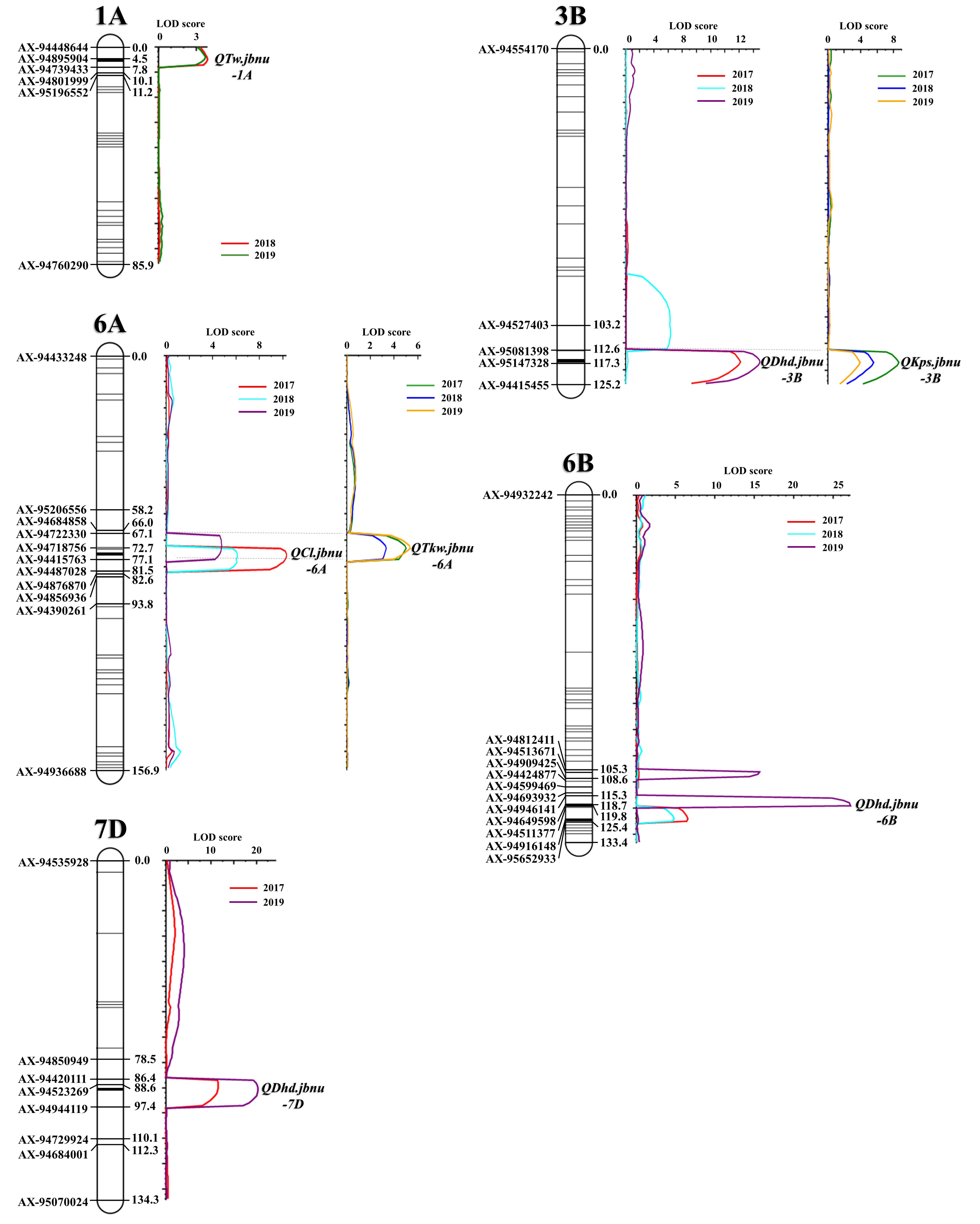
A total of seven QTLs, three for DHD and one each for CL, KPS, TKW, and TW, were detected in at least two of the three years (
Table 1 and
Fig. 2). Three QTLs for DHD,
QDhd.jbnu-3B,
QDhd.jbnu-6B, and
QDhd.jbnu-7D, were stably detected with the LOD scores of 6.3-18.9, 4.7-27.2, and 4.6-8.1, respectively.
QDhd.jbnu-6B explained 12.2- 33.1% of the phenotypic variance, and Keumkang contri-buted the allele for late heading with the additive effects of 0.9-2.2 days. For
QDhd.jbnu-3B and
QDhd.jbnu-7D, Olgeuru contributed the allele for late heading with the additive effects of 1.1-2.2 and 1.0 days, explaining 17.4-40.9% and 6.0-8.7% of the phenotypic variance, respectively. For CL,
QCl.jbnu-6A explained 13.8-27.5% of the phenotypic variance with the LOD scores of 4.7-10.3. Keumkang contributed the allele for a long culm length with the additive effects of 2.8-4.0 cm. For KPS,
QKps.jbnu-3B explained 15.6-30.6% of the phenotypic variance with the LOD scores of 4.6-8.1. Olgeuru con-tributed the allele for high kernels per spike with the addi-tive effects of 1.1-2.6. For TKW,
QTkw.jbnu-6A explained 15.2-22.7% of the phenotypic variance with the LOD scores of 3.3-5.3. The positive allele for
QTkw.jbnu-6A was contributed by Keumkang with the additive effects of 1.3-1.6 g. For TW,
QTw.jbnu-1A explained 13.2-17.9% of the phenotypic variance with the LOD score 3.7-3.9. Keumkang contributed the allele for high test weight with the additive effects of 5.7-6.1 g/l.
QDhd.jbnu-3B and
QKps.jbnu-3B were detected on the same position (117.0 cM), and
QCl.jbnu-6A and
QTkw.jbnu-6A were located within a 3.0 cM interval, indicating that these QTLs may have pleiotropic effects on two different traits (Supple-mentary Table S2). No stable QTL was detected for SL, TN, and YD.
As shortening DHD with maintaining productivity is one of the most important goals of Korean wheat breeding programs, we focused on the three DHD QTLs for further analyses. To characterize the effects of the three DHD QTLs and their interactions, we conducted three-way ANOVAs of
QDhd.jbnu-3B,
QDhd.jbnu-6B, and
QDhd.jbnu-7D for the yield-related traits (
Table 2). The main effects of
QDhd.jbnu-3B were highly significant for CL, SL, KPS, TN, TW, YD as well as DHD. Lines carrying the Keumkang allele at
QDhd.jbnu-3B headed 3.1 days earlier than those carrying the Olgeuru allele. The Keumkang allele was also associated with a decrease in culm length (‒3.9 cm), spike length (‒0.4 cm), kernels per spike (‒3.5), and the final yield (‒27.9 kg/10a), while an increase in the number of tillers (+15/m
2), test weight (+7.7 g/l), and thousand kernel weight (+0.7 g). The main effects of
QDhd.jbnu-6B were significant for all traits except yield. For
QDhd.jbnu-6B, lines carrying the Olgeuru allele headed 2.0 days earlier than those carrying the Keumkang allele. The Olgeuru allele at
QDhd.jbnu-6B was associated with decreased culm length (‒2.6 cm), spike length (‒0.5 cm), kernels per spike (‒1.3), and thousand kernel weight (‒1.7 g), while increased number of tillers (+25.6/m
2) and test weight (+8.9 g/l). The main effects of
QDhd.jbnu-7D were sig-nificant for DHD, KPS, and TW. Lines carrying the Keumkang allele headed 1.7 days earlier than those with the Olgeuru allele. The Keumkang allele was associated with fewer kernels per spike (‒1.4) and higher test weight (+3.7 g/l). The alleles for early heading of the three QTLs were consistently associated with a decrease in kernels per spike and an increase in test weight.
Although the two-way and three-way interactions bet-ween the three DHD QTLs were significant for a few traits (i.e.,
QDhd.jbnu-3B ×
QDhd.jbnu-6B interaction for KPS and TW,
QDhd.jbnu-3B ×
QDhd.jbnu-7D interaction for SL,
QDhd.jbnu-6B ×
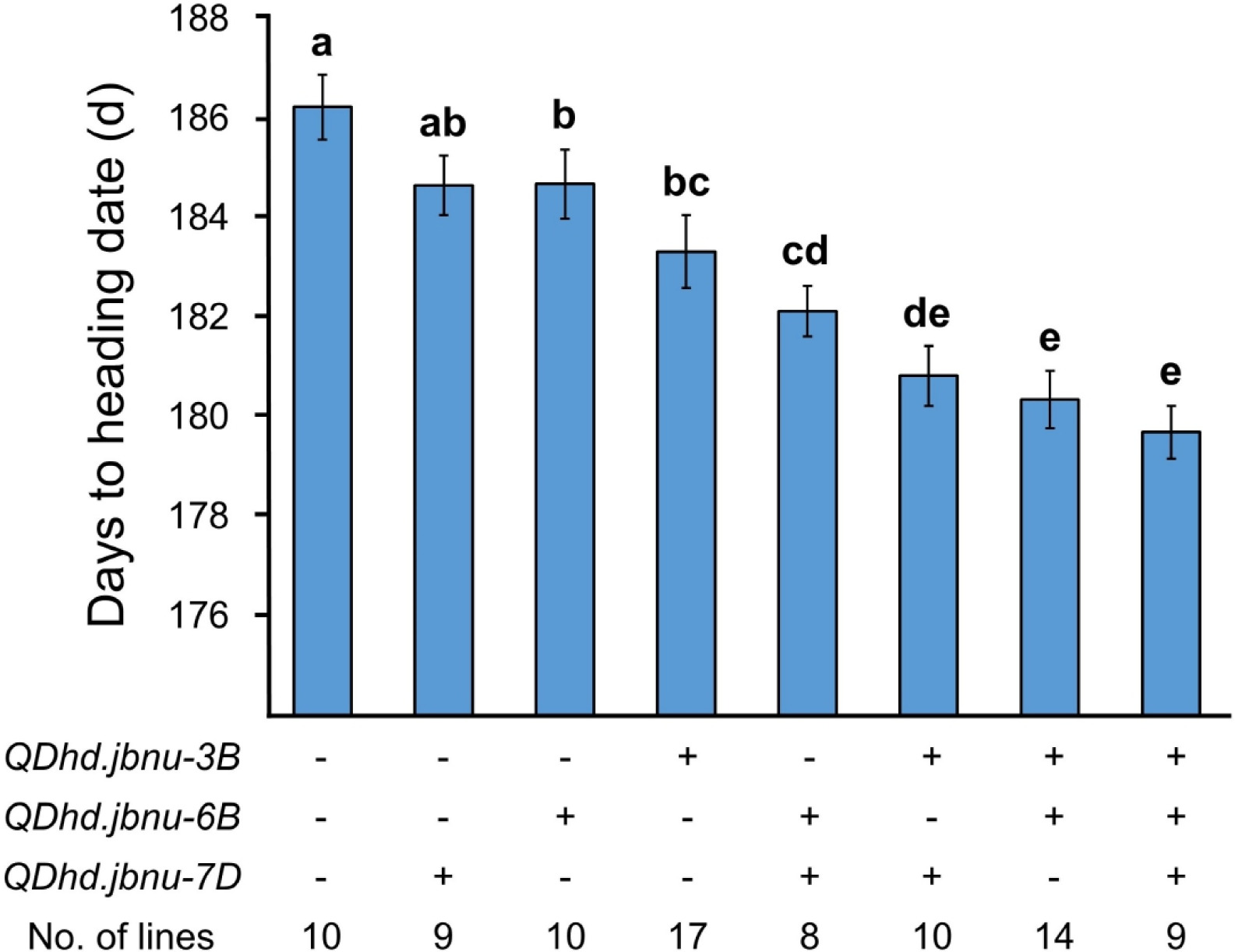
QDhd.jbnu-7D interaction for KPS and TKW, and the three way interaction for DHD, KPS, and TW), they explained limited proportion (< 4%) of the phenotypic variances. Notably, pyramiding two or more alleles for early heading at
QDhd.jbnu-3B,
QDhd.jbnu-6B, and
QDhd.jbnu-7D was highly effective in accelerating heading, ranging from 179.7 days in the lines with the three alleles for early heading to 186.2 days in the lines with the three alleles for late heading (
Fig. 3).
DISCUSSION
This study identified seven stable QTLs for yield-related traits using the doubled haploid lines derived from the two Korean wheat cultivars, Keumkang and Olgeuru. As early heading is especially important in Korean wheat breeding programs, we focused on the three DHD QTLs (i.e., QDhd.jbnu-3B, QDhd.jbnu-6B, and QDhd.jbnu-7D) to cha-racterize their effects and interactions on DHD and other yield-related traits. In this section, we compare the three DHD QTLs with those identified in previous studies and discuss their potential uses in wheat breeding programs.
Comparison of the three DHD QTLs with previous studies
QDhd.jbnu-3B was detected in three consecutive years by the flanking marker AX-95081398 (810.6 Mb; IWGSC RefSeq v1.0) on chromosome 3B (
Table 1 and
Fig. 2). Com-parative analysis revealed that it was co-located with
QKNS.caas-3B, a QTL for KPS flanked by the markers BobWhite_c22016_155 (IWB1543; 789.3 Mb) and RAC875_ c10909_1180 (IWB53203; 805.6 Mb) (
Gao et al. 2015). While the effects of
QKNS.caas-3B on DHD are unknown, the co-location of
QDhd.jbnu-3B and
QKps.jbnu-3B by the same flanking marker (AX-95081398) in our study (
Table 1) indicate that the gene underlying this locus may have a pleiotropic effect on DHD and kernels per spike.
QDhd.jbnu-6B identified in three consecutive years was flanked by AX-94511377 (663.5 Mb; IWGSC RefSeq v1.0) on chromosome 6B (
Table 1 and
Fig. 2). While no known QTL for DHD was co-located with this region, it was in a similar chromosomal region with two loci identified in genome-wide association mapping studies (GWAS), i.e.,
wsnp_Ex_c1276_2445537 (642.3 Mb) associ-ated with kernel weight per spike (
Lozada et al. 2017) and
AX_109917592 (677.4 Mb) associated with TKW (
Li et al. 2019). As
QDhd.jbnu-6B exhibited pleiotropic effects on DHD and TKW in the present study (
Table 2), further study is required to test if the gene underlying
QDhd.jbnu-6B is the same gene with those underlying the two kernel weight loci identified from GWAS. As the pseudomolecule locations (IWGSC RefSeq v1.0) of the flanking markers for
QDhd.jbnu-7D were unclear (e.g., the location of AX-94523269 is unknown while AX-94944119 is on chromosome 7B; but both are located on chromosome 7D according to the consensus map), we did not compare
QDhd.jbnu-7D with previously reported QTLs.
Potential applications of the DHD QTLs in wheat breeding programs
Heading date is an important trait to secure stable yield under target environments and cropping system. In Korea, developing early heading wheat cultivars is especially important to allow the optimum transplanting period of rice in the wheat-rice double cropping system while maintain-ing stable yield and quality of wheat. As Korean wheat breeding programs have focused on developing early-heading cultivars since the 1970s, most recent commercial cultivars already carry the alleles for early heading at the major heading date genes such as
VRN1 and
PPD1 (
Lee et al. 2014;
Cho et al. 2015a;
Cho et al. 2015b;
Cho et al. 2018). Therefore, the three DHD QTLs identified in this study provide useful genetic resources to develop early heading cultivars in Korean wheat breeding programs. When the alleles for early heading at
QDhd.jbnu-3B,
QDhd.jbnu-6B, and
QDhd.jbnu-7D were pyramided, the heading date could be advanced by approximately one week (
Fig. 3).
However, caution is required because early heading is often associated with decreased spikelets per spike and kernels per spike, thus reduces the yield potential (
Muterko et al. 2015;
Hu et al. 2023). For example, the spring alleles of
Vrn-A1 significantly shortened the vegetative phase and early reproductive phase, resulting in the reduced spikelet number per spike (
Stelmakh 1992,
1998;
Dreisigacker et al. 2021). Similarly, the photoperiod-insensitive alleles of
Ppd-D1 are associated with the shortened period of terminal spikelet formation, which resulted in accelerated heading and a decreased spikelet number per spike (
Ransom et al. 2007;
Dreisigacker et al. 2021). Similar to these, the three DHD QTLs detected in this study affected heading date and kernels per spike at the same time, where the alleles for early heading were associated with reduced kernels per spike (
Table 2). As the yield reduction associated with the allele for early heading was more severe for
QDhd.jbnu-3B (‒6.21%) compared with
QDhd.jbnu-6B (‒1.40%) and
QDhd.jbnu-7D (‒0.55%), pyramiding the alleles for early heading at
QDhd.jbnu-6B and
QDhd.jbnu-7B might be beneficial for accelerating heading while minimizing the negative impact on yield. Further research is required to evaluate the effects of these QTLs on heading date and other important agronomic traits under different genetic backgrounds and environments.
DATA AVAILABILITY STATEMENT
The datasets generated from this research are available from the corresponding author upon reasonable request.
Supplemental Material
ACKNOWLEDGEMENTS
This work was carried out with the support of the “Cooperative Research Program for Agriculture Science & Technology Development (RDA PJ0159652023)”, Rural Development Administration, Republic of Korea.
Notes
-
AUTHOR CONTRIBUTIONS
Sumin Hong performed the experiments, analyzed the data and wrote the first draft. Kyeong-Min Kim, Changhyun Choi, and Seong-Woo Cho conducted field trials and analyzed the data. Chul Soo Park designed the experiments and supervised the project. Youngjun Mo analyzed the data, supervised the project, and wrote the final draft.
-
CONFLICT OF INTEREST
The authors declare that they have no conflicts of interest.
Fig. 1Distribution of the yield-related traits in the Keumkang/Olgeuru doubled haploid population. Black vertical line indicates the mean value. Red and blue arrows indicate the value of Keumkang and Olgeuru, respectively.
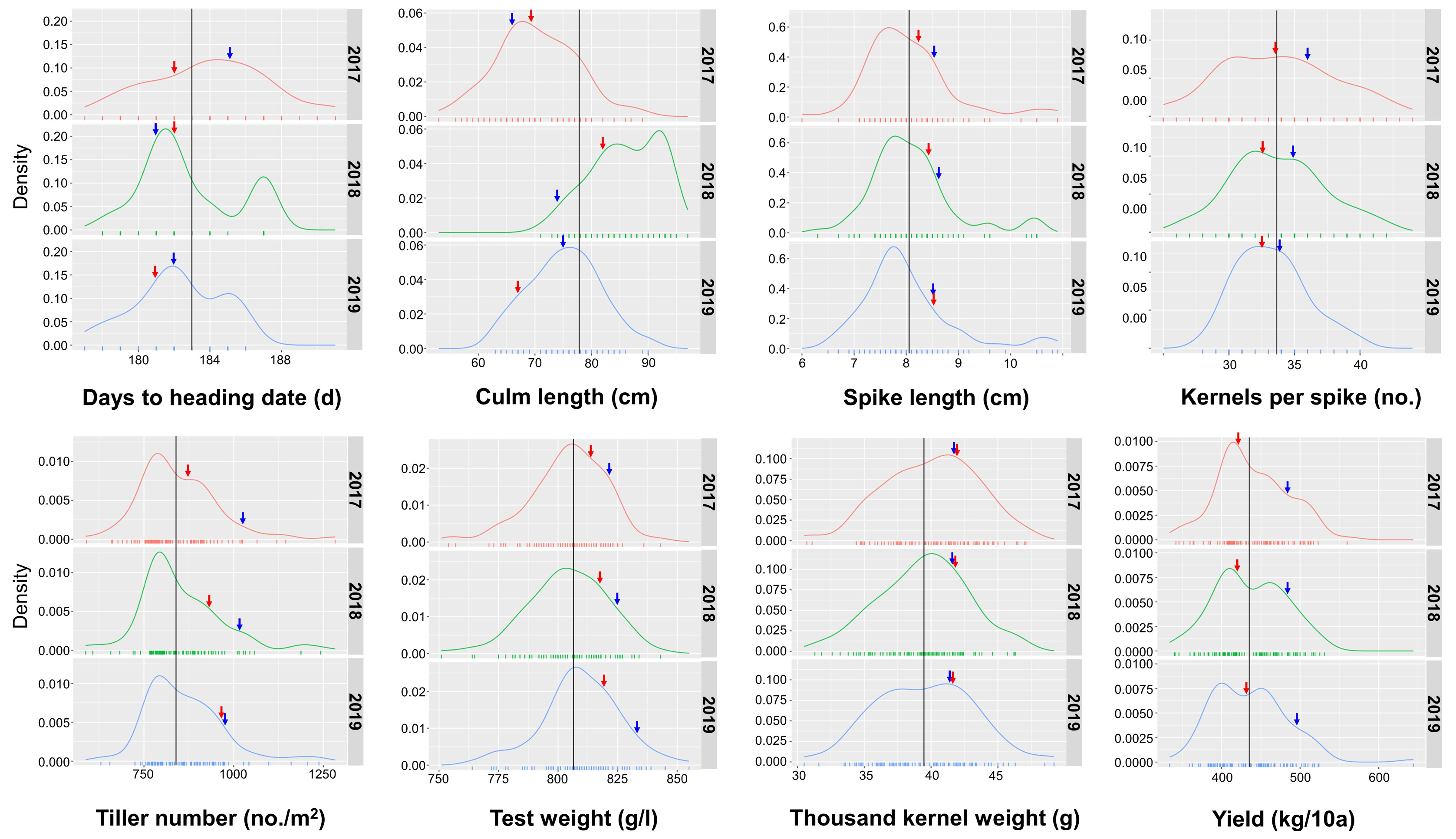
Fig. 2QTL mapping for yield-related traits in the Keumkang/Olgeuru doubled haploid population. TW: test weight, DHD: days to heading date, KPS: kernels per spike, CL: culm length, TKW: thousand kernel weight.
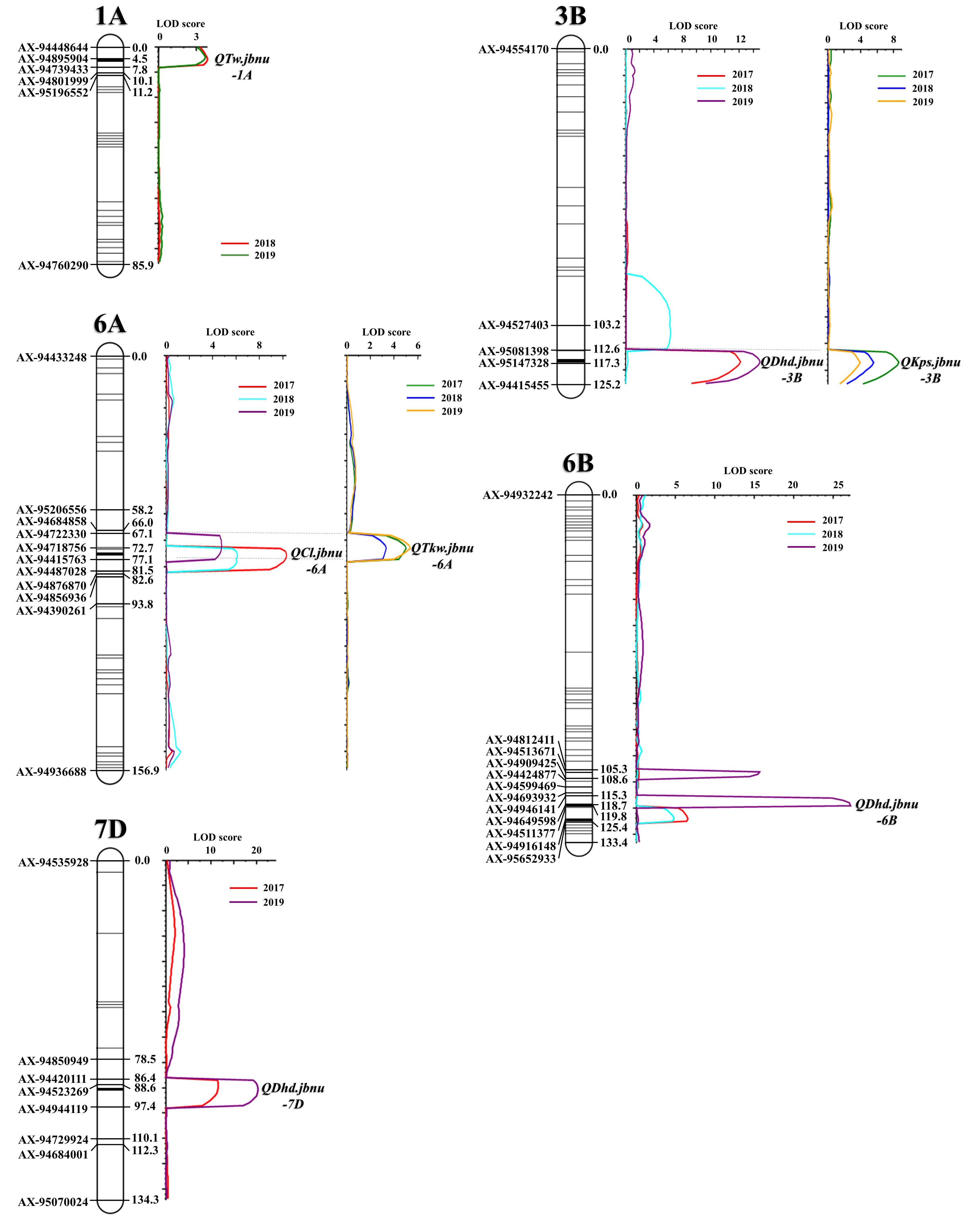
Fig. 3Days to heading date of the doubled haploid lines carrying different allele combinations of QDhd. jbnu-3B, QDhd.jbnu-6B, and QDhd.jbnu-7D. ‘+’ indicates the allele for early heading while ‘‒’ in-dicates the allele for late heading. The Keumkang allele is associated with early heading for QDhd. jbnu-3B and QDhd.jbnu-7D, while the Olgeuru allele is associated with early heading for QDhd.jbnu-6B. Different letters above the bars indicate significant difference from the Tukey’s HSD test at P < 0.05.
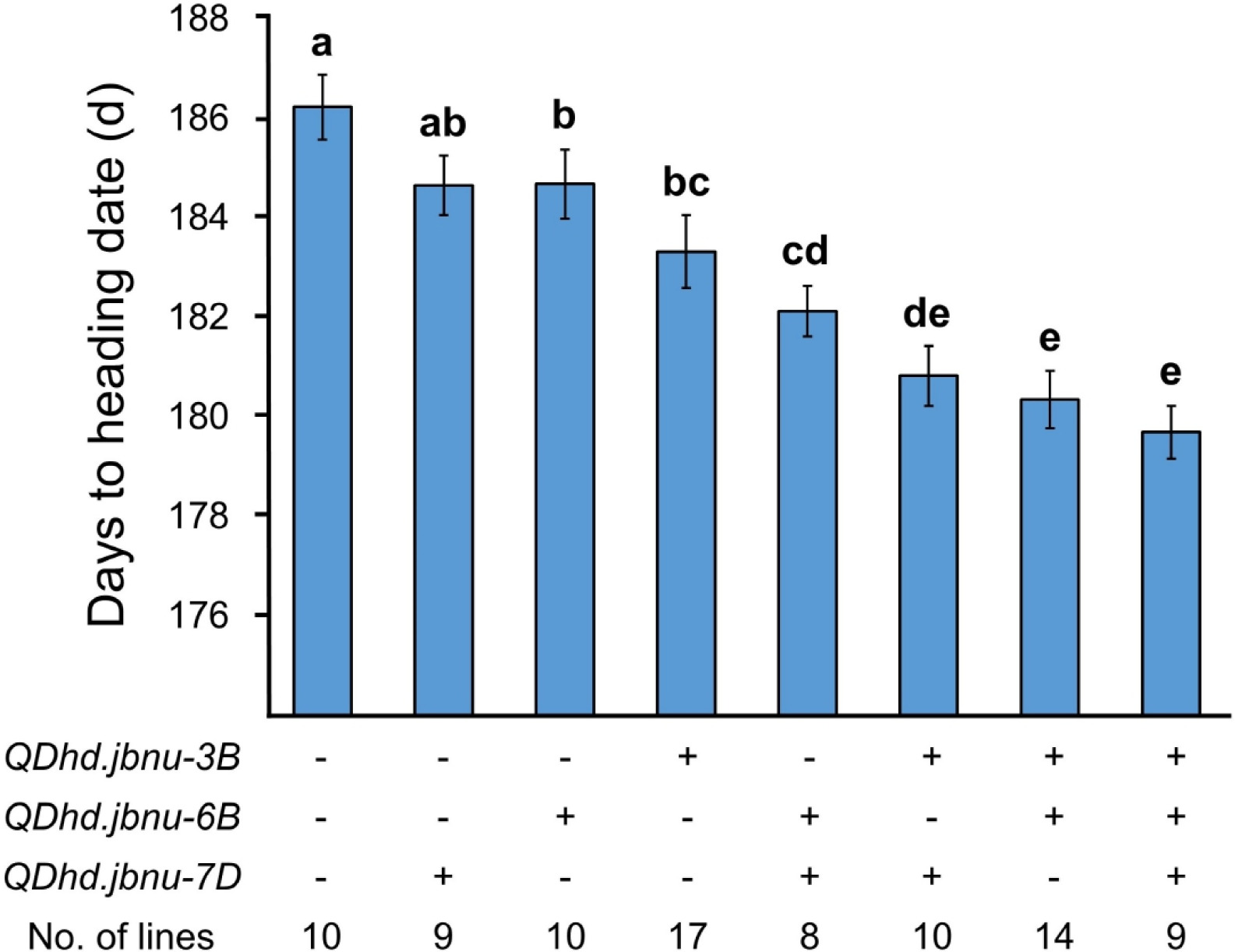
Table 1QTLs for yield-related traits identified from the Keumkang/Olgeuru doubled haploid population
Table 1
|
QTLz)
|
Year |
Position (cM) |
Left marker |
Right marker |
Interval (cM) |
LODy)
|
PVEx) (%) |
ADDw)
|
|
QDhd.jbnu-3B
|
2017 |
117.0 |
AX-95081398 |
AX-95147328 |
6.0 |
16.1 |
40.9 |
‒2.2 |
|
2018 |
106.0 |
AX-94527403 |
AX-95081398 |
9.0 |
6.3 |
17.4 |
‒1.1 |
|
2019 |
117.0 |
AX-95081398 |
AX-95147328 |
5.0 |
18.9 |
18.0 |
‒1.7 |
|
QDhd.jbnu-6B
|
2017 |
124.0 |
AX-94511377 |
AX-94916148 |
5.0 |
6.5 |
12.8 |
1.2 |
|
2018 |
124.0 |
AX-94511377 |
AX-94916148 |
5.0 |
4.7 |
12.2 |
0.9 |
|
2019 |
119.0 |
AX-94649598 |
AX-94511377 |
3.0 |
27.2 |
33.1 |
2.2 |
|
QDhd.jbnu-7D
|
2017 |
89.0 |
AX-94523269 |
AX-94944119 |
9.0 |
4.6 |
8.7 |
‒1.0 |
|
2019 |
91.0 |
AX-94523269 |
AX-94944119 |
10.0 |
8.1 |
6.0 |
‒1.0 |
|
QCl.jbnu-6A
|
2017 |
75.0 |
AX-94718756 |
AX-94415763 |
8.0 |
10.3 |
27.5 |
4.0 |
|
2018 |
75.0 |
AX-94718756 |
AX-94415763 |
4.0 |
6.1 |
25.6 |
3.2 |
|
2019 |
72.0 |
AX-94722330 |
AX-94718756 |
10.0 |
4.7 |
13.8 |
2.8 |
|
QKps.jbnu-3B
|
2017 |
117.0 |
AX-95081398 |
AX-95147328 |
6.0 |
8.6 |
30.6 |
‒2.6 |
|
2018 |
117.0 |
AX-95081398 |
AX-95147328 |
7.0 |
5.5 |
20.8 |
‒1.6 |
|
2019 |
117.0 |
AX-95081398 |
AX-95147328 |
8.0 |
3.9 |
15.6 |
‒1.1 |
|
QTkw.jbnu-6A
|
2017 |
73.0 |
AX-94718756 |
AX-94415763 |
8.0 |
5.0 |
21.9 |
1.6 |
|
2018 |
73.0 |
AX-94718756 |
AX-94415763 |
9.0 |
3.3 |
15.2 |
1.3 |
|
2019 |
73.0 |
AX-94718756 |
AX-94415763 |
7.0 |
5.3 |
22.7 |
1.6 |
|
QTw.jbnu-1A
|
2018 |
5.0 |
AX-94895904 |
AX-94739433 |
7.5 |
3.9 |
17.9 |
6.1 |
|
2019 |
4.0 |
AX-94448644 |
AX-94895904 |
7.5 |
3.7 |
13.2 |
5.7 |
Table 2Three-way ANOVAs of QDhd.jbnu-3B (Q3), QDhd.jbnu-6B (Q6), and QDhd.jbnu-7D (Q7) for different yield-related traits.
Table 2
|
Traitz)
|
Allele |
Main effecty)
|
|
Interaction |
|
Q3
|
Q6
|
Q7
|
|
Q3 × Q6
|
Q3 × Q7
|
Q6 × Q7
|
Q3 × Q6 × Q7
|
|
DHD (d) |
Keumkang |
181.0 |
183.8 |
182.0 |
|
|
|
|
|
|
Olgeuru |
184.1 |
181.8 |
183.7 |
|
|
|
|
|
|
P-value |
***
|
***
|
***
|
|
ns |
ns |
ns |
**
|
|
PVE (%) |
27.7 |
13.1 |
9.5 |
|
|
|
|
1.2 |
|
CL (cm) |
Keumkang |
74.8 |
78.4 |
76.4 |
|
|
|
|
|
|
Olgeuru |
78.7 |
75.8 |
78.2 |
|
|
|
|
|
|
P-value |
***
|
*
|
ns |
|
ns |
ns |
ns |
ns |
|
PVE (%) |
4.2 |
1.9 |
|
|
|
|
|
|
|
SL (cm) |
Keumkang |
7.8 |
8.3 |
8.1 |
|
|
|
|
|
|
Olgeuru |
8.2 |
7.8 |
8.1 |
|
|
|
|
|
|
P-value |
***
|
***
|
ns |
|
ns |
***
|
ns |
ns |
|
PVE (%) |
7.4 |
7.4 |
|
|
|
3.9 |
|
|
|
KPS (no.) |
Keumkang |
31.7 |
34.3 |
33.0 |
|
|
|
|
|
|
Olgeuru |
35.2 |
33.0 |
34.4 |
|
|
|
|
|
|
P-value |
***
|
***
|
***
|
|
**
|
ns |
*
|
*
|
|
PVE (%) |
22.2 |
4.4 |
3.6 |
|
2.2 |
|
1.3 |
1.3 |
|
TN (no./m2) |
Keumkang |
873.0 |
819.8 |
854.8 |
|
|
|
|
|
|
Olgeuru |
835.5 |
883.8 |
847.0 |
|
|
|
|
|
|
P-value |
**
|
***
|
ns |
|
ns |
ns |
ns |
ns |
|
PVE (%) |
2.9 |
9.6 |
|
|
|
|
|
|
|
TW (g/l) |
Keumkang |
811.1 |
801.9 |
807.5 |
|
|
|
|
|
|
Olgeuru |
803.4 |
810.8 |
803.8 |
|
|
|
|
|
|
P-value |
***
|
***
|
**
|
|
**
|
ns |
ns |
*
|
|
PVE (%) |
5.6 |
9.2 |
2.4 |
|
2.0 |
|
|
1.5 |
|
TKW (g) |
Keumkang |
39.9 |
40.4 |
39.7 |
|
|
|
|
|
|
Olgeuru |
39.2 |
38.7 |
39.6 |
|
|
|
|
|
|
P-value |
ns |
***
|
ns |
|
ns |
ns |
*
|
ns |
|
PVE (%) |
|
5.7 |
|
|
|
|
1.4 |
|
|
YD (kg/10a) |
Keumkang |
421.5 |
440.8 |
436.3 |
|
|
|
|
|
|
Olgeuru |
449.4 |
434.6 |
438.7 |
|
|
|
|
|
|
P-value |
***
|
ns |
ns |
|
ns |
ns |
ns |
ns |
|
PVE (%) |
8.7 |
|
|
|
|
|
|
|
References
- Alvarez MA, Tranquilli G, Lewis S, Kippes N, Dubcovsky J. 2016. Genetic and physical mapping of the earliness per se locus Eps-A (m) 1 in Triticum monococcum identifies EARLY FLOWERING 3 (ELF3) as a candidate gene. Funct. Integr. Genom.. 16(4): 365-382.
- Assanga SO, Fuentealba M, Zhang G, Tan C, Dhakal S, Rudd JC, et al. 2017. Mapping of quantitative trait loci for grain yield and its components in a US popular winter wheat TAM 111 using 90K SNPs. PLoS One. 12(12): e0189669
- Bentley AR, Horsnell R, Werner CP, Turner AS, Rose GA, Bedard C, et al. 2013. Short, natural, and extended photo-period response in BC2F4 lines of bread wheat with different photoperiod-1 (Ppd-1) alleles. J. Exp. Bot.. 64(7): 1783-1793.
- Cao S, Xu D, Hanif M, Xia X, He Z. 2020. Genetic architec-ture underpinning yield component traits in wheat. Theor. Appl. Genet.. 133(6): 1811-1823.
- Chen X, Min D, Yasir TA, Hu YG. 2012. Evaluation of 14 morphological, yield-related, and physiological traits as indicators of drought tolerance in Chinese winter bread wheat revealed by analysis of the membership function value of drought tolerance (MFVD). Field Crops Res.. 137: 195-201.
- Cho EJ, Kang CS, Jung JU, Yoon YM, Park CS. 2015a. Allelic variation of Rht-1, Vrn-1 and Ppd-1 in Korean wheats and its effect on agronomic traits. Plant Breed. Biotech.. 3(2): 129-138.
- Cho EJ, Kang CS, Yoon YM, Park CS. 2015b. The relationship between allelic variations of Vrn-1 and Ppd-1 and agronomic traits in Korean wheat cultivars. Indian J. Genet. Plant Breed.. 75(03): 294-300.
- Cho SW, Kang TG, Kang SW, Kang CS, Park CS. 2018. Assessment of DNA markers related to days to heading date, tiller number, and yield in Korean wheat popula-tions. Korean J. Breed. Sci.. 50(3): 211-223.
- Cui F, Zhao C, Ding A, Li J, Wang L, Li X, et al. 2014. Construction of an integrative linkage map and QTL mapping of grain yield-related traits using three related wheat RIL populations. Theor. Appl. Genet.. 127(3): 659-675.
- de Mendiburu F. 2023. Agricolae: Statistical Procedures for Agricultural Research. R package version 1.3-6. https://CRAN.R-project.org/package=agricolae.
- Deng M, Wu F, Zhou W, Li J, Shi H, Wang Z, et al. 2019. Mapping of QTL for total spikelet number per spike on chromosome 2D in wheat using a high-density genetic map. Genet. Mol. Biol.. 42(3): 603-610.
- Dreisigacker S, Pacheco A, Molero G, Sukumaran S, Rivera-Amado C, et al. Burgueño J2021. Effect of flowering time-related genes on biomass, harvest index, and grain yield in CIMMYT elite spring bread wheat. Biology. 10(9): 855
- FAO (Food.Agriculture Organization).2023. Online statistical database: Food balance. FAOSTAT (Food and Agriculture Organization of the United Nations statistical Database).
- Gao F, Wen W, Liu J, Rasheed A, Yin G, Xia X, et al. 2015. Genome-wide linkage mapping of QTL for yield com-ponents, plant height and yield-related physiological traits in the Chinese wheat cross Zhou 8425B/Chinese spring. Front. Plant Sci.. 6: 1099
- Gupta PK, Balyan HS, Sharma S, Kumar R. 2020. Genetics of yield, abiotic stress tolerance and biofortification in wheat (Triticum aestivum L.). Theor. Appl. Genet.. 133: 1569-1602.
- Hazell PBR. 2009. The Asian green revolution. International Food Policy Research Institute 911..
- Herndl M, White JW, Graeff S, Claupein W. 2008. The impact of vernalization requirement, photoperiod sensitivity and earliness per se on grain protein content of bread wheat (Triticum aestivum L.). Euphytica. 163: 309-320.
- Hu W, Zhu D, Zhang Y, Liu J, Zhao D, Liao S, et al. 2023. Quantitative trait loci mapping for heading date and spikelet number in wheat (Triticum aestivum L.) based on two recombinant inbred line populations. Genet. Resour. Crop Evol.. 70: 1179-1195.
- Kamran A, Iqbal M, Spaner D. 2014. Flowering time in wheat (Triticum aestivum L.): a key factor for global adaptability. Euphytica. 197: 1-26.
- Khlestkina EK, Giura A. Röder MSBörner A2009. A new gene controlling the flowering response to photoperiod in wheat. Euphytica. 165: 579-585.
- Law C, Sutka J, Worland A. 1978. A Genetic study of day- length response in wheat. Heredity. 41: 185-191.
- Lee HS, Jung JU, Kang CS, Heo HY, Park CS. 2014. Mapping of QTL for yield and its related traits in a doubled haploid population of Korean wheat. Plant Biotechnol. Rep.. 8: 443-454.
- Li F, Wen W, Liu J, Zhang Y, Cao S, He Z, et al. 2019. Genetic architecture of grain yield in bread wheat based on genome-wide association studies. BMC Plant Biol.. 19(1): 168
- Liu J, Wu B, Singh RP, Velu G. 2019. QTL mapping for micronutrients concentration and yield component traits in a hexaploid wheat mapping population. J. Cereal Sci.. 88: 57-64.
- Lozada DN, Mason RE, Babar MA, Carver BF, Guedira GB, Merrill K, et al. 2017. Association mapping reveals loci associated with multiple traits that affect grain yield and adaptation in soft winter wheat. Euphytica. 213: 222
- Mcintosh RA, Yamazaki Y, Dubcovsky J, Rogers J, Morris C, Xia XC. 2017. Catalogue of gene symbols for wheat: 2017 Supplement.
- Meng L, Li H, Zhang L, Wang J. 2015. QTL IciMapping: Integrated software for genetic linkage map construction and quantitative trait locus mapping in biparental populations. Crop J.. 3(3): 269-283.
- Mondal S, Singh RP, Mason ER, Huerta-Espino J, Autrique E, Joshi AK. 2016. Grain yield, adaptation and progress in breeding for early-maturing and heat-tolerant wheat lines in South Asia. Field Crops Res.. 192: 78-85.
- Muterko A, Kalendar R, Cockram J, Balashova I. 2015. Discovery, evaluation and distribution of haplotypes and new alleles of the Photoperiod-A1 gene in wheat. Plant Mol. Biol.. 88: 149-164.
- Nam JH. 1994. Development of soft wheat cultivar 'Olgeuru' with early maturity, and high yield. Korean Wheat & Barley Industry Development Institute. 2: 68-69.
- Pearce S. 2021. Towards the replacement of wheat 'Green Revolution' genes. J. Exp. Bot.. 72(2): 157-160.
- Peng J, Richards D, Hartley N, Murphy GP, Devos KM, Flintham JE, et al. 1999. 'Green revolution' genes encode mutant gibberellin response modulators. Nature. 400: 256-261.
- Ransom J, Endres G, Schatz B. 2007. Paper presented at inter-national workshop on increasing wheat yield potential, CIMMYT, Obregon, Mexico, 20-24 MARCH 2006 Sustainable improvement of wheat yield potential: The role of crop management. J. Agric. Sci.. 145(2): 55-61.
- Ray D, Ramankutty N, Mueller N, West PC, Foley JA. 2012. Recent patterns of crop yield growth and stagnation. Nat. Commun.. 3: 1293
- Rural Development Administration (RDA).2012. Standard of research and analysis for agricultural technology. Rural Development Administration (RDA). Suwon, Korea..
- Rebetzke GJ, Richards RA, Fischer VM, Mickelson BJ. 1999. Breeding long coleoptile, reduced height wheats. Euphytica. 106: 159-168.
- Scarth R, Law C. 1983. The location of the photoperiod gene, Ppd2 and an additional genetic factor for ear-emergence time on chromosome 2B of wheat. Heredity. 51: 607-619.
- Shin S, Kim K, Kang C, Park J, Hyun J, Park C. 2013. Effects of agronomic characteristics and grain morphology on pre-harvest sprouting in Korean wheat cultivar. Korean J. Breed. Sci.. 45(4): 346-357.
- Song HS. 1998. Development of wheat (Triticum aestivum L.) cultivar, 'Keumkang' with white coler, early-maturation, high protein content, and suitability for bread making. Korean Wheat & Barley Industry Development Institute. 5: 91-93.
- Stelmakh A. 1992. Genetic effects of Vrn genes on heading date and agronomic traits in bread wheat. Euphytica. 65: 53-60.
- Stelmakh A. 1998. Genetic systems regulating flowering response in wheat. Euphytica. 100: 359-369.
- Thomas SG. 2017. Novel Rht-1 dwarfing genes: tools for wheat breeding and dissecting the function of DELLA proteins. J. Exp. Bot.. 68(3): 354-358.
- Tshikunde NM, Mashilo J, Shimelis H, Odindo A. 2019. Agronomic and physiological traits, and associated quantitative trait loci (QTL) affecting yield response in wheat (Triticum aestivum L.): A Review. Front. Plant Sci.. 10: 1428
- Wu X, Cheng R, Xue S, Kong Z, Wan H, Li G, et al. 2014. Precise mapping of a quantitative trait locus interval for spike length and grain weight in bread wheat (Triticum aestivum L.). Mol. Breeding. 33: 129-138.
- Xiong H, Zhou C, Fu M, Guo H, Xie Y, Zhao L, et al. 2022. Cloning and functional characterization of Rht8, a "Green Revolution" replacement gene in wheat. Mol. Plant. 15(3): 373-376.
- Yan L, Fu D, Li C, Blechl A, Tranquilli G, Bonafede M, et al. 2006. The wheat and barley vernalization gene VRN3 is an orthologue of FT. Proc. Natl. Acad. Sci. U. S. A.. 103(51): 19581-19586.
- Yan L, Loukoianov A, Blechl A, Tranquilli G, Ramakrishna W, SanMiguel P, et al. 2004. The wheat VRN2 gene is a flowering repressor down-regulated by vernalization. Science. 303(5664): 1640-1644.
- Zhang J, Gizaw SA, Bossolini E, Hegarty J, Howell T, Carter AH, et al. 2018. Identification and validation of QTL for grain yield and plant water status under contrasting water treatments in fall-sown spring wheats. Theor. Appl. Genet.. 131(8): 1741-1759.
- Zhang J, She M, Yang R, Jiang Y, Qin Y, Zhai S, et al. 2021. Yield-Related QTL Clusters and the Potential Candidate Genes in Two Wheat DH Populations. Int. J. Mol. Sci.. 22(21): 11934