Abstract
Targeted genome editing using CRISPR/Cas nucleases has become the standard approach for creating mutant plants. Significant progress has been made to enhance the editing efficiencies through optimizing CRISPR/Cas expression, including applying heat stress. In this study, we used heat stress to enhance the Potato virus X (PVX)-mediated CRISPR/Cas9 mutagenesis in Nicotiana benthamiana. We show that heat stress at 4-5 days after PVX inoculation effectively increases the mutagenesis efficiency of Cas9 nuclease. We observed up to a 5-8% increase in mutation efficiency depending on the sgRNA construct when heat stress is applied to the pPVX-Cas9::sgRNA infiltrated samples. Furthermore, analysis of the effect of the heat stress on the pattern of mutation types in the target gene regions showed no obvious changes in CRISPR/Cas9 induced mutagenesis pattern between heat stress treated and no heat stress treated samples. Overall, our experiments demonstrate that heat stress treatment at the optimal time after viral inoculation is most effective in increasing the PVX-mediated CRISPR/Cas9 editing efficiency in plants.
-
Key words: CRISPR/Cas9, Genome editing, Heat stress, Nicotiana benthamiana, Potato virus X (PVX)
INTRODUCTION
Programmable site-specific nucleases for targeted ge-nome mutagenesis is an important tool that has been widely used, customized, and improved by researchers. Clustered regularly interspaced short palindromic repeats (CRISPR)/ CRISPR associated (Cas) systems has been successfully utilized in many plant species by delivering Cas9 nucleases along with a single-guide RNA (sgRNA) complementary to the target DNA site in the host genome (
Soyars et al. 2018;
Manghwar et al. 2019;
Zhang et al. 2019). Using CRISPR/Cas9 mediated genome editing (GE), various genome-engineered crops have been developed, for instance, powdery mildew resistance in wheat, herbicide resistance in rice, and Pepper mottle virus (PepMoV) resistance in tomato (
Feng et al. 2013;
Fan et al. 2015;
Ma et al. 2015;
Nishitani et al. 2016;
Osakabe et al. 2018;
Wang et al. 2018;
Yoon et al. 2020).
Plant genome editing is mainly achieved through
Agrobacterium-mediated transformation of T-DNA carry-ing
Cas9 and a
sgRNA. T-DNA-free lines with the targeted mutation can be selected in the subsequent generations through transgene segregation and genotyping. However, it is time-consuming and difficult to remove transgene from vegetatively propagated plants or hybrid cultivars with high heterozygosity (
Ariga et al. 2020). Because of these and regulatory issues, biotechnological approaches for developing genome-edited plants without transgene insertion in their genomes have gained utmost importance. To overcome the limitations caused by tissue culture, plant virus-mediated genome editing technologies have been developed. One of the promising approaches to this end is the deployment of plant viral-based delivery of CRISPR/ Cas9 reagents. Virus vectors can deliver CRISPR/Cas reagents into a plant cell with a simple experimental procedure. In many cases,
Agrobacterium-based plant viral vectors have been used to deliver CRISPR/Cas nucleases into plant cells by simple inoculation methods (
Ali et al. 2015;
Ariga et al. 2020). Both DNA and RNA-based viral vectors have been successfully used for genome editing in several plant species. DNA-based viral replicons (decons-tructed geminiviruses) have been reported to express
Cas9 successfully (
Baltes et al. 2014;
Čermák et al. 2015; Gil- Humanes
et al. 2017). Previous attempts to use plant RNA viral vectors for the delivery of
sgRNAs were successful in inducing mutations in plant genomes when Cas9 nuclease was delivered in
trans (
Ali et al. 2015;
Cody et al. 2017;
Hu et al. 2019;
Jiang et al. 2019;
Mei et al. 2019;
Ellison et al. 2020). However, the cargo capacity of these vectors is limited for delivering both the
Cas9 and
sgRNAs. Recently, potato virus X (PVX), with a simple filamentous flexible structure (
Kendall et al. 2008) as has been successfully used for delivering both
Cas9 and
sgRNAs without physical size limitations, making it an important genome editing tool for developing transgene-free genome-edited plants (
Ariga et al. 2020).
In this study, we used HS treatment to increase the edi-ting efficiency of a PVX- mediated CRISPR/Cas9 genome editing in Nicotiana benthamiana plants. Our results showed that editing efficiency can be increased with HS treatment of pPVX-Cas9 inoculated plants. We observed a consistent increase in indel frequencies in the NbPDS target regions using PVX- mediated CRISPR/Cas9 system in N. benthamiana. This study will be useful for plant viral mediated CRISPR/Cas9 GE applications in N. benthamiana and other plant species.
MATERIALS AND METHODS
pPVX-PDS-gRNA vector construction
pPVX-Cas9 vector (
Ariga et al. 2020) was kindly pro-vided by Dr. Kazuhiro Ishibashi (Institute of Agrobiolo-gical Sciences, National Agriculture and Food Research Organization, Japan). The sgRNA target sequences were identified using CCTop - CRISPR/Cas9 target online predictor (
https://crispr.cos.uni-heidelberg.de/index.html) and PDS-sgRNA1 & 2 cloning primers were custom synthesized at Bioneer (Bioneer, Republic of Korea) (
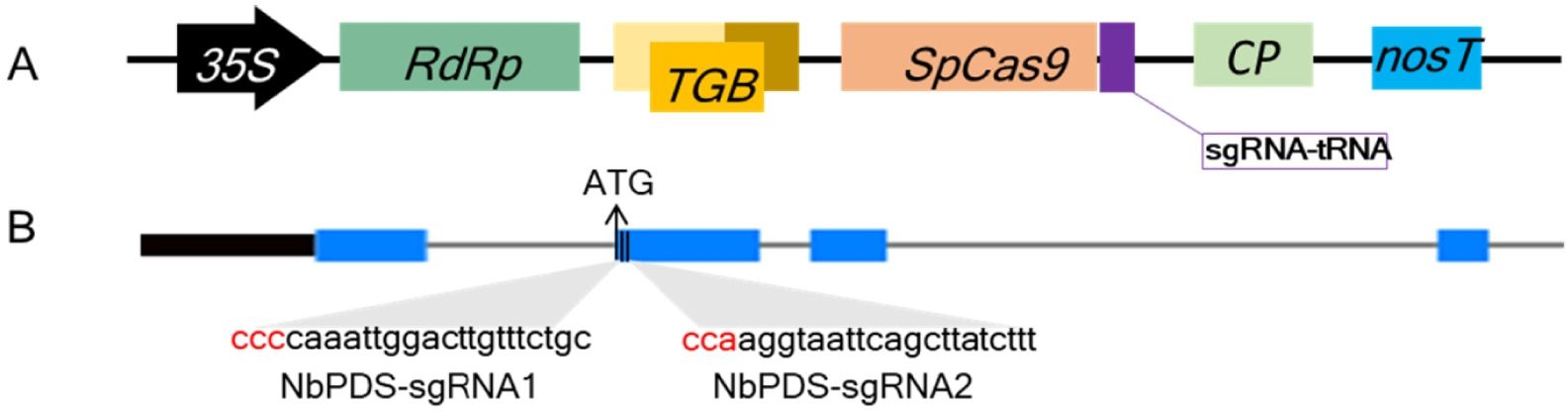
Table 1). sgRNA sequences comprising 80-bp scaffold RNA and target sequences of 20 bp for
NbPDS editing and tRNA sequence containing 80-bp (
Ellison et al. 2020) were cloned into the pPVX-Cas9 vector (
Fig. 1A) at
MluI,
StuI, and
SalI restriction enzyme sites using primers listed in
Table 1. Details of NbPDS-sgRNA sequences are included in
Table 2 and
Fig. 1B. The constructed PVX vectors containing
SpCas9 and NbPDS-sgRNA-tRNA targets were mobilized into
Agrobacterium tumefaciens strain GV3101 by electroporation.
N. benthamiana plants were grown in a growth chamber maintained at 24 ± 2℃ and an agroinfiltration experiment was performed as previously described (
Hwang et al. 2015). Single
Agrobacterium colonies for each construct were inoculated into 10 mL of YEP medium with 50 mg∙L
‒1 kanamycin and 50 mg∙L
‒1 rifampicin, and incubated overnight. Cells were washed with 10 mM MgCl
2 and diluted to an OD600 of 0.3 with an infiltration medium (10 mM MES, 10 mM MgCl
2, and 200 mM acetosyringone). Agrobacterial cultures of p19 and pPVX-Cas9::sgRNA constructs were mixed at a 1:1 and incubated at room temperature for 3 hours and co-infiltrated into the lower side of the 4-week-old
N. benthamiana plant leaves using a needleless 1 mL syringe.
Agrobacterium cultures carrying pPVX-GFP and empty p19 vectors were used in mock infiltration.
N. benthamiana HS treatments
N. benthamiana plants infiltrated with pPVX-Cas9:: sgRNA constructs and p19 were used for investigating the effect of HS on the CRISPR mutagenesis efficiency. Plants were subjected to a single cycle of HS of 37℃ for 24 hours from 2 days after infiltration (DAI) to 5 DAI. Plants were moved to 24℃ after the end of the HS treatment, while p19 and pPVX-Cas9::sgRNA constructs infiltrated plants were grown at 24℃ with no HS (NHS) treatment were used as controls.
Evaluation of the targeted GE
Leaf samples were collected from the
N. benthamiana plants infiltrated with pPVX-Cas9::sgRNA constructs at 7 DAI, and genomic DNA was isolated using the CTAB method (DOYLE, 1987). Genomic DNA mutations resulting from the CRISPR/Cas9 GE were analyzed through the restriction site protection assay. The
NbPDS target regions of sgRNA1 and 2 were PCR amplified using primers listed in
Table 1. PCR reactions were performed in 50 mL reaction volume consisting of 10 mL PrimeSTAR GXL buffer, 4 mL of 2.5 mM dNTPs, 2 mL of each of the reverse and forward primers, 4 mL of 50 ng genomic DNA, 1.0 mL PrimeSTAR GXL Taq DNA polymerase and 27.0 mL sterile water. Following PCR conditions were used: initial denaturation for 3 minutes at 95℃, followed by 36 cycles of 10 s at 98℃, 15 seconds at 55℃, and 30 seconds at 68℃, and a final extension of 3 minutes at 68℃. A 250 ng of purified PCR products corresponding to the sgRNA1 and sgRNA2, two target regions were digested with
BslI, and
StyI, respectively. Samples were incubated at 55℃ and 37℃ for 2 hours and overnight, respectively, for
BsaI and
StyI restriction enzymes. Digested PCR products were visualized in 2% agarose gel made with 1 × TAE buffer. The GE efficiency was calculated as a percentage of un-cleaved DNA band intensity measured using ImageJ software.
An amplicon size of 531-bp length including both sgRNA target sites was used for Miseq. Primers for Miseq were synthesized at the Macrogen (Seoul, Republic of Korea). The primers with multiplexing indices and sequen-cing adaptors for PCR amplification of sgRNA target regions and deep sequencing are included in
Table 3. Target regions were amplified using a QIAGEN Multiplex PCR kit (QIAGEN, Germany). A reaction volume of 50 mL included 25 mL of 2× master mix, 2.0 mL oligonucleotides mix (10 pmol) and 100 ng of genomic DNA. The PCR cycling conditions consisted of 5 minutes at 95℃ followed by 35 cycles of denaturation at 95℃ for 30 seconds, annealing at 58℃ for 30 seconds, extension at 72℃ for 90 seconds, and a final extension for 10 minutes at 72℃. Amplified PCR product was gel eluted and subjected to deep-sequencing at NICEM (Seoul National University, Seoul, Republic of Korea). Pooled PCR samples were used for high-throughput paired-end amplicon sequencing on the Illumina MiSeq platform at NICEM (Seoul National University, Seoul, Republic of Korea). Raw paired-end reads were joined by the program, ‘fastq-join’ as imple-mented in the package, ‘eu-util’. Mutation counts and patterns in merged reads were analyzed using in-house scripts. Sequencing reads identified with insertion/deletion (indel) within and around the spacer region were regarded as an outcome of error-prone repair of Cas9 cleaved sites by non-homologous end-joining (NHEJ). GE efficiency is displayed as the proportion of DNA sequence reads with NHEJ-induced indels against the reads count.
Enzyme-linked immunosorbent assay (ELISA) analysis was performed at 7 DAI to detect the PVX viral coat protein accumulation. Samples were collected from inoculated leaves. ELISA tests were performed as per the manufac-turer’s instructions (Agdia, Elkhart, IN).
Data analysis
At least 4-6 plants per treatment were used in restriction site protection assays. The ELISA analysis was performed with six replicates. Statistical difference between treatment groups was calculated using Duncan’s multiple range test (P ≤ 0.05).
RESULTS
Effect of HS on PVX viral accumulation
To explore and improve the PVX-mediated genome editing in
N. benthamiana, we firstly tested the effect of HS on the accumulation of viral particles.
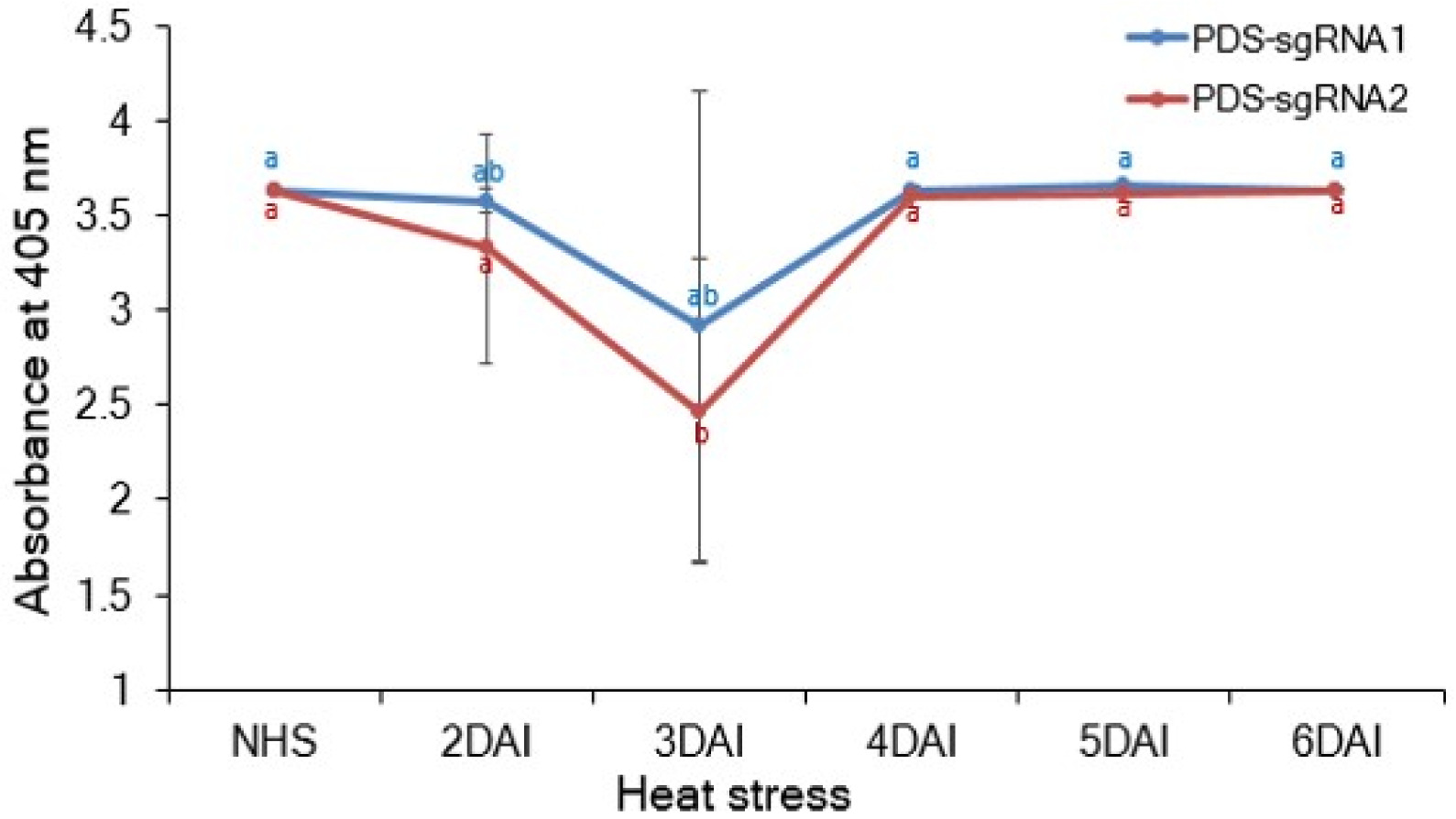
N. benthamiana samples infiltrated with pPVX-Cas9::sgRNA constructs (1, 2) were exposed to 24 hours HS at 2 to 6 DAI. DAS-ELISA was performed to test the accumulation of PVX coat protein at the end of the 7
th day. Samples exposed to HS at 4-6 DAI showed no significant difference in viral accumulation compared with samples not treated with HS (NHS) (
Fig. 2). The sample treated with HS at 2-3 DAI showed a lower accumulation of viral particles. Thus, HS negatively affected the accumulation of the viral particles in the
N. benthamiana plant, with the most pronounced effect in samples exposed to HS at 3 DAI. These results suggested that exposing samples to HS after 4-5 DAI is suitable for allowing viral recovery and efficient GE in
N. benthamiana.
To explore the effect of HS on PVX-mediated GE, we exposed
N. benthamiana plants infiltrated with pPVX- Cas9::sgRNA constructs at the 2, 3, 4, and 5 DAI. To estimate editing efficiency, we chose the
NbPDS gene as the target and designed two different sgRNAs targeting exon two of the
NbPDS gene (
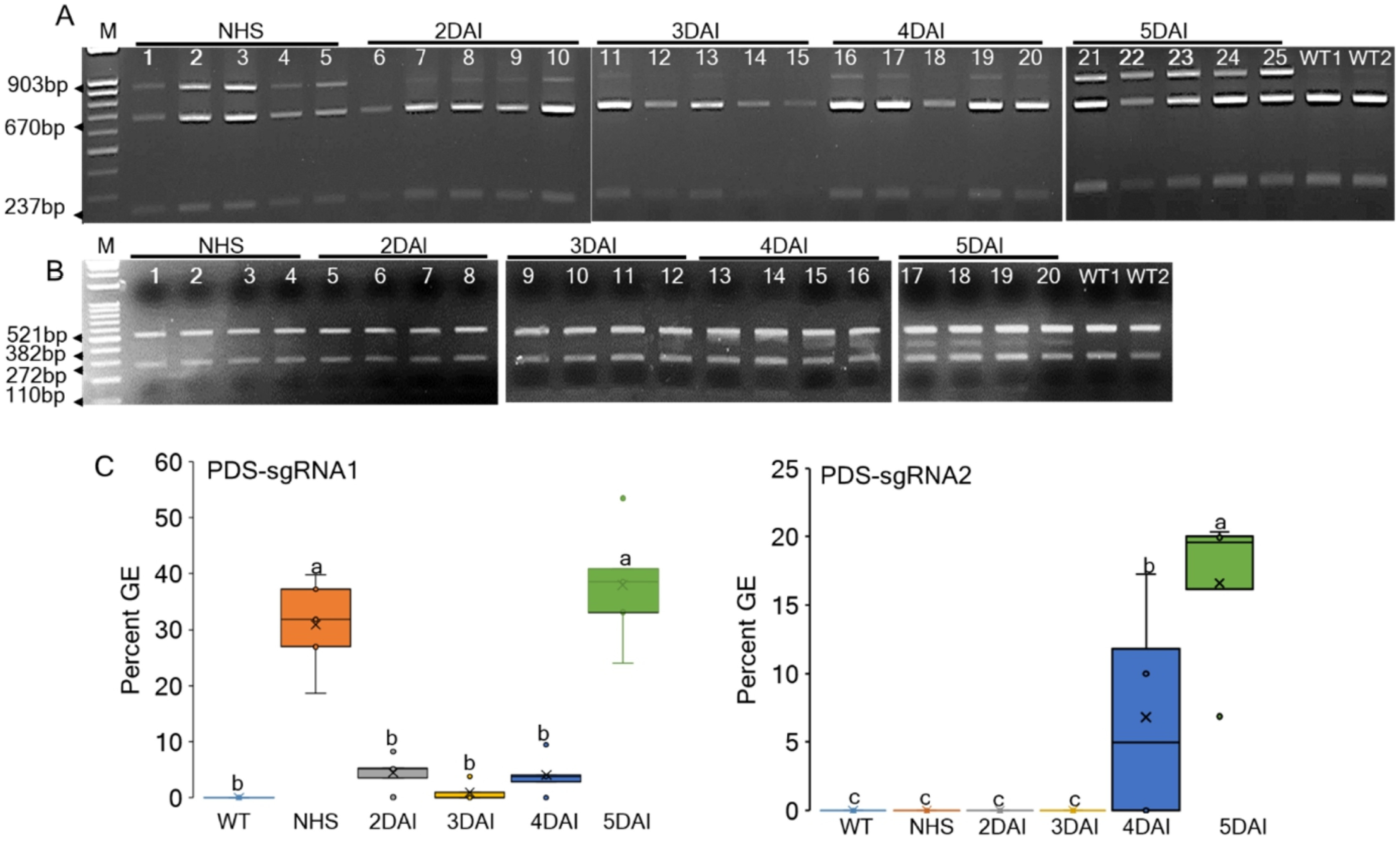
Fig. 1B). In the case of the NbPDS-sgRNA1 construct, an average editing efficiency of about 29.0% was detected in leaves not exposed to HS (
Fig. 3). In the case of samples exposed to the HS at 2, 3, and 4 DAI recorded only about 2-4.5% editing efficiency. However, at 5 DAI, an average editing efficiency of 36.8 ± 16% was observed, with maximum editing efficacy of up to 52.2% (
Fig. 3). For the PDS-sgRNA2 target, no detectable indels were observed in NHS treated samples and samples exposed to HS at 2 and 3 DAI. However, samples exposed to the HS at 4 and 5 DAI showed significant differences in editing efficiencies, with an average editing efficiency of about 6.8% and 16.6% recorded, respectively (
Fig. 3). Overall, these results suggest that HS enhances the CRISPR/Cas9 GE efficiency, HS can also negatively affect the accumulation of the viral particles during the early days of infection.
To further analyze the precise nature of the targeted GE at the
NbPDS gRNA target sites, we used Illumina’s MiSeq deep sequencing to quantify the rate of insertions, deletions, and substitutions generated by NHEJ in the
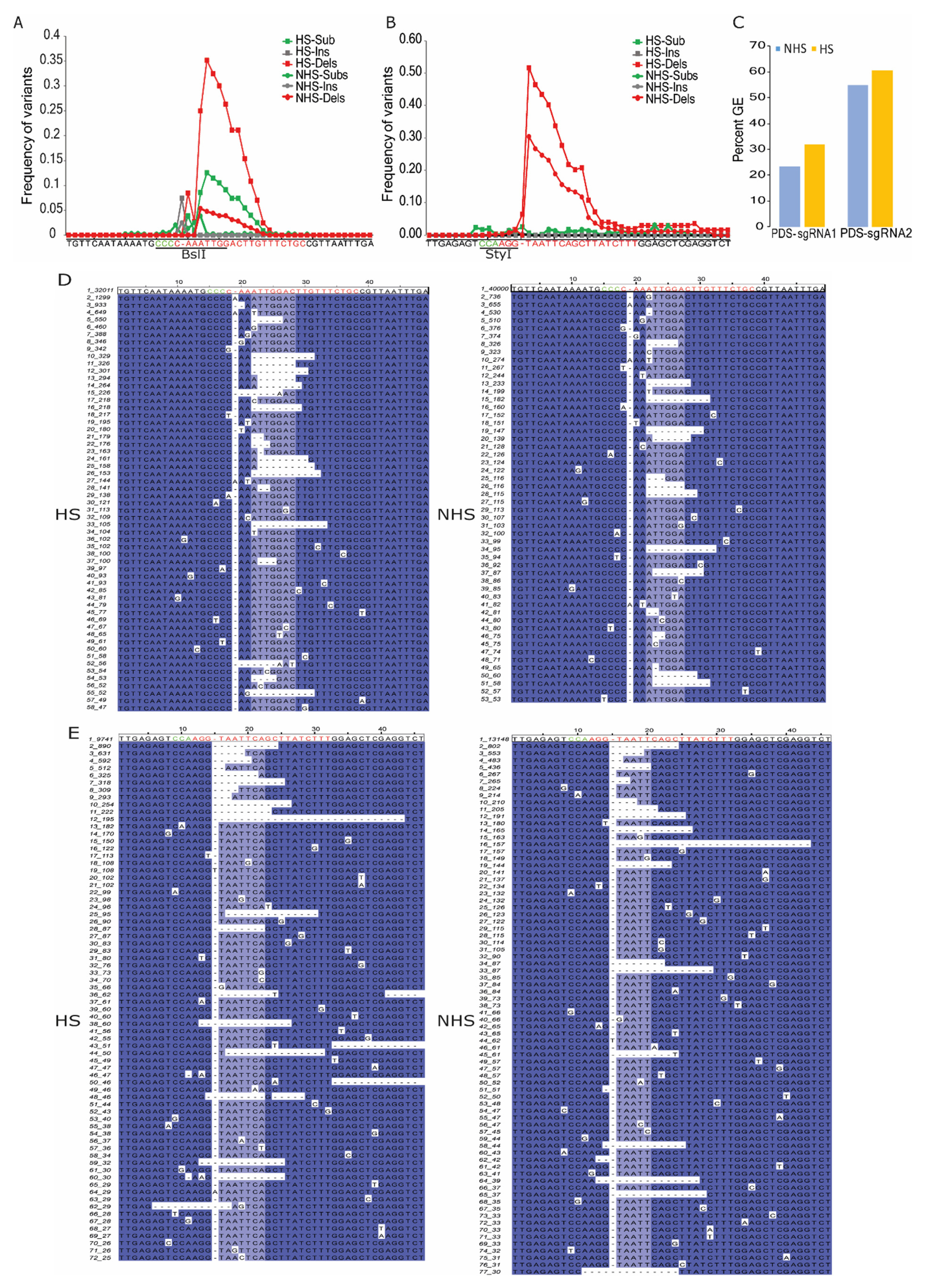
N. benthamiana pPVX-Cas9::sgRNA infiltrated samples of NHS and HS at the 5 DAI. In the case of NbPDS-sgRNA1, a large number of sequence variations included nucleotide deletions followed by substitutions and insertions. Both deletions and substitutions increased due to HS treatment (
Fig. 4A). Similar results were obtained with NbPDS-sgRNA2; a large number of sequence variations were deletions, never-theless, substitutions and insertions were also observed with low frequencies (
Fig. 4B). However, we couldn’t see any apparent changes in double-strand break site, length of indels, and the substitution pattern due to HS in either sgRNA1 or sgRNA2 infiltrated samples (
Fig. 4A, B). Mutation frequency curves of NbPDS-sgRNA1 and NbPDS- sgRNA2 showed a similar trend of sequence variations (
Fig. 4A, B). GE efficiency was calculated as the total num-ber of sequence variants against a total number of target amplicon reads revealed that in NHS (25℃) condtions, GE is about 23.2%, whereas in HS conditions (37℃), GE was about 31.8% for NbPDS-sgRNA1 (
Fig. 4C). GE efficiencies for NbPDS-sgRNA2 in NHS condition is about 54.7 whereas in HS conditions (37℃) is approxi-mately 60.49%. These results indicate that HS treatment can induce high indel frequency, but is unlikely to change the pattern of indels.
DISCUSSION
The CRISPR/Cas9 system is a valuable genomic engi-neering strategy for targeted modification of DNA sequen-ces and has been used in the number of plant and animal species. Nevertheless, the editing efficiencies of the CRISPR/Cas9 system are highly variable depending on the delivery of CRISPR/Cas9 reagents and plant growth conditions. Efforts are being made continuously to improve editing efficiency further using various approaches. Recent studies showed that the high temperature improved the CRISPR/Cas9 or other CRISPR-associated nucleases editing efficiency in animals and plants (
Xiang et al. 2017;
LeBlanc et al. 2018;
Malzahn et al. 2019;
Vu et al. 2019;
Kurokawa et al. 2021). Various studies have deployed different HS treatments ranging from a few hours to several days. CRISPR/Cas9 mutagenesis in
Arabidopsis and
Citrus plants was enhanced several folds using four cycles of HS (37℃ for 30 hours) (
LeBlanc et al. 2018). Even elevated growth temperature conditions increased CRISPR/Cas9 editing efficiency in wheat (
Milner et al. 2020). Here we investi-gated if the HS treatment has a similar effect on PVX-mediated CRIPSR/Cas9 GE efficiency in
N. benthamiana. We have demonstrated here that a heat treatment at 37℃ for 24 hours at 4-5 days after PVX inoculation can enhance the CRISPR/Cas9-mediated mutagenesis up to 5-8% higher editing efficiency than that of NHS treated
N. benthamiana (
Fig. 4C).
In this study, we targeted the
NbPDS gene for investi-gating the effect of high-temperature stress on the efficiency of PVX-mediated CRISPR/Cas9 GE. Our results showed that the HS treatment of pPVX-Cas9::PDS-sgRNAs infil-trated samples recorded higher CRISPR/Cas9 mutagenesis efficiency, consistent with the previous report that the high HS improves the efficiency of GE in crops (
LeBlanc et al. 2018;
Milner et al. 2020;
Kurokawa et al. 2021). Though HS can increase the CRIPSR/Cas9 GE efficiency, HS can negatively affect the accumulation of viral particles in the
N. benthamiana plant. We observed a reduced accumula-tion of PVX viral particles following the HS treatment at 2-4 DAI. This was reflected in the lower GE efficiency of the PVX-mediated CRISPR/Cas9 system (
Fig. 3). These results suggested that exposing samples to HS after 4-5 DAI is a suitable time for efficient genome editing in
N. benthamiana.
Although the editing efficiencies of sgRNA1 and sgRNA2 were different, HS significantly improved GE efficiency in both cases. The principal cause of increased editing efficiency at higher temperature stress has mainly been attributed to an increase in CRISPR nuclease and gRNA activity (
Kurokawa et al. 2021). Previous
in vitro activity studies of CRISPR/Cas nucleases and gRNA expression showed that nuclease activity is positively correlated with higher temperatures, but an expression of
Cas9 is unaffected (
Xiang et al. 2017;
LeBlanc et al. 2018;
Li et al. 2018;
Kurokawa et al. 2021;
Li et al. 2021). The editing efficiency of the target
NbPDS-sgRNA2 was generally lower than that of the
NbPDS-sgRNA1 calculated based on the restriction enzyme protection assay. However, MiSeq sequencing results revealed much higher editing efficiency than NbPDS-sgRNA1 because indels were created in other than the
StyI enzyme site, because of which no detectable expected bands were observed in cleavage assay of sgRNA2 target with the
StyI enzyme. Since high-temperature stress increased the GE efficiency with increased frequency of indels and substitutions in the vicinity of PAM, detectable cleavage products were ob-served at 4 and 5 DAI of PVX infection.
We next studied the effect of HS treatment on the pattern of PVX-mediated CRISPR/Cas9-induced mutations. To detect the editing pattern and GE efficiency, next-generation targeted deep sequencing was performed for PCR products of
NbPDS-sgRNA1 and
NbPDS-sgRNA2 target regions obtained from the genomic DNA from the sample treated with HS. The most common CRISPR/Cas9 mutations observed were nucleotide deletions, followed by substitutions and a few insertions (
Fig. 4A, B, D, E). A similar pattern was observed for both NbPDS-sgRNA1 and NbPDS-sgRNA2 constructs infiltrated samples. All the indels, insertions, or substitution peaks of the NbPDS-sgRNA1 and NbPDS- sgRNA2 shared a similar location to that of NHS condi-tions (
Fig. 4). According to their representative indel sequence data, the indel peaks shared similar editing positions in HS and NHS samples (
Fig. 4). These results indicate that the HS does not change or induce specific indels with editing positions different from the NHS conditions. These results are consistent with a previous report that the HS does not affect the CRISPR/Cas9- mediated patterns in Arabidopsis (
Kurokawa et al. 2021).
In summary, here we showed that the HS could improve the PVX-mediated CRISPR/Cas9 editing efficiency. Next generation deep sequencing revealed that HS and NHS conditions shared similar editing traits, but higher editing efficiency was observed with HS. However, our findings suggest that HS can negatively affect the viral accumula-tion in a plant cell. Therefore, depending on the plant species, optimal conditions should be determined to mini-mize the negative effect of the HS on viral replication to achieve maximum GE efficiency. The results of this study will be helpful for improving the editing efficiency of other viral-mediated gene editing systems in N. benthamiana and other plant species.
ACKNOWLEDGEMENTS
This research was supported by Basic Science Research Program through the National Research Foundation (NRF) of Korea funded by the Ministry of Education (2021R1I1A 1A01041938). This work was supported by a grant from the ‘New Breeding Technologies Development Program (Project No. PJ0165432022)’, Rural Development Admin-istration, Republic of Korea.
Fig. 1Schematic diagram of the T-DNA cassette expres-sing the PVX viral components and CRISPR/Cas9 and sgRNAs. (A) Diagram of the T-DNA cassette PVX genome and Cas9 gene and PDS-sgRNA sequence under the control of the 35S promoter. (B) Diagram of the CRISPR/Cas9 target sites within the NbPDS gene. The sgRNA target sequences are shown in black letters, followed by protospacer- adjacent motif (PAM) sequences in red.
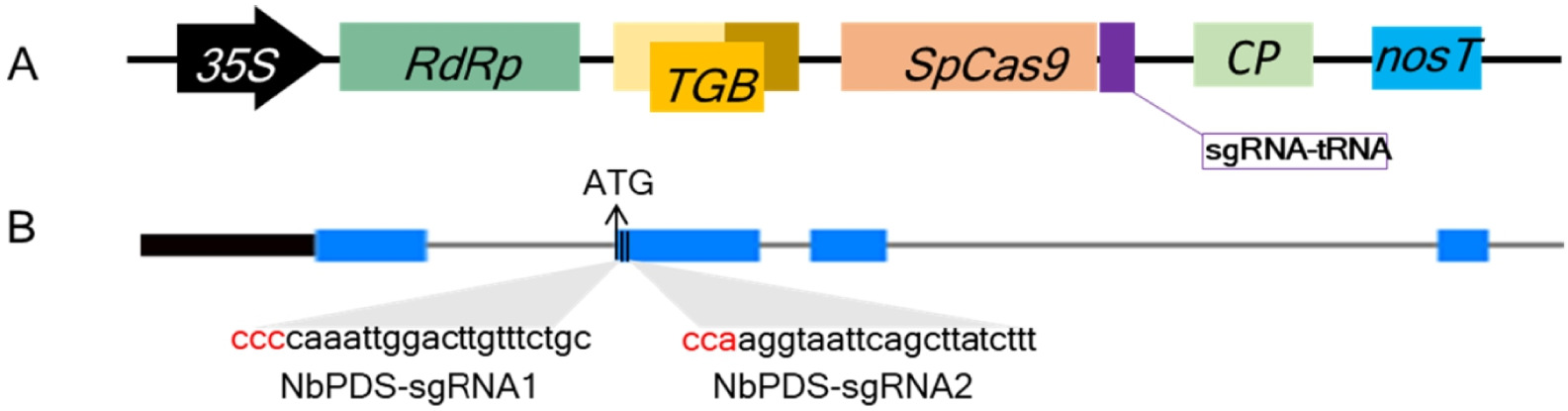
Fig. 2Accumulation of PVX in N. benthamiana samples treated with 37℃. Samples were infiltrated with pPVX-Cas9::sgRNA 1 and 2 constructs. DAS-ELISA assays was performed at 2-6 DAI. Error bars indicate mean values of replicates ± standard deviation (SD). Different letters indicate significant differences bet-ween heat stress (HS) and no heat stress (NHS) treatments according to Duncan’s multiple range test (P ≤ 0.05).
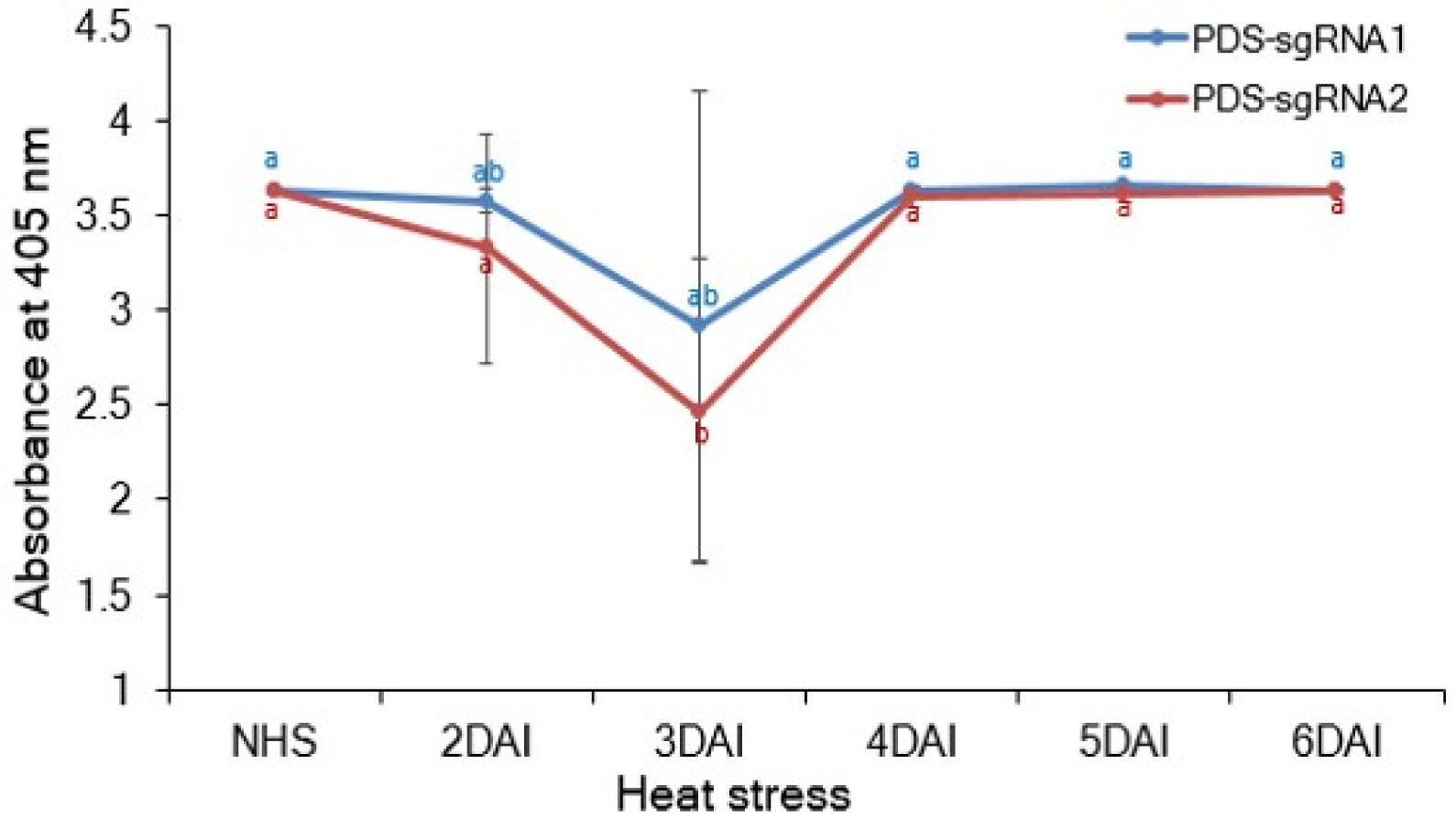
Fig. 3Effect of heat stress (HS) on PVX-mediated CRISPR/Cas9 targeted mutagenesis of the NbPDS gene. (A) Analysis of leaf samples infiltrated with pPVX-Cas9::NbPDS-sgRNA1 for the presence of targeted modification using BslI recognition site loss assay. Expected bands for WT/mock: 237 bp and 670 bp; Expected bands for mutated: 237 bp, 670 bp and 903 bp. (B) Analysis of leaf samples infiltrated with pPVX-Cas9::NbPDS-sgRNA2 for the presence of targeted modification using StyI recognition site loss assay. Expected bands for WT/mock: 110 bp, 272 bp, and 521 bp; Expected bands for mutated: 110 bp, 272 bp, 382 bp, and 521 bp. (C) GE efficiencies of NbPDS-sgRNA1 and NbPDS-sgRNA2 constructs infiltrated samples. Infiltrated leaves were collected from plants treated with HS at 2, 3, 4, and 5 days after infiltration (DAI). Different letters indicate significant differences between HS treat--ments according to Duncan's multiple range test (P ≤ 0.05).
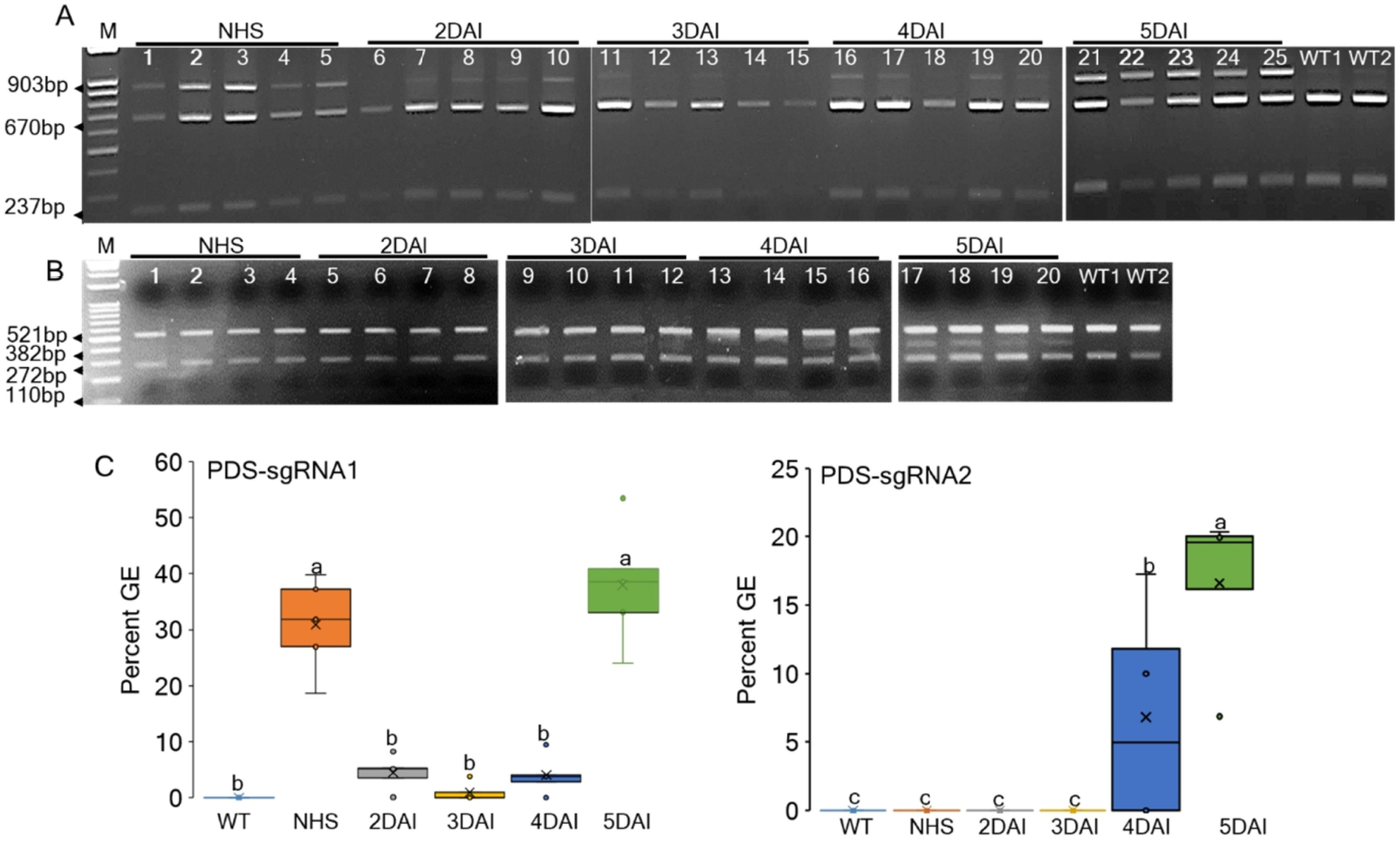
Fig. 4Deep-sequencing analysis of the PVX-SpCas9 mediated GE. (A) Frequency of sequence variations by length detected by amplicon deep sequencing of PDS-sgRNA1 target region in N. benthamiana leaves treated with heat stress (HS) and no heat stress (NHS). (B) Frequency of sequence variations by length detected by amplicon deep sequencing of PDS-sgRNA2 target region in N. benthamiana leaves treated with HS and NHS. (C) Percent GE recorded with NbPDS-sgRNA1 and NbPDS-sgRNA2 constructs. (D) Alignment of Mi-seq sequencing reads showing the presence of indels at the NbPDS-sgRNA1 target sequence. (E) Alignment of Mi-seq sequencing reads showing the presence of indels at the NbPDS-sgRNA2 target sequence. The number following the sequence variant and underscore indicates the total number of that particular variant. Target sequence with the PAM is shown in green and protospacer is marked with red font.
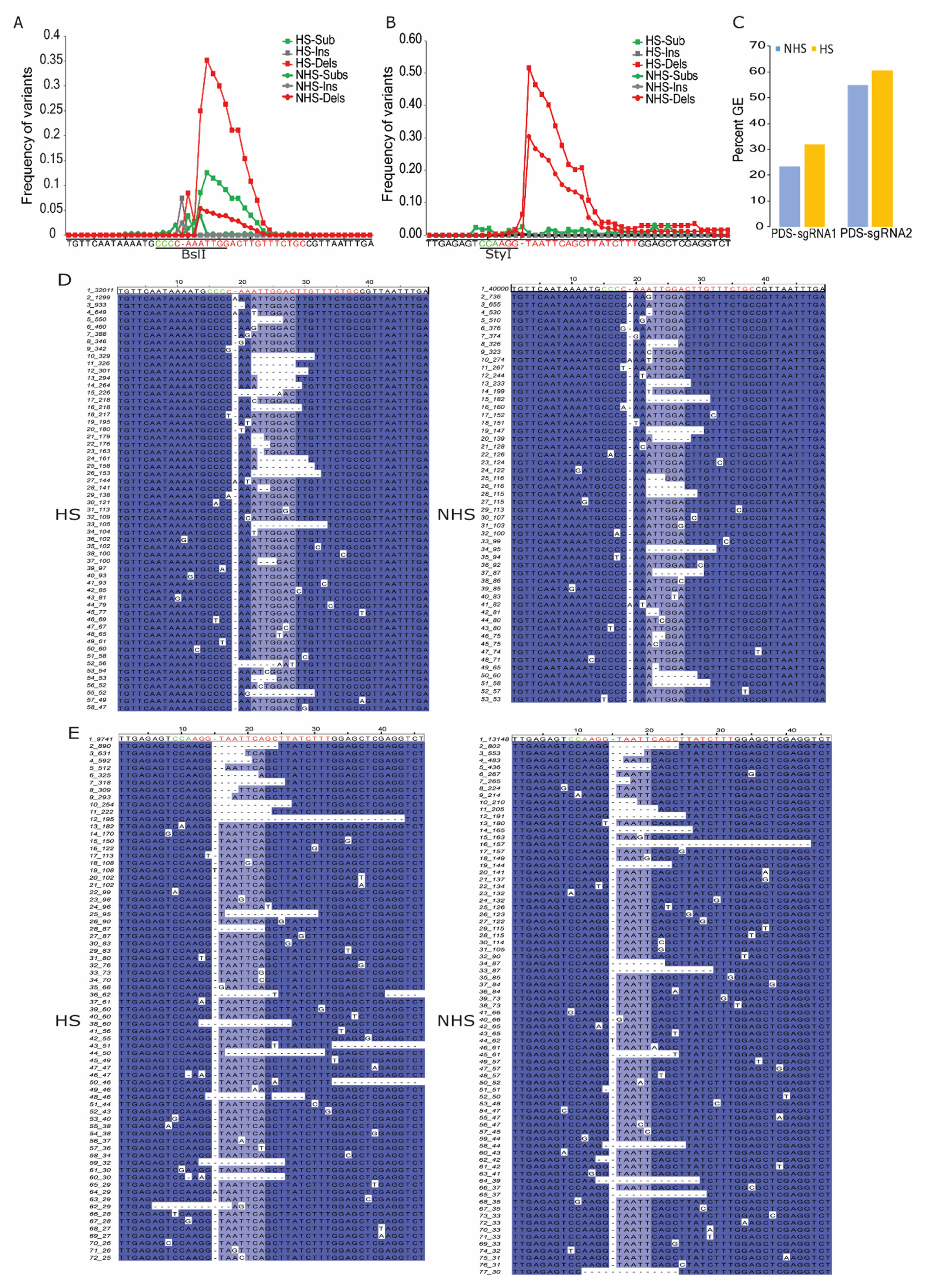
Table 1Primer sequences used for amplification in this study.
Table 1
|
Name |
Sequence (5’-3’) |
Purpose |
|
NB(12)PDS-F |
GTGGGTGAAGGCTAATTTTTCTCATAGTGT |
NbPDS target amplification |
|
NB(12)PDS-R |
GAGTGACGGCAAAAATAGTTCAAAACAAACTAGT |
NbPDS target amplification |
|
PVX. Cas9/721F |
TGGTTTCGATTCTCCTACCG |
PVX-Cas9 amplification |
|
PVX. Cas9/721R |
ATCAGCCCTTGAATCACCAC |
PVX-Cas9 amplification |
|
1pds-F1 |
AAACAAGTCCAATTTGGTTTTAGAGCTAGAAATA |
NbPDS sgRNA1 cloning |
|
2pds-F1 |
ATAAGCTGAATTACCTGTTTTAGAGCTAGAAAT |
NbPDS sgRNA2 cloning |
|
1pds-F2 |
ATGCACGCGTGCAGAAACAAGTCCAATTTG |
NbPDS sgRNA1 cloning |
|
2pds-F2 |
ATGCACGCGTAAAGATAAGCTGAATTACCT |
NbPDS sgRNA2 cloning |
|
sgRNA-Sal1-R |
CGGCGGTCGACTGGGTCTAGAAAAAAAGCA |
pPVX-Cas9 cloning |
|
tRNA-Sal1-R |
GCATGTCGACTGGGTCTAGAAAAAATGCTTCCGGCGGGGCT |
pPVX PDS vector construction |
|
CP. NR-R_SEQ |
ACGGGCTGTACTAAAGAAATCCCCA |
Sequence confirmation |
Table 2NbPDS-sgRNA sequences used in the present study.
Table 2
|
Name |
Sequence (5’-3’) |
|
NbPDS-sgRNA1-tRNA |
ACGCGTGCAGAAACAAGTCCAATTTGGTTTTAGAGCTAGAAATAGCAAGTTAAAATAAGGCTAGTCCGTTATCAACTTGAAAAAGTGGCACCGAGTCGGTGCTCCCAGGCCTGCTCCCGTAGCTCAGTTGGTTAGAGCGTTGGTCTTATGAGCCGAAGGTCGCGGGTTCGAGCCCCGCCGGAAGCATTTTTTGTCGAC
|
|
NbPDS-sgRNA2-tRNA |
ACGCGTAAAGATAAGCTGAATTACCTGTTTTAGAGCTAGAAATAGCAAGTTAAAATAAGGCTAGTCCGTTATCAACTTGAAAAAGTGGCACCGAGTCGGTGCTCCCAGGCCTGCTCCCGTAGCTCAGTTGGTTAGAGCGTTGGTCTTATGAGCCGAAGGTCGCGGGTTCGAGCCCCGCCGGAAGCATTTTTTGTCGAC
|
Table 3Primer sequences used for Miseq analysis.
Table 3
|
Name |
Sequence (5’-3’) |
|
|
NbPDS_Miseq_1F |
TCGTCGGCAGCGTCAGATGTGTATAAGAGACAGNNNNNAACACGCTAATTTTTCTCATAGTGT |
Poo11 |
|
NbPDS_Miseq_1F-1 |
TCGTCGGCAGCGTCAGATGTGTATAAGAGACAGNNNNNAACACNGCTAATTTTTCTCATAGTGT |
|
|
NbPDS_Miseq_1F-2 |
TCGTCGGCAGCGTCAGATGTGTATAAGAGACAGNNNNNAACACNNGCTAATTTTTCTCATAGTGT |
|
|
NbPDS_Miseq_1F-3 |
TCGTCGGCAGCGTCAGATGTGTATAAGAGACAGNNNNNAACACNNNGCTAATTTTTCTCATAGTGT |
|
|
NbPDS_Miseq_2F |
TCGTCGGCAGCGTCAGATGTGTATAAGAGACAGNNNNNACTATGCTAATTTTTCTCATAGTGT |
Pool2 |
|
NbPDS_Miseq_2F-1 |
TCGTCGGCAGCGTCAGATGTGTATAAGAGACAGNNNNNACTATNGCTAATTTTTCTCATAGTGT |
|
|
NbPDS_Miseq_2F-2 |
TCGTCGGCAGCGTCAGATGTGTATAAGAGACAGNNNNNACTATNNGCTAATTTTTCTCATAGTGT |
|
|
NbPDS_Miseq_2F-3 |
TCGTCGGCAGCGTCAGATGTGTATAAGAGACAGNNNNNACTATNNNGCTAATTTTTCTCATAGTGT |
|
|
NbPDS_Miseq_1R |
GTCTCGTGGGCTCGGAGATGTGTATAAGAGACAGCTGAATGGCAAGATATACAT |
Common primer |
|
NbPDS_Miseq_1R-1 |
GTCTCGTGGGCTCGGAGATGTGTATAAGAGACAGNCTGAATGGCAAGATATACAT |
|
|
NbPDS_Miseq_1R-2 |
GTCTCGTGGGCTCGGAGATGTGTATAAGAGACAGNNCTGAATGGCAAGATATACAT |
|
|
NbPDS_Miseq_1R-3 |
GTCTCGTGGGCTCGGAGATGTGTATAAGAGACAGNNNCTGAATGGCAAGATATACAT |
|
References
- Ali Z, Abul-faraj A, Li L, Ghosh N, Piatek M, Mahjoub A, et al. 2015. Efficient Virus-Mediated genome editing in plants using the CRISPR/Cas9 system. Mol Plant.. 8: 1288-1291.
- An Y, Geng Y, Yao J, Fu C, Lu M, Wang C, et al. 2020. Efficient genome editing in Populus using CRISPR/Cas12a. Front. Plant Sci.. 11: 593938
- Ariga H, Toki S, Ishibashi K. 2020. Potato virus X vector- mediated DNA-free genome editing in plants. Plant Cell Physiol.. 61: 1946-1953.
- Baltes NJ, Gil-Humanes J, Cermak T, Atkins PA, Voytas DF. 2014. DNA replicons for plant genome engineering. Plant Cell.. 26: 151-163.
- Čermák T, Baltes NJ, Čegan R, Zhang Y, Voytas DF. 2015. High-frequency, precise modification of the tomato genome. Genome Biol.. 16: 232
- Cody WB, Scholthof HB, Mirkov TE. 2017. Multiplexed gene editing and protein overexpression using a Tobacco mosaic virus viral vector. Plant Physiol.. 175: 23-35.
- Ellison EE, Nagalakshmi U, Gamo ME, Huang P-j, Dinesh-Kumar S, Voytas DF. 2020. Multiplexed heritable gene editing using RNA viruses and mobile single guide RNAs. Nat. Plants.. 6: 620-624.
- Fan D, Liu T, Li C, Jiao B, Li S, Hou Y, et al. 2015. Efficient CRISPR/Cas9-mediated targeted mutagenesis in Populus in the first generation. Sci. Rep.. 5: 1-7.
- Feng Z, Zhang B, Ding W, Liu X, Yang D-L, Wei P, et al. 2013. Efficient genome editing in plants using a CRISPR/Cas system. Cell Res.. 23: 1229-1232.
- Gil-Humanes J, Wang Y, Liang Z, Shan Q, Ozuna CV, Sánchez-León S, et al. 2017. High-efficiency gene target-ing in hexaploid wheat using DNA replicons and CRISPR/Cas9. Plant J.. 89: 1251-1262.
- Greiner A, Kelterborn S, Evers H, Kreimer G, Sizova I, Hegemann P. 2017. Targeting of photoreceptor genes in Chlamydomonas reinhardtii via zinc-finger nucleases and CRISPR/Cas9. Plant Cell.. 29: 2498-2518.
- Hu J, Li S, Li Z, Li H, Song W, Zhao H, et al. 2019. A barley stripe mosaic virus-based guide RNA delivery system for targeted mutagenesis in wheat and maize. Mol. Plant Pathol.. 20: 1463-1474.
- Hwang J, Lee S, Lee J-H, Kang W-H, Kang J-H, Kang M-Y, et al. 2015. Plant translation elongation factor 1Bb facilitates potato virus X (PVX) infection and interacts with PVX triple gene block protein 1. PLoS One.. 10: e0128014
- Jiang N, Zhang C, Liu J-Y, Guo Z-H, Zhang Z-Y, Han C-G, et al. 2019. Development of Beet necrotic yellow vein virus-based vectors for multiple-gene expression and guide RNA delivery in plant genome editing. Plant Biotechnol. J.. 17: 1302-1315.
- Kendall A, McDonald M, Bian W, Bowles T, Baumgarten SC, Shi J, et al. 2008. Structure of flexible filamentous plant viruses. J. Virol.. 82: 9546-9554.
- Kurokawa S, Rahman H, Yamanaka N, Ishizaki C, Islam S, Aiso T, et al. 2021. A simple heat treatment increases SpCas9-mediated mutation efficiency in Arabidopsis. Plant Cell Physiol.. 62: 1676-1686.
- LeBlanc C, Zhang F, Mendez J, Lozano Y, Chatpar K, Irish VF, et al. 2018. Increased efficiency of targeted muta-genesis by CRISPR/Cas9 in plants using heat stress. Plant J.. 93: 377-386.
- Li B, Liang S, Alariqi M, Wang F, Wang G, Wang Q, et al. 2021. The application of temperature sensitivity CRISPR/LbCpf1 (LbCas12a) mediated genome editing in allo-tetraploid cotton (G. hirsutum) and creation of nontrans-genic, gossypol‐free cotton. Plant biotechnol. J.. 19: 221
- Li Z, Shi Z, Fan N, Chen Y, Guo J, Wu J, et al. 2018. Verified the effectiveness of AsCpf1 system in a variety of verte-brate species. bioRxiv. 272716:
- Liu B, Chen S, Rose AL, Chen D, Cao F, Zwinderman M, et al. 2020. Inhibition of histone deacetylase 1 (HDAC1) and HDAC2 enhances CRISPR/Cas9 genome editing. Nucleic Acids Res.. 48: 517-532.
- Ma X, Zhang Q, Zhu Q, Liu W, Chen Y, Qiu R, et al. 2015. A robust CRISPR/Cas9 system for convenient, high-efficiency multiplex genome editing in monocot and dicot plants. Mol. Plant.. 8: 1274-1284.
- Malzahn AA, Tang X, Lee K, Ren Q, Sretenovic S, Zhang Y, et al. 2019. Application of CRISPR-Cas12a temperature sensitivity for improved genome editing in rice, maize, and Arabidopsis. BMC Biol.. 17: 1-14.
- Manghwar H, Lindsey K, Zhang X, Jin S. 2019. CRISPR/Cas system: recent advances and future prospects for genome editing. Trends Plant Sci.. 24: 1102-1125.
- Mei Y, Beernink BM, Ellison EE, Konečná E, Neelakandan AK, Voytas DF, et al. 2019. Protein expression and gene editing in monocots using foxtail mosaic virus vectors. Plant Direct. 3:
- Milner MJ, Craze M, Hope MS, Wallington EJ. 2020. Turning up the temperature on CRISPR: increased temperature can improve the editing efficiency of wheat using CRISPR/ Cas9. Front. Plant Sci. 11:
- Moreno-Mateos MA, Fernandez JP, Rouet R, Vejnar CE, Lane MA, Mis E, et al. 2017. CRISPR-Cpf1 mediates efficient homology-directed repair and temperature- controlled genome editing. Nat. Commun.. 8: 1-9.
- Nishitani C, Hirai N, Komori S, Wada M, Okada K, Osakabe K, et al. 2016. Efficient genome editing in apple using a CRISPR/Cas9 system. Sci. Rep.. 6: 1-8.
- Osakabe Y, Liang Z, Ren C, Nishitani C, Osakabe K, Wada M, et al. 2018. CRISPR–Cas9-mediated genome editing in apple and grapevine. Nat. Protoc.. 13: 2844-2863.
- Soyars CL, Peterson BA, Burr CA, Nimchuk ZL. 2018. Cutting edge genetics: CRISPR/Cas9 editing of plant genomes. Plant Cell Physiol.. 59: 1608-1620.
- Vu TV, Sivankalyani V, Kim E, Doan DTH, Tran MT, Kim J, et al. 2019. Highly efficient homology-directed repair using transient CRISPR/Cpf1-geminiviral replicon in tomato. Plant Biotechnol. J.. 18: 2133-2143.
- Wang Z, Wang S, Li D, Zhang Q, Li L, Zhong C, et al. 2018. Optimized paired‐sgRNA/Cas9 cloning and expression cassette triggers high‐efficiency multiplex genome editing in kiwifruit. Plant Biotechnol. J.. 16: 1424-1433.
- Xiang G, Zhang X, An C, Cheng C, Wang H. 2017. Temperature effect on CRISPR-Cas9 mediated genome editing. J. Genet. Genomics.. 44: 199-205.
- Yoon Y-J, Venkatesh J, Lee J-H, Kim J, Lee H-E, Kim D-S, et al. 2020. Genome editing of eIF4E1 in tomato confers resistance to pepper mottle virus. Front. Plant Sci.. 11: 1098
- Yu C, Liu Y, Ma T, Liu K, Xu S, Zhang Y, et al. 2015. Small molecules enhance CRISPR genome editing in pluripotent stem cells. Cell Stem Cell.. 16: 142-147.
- Zhang Y, Malzahn AA, Sretenovic S, Qi Y. 2019. The emerging and uncultivated potential of CRISPR technology in plant science. Nat. Plants.. 5: 778-794.