Abstract
Global area of genetically modified crops (GM crops or biotech crops) continues to grow. It was 189.9 million hectares in 2017. Recently, a total of 24 countries have approved GM crops for planting and additional 43 countries have formally imported biotech crops for food, feed, and processing, meaning that biotech crops are now commonly accepted in those countries. With the continuous growth of the global population and the impact of climate change, research and commercialization of genetically modified crops are important for solving global food security issues in the future. At present, a large number of GM rice varieties have been cultivated in China (Chen et al. 2004; Jia 2004). Among them, GM rice varieties with insect resistance (Bt, CpTI genes), disease resistance (Xa21 genes), and herbicide resistance (bar, EPSPs genes) are waiting for relevant planting permits (Chen et al. 2004). In particular, two varieties, “Huahua 1” and “Shanyou 63”, developed by China Huazhong Agriculture Co., Ltd. have obtained GM rice safety certificate from the Ministry of Agriculture of China. However, there is still a lot of controversy in South Korea on the commercialization and safety research of GM products. This article aims to conduct a rational analysis of China's GM rice pollen mobility and China's current GM rice commercialization process to provide relevant reference basis for safety evaluation and future commercialization process of GM rice in South Korea.
-
Key words: Gene flow, GM rice, Safety evaluation
INTRODUCTION
Rice is an important cereal crop in the world, providing food for nearly half of the world's population. Therefore, rice production is of great significance in ensuring food security and solving basic nutrition problems in the world, especially in developing countries. China is the world's largest rice producer and consumer. According to data provided by the National Bureau of Statistics of China (NBSC), the total area of rice planted in China in 2007 was 439 million mu and the total output was about 182.57 billion kg. On average, China needs to consume 170 billion kilograms of rice each year, accounting for 35.7% of China's total grain output. Rice production and variety improvement in China have gone through different development stages with distinct characteristics, namely traditional systematic selection, genetic improvement breeding, and heterosis through sexual hybridization. At the same time, the application and promotion of these new technologies have played a huge role in the improvement and production of rice varieties. The rapid development of new technologies such as biotechnology, molecular marker-assisted breeding, high throughput molecular testing, and genomics and their application in the agricultural field have brought new opportunities for further genetic improvement of rice varieties and production. Determination of the whole genome DNA sequence of rice has also rapidly promoted research on genetic resources of cultivated rice and Oryza wild relatives at the whole genome level, providing a huge space for genetic improvement of rice varieties.
In the current severe situation of the world’s growing population, increasingly insufficient water resources, and gradual reduction of rural labor, the yield per unit area of rice has been continuously increased through continuous development and use of high-tech science and technology. In particular, the transgenic technology provides sufficient guarantee for the continuous high yield of rice and the continuous improvement of varieties. The rapid development of genetically modified biotechnology has played an epoch-making role in the genetic improvement of Chinese rice varieties. China has conducted a lot of exploration and research in the cultivation of genetically modified rice. At present, a large number of genetically modified rice with resistance to insects, diseases, herbicides, and other excellent quality traits have been cultivated (
Huang et al. 2005;
Lu and Snow 2005;
Wang and Johnston 2007). Some genetically modified rice lines have entered the stage of China's national biosafety assessment such as environmental release test and production test. If these genetically modified rice lines can successfully pass China's biosafety assessment, including food safety assessment, environmental safety assessment, and so on, they can enter the commercial production stage. The Chinese government takes a positive and cautious attitude towards the commercial production of genetically modified rice. On the one hand, it fully affirms the huge promotion effect of biological high-tech on agricultural production and the huge economic benefit and social impact that commercial application of genetically modified rice will bring. On the other hand, potential biosafety issues may arise from the application of new technologies with large-scale environmental release of genetically modified rice and its commercial production. Therefore, a strict biosafety assessment of transgenic rice has been carried out. According to important principles of biosafety evaluation, that is, science-based principle, case-by-case principle and step-by-step principle, we conducted relevant monitoring and research on the current breeding and development of GM rice varieties.
Since Darwin proposed the theory of species origin and natural selection in 1859, the formation and maintenance mechanism of many biodiversity in nature have been the focus of attention and research of biologists. Factors such as gene flow, natural selection, local adaptation, genetic bottleneck, and genetic drift can affect and change the process of biological diversification from different aspects. In particular, gene flow has attracted much attention because of its dynamic changes on different time and space scales and its influence on the process of biological adaptive evolution and diversification in many ways. Gene flow can be broadly defined as the transfer and exchange of genetic material within and between biological species. Based on this broad definition, the movement of genes, the movement of individuals, and the extinction-reconstruc-tion dynamics in the population are collectively referred to as gene flow (
Slatkin 1985). Traditional concept believes that the main function of gene flow is to maintain species cohesion and prevent local adaptation or genetic drift from causing population differentiation. At the same time, gene flow between species can erode the integrity of species genome and hinder the process of biological diversi-fication. Thus, gene flow not only cannot effectively promote biological evolution and species diversification, but also has negative effects. However, with accumulation of more and more experimental data and the development of theoretical simulation research, this traditional concept is being challenged. Relevant studies have gradually shown that gene flow plays an important role in the genetic differentiation and diversification of natural species. It also has a positive impact on speciation and adaptive evolution (
Seehausen 2004;
Garant et al. 2007). The research on the formation mechanism of the same domain species and ring species, as well as the research of interspecific hybridization, adaptive radiation, polyploidization, etc. have deeply explored the relationship between species evolution and gene drift. It has been demonstrated that dynamics of gene flow have close relationships with adaptive differentiation and diversification of biological species (
Seehausen 2004; Irwin
et al. 2005;
Barluenga et al. 2006;
Mallet 2007). Through this result, we found that the gene flow of plants has a more obvious impact on the evolution and diversification of plants than that of animals. Especially in the study of plant gene flow, we have discovered plant reproductive barrier mechanisms (such as polyploidization) and mechanisms of survival and local adaptive differentiation (such as the survival of individuals through asexual reproduction or vegetative reproduction). The introduction of gene flow can have a positive effect on the inheritance and evolution process of plant inheritance, ultimately leading to interactions of genetics with the environment and the movement of gene flow (
Hewitt 2001). Because plants rely on pollens to complete the reproduction and reproduction of their own populations, the spread of pollen is an important source of plant gene flow.
This article aims to conduct a rational analysis of research on pollen mobility of GM rice in China and the current progress and status quo of commercialization of GM rice in China, hoping to provide a reference for safety evaluation and commercialization of GM rice and other crops in Korea.
MATERIALS AND METHODS
The main way of gene movement
Research, development, and commercialization of GM rice will provide new opportunities for improving rice productivity and alleviating the global food crisis. However, large-scale environmental release and commer-cial production of GM rice may bring certain environ-mental biosafety issues. Improper handling might affect further research and development of GM rice. Common environmental biosafety issues mainly include the following aspects: (1) The impact and effect of transgenic resistance to biological stress on non-target organisms; (2) The escape of foreign genes to non-transgenic crops and wild relatives with possible ecological consequences; (3) The potential impact of genetically modified crops on agricultural ecosystems, soil microorganisms, and biodi-ver-sity; and (4) The long-term use of bio-stress-resistant transgenes might cause target organisms to develop resistance to transgenes.
Safety research of genetically modified crops is divided into two stages. The first stage is the laboratory stage. Physiological and physical characteristics of genetically edited crops are monitored in a closed laboratory environment and their biological safety is evaluated and researched. The second step is the experimental field cultivation stage, where the gene flow (pollen mobility) of genetically modified crops in an open ecological environment is monitored and related biosafety research is conducted. These two stages are aimed at whether the spread of pollen in the field environment will have a destructive effect on the surrounding ecological environ-ment, animals, and plants during the commercial planting of genetically modified rice.
In the study of
Lu et al. (2008), divided the gene drift modes of GM rice into three categories: 1) pollen migration; 2) seed migration; 3) asexual reproductive organ migration. Among them, pollen migration is accomplished through sexual crossing, and genetic pollen migration in transgenic rice is the most important way of gene migration. Through corresponding research, it is found that the genetic pollen transfer rate of genetically modified rice is affected by many natural environmental factors such as air pollution, wind, temperature and humidity.
Gene flow between biological natural communities not only can prevent genetic differentiation to maintain the integrity of species, but also can actively respond to the process of biological diversification. Understanding the adaptive evolution related to gene flow and its internal mechanism will help us better understand the true reasons for the formation of biological species and the original dynamics of their diversification.
Through a comprehensive analysis of a series of recent theoretical methods and research progress, it can be seen that ecological environmental factors play a very important role in the process of population fitness, local adaptation, and diversification of species directly or indirectly related to gene flow. The birth of biological species and the formation of biological diversity both involve the interaction of biological genetics and ecological environment. In the process of adaptive evolution and diversification related to gene flow, the dispersal of pollen and seeds, the migration, diffusion, and hybridization of individuals, and other vegetative propagules are constantly transmitting and exchanging genetic information. At the same time, new or changing ecological and environmental factors (such as climate, resources, soil, hydrology and geographic structure, etc.) provide new selection pressures and opportunities for adaptive evolution for these different genetic sources. If gene flow within and between species can actively respond to complex ecological environmental factors, the selection pressure, and driving force of ecological diversity, it will be beneficial to promote adaptive evolution and diversification of species in a shorter period of time. Therefore, when discussing the positive impact of gene flow on adaptive evolution, we must fully consider the role of ecological and environ-mental factors.
Based on the characteristics of plant gene drift and the influence of natural environmental factors. Gene transfer verification methods are divided into four types (
Table 1): (1) by the studying of pollen migration range, (2) by the studying of hybrid compatibility between cultivated species and wild species, (3) by verifying gene mobility by using specific morphological features or specific genetic markers to check the outcrossing rate between cultivated varieties and wild species, and. (4) by using specific markers of transgenic plants to determine verify the gene transfer rates of foreign genes to parents or wild species (Liu and Huang. 2009).
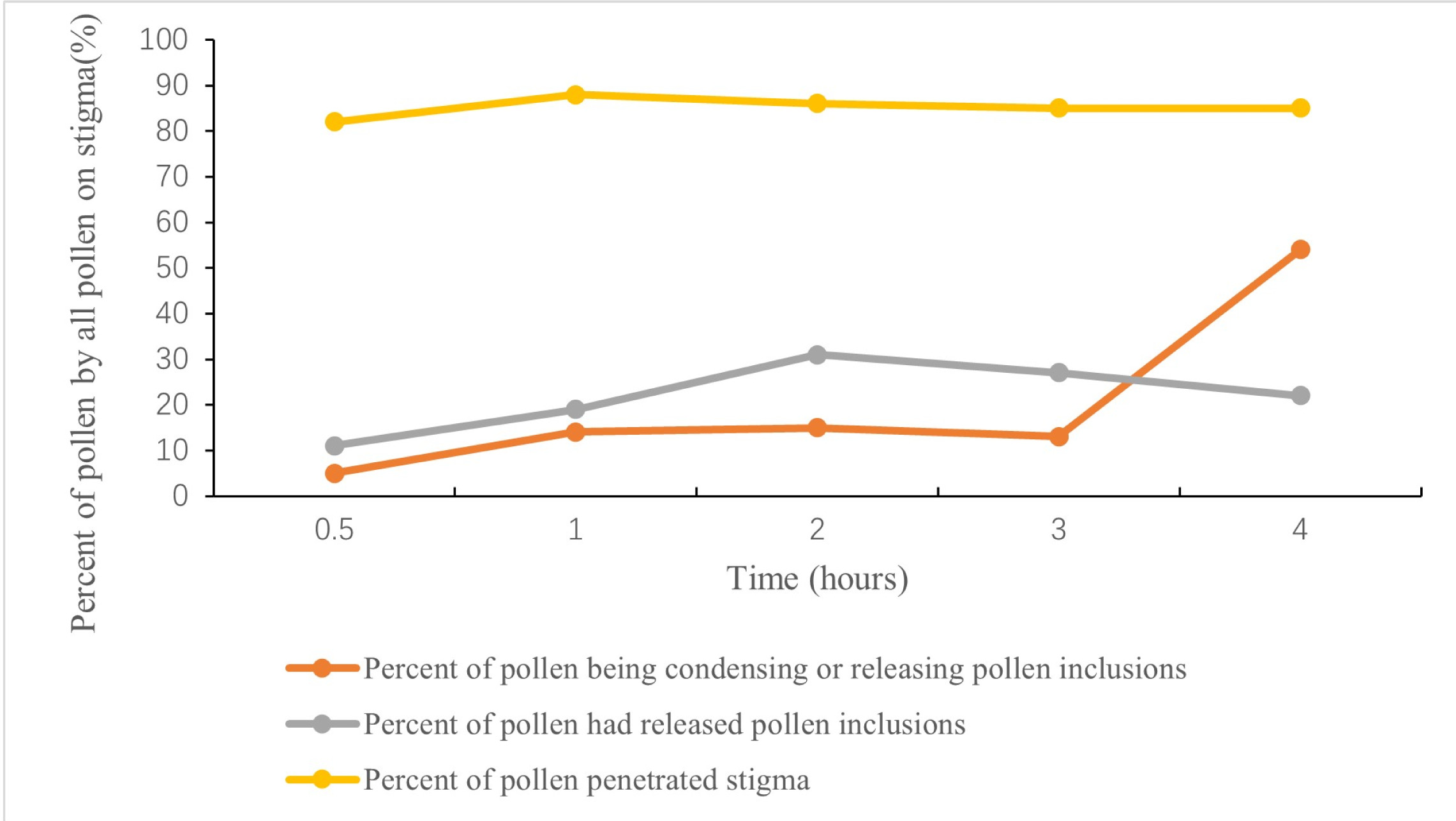
Regarding research on hybrid compatibility between different varieties of plants that may be caused by mobility of GM rice pollen, Chinese researchers have used reproductive biology methods to test cross-compatibility of transgenic rice varieties Y0003 and 99-t (male parent) with rice-associated weed barnyard grass (female parent). The germination and growth of rice pollen on the barnyard grass stigma were observed through an optical microscope at 30 minnutes and 1-4 hours after hand-crossing of barnyard grass with transgenic rice and compared with pollen germination and growth at the corresponding time after barnyard grass flowered (
Fig. 1). Their results showed that pollen germination and growth of the two GM rice varieties on the barnyard grass stigma were similar. After barnyard grass self-pollination, pollen grains could germinate and grow normally. At 30 minutes, 85% of pollen grains and pollen tubes could pass through the stigma. At the same time, the content is being condensed and released, or the percentage of pollen grains released by the content gradually increases. After hybridization, the pollen of transgenic rice could not germinate or grow normally on the barnyard grass stigma. It failed to pass through the barnyard grass stigma. Therefore, the incompatibility between barnyard grass and transgenic rice is demonstrated in that rice pollen cannot grow normally on the barnyard grass stigma, let alone pass through the barnyard grass stigma. Results of mating between emasculated barnyard grass and GM rice pollen without setting seeds also proved the incompatibility of these two population (
Song et al. 2002a).
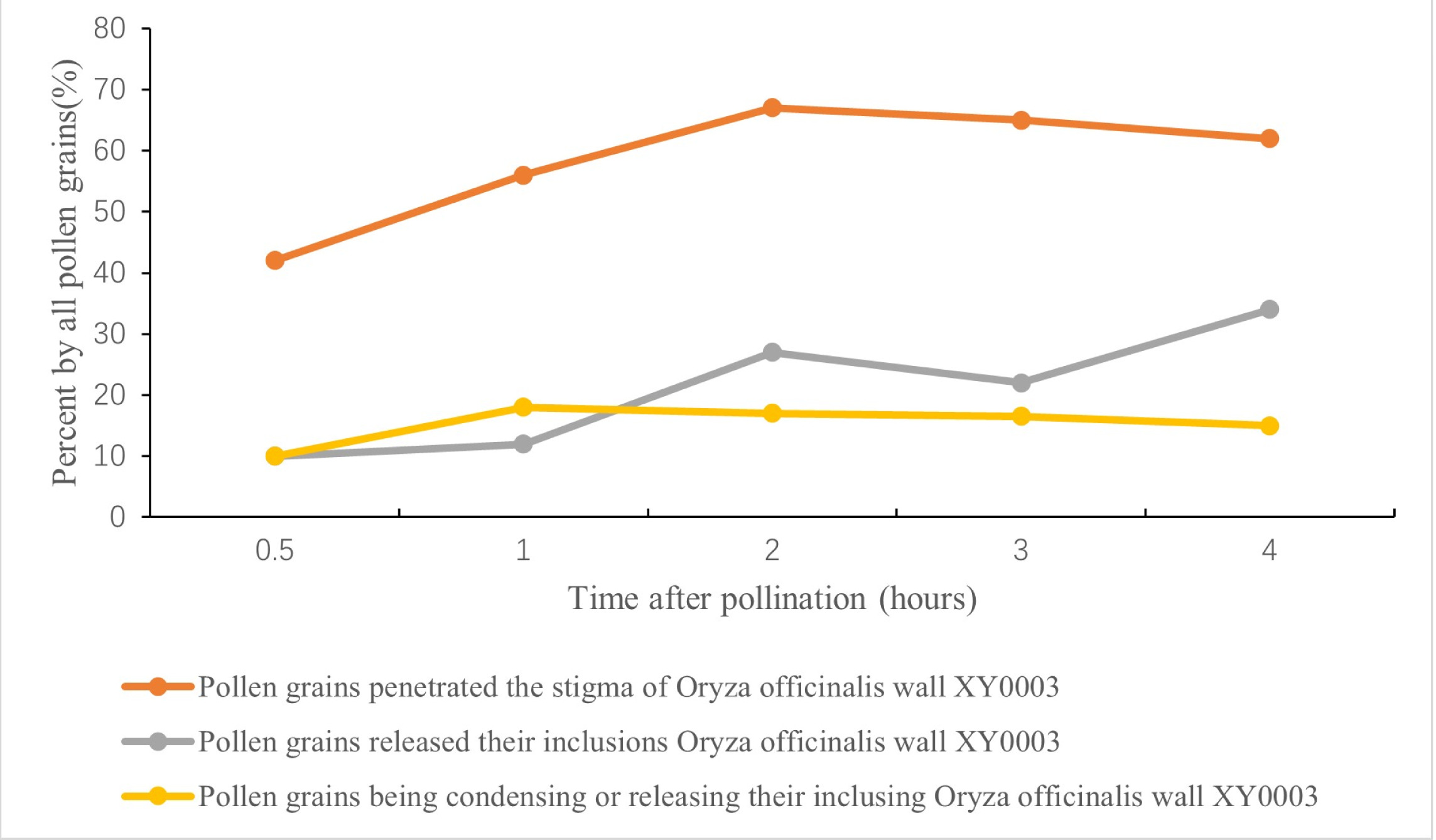
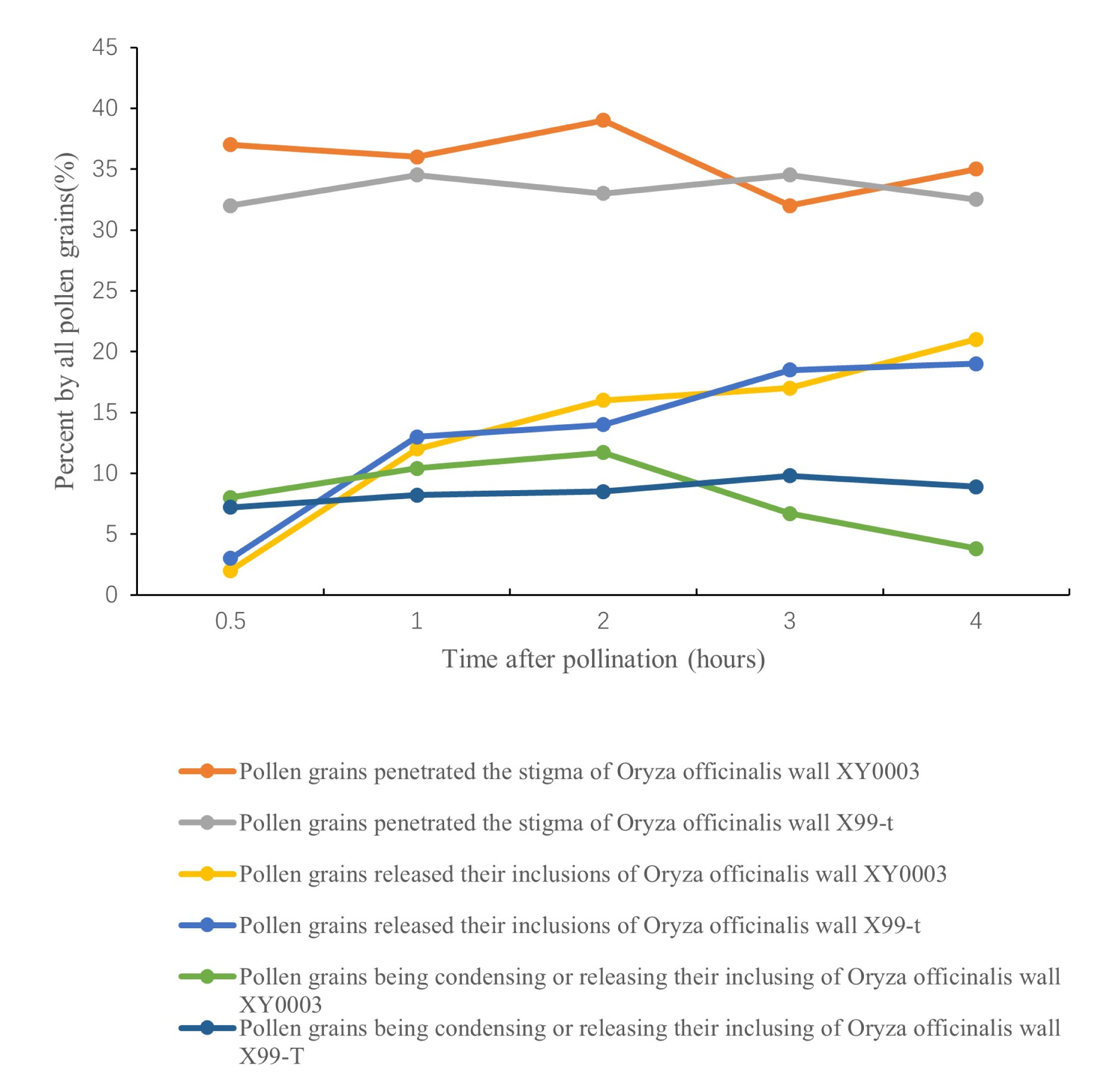
Chinese scholars have also used the same method to study the compatibility between medicinal wild rice and GM rice (
Fig. 2 and
Fig. 3). Their results showed that the germination and growth of the tested rice pollen on the stigma of the medicinal wild rice were different from those of self-pollinated pollen of the medicinal wild rice. The percentage of pollen grains passing through the stigma and the percentage of pollen grains released by shrinkage are both less than the self-pollination efficiency of wild rice. Although genetically modified rice pollen could normally germinate and grow on the stigma of wild medicinal rice and release its contents, the seed setting rate after hybridization was 0, indicating the incompatibility of hybridization between GM rice and medicinal wild rice (
Song et al. 2002b).
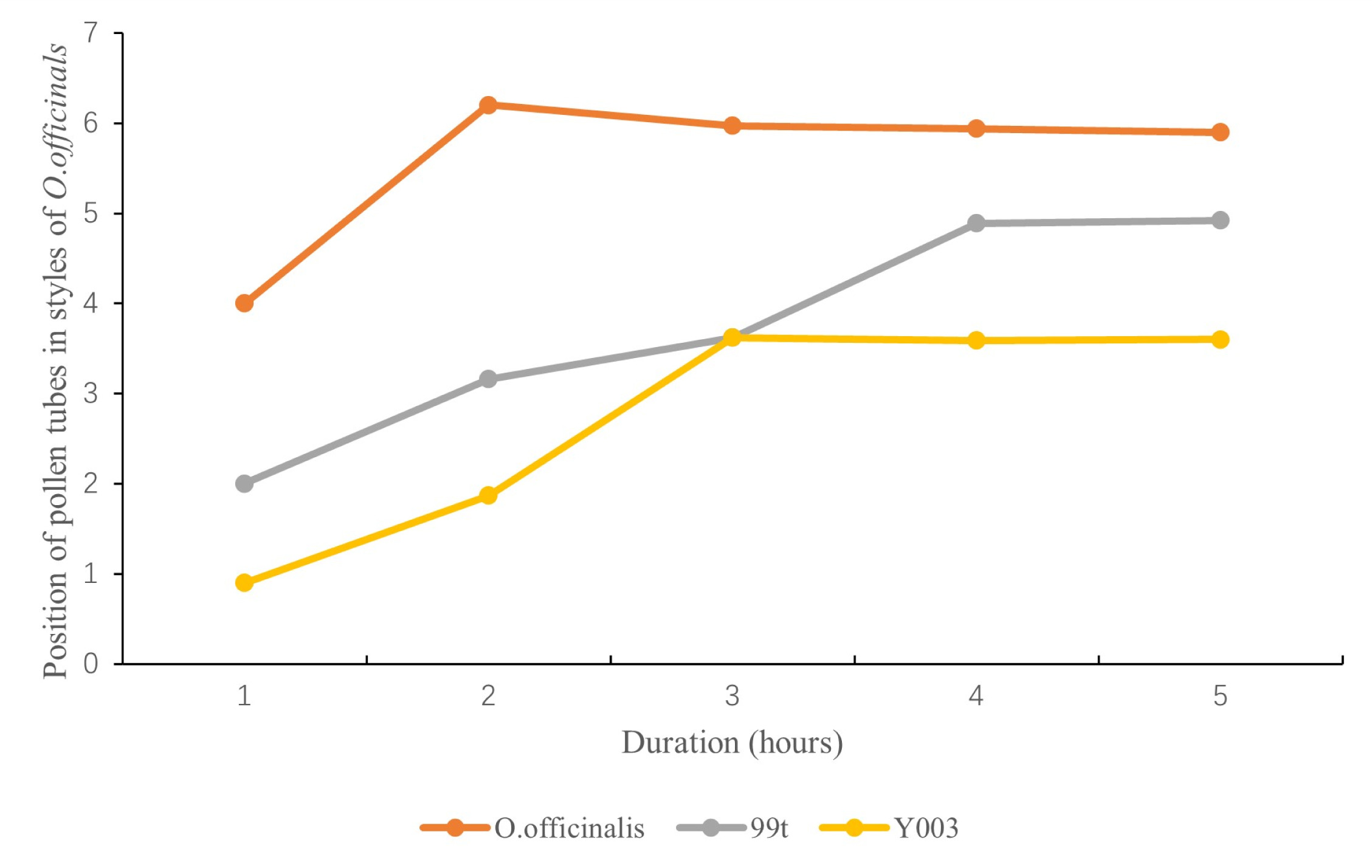
Based on these results, Chinese scholars have used fluorescence microscopy to observe the germination of transgenic rice pollen on the stigma of medicinal wild rice and the growth process in the style to clarify the stage of incompatibility between the two population (
Fig. 4). Their results showed that pollen germination rates of the two GM cultivated rice (Y003 and 99t) on the stigma of the medicinal wild rice were lower than those of self-pollinated medicinal wild rice. The pollen tube grew slowly in the style. It stopped growing when it reached the middle of the style (Y003) or the base of the style (99t). Its top was abnormally enlarged. The hybrid ovary gradually shrank and the seed setting rate was 0. Therefore, the reason for the incompatibility between wild medicinal rice and GM cultivated rice was because the pollen tube stopped growing in the style, making it impossible to enter the embryo sac to complete fertilization (
Liu et al. 2004a;
Liu et al. 2004b).
The cross affinity between various plant varieties and target varieties of GM cultivated rice is a prerequisite for successful transfer of foreign genes. Exogenous genes can only achieve gene transfer and reproduction after successful hybridization with other varieties of plants through migration characteristics of pollen (
Song et al. 2002a,
Song et al. 2002b). Based on observations with an electron glare microscope, the reason for the insufficient mating affinity between various plant varieties and GM rice was found to be that the pollen of GM rice did not germinate normally on stems of these plants, nor did it pass through stems, which made the pollen unable to enter the backpack. Thus, it could not be fertilized (
Liu et al. 2004a).
Song et al. (2004) have found that under the influence of surrounding non-GM rice, the farther away from the pollen source, the faster the Bt gene pollen density will decrease (
Table 2). According to research results of Xiao
et al. (2009), when the pollen source area is 667 m
2, the maximum pollen transfer distance of general varieties is 30 m, with a pollen movement rate of 0.295%. When the pollen source area is 4 m
2, the maximum pollen movement distance of PGMS rice varieties is 9 m, with a pollen movement rate of 4.518%.
Wang et al. (2006) have found that the pollen transfer rate from bar gene GM rice to wild rice at a distance of 0-1 m is 11-18%. The farther the distance, the lower the pollen transfer rate. The pollen transfer rate at 250 m was 0.01%. In addition, they found that there was no movement of pollen between GM rice pollen and barnyard grass.
Zhang et al. (2016) have used insect-resistant transgenic rice “Huahui No. 1” as a research object and planted several non-transgenic conventionally cultivated rice around it. PCR was used to identify transgenic hybrids of F1 rice seeds collected at different distances. The frequency of foreign gene flow was counted and analyzed. The risk of insect-resistant rice gene flow was then evaluated based on results of PCR analysis. Their results showed that the average gene flow frequency of exogenous Bt genes in “P13381” and “Chunjiang 063” rice was 0. The in-sect-resis-tant GM rice “Huahui 1” and non-GM rice: Hexi 22-2, Tianxiang, Minghui 63, and P1157 showed transgenic drift at varying degrees, with the highest average drift frequency of 0.88%. The drift frequency gradually decreased as the distance increased. The average transgene drift frequency was zero at all sampling points beyond 7 m (
Table 3). By adopting reasonable field layout, physical isolation, keeping proper distance, scientifically arranging farming time, avoiding flowering period, and so on, the risk of exogenous gene drift in GM rice can be effectively reduced.
Difference pollen movement rates between plant varieties and GM rice
When pollen-mediated foreign genes escape from genetically modified rice to non-transgenic rice, the purity of non-transgenic rice varieties will decrease. Under natural conditions of field production, exogenous genes can be transferred from GM rice to non-GM rice at a high frequency. This will reduce the seed purity of non-GM rice varieties and also make non-GM rice into GM rice, thus affecting the production layout of rice varieties in certain areas. Therefore, it is very important to study pollen transmission rates between different rice varieties, especially between GM and non-GM rice varieties. At the same time, the research can ensure the seed purity of each rice variety, thereby improving the efficiency and quality of industrialized production.
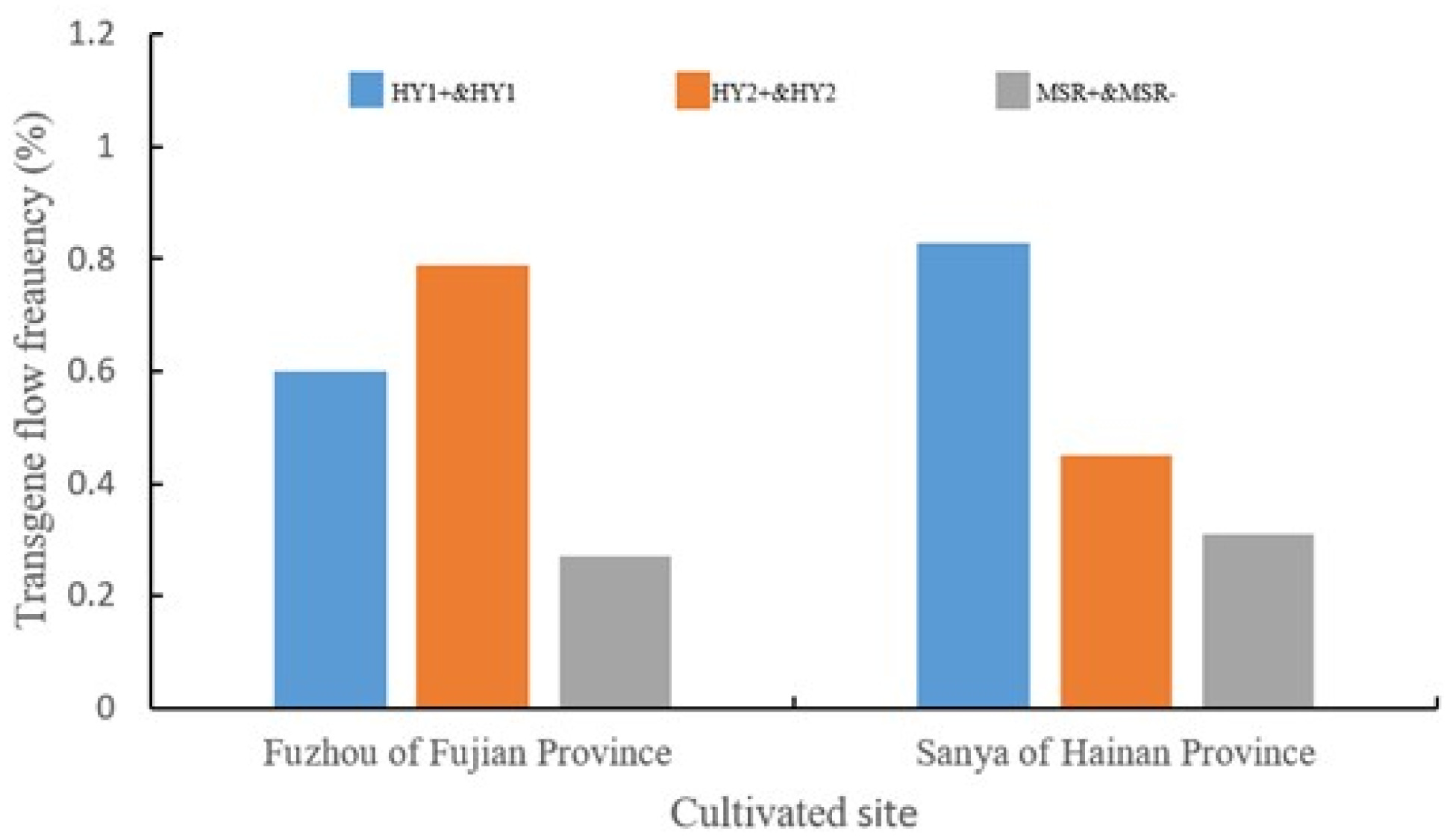
Rong et al. (2006) have used different rice germplasm with an average germination rate of 90% to 97% to study the natural hybridization rate of pollen transfer between GM and non-GM rice varieties. In their study, about 74,000 non-GM rice seeds and 70,056 seedlings of GM rice varieties
(HY1-: 20,942 strains, HY2-: 23,851 strains, and MSR-: 25,263 strains) for hygromycin resistance screening were obtained. Their statistical results for the identification of hygromycin resistant seedlings showed that the average gene drift frequency of the same combination of GM hybrid rice “Youkefeng 6” and non-GM hybrid rice “Youming 86” was 0.629-0.832%. The gene flow frequency of the same combination of hybrid rice “Liangyouke 6” to hybrid rice “Liangyou 2186” was 0.474-0.792%. The genetic drift rate from the GM restorer line “Feng 6” to the parent “Ming Shun 86” was 0.275-0.362%. Specific PCR amplification results of randomly selected 10% hygromycin-resistant rice seedlings revealed corresponding specific bands of Bt, CpTI, and hpt genes in all samples. In addition, by confirming that resistant seedlings of non-GM rice varieties obtained through hygromycin resistance gene screening were hybrids produced by gene drift, the reliability of hygromycin identification gene drift was verified. The frequency of gene drift fluctuated between different species and different experimental locations. However, the frequency of gene transfer from the three Bt/CpTI GM rice plants to the adjacent non-GM parental control was relatively low, with an average value of less than 0.9%. In addition, the frequency of gene drift between hybrid rice varieties was slightly higher than that of conventional rice varieties.
At the same time,
Huang et al. (2015) found that the genetic drift of multi-character GM rice varieties was not significantly different from that of single-character GM rice varieties.
Huang et al. (2015) GM rice and weed rice were cultivated in the field through the method of staggered cultivation, and it was found that the maximum gene flow frequency of transgenic rice pollen to weed rice was 0.919% and 0.164%, respectively. The highest frequency of gene flow from GM rice to weed rice was 0.230%, consistent with previous research results (
Rong et al. 2006). The genetic drift rate of glufosinate-resistant GM rice pollen to weed rice was studied using concentric, interlaced, and adjacent sowing methods. They found that the maximum gene transfer frequencies of resistance genes under those three sowing methods were 0.302%, 0.470%, and 0.187%, respectively. Therefore, the frequency of gene transfer from different GM rice to other weed rice was not completely the same. It was related to rice varieties, the biological type of weed rice, the suitability of cultivated rice and weed rice, and environmental factors. Therefore, when accurately assessing the risk of genetic drift of GM rice with complex traits, factors affecting genetic drift such as wind speed, humidity, temperature, and so on should be fully considered (
Fig. 5). According to results of Zhang
et al. (2006), the pollen of a Bt gene GM rice variety was not been transferred to two rice varieties P13381 and Chunjiang 063. The maximum pollen drift rate of Daoheline 22-2, Tianxiang, Minghui 63, and P1157 rice varieties was 0.857%. However, the pollen migration rate was 0 when the range exceeded 7 meters
(
Table 4). Research results of
Jiang et al. (2010) showed that the pollen transfer rate of MS line in GM rice was as high as 31.74% and the pollen transfer rate of general varieties was less than 2%. In results of
Jia et al. (2007), when bar gene GM rice was cultivated at an interval of 0 meters, the pollen mobility of sterile lines of GM rice was significantly different. They found that the pollen migration rate to general rice varieties was between 3.14% and 36.116%. Normal rice varieties had no pollen movement within a distance of 30-40 m, while sterile rice varieties had no pollen movement within a distance of 40-150 meters.
Based on the above research results of genetic drift rate of GM rice and non-GM rice varieties,
Cui et al. (2013) have used two different sowing methods, transplanting and direct seeding, to conduct targeted research on gene drift rate (
Fig. 5). After the “Taizhou Weed Rice” was sown by transplanting and the “Zhaoqing Weed Rice and Ⅱ You 86B” was sown by direct seeding met at the flowering stage, detected gene drift rates were 0.136% and 0.018%, respectively. When the “Zhaoqing Weed Rice” sown by direct seeding method met the “restorer line 86B” at the flowering stage, the detected gene drift rate was 0.016% (
Table 5).
Therefore, while foreign resistance genes in GM rice varieties can successfully migrate to their associated wild relatives through their own pollen mobility, they pose a threat to the surrounding agricultural production and the safety of the ecological environment at the same time. The degree of damage to the surrounding environment and crops based on pollen mobility mainly depends on whether the genetically modified crops can be initially hybridized with their wild relatives. It also depends on whether the adaptability of the hybrid has decreased or not. Adaptability is the ability of an individual to survive and reproduce under certain environmental conditions. It determines whether the hybrid offspring can survive normally in nature and form an independent population. Changes in adaptability are related to parental genotypes, resistance genes, environmental conditions, and their mutual effects. Therefore, the hazard assessment of pollen drift of GM rice to surrounding crops and the environment cannot be judged by simply confirming whether it has hybrid compatibility with the GM rice. At the same time, it is necessary to study whether the varieties that have been polluted by GM rice pollen have the corresponding adaptability and stability in order to objectively evaluate and judge their hazards (
Cui et al. 2013).
DISCUSSION
The development of genetically modified biotechnology and the commercial application of genetically modified crops have played a huge role in advancing agricultural production and ensuring food security. Today, the commercial cultivation of genetically modified crops has been 25 years. GM crops have been planted in 29 countries around the world, and 42 countries or regions that do not plant GM crops import GM crops for food, feed, and related processing raw materials. This is fully demonstrating the strong vitality of genetically modified biotechnology and its contribution to global agricultural production. Moreover, the second generation of genetically modified products will include many quality traits that can benefit consumers, such as healthy edible oil, high-quality rice, etc., which will enrich the functionality of genetically modified products. However, just like the advent and application of any new technology, while genetically modified biotechnology and its products bring huge economic and social benefits, they might also have some potential risks that require serious scientific research and evaluation. On the other hand, it would be irresponsible to completely deny or even abandon this technology and its products on grounds of unproven and possible risks. We should adopt a scientific, cautious, and serious attitude in the face of environmental biosafety issues that might be brought about by the commercial application of genetically modified rice. We should actively evaluate its risks, take effective countermeasures to possible harms, try to avoid and reduce possible risks, and maximize benefits of commercial application of genetically modified rice. Compared with the traditional rice planting method that uses large amounts of chemical pesticides to control pests, insect-resistant and disease-resistant transgenic rice varieties are much less harmful to the environment than ordinary rice varieties. Therefore, the application of biotechnology in farmland production not only can offer high yield, high quality, disease resistance, and stress resistance of crops, but also can solve problems related to ecology and environment in production through scientific design. Scientific risk assessment of genetically modified biotechnology and its products not only can accumulate large amounts of scientific data and knowledge related to environmental biosafety, but also can escort the safe and sustainable use of these products. Although transgenic technology is a key means for humans to solve population and food problems in the future, it is affected by many commercial interests and social value conflicts involved in the commercialization of genetically modified rice. As a result, there are disagreements and unreasonable disputes in many aspects of the commercialization of genetically modified rice, and it has caused strong social problems and contradictions.
The safety of the ecological environment in the cultivation of genetically modified rice is mainly caused by its pollen mobility. Factors that cause the emergence of genetically modified weeds include: 1) the degree of closeness between the genetically modified crop and its related wild species; 2) the chance of hybridization between different crops and wild relatives; and 3) the frequency of the spread of genetically modified plants based on pollen; After clarifying the above-mentioned influencing factors, the following targeted methods can be taken to suppress the spread of transgenes: 1) set a certain separation distance; 2) stagger the flowering period of transgenic rice with the flowering period of the surrounding ordinary rice; 3) plant ordinary rice as a buffer; and 4) choose male sterile varieties to suppress pollen dispersion.
ACKNOWLEDGEMENTS
This work was supported by a grant from the Rural Development Administration Agenda Program (Project No. PJ01423504), Rural Development Administration, Republic of Korea.
Fig. 1Pollen grain germination and growth of barnyarddrass after self-pollination (Song et al. 2002).
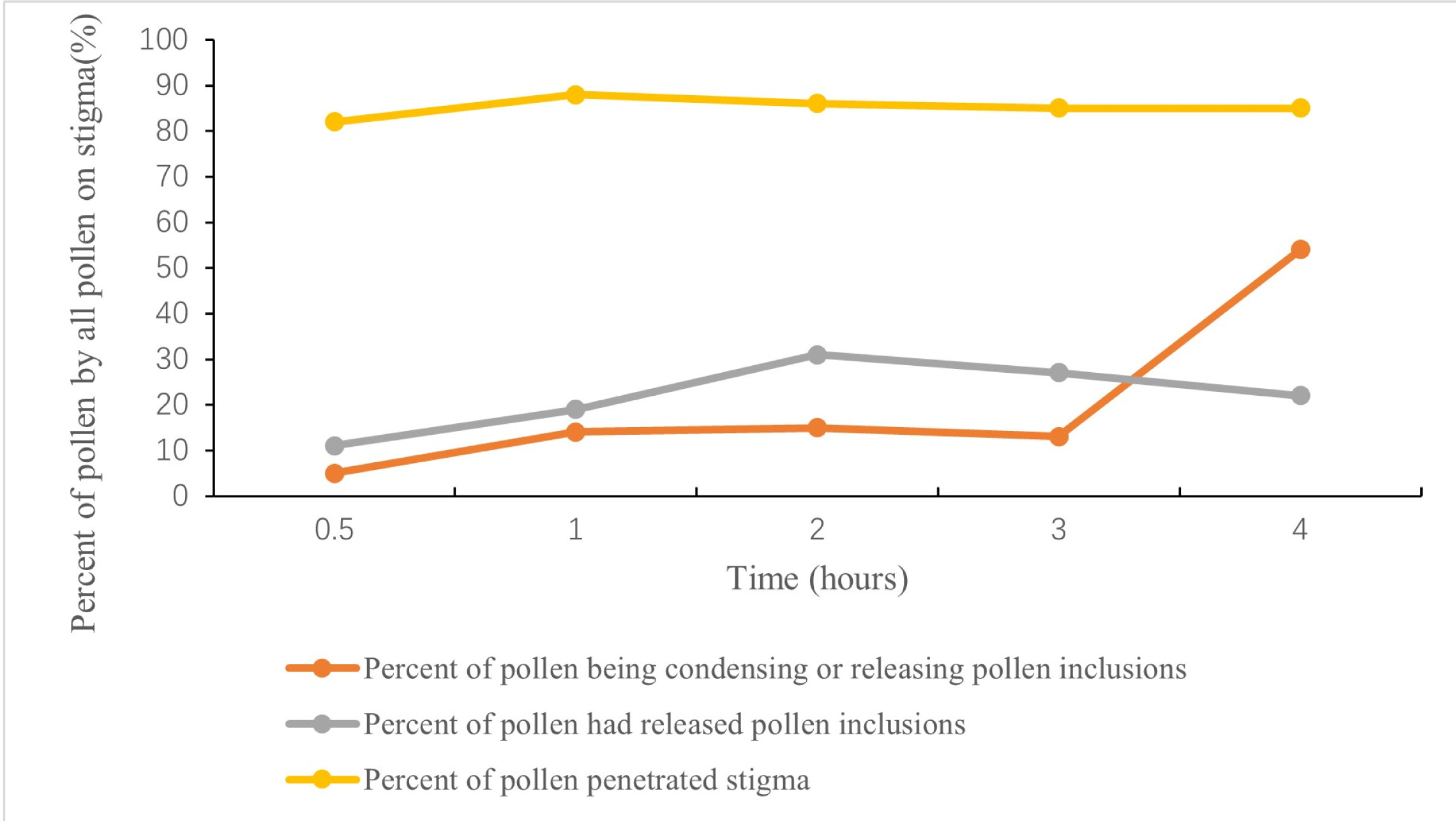
Fig. 2Germination and growth of pollen grains after self-pollination of Oryza officinalis and pollen grains of transgenic rice with bar gene on the stigma of Oryza officinalis Wall (Song et al. 2002).
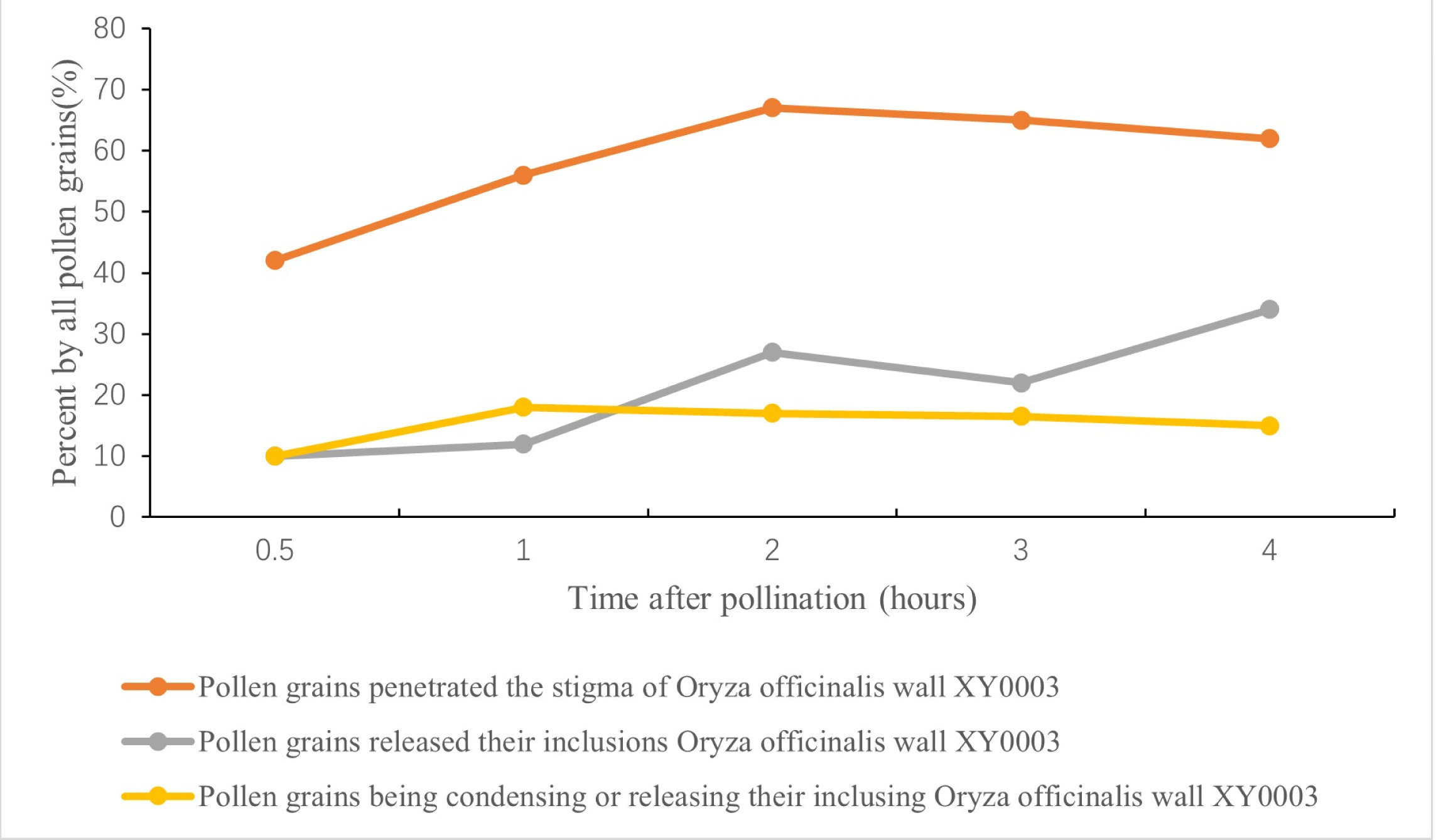
Fig. 3Germination and growth of pollen grains after self-pollination of Oryza officinalis (Song et al. 2002).
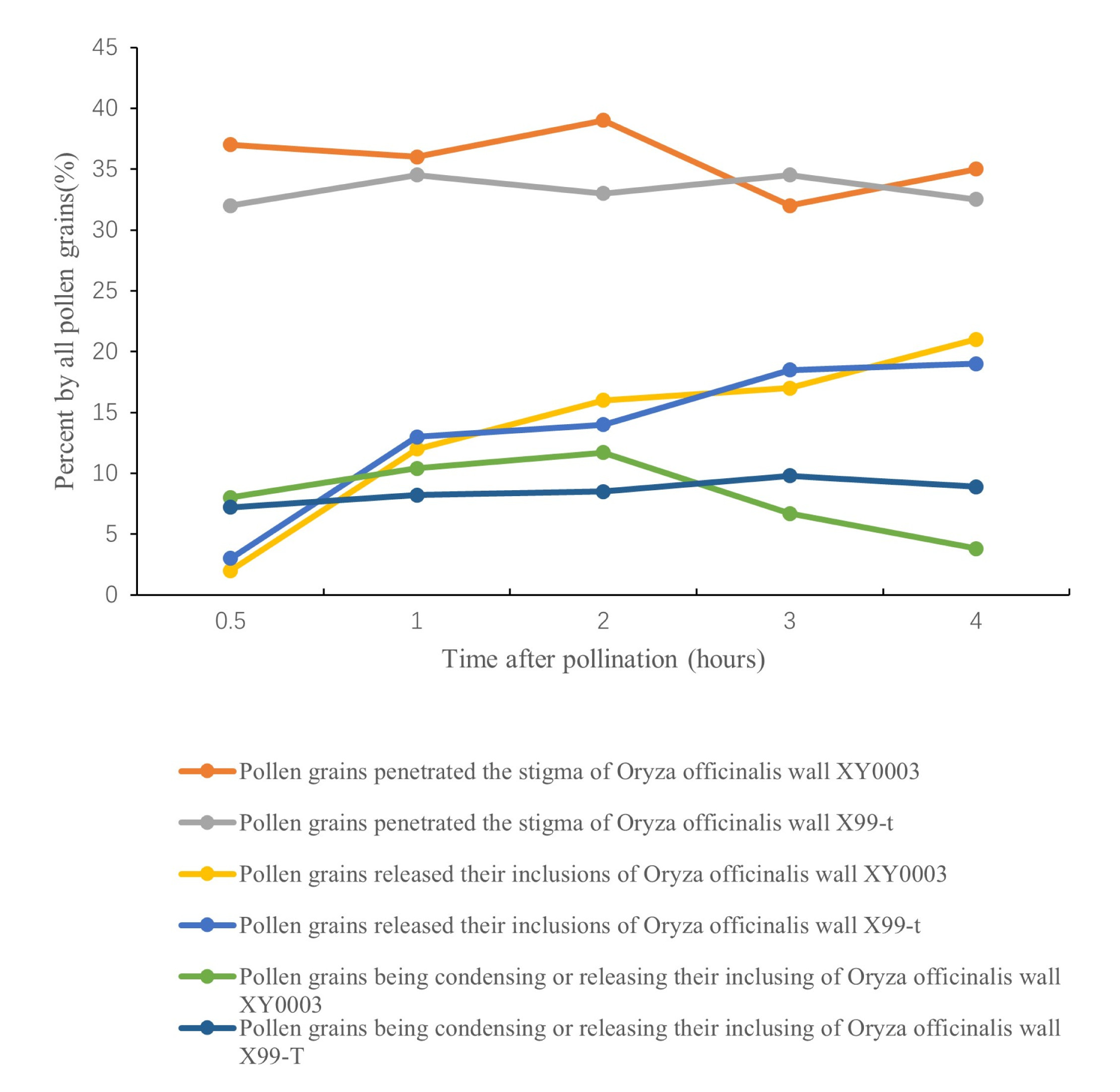
Fig. 4Speed of pollen tube growth; Positions of pollen tubes reached into styles of O. officinalis; 1. Penniform branch of stigma; 2. The top of stigma; 3. The middle of stigma; 4. The lower part of stigma; 5. The base of stigma; 6. Ovary (Liu et al. 2004).
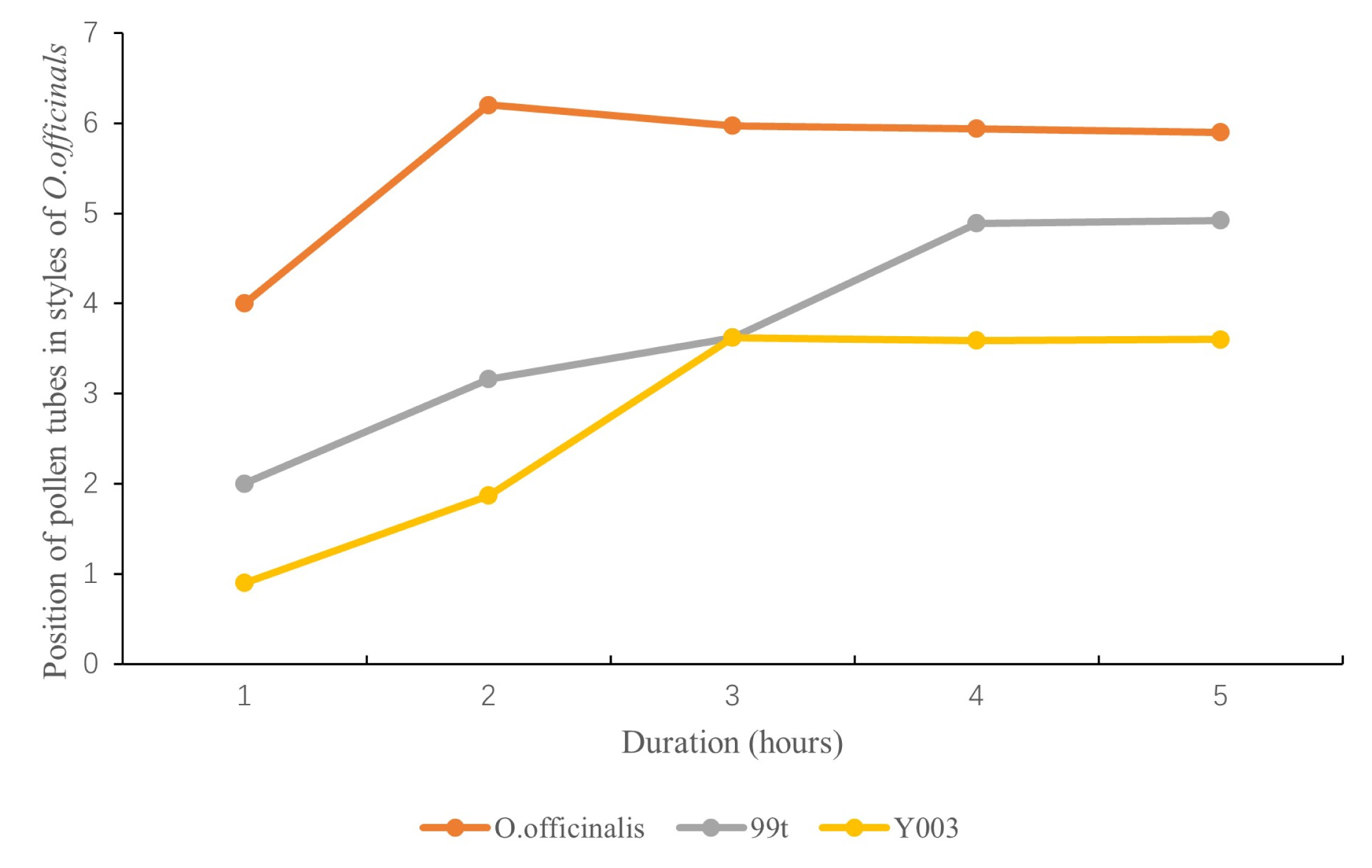
Fig. 5Frequencies of transgene flow (%) from transgenic rice to their non- transgenic counterparts at different experimental sites (
Rong et al. 2006).
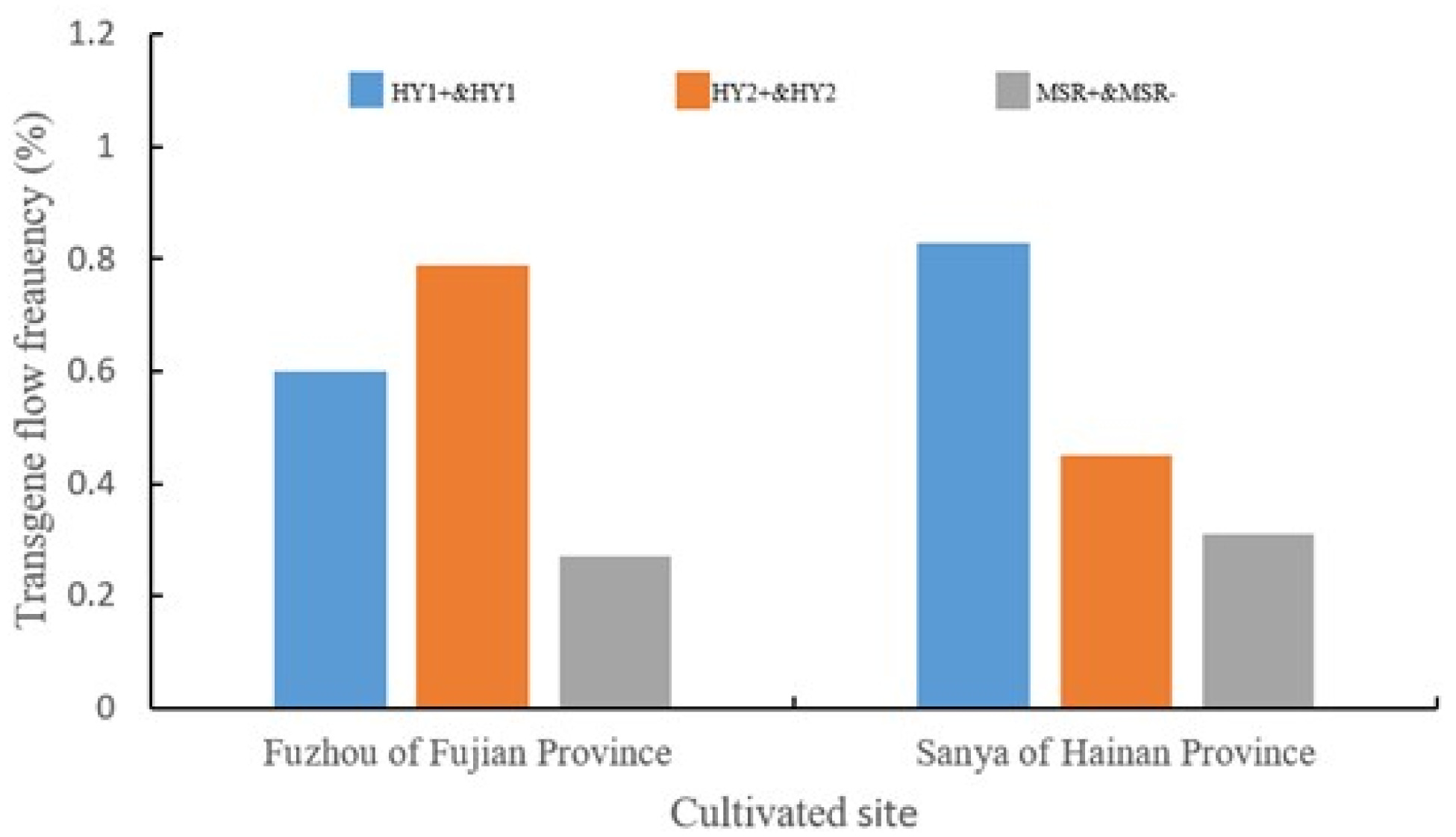
Table 1Case study of intra and inter-specific gene flow and adaptive evolution in plants (
Liu and Huang 2009).
Table 1
|
Variety |
Research direction |
Gene flow dynamics and diversity patterns |
The mechanism of gene flow promoting adaptive evolution |
References |
|
Myricaria laxiflora (Franch.) P. Y. Zhang et al. Y. J. Zhang |
Intraspecies |
Unidirectional linear migration and higher genetic differentiation among populations |
Under the condition of unidirectional linear gene flow, the changeable ecological environment of canyons and rivers promotes the continuous establishment and genetic diversification of new populations downstream |
Liu et al. 2006; Wang Yong et al.
|
|
Carex curvula All. |
Between subspecies within the species |
Common origin and free mating, but adapt to different ecological environments |
Niche theory: Introgressive hybridization promotes newly formed individuals or populations to adapt to marginal habitats |
Choler et al. 2004 |
|
Eucalyptus globulus Labill |
Intraspecies |
The three dwarf-growing populations and their neighboring high-growing individuals formed genetic differentiation, and they had their own independent origins. |
Eucalyptus marginal small populations establish genetic differentiation with neighboring large populations through ecological speciation |
Foster et al. 2007 |
|
Howea belmoreana (C. Moore & F. Muell.) Becc. and H. forsteriana (C. Moore & F. Muell.) Becc. |
Intraspecies differentiation to interspecies |
Habitat, reproduction and molecular data, as well as recent theoretical simulation analysis, show that there is no strict geographical isolation and gene flow blockage in the same region of genetic differentiation and speciation |
The new island soil types produce new island habitats, and ultimately lead to the original population individuals adapting to the new ecological environment under the effect of selection |
Savolainen et al. 2006; Gavrilets and Vose 2007 |
|
Pinus densata Mast. |
Intraspecies |
Morphology, allozyme and cpDNA data reveal that Pinus densata originated from the cross between P. tabuliformis and P. yunnanensis
|
The uplift of the plateau creates new ecological adaptation environments and opportunities for the offspring of heterozygotes |
Wang et al. 2001; Song et al. 2002 |
|
Dubautia ciliolate (DC.) Keck and D. arborea (Gray) Keck |
Species complex |
The different gene flows that accompanied the expansion of primitive populations eventually led to the divergence of the two species branches |
Natural selection based on different habitats, different ecological and climatic factors, etc. may jointly lead to the final genetic differentiation of the species complex |
Friar et al. 2007; Lawton-Rauh et al. 2007; Remington and Robichaux 2007 |
|
Helianthus annuus Linn., H. petiolaris Nutt. And Hybrid seeds of the three of them |
Intraspecies |
The offspring of three sunflower hybrids with different morphologies and adapted to different extreme habitats independently originated from the same pair of ancestral parents |
The ecological environment has played an important role in the ecological adaptation, transformation and adaptive evolution of the offspring of these three different heterozygotes. |
Gross et al. 2003; Lexer et al. 2003; Rieseberg et al. 2003a; Ludwig et al. 2004 |
Table 2The pollen drift distance and gene flow percentage of transgenic rice (Xiao 2004).
Table 2
|
Transgenic rice |
Distance (m) |
Gene flow percentage (%) |
|
East |
West |
South |
North |
SE |
NE |
SW |
NW |
|
Bar68-1 (4 m2) |
0 |
1.911 |
4.518 |
1.191 |
4.205 |
1.974 |
2.724 |
1.48 |
0.89 |
|
1 |
0.138 |
0.237 |
0.077 |
0.216 |
0.496 |
0.406 |
0.765 |
0.23 |
|
2 |
0 |
0.253 |
1.058 |
0.21 |
0.33 |
0.056 |
0.332 |
0.038 |
|
3 |
0 |
0 |
0.123 |
0 |
0.101 |
0 |
0.356 |
0 |
|
4 |
0 |
0.034 |
0 |
0 |
0.073 |
0 |
0.034 |
0 |
|
5 |
0 |
0.043 |
0.046 |
0 |
0.116 |
0 |
0.052 |
0 |
|
6 |
0.037 |
0 |
0.154 |
0.038 |
0 |
0 |
0 |
0 |
|
7 |
0 |
0 |
0.133 |
0 |
0 |
0 |
0.076 |
0 |
|
8 |
0 |
0 |
0 |
0 |
0 |
0 |
0.036 |
0 |
|
9 |
0 |
0 |
0 |
0 |
0 |
0 |
0 |
0 |
|
… |
… |
… |
… |
… |
… |
… |
… |
… |
|
14 |
0 |
0 |
0 |
0 |
0 |
0 |
0 |
0 |
|
Xiang 125S/Bar68-1 (667 m2) |
0 |
0.275 |
0.103 |
0.288 |
0.108 |
0.065 |
0 |
0 |
0.122 |
|
5 |
0.083 |
0 |
0.257 |
0 |
0 |
0 |
0 |
0.089 |
|
10 |
0.134 |
0 |
0.236 |
0 |
0 |
0 |
0 |
0 |
|
15 |
0 |
0 |
0.295 |
0 |
0 |
0 |
0 |
0 |
|
20 |
0 |
0 |
0.156 |
0 |
0 |
0 |
0 |
0 |
|
25 |
0 |
0 |
0.126 |
0 |
0 |
0 |
0 |
0 |
|
30 |
0 |
0 |
0 |
0 |
0 |
0 |
0 |
0 |
|
… |
… |
… |
… |
… |
… |
… |
… |
… |
|
100 |
0 |
0 |
0 |
0 |
0 |
0 |
0 |
0 |
Table 3Frequency of foreign gene flow from insect-resistance transgenic rice HUAHUI-1 to conventional rice varieties (
Zhang et al. 2011).
Table 3
|
Variety |
Frequency of gene flow (%) |
|
0 m |
1 m |
2 m |
3 m |
4 m |
5 m |
6 m |
7 m |
8 m |
9 m |
10 m |
|
Hexi 22-2 |
1 |
1.02 |
0.51 |
0.51 |
0.61 |
0 |
0.52 |
0 |
0 |
0 |
0 |
0 |
|
2 |
0.51 |
0.5 |
0 |
0 |
0.56 |
0 |
0 |
0 |
0 |
0 |
0 |
|
3 |
1.5 |
1 |
1 |
0.6 |
0.51 |
0 |
0 |
0 |
0 |
0 |
0 |
|
4 |
0 |
0.51 |
0 |
0 |
0 |
0 |
0 |
0 |
0 |
0 |
0 |
|
Mean |
0.76 |
0.63 |
0.38 |
0.3 |
0.27 |
0.13 |
0 |
0 |
0 |
0 |
0 |
|
Tianxiang |
1 |
1.5 |
0.52 |
0.51 |
0 |
0 |
0 |
0 |
0 |
0 |
0 |
0 |
|
2 |
0.5 |
1.09 |
0.5 |
0.6 |
0.51 |
0 |
0 |
0 |
0 |
0 |
0 |
|
3 |
1 |
0.54 |
0 |
0.63 |
0 |
0 |
0 |
0 |
0 |
0 |
0 |
|
4 |
0.5 |
0.51 |
1 |
0 |
0.51 |
0.51 |
0 |
0 |
0 |
0 |
0 |
|
Mean |
0.88 |
0.66 |
0.5 |
0.31 |
0.26 |
0.13 |
0 |
0 |
0 |
0 |
0 |
|
Minghui 63 |
1 |
0.5 |
1 |
0.52 |
0 |
0 |
0 |
0 |
0 |
0 |
0 |
0 |
|
2 |
1 |
0.51 |
0.53 |
1 |
0.51 |
0.52 |
0 |
0 |
0 |
0 |
0 |
|
3 |
1 |
0.51 |
1.02 |
0.52 |
0 |
0 |
0.5 |
0 |
0 |
0 |
0 |
|
4 |
1 |
0.5 |
0 |
0 |
0.51 |
0 |
0 |
0 |
0 |
0 |
0 |
|
Mean |
0.88 |
0.63 |
0.52 |
0.38 |
0.26 |
0.13 |
0.13 |
0 |
0 |
0 |
0 |
|
P1157 |
1 |
1 |
0.59 |
0.58 |
0.5 |
0 |
0 |
0 |
0 |
0 |
0 |
0 |
|
2 |
0.53 |
0 |
0.52 |
0.51 |
0.52 |
0 |
0 |
0 |
0 |
0 |
0 |
|
3 |
1.02 |
1.14 |
0 |
0.5 |
0 |
0 |
0 |
0 |
0 |
0 |
0 |
|
4 |
0.5 |
0.6 |
0.57 |
0 |
0.51 |
0.52 |
0 |
0 |
0 |
0 |
0 |
|
Mean |
0.76 |
0.58 |
0.42 |
0.38 |
0.26 |
0.13 |
0 |
0 |
0 |
0 |
0 |
|
Chunjiang 063 |
1 |
0 |
0 |
0 |
0 |
0 |
0 |
0 |
0 |
0 |
0 |
0 |
|
2 |
0 |
0 |
0 |
0 |
0 |
0 |
0 |
0 |
0 |
0 |
0 |
|
3 |
0 |
0 |
0 |
0 |
0 |
0 |
0 |
0 |
0 |
0 |
0 |
|
4 |
0 |
0 |
0 |
0 |
0 |
0 |
0 |
0 |
0 |
0 |
0 |
|
Mean |
0 |
0 |
0 |
0 |
0 |
0 |
0 |
0 |
0 |
0 |
0 |
|
P13381 |
1 |
0 |
0 |
0 |
0 |
0 |
0 |
0 |
0 |
0 |
0 |
0 |
|
2 |
0 |
0 |
0 |
0 |
0 |
0 |
0 |
0 |
0 |
0 |
0 |
|
3 |
0 |
0 |
0 |
0 |
0 |
0 |
0 |
0 |
0 |
0 |
0 |
|
4 |
0 |
0 |
0 |
0 |
0 |
0 |
0 |
0 |
0 |
0 |
0 |
|
Mean |
0 |
0 |
0 |
0 |
0 |
0 |
0 |
0 |
0 |
0 |
0 |
Table 4The frequency of foreign gene flow from insect-resistance transgenic rice HUAHUI-1 to conventional rice varieties (Zhang et al. 2006).
Table 4
Distance
(m) |
Frequency of gene flow (Mean ± SD) (%) |
|
CHUNJIANG063 |
HEXI22-2 |
TIANXIANG |
MINGHUI63 |
P1157 |
P13381 |
|
0 |
0 |
0.750 ± 0.289 |
0.875 ± 0.479 |
0.833 ± 0.373 |
0.750 ± 0.250 |
0 |
|
1 |
0 |
0.625 ± 0.250 |
0.667 ± 0.373 |
0.625 ± 0.025 |
0.583 ± 0.344 |
0 |
|
2 |
0 |
0.375 ± 0.250 |
0.500 ± 0.289 |
0.583 ± 0.186 |
0.417 ± 0.344 |
0 |
|
3 |
0 |
0.333 ± 0.373 |
0.350 ± 0.289 |
0.333 ± 0.289 |
0.375 ± 0.250 |
0 |
|
4 |
0 |
0.250 ± 0.289 |
0.250 ± 0.289 |
0.250 ± 0.289 |
0.250 ± 0.289 |
0 |
|
5 |
0 |
0.125 ± 0.250 |
0.125 ± 0.250 |
0.125 ± 0.250 |
0.125 ± 0.250 |
0 |
|
6 |
0 |
0 |
0 |
0.125 ± 0.250 |
0 |
0 |
|
7 |
0 |
0 |
0 |
0 |
0 |
0 |
|
8 |
0 |
0 |
0 |
0 |
0 |
0 |
|
9 |
0 |
0 |
0 |
0 |
0 |
0 |
|
10 |
0 |
0 |
0 |
0 |
0 |
0 |
Table 5Gene flow frequency from transgenic rice Ⅱyou 86B to weedy rice (
Cui et al. 2013).
Table 5
|
Weedy rice |
Plant method |
Germination
rate (%) |
Seed amount
(g) |
Thousand grain weight (g) |
Total number of resistant plants |
Frequency of gene flow (%) |
|
TAIZHOU |
Transplant |
95.5 |
18675 |
22.1 |
550 |
0.136 |
|
ZHAOQING |
Direct seeding |
86.75 |
16963 |
17.3 |
730 |
0.018 |
References
- Barluenga M, StÖlting KN, Salzburger W, Muschick M, Meyer A. 2006. Sympatric speciation in Nicaraguan crater lake cichlid fish. Nature. 439: 719-723.
- Chen LJ, Lee DS, Song ZP, Suh HS, Lu BR. 2004. Gene flow from cultivated rice (Oryza sativa) to its weedy and wild relatives. Ann. Bot.. 93: 67-73.
- Cui RR, Dai WM, Qiang S, Song XL. 2013. Gene flow from transgenic glufosinate-resistant rice Ⅱ you 86B and its restorer line 86B to weedy rice. Jiangsu Journal of Agricultural Sciences. 29: 708-714.
- Garant D, Forde SE, Hendry AP. 2007. The multifarious effects of dispersal and gene flow on contemporary adaptation. Funct Ecol. 21: 434-443.
- Hewitt GM. 2001. Speciation, hybrid zones and phylo-geography-or seeing genes in space and time. Mol. Ecol.. 10: 537-549.
- Huang JK, Hu R, Rozelle R, Pray C. 2005. Insect-resi-stance GM rice in farmers' fields: assessing productivity and health effects in China. Science. 308: 688-690.
- Huang Y, Li JK, Qiang S, Luo TP, Song XL. 2015. Gene flow from transgenic rice T1c-19 with stacked cry1C*/bar genes to weedy and cultivated rice species. Chin. J. Appl. Environ. Biol.. 21: 1112-1119.
- Jia HP. 2004. China ramps up efforts to commercialize GM rice. Nature Biotechnol.. 22: 642-643.
- Jia SR, Wang F, Shi L, et al. 2007. Transgene flow to hybrid rice and its male-sterile lines. Transgenic Res.. 16: 491-501.
- Jiang DG, Liang YT, Huang J, Chen YX, Cai YJ, Yao J, et al. 2010. Study on Gene Flow of Transgenic Rice. Biothe-chnology Bulletin. 6: 95-99.
- Liu LL, Qiang S, Song XL. 2004a. A study on compatibilities on transgenic herbicide-resistant rice with wild relatives by using autoradiography of 32P labeled pollen. Nucl. Technol.. 27: 617-619.
- Liu LL, Qiang S, Song XL, Hu JL. 2004b. Observation of the Sexual Incompatibility Between Wild Rice (Oryza officinalis Wall) and Transgenic Rice by Fluorescence Microscope. Scientia Agricultura Sinica. 37: 469-472.
- Liu YF, Huang HW. 2009. Gene flow dynamics and related adaptive evolution in plant populations. Chinese Bulletin of Botany. 44: 351-362.
- Lu BR, Fu Q, Shen ZC. 2008. Commercialization of transgenic rice in china potential environmental biosafety issues. Biodiversity Science. 16: 426-436.
- Lu BR, Snow AA. 2005. Gene flow from genetically modified rice and its environmental consequences. Bioscience. 55: 669-678.
- Mallet J. 2007. Hybrid speciation. Nature. 446: 279-283.
- Rong J, Song ZP, Su J, Xia H, Wang F, Lu BR. 2006. Low frequencies of transgene flow between Bt/CpTI rice and their non-transgenic counterparts under alternating cultivation. Biodiversity Science. 14: 309-314.
- Seehausen O. 2004. Hybridization and adaptive radiation. Trends Ecol. Evol.. 19: 198-207.
- Slatkin M. 1985. Gene flow in natural populations. Annu. Rev. Ecol. Syst.. 16: 393-430.
- Song XL, Qiang S, Liu LL, Xu YH. 2002a. Assessment on gene flow through detection of sexual compatibility between transgenic rice with bar and Echinochloa crusgalli var. mitis. Agric. Sci. China.. 1: 1185-1189.
- Song XL, Qiang S, Liu LL, Xu YH, Liu YL. 2002b. Gene flow pollen cross between Oryza officinalis wall and transgenic rice with bar gen. J. Nanjing Agric. Univ.. 25: 5-8.
- Song ZP, Lu BR, Chen JK. 2004. Pollen flow of cultivated rice measured under experimental conditions. Biodivers. Conserv.. 13: 579-590.
- Sun GH, Dai WM, Cui RR, Qiang S, Song XL. 2015. Gene f low from glufosinate-resistant transgenic hybrid rice Xiang 125S/Bar68-1 to weedy rice and cultivated rice under different experimental designs. Euphytica. 204: 211-227.
- Wang F, Yuan QH, Shi L, Qian Q, Liu WG, Kuang BH, et al. 2006. A large-scale field study of transgene flow from cultivated rice (Oryza sativa) to common wild rice (O. rufipogon) and barnyard grass (Echinochloa crusgalli). Plant Biotechnol. J.. 4: 667-676.
- Wang Y, Johnston S. 2007. The status of GM rice R & D in China. Nat. Biotechnol. 25: pp. 717-718.
- Xiao GY. 2009. The Drift Distance of Pollen from Herbicide Resistant Transgenic Rice and Ecological Risk Assessment. Hybreed Rice. 24: 78-80.
- Zhang FL, Niu B, Chang LJ, Song J, Wang dong, Yin Q, et al. 2016. PCR detection method for assessment risk of gene flow from insect-resistance transgenic rice. Southwest China Journal of Agricultural Sciences. 29: 2269-2273.
- Zhang FL, Tong HJ, Liu Y, Yin Q, Wang D, Song J, et al. 2011. Study on Frequency of Foreign Gene Flow from Insect-resistance Transgenic Rice without Label Gene to Conventional Rice Varieties. Southwest China Journal of Agricultural Sciences. 5: 1733-1737.