Abstract
Fonio, known to be the smallest and oldest form of millet grown in sub-Saharan Africa, has remained relatively poor of research despite its nutritional, sociocultural, agroecological, therapeutic and economic potentials. Based on systematic literature review, this critical study showed that fonio genetic breeding progress is at a low level. Genetic resources are threatened by erosion, particularly extra-early cultivars of Digitaria exilis, and mainly D. iburua species have practically disappeared in some cultivation countries including Benin. Varietal environment is characterized by lack of improved varieties and seeds, so that cultivars are ecotypes derived from natural selection often with low yields. Seeds, very tiny, are generally heterogenous, in polyvarietal mixtures because of unimproved systems and management by farmers. These ecotypes are susceptible to stem lodging and seed shattering. An exhaustive list of fonio genetic resources from West and Central Africa into catalog remains to be documented. There is a need for regional and international networking of fonio researchers with institutional support for harmonizing germplasm characterization methods, will facilitate descriptors development for all countries. It is necessary to consider in this work wild relative species that have potential genes of resistance/tolerance to biotic and abiotic stress. Starting from autogamy and apomixis revealed on fonio, homogenization program using pureline and mass selection of cultivars could enable rapid release of homogeneous and higher yielding materials to farmers and processors. Development of early and yielded varieties, with upright stem and coarse grains, resistant to lodging, shattering, and facilitating mechanical harvesting would enhance effective production revival.
-
Key words: Genetic erosion, Networking, Catalog and descriptors, Selection, Improved varieties of fonio, Africa
INTRODUCTION
Conservation and sustainable exploitation of traditional phytogenetic resources is now a major concern for agriculture and scientific research. Indeed, it is estimated that nearly three-quarters of crop genetic diversity has been lost in the last century, and this genetic erosion continues (Convention on Biological Diversity,
http://fr.wikipedia.org/wiki/Convention_sur_la_diversit%C3%A9_biologique). This is the case of neglected and underutilized food species of the tropical world, which today represent an unexplored pool of diversities and potentialities.
Fonio (
Digitaria exilis S.,
D. iburua S.) is one of these neglected species that is a staple food for populations in several West African countries (
Cruz et al. 2011). It plays a crucial role in food security of thousands of people around the world, especially with early cultivars harvested often early that serve to get through the lean season (
Dramé and Cruz 2002; Paraïso
et al. 2011;
Sekloka et al. 2016). In the world, apart from
Panicum miliaceum and
Setaria italica from the sub-temperate countries, there are not yet small cereals cultivated by a large number of small producers (
Portères 1955;
CIRAD 2009). Cultivated often without chemical inputs, fonio contributes to environment protection (
CIRAD 2009;
Cruz et al. 2011). Recognized for its nutritional, medicinal and socio-cultural importances (
Jideani 1999;
Adoukonou-Sagbadja et al. 2006;
Ballogou 2013), fonio is intended to be a cereal of the future. However, it has remained a long-time marginal plant and poor relative of research. In all areas of West Africa where this cereal is grown, very little attention is paid to the assessment and breeding of its germplasm (
Hilu et al. 1997;
Sekloka et al. 2016; Animasaum
et al. 2018). It is still little known from morphological, agronomic, physiological or even biological point of view so that it is difficult to determine with precision extent of its diversity and cultivated varieties of fonio. With this in context, this study aims at making a critical documentary synthesis on genetic resources diversity and varietal environment of fonio so as to identify challenges and prospects for breeding.
This study involved a systemactic literature search on genetic resources and varietal breeding of fonio in different crop areas in West Africa. Thus, the keywords “fonio genetic resources_ biology and reproduction_related species and genetic reservoir_agro-morphological classification and phenotypic discrimant traits_ markers and molecular characterization of fonio” have been submitted for collecting the literature available via Google Scholar, AJOL, DOAJ, ResearchGate, ScienceDirect, JSTOR and AGORA. This search has led to more than 800 documents of different kinds (articles, conference papers, theses, dissertations, reports and statistical data). Selective sorting based on the choice of documents addressing the sub-themes developed, and prioritizing scientific publications has enabled to reduce the number of documents and to retain 62 papers in this article. This documentation has been subjected to systemic and critical analysis. Thus, the results of analysis have been presented in the form of literature synthesis, tables and figures.
Origin, domestication, and distribution areas of cultivated fonios
Designated from the Malinke patois of Upper Senegal and Upper Niger, fonio is one of the first cereals grown in West Africa (
Portères 1955;
Adoukonou-Sagbadja et al. 2006). The biodiversity of fonio millet includes four (4) cultivated species around the world.
Digitaria exilis (white fonio) and
Digitaria iburua (black fonio) are the two species grown in West Africa.
Digitaria sanguinalis (European millet or red manna) is produced in Eastern Europe and
Digitaria cruciata (raishan) practiced in India and Vietnam (
Froment and Renard 2001;
Vodouhè and Achigan Dako 2006). Today,
Digitaria exilis and
D. iburua, the most species cited in the literature, dominate the biodiversity of
digitaria genus. Better, only
D. exilis is much more cultivated and even outside Africa, it is grown in Dominican Republic mainly for fodder production (
Morales-Payán et al. 2002).
First work early reported important botanical and geographical similarities of grown fonios (
Digitaria exilis and
D. iburua) with several wild species of
Digitaria genus (
D. longiflora,
D. barbinodis,
D. fuscescens,
D. ternata,
D. tricostulata,
D. atrofusca) (
Stapf 1915;
Henrard 1950;
Haq and Ogbe 1995).
Further, phylogenetic researches based on molecular markers (RAPD, RFLP, AFLP, SSR, etc.) carried out to date have unanimously shown that
Digitaria longiflora and
D. ternata were the most likely wild relatives of
Digitaria exilis and
D. iburua respectively (
Table 1). Among these grown fonios, molecular analyzes also revealed differentiations between
D. exilis and
D. iburua showing that they constitute two different species (
Adoukonou-Sagbadja et al. 2007;
Nyam et al. 2017;
Olodo et al. 2019).
Related wild species, notably
D. longiflora and
D. ternata, constitute an important exploitable genetic pool for improving grown fonio species. Indeed, it has often been reported that wild relatives’ species are potential sources of genes for resistance/tolerance to pests, desease, and for adaptation to abiotic conditions (lodging, etc.) (
Ochatt et al. 2004;
Adoukonou-Sagbadja 2010). Fonio is a cereal very sensitive to lodging stress (
Adoukonou-Sagbadja 2010;
Dansi et al. 2010), factor that significantly reduces grain yield, and stand for real bottleneck to the mechanization of fonio harvesting. Indeed, fragile and thin constitution of fonio stems predisposes it to the lodging and this especially pronounced towards the harvest. Plant height, grains weight at maturation and phenomena of bad weather (rain, violent wind, etc.) are all factors that create plants imbalance and therfore favor lodging. Literature has mentioned that
Digitaria longiflora species, most closely related to
D. exilis, present interesting agronomic traits for breeding of fonio grown species (erect habit, long stem, large, strong and resistant to lodging, long panicle, large grains) (
Vodouhè et al. 2007;
Adoukonou-Sagbadja et al. 2010;
Dansi et al. 2010). Thus, it may be interesting to consider a varietal breeding program based on fusion of interspecific protoplasts of
D. exilis and
D. longiflora to generate vitro-plant with erect habit and lodging-resistance. Protoplast fusion techniques for somatic hybrids production have been the subject of several research studies on various crops (sorghum, rice, wheat, etc.) (
Wei and Xu 1990). It has resulted in the regeneration of fertile plants from calli from young leaves, flowers and immature embryos (
Jansky 2006). Seed shattering is another bottleneck to fonio productivity (
Adoukonou-Sagbadja et al. 2007;
Dansi et al. 2010). The fine and fragile constitution of the pedicels predisposes fonio grains to easily detach from panicles axis. This characteristic would reside in the crop domestication (
Ayena et al. 2018). Lodging, wind, rains at harvest period are factors which accentuate the shattering resulting in important yields loss of fonio. It was found seed shattering at maturity can cause up to 25% loss if harvest is delayed (Vodouhè
et al. 2003). Development of resistant varieties and good harvesting practices would make it possible to limit losses due to shattering.
The two cultivated species of fonio have several morphobotanical affinities with some differences (
Vietmeyer et al. 1996;
Adoukonou-Sagbadja 2010). Botanical studies have shown that the stems of black fonio are longer with leaves also longer and wider than in white fonio (
Table 2).
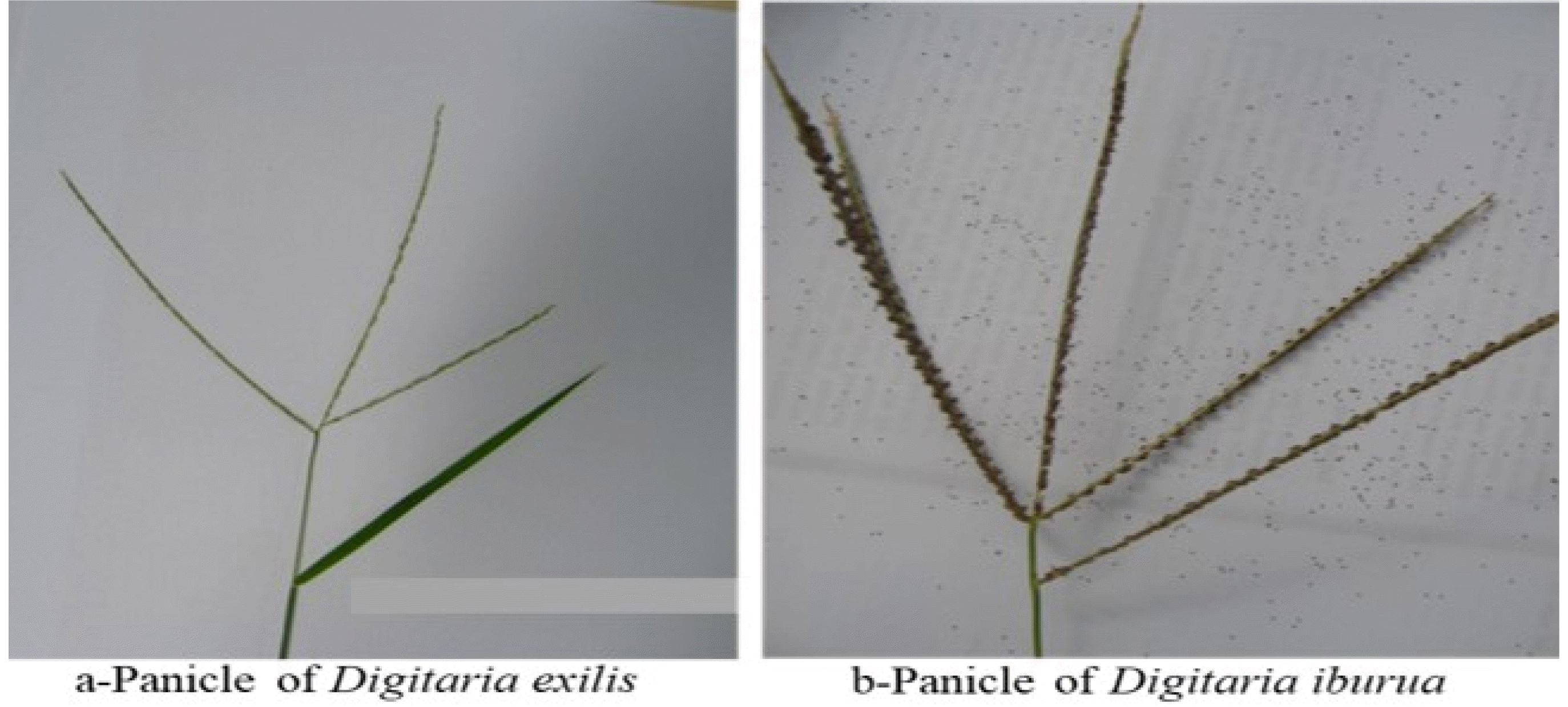
Fonio inflorescences are fine organs, much miniaturized and sometimes difficult to observe with naked eye. Inflorescence is a digitized terminal panicle composed of 2-5 racemes (
D. exilis) and 4-10 sub-racemes (
D. iburua) (
Table 2).
The raceme has spikelets with pale green pedicels, very slender about 1 mm.
Portères (1955) further described that the spikelets are grouped by 2, 3, or 4 on racemes depending on
D. exilis varieties whereas they are often 5 in number on racemes of
D. iburua (
Fig. 2).
For both grown species, pediceled spikelets are composed of sterile lower flower and fertile upper bisexued flower (
Portères 1955;
Adoukonou-Sagbadja 2010). The upper flower includes three (03) stamens with white or purple fillets, and yellow or purple-yellow anthers. The ovary is upper and has two (02) feathery stigmas from white to pink and to dark purple depending on the varieties.
Adoukonou-Sagbadja et al. (2010) went further by estimating viability of white fonio pollen grains up to 81-90%. This would reflect the fertility potential of male gametes from fonio plants.
In addition, knowledge of reproductive regime of this species has undergone sometimes controversial evolution in the scientific community and this with the precision of genetic tools used (
Table 3). Thus,
Cissé (1975) mentioned that fonio plants multiplied by self-fertilization and despite the abundant rains, it takes place entirely leading to fruit formation. After two (02) to three (03) decades, other authors, contrarily, claimed that fonio was cross-pollinated plant and it was through this cross-fertilization it retained relatively high genetic diversity (
Hilu et al. 1997;
Vodouhè and Achigan Dako 2006). Few years later, the molecular analyses of
Adoukonou-Sagbadja et al. (2010) from AFLP markers, showed that
D. iburua reproduces by absolute apomixis while
D. exilis is apomictic with a little autogamy (
Table 3). More recent results work using SSR microsatellite markers (
Barnaud et al. 2012), very polymorphic and more precise than AFLP, suggested that white fonio (
Digitaria exilis) is highly autogamous with low rate (1.7%) of possible cross-pollination (
Barnaud et al. 2017) (
Table 3). These last results based on these molecular markers (AFLP and SSR) suggest that allopollinization is rare in fonio mating and is far from being the preferential reproduction regime of the species
D. exilis and
D. iburua. However, all these results deserve to be confirmed with the most advanced new molecular methods, including genomic sequencing based on Next Generation Sequencing (NGS) (Egan
et al. 2012) to gain unanimity within the scientific community.
The knowledge refinement of biology and physiology of fonio flowering is nowadays a major challenge to successfully hybridize for the creation of better genotypes. In addition, the tiny size of reproductive organs and fonio seeds make biological manipulations difficult. The development of coarse varieties should be a breeding goal. Thus, polyploidization techniques could be explored. Cultivated fonios (
Digitaria exilis and
D. iburua) being tetraploid (2n = 4x = 36), have a genome of about 904-956 Mbp (
Adoukonou-Sagbadja 2010) with very small and short chromosomes. Duplication techniques of chromosomal stock would increase ploidy level which would be expressed by an increase in grain size, yield etc. To this end, colchicine, nitrous acid, etc. could be used.
Several genetic resources of fonio are traditionally preserved
in situ and in genebanks. Thus, hundreds of fonio ecotypes are continuously grown in the production areas and their maintenance for generations is ensured
in situ by traditional conservation practice where the farmers gather harvest seeds to take next seeds (
Adoukonou-Sagbadja et al. 2004;
Dansi et al. 2010).
Outside, efforts at national and international collection of fonio germplasm have also maintained hundreds of fonio accessions in different African and European agricultural research centres (IRD, CIRAD, etc.) (
Clément and Leblanc 1984;
Kwon-Ndung et al. 1998;
Adoukonou-Sagbadja et al. 2004;
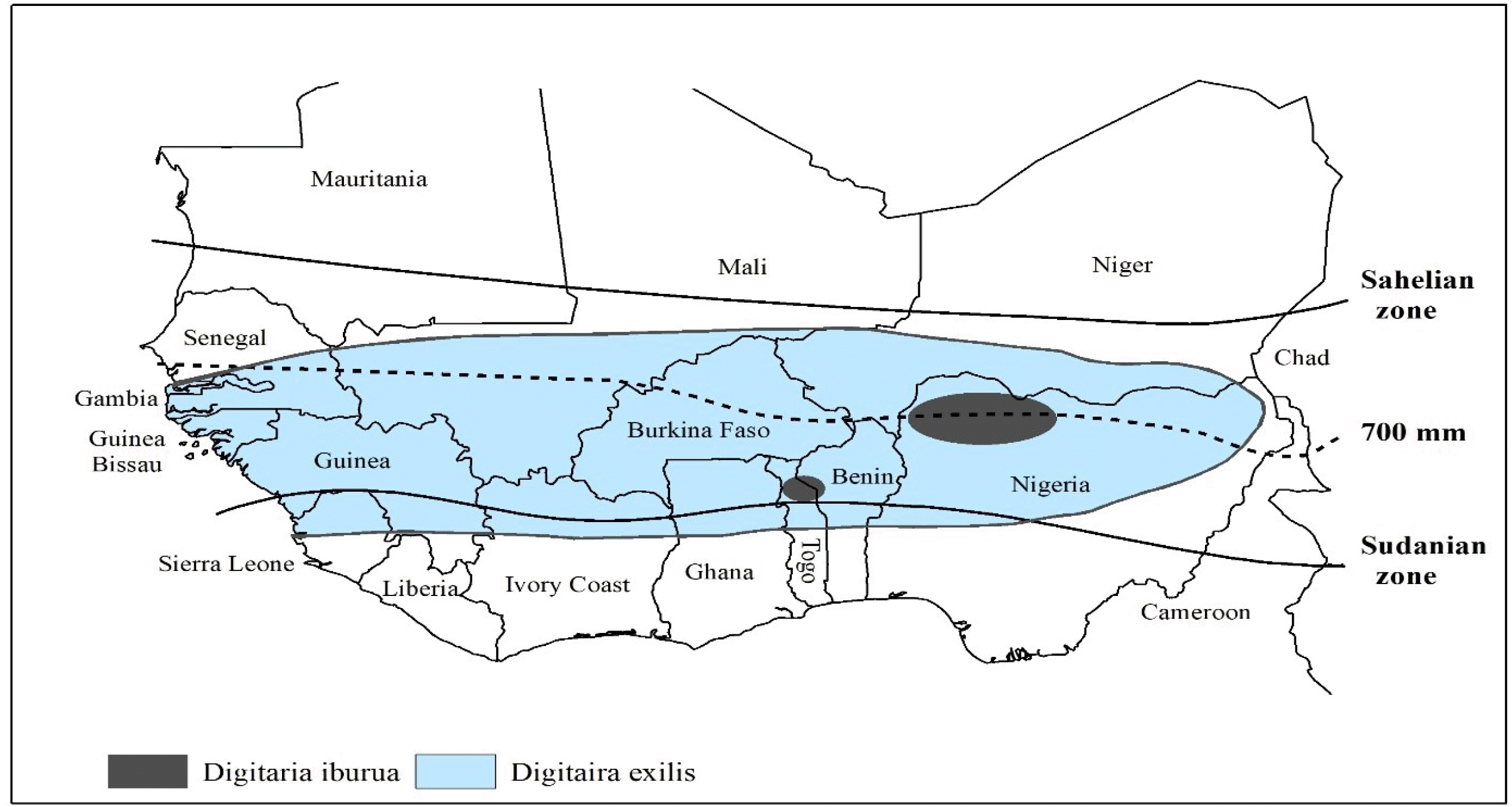
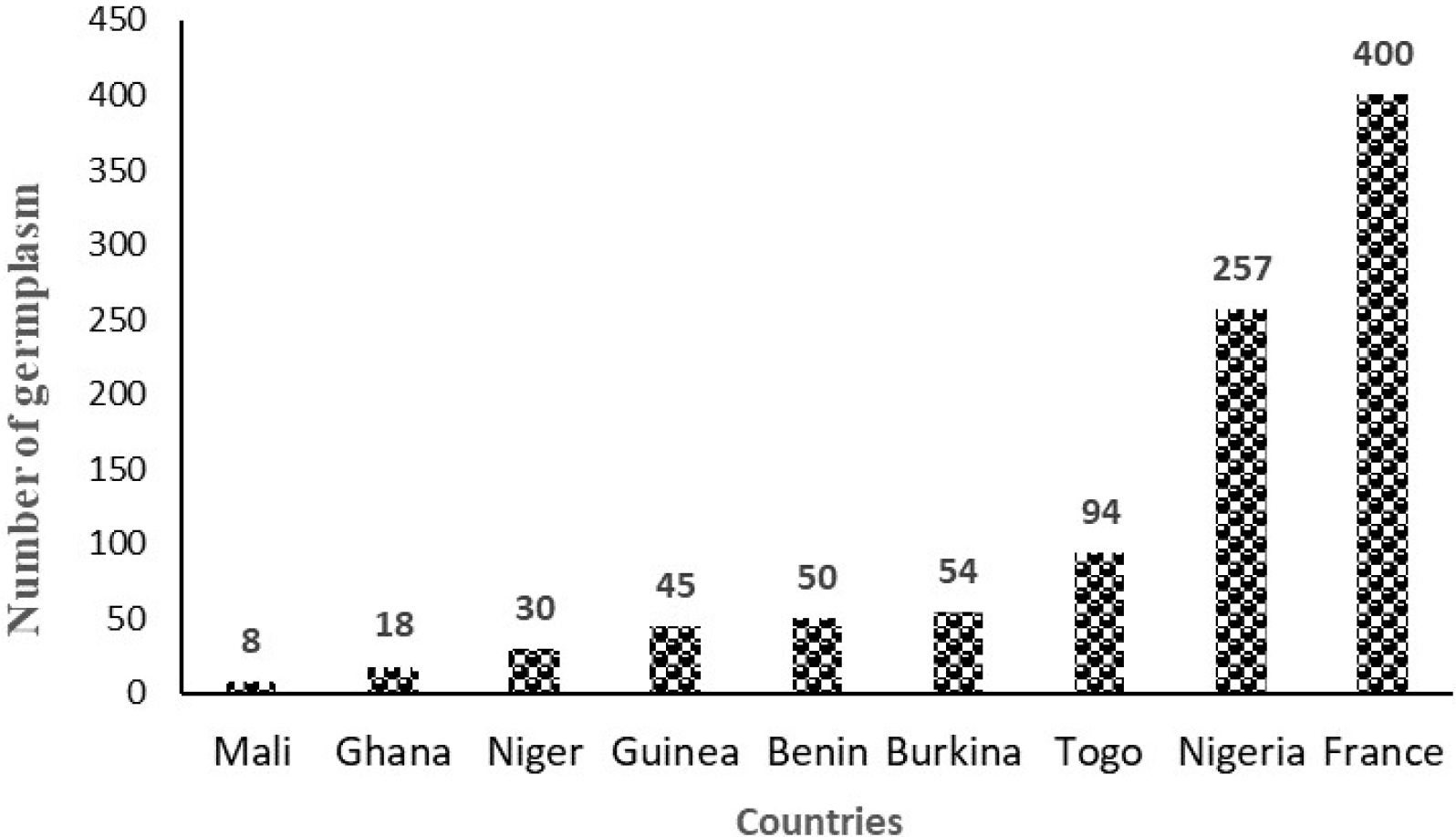
Clottey et al. 2006a). Thus, several materials of cultivated fonio and related wild species were conserved in Guinea, Mali, Ghana, Niger, Benin, Burkina Faso, Togo, Nigeria, Senegal, and France (
Fig. 3) (
Vodouhè and Achigan Dako 2006;
Adoukonou-Sagbadja 2010).
A non-exhaustive assessment of germplasm preserved in the genebanks showed 99.5% of
D. exilis, 0.1% of
D. iburua and 0.4% of wild species including the two most closely related relatives (
D. longiflora,
D. ternata) (
Adoukonou-Sagbadja 2010). These genetic materials would be important sources of genetic variability and should be sufficiently collected to assess full extent of diversity and its maintenance.
Despite these various efforts, the state of diversity conservation of fonio genetic resources is not shining. Thus,
Dansi et al. (2010) mentioned in 2003, that genetic erosion threat of fonio biodiversity, neglected cereal even if this erosion does not seem to be perceived by others (
Vodouhè and Achigan Dako 2006). Even a little more in Togo, it has been pointed out that fonio is undergoing increasing genetic erosion due to production decrease in favor of maize (
Adoukonou-Sagbadja et al. 2004,
2006). In Benin,
Sekloka et al. (2015) go further by showing that extra-early varieties of white fonio are less and less grown and threatened with extinction and no landrace of
Digitaria iburua has been found during their prospecting.
Fonio has remained an orphaned and neglected crop whose cultivation area has not really been extentive (FAOSTAT,
http://faostat3.fao.org/browse/Q/QC/E). Thus, specific measures are needed for sustainable conservation of the diversity of this traditional cereal in different growing areas.
Many works have revealed over time on wide variability of cultivated fonios mainly for
Digitaria exilis (
Portères 1976;
Dansi et al. 2010).
Adoukonou-Sagbadja et al. (2007) pointed out that the diversity within
D. exilis is greater and unevenly distributed in different production areas, unlike
D. iburua where its diversity is extremely low. These same authors also showed upper Niger basin countries (Guinea, Mali, Burkina Faso, etc.) have the greatest diversity compared to countries covering Atacora ranges (Togo, Benin).
First approaches to varietal categorization of fonio were traditional, based on local names, lengths of vegetative cycle, grain size, sowing period, yields and glumes appearance (
Renoux and Dumax 1905). Five decades later, agro-botanist
Portères (1955) took over the classification based on an identification key incorporating other morphobotanical criteria. For
Digitaria exilis, he identified five (5) racial groups (gracilis, stricta, rustica, mixta and densa) mainly distinguished by the port, plant anthocyanin coloration, color and appearance of leaves, pedicels, spikelets, racemes, geographical distribution and length of crop cycle. For
D. iburua, which has narrower range,
Portères (1976) reported two distinct landraces of black fonio in Benin and Togo.
Following this first scientific description, several collections and agro-morphological characterization efforts were made sparsely at regional or national scale (
Table 4). These works identified 3-5 morphotypes from national or regional collections that discriminated by qualitative and quantitative traits. The main discriminating quantitative criteria included crop cycle length, plant size, yield in grains and dry biomass, number of tillers, length and width of leaves, length of internodes, length of panicles and racemes. The qualitative traits consist of the green or anthocyanin colouration of stems and leaves, type and exsertion panicle (
Kwon-Ndung et al. 2001;
Diallo 2003;
Saidou et al. 2014;
Sekloka et al. 2016).
Similarly, the surveys conducted on local taxonomy in 2003 in Benin enabled the characterization of five fonio morphotypes, including four types for
D. exilis (Yôrô, Ipordapia, Ipordawan and Iporni) and one type for
D. iburua (Ipoaga) (
Dansi et al. 2010). One decade later, similar results were obtained by
Sekloka et al. (2015) for
D. exilis without finding ecotype of
D. iburua. However, classifications based on local names complicate and hinder ecotypes identification due to the cohabitation of several sociolinguistic groups in the cultivation areas, and then the multiplicity of names given to the same variety in the same language (
Dupuis et al. 2007;
Sekloka et al. 2015).
Future work should focus more on standardizing accession characterization and screening for conservation and rationalization of fonio germplasm management (
Bautista-Salas 2009). This should lead to developing specific clear descriptors as was the case for other cereals (rice, maize, sorghum, wheat etc.) (
Bioversity International et al. 2007).
In addition, evolution of genetic tools including molecular markers has further refined fonio millet characterization. Phenotypic classifications no less important do not always agree with molecular analyses. Thus, molecular characterization of fonio accessions based on RAPD-PCR markers (
Kwon-Ndung 2014) showed that genetic variability described between the different ecotypes is weakly correlated with their phenotypic traits. A little later, a similar trend was observed on 122 fonio ecotypes (118
D. exilis and 4
D. iburua) (
Adoukounou-Sagbadja et al. 2007). Indeed, molecular characterization of these ecotypes based on AFLP markers has allowed to structure the collection into three (03) large genetic groups consistent with their geographical origins, but less correlated with their phenotypic characteristics. It appears that substantial genetic differentiation has taken place over time during the cultivation and dispersal of these species. Various factors such as reproductive mode, natural selections, environmental adaptations, and foundation effects contribute to observed genetic structures (
Adoukounou-Sagbadja et al. 2007;
Kwon-Ndung 2014).
Nuclear markers offer opportunities for conducting thorough genetic studies of population evolution and developing conservation and improvement strategies. However, molecular analyzes must be associated with phenotypic studies to reveal the genetic content of genotypes in order to appreciate the expression of traits under environmental influences. Advanced genomic sequencing techniques through the use of Next Generation Sequencing (NGS) needs to be explored to further refine genotyping of fonio ecotypes given the full cytological and genetic complexity of this crop (
Egan et al. 2012).
Fonio, a widely considered minor cereal, has remained poor relative of research in the case of varietal improvement. Like Guinea, Senegal, Benin, etc., researchers do not yet have any real support from the institutions (
USAID 2008;
Ayenan et al. 2018) who give greater priority to large-scale food and cash crops (maize, cotton etc.). As a result, in most parts of West Africa where this cereal is grown, there is still no formal system of variety creation, seed production and distribution. Breeding attempts have been made in Guinea, but no published results are available (
Vodouhè et al. 2006;
Ayenan et al. 2018). Fonio improvement by conventional hybridization does not seem very attractive because of insufficient knowledge of its floral biology and extraordinarily miniaturized nature of its floral organs (
Vodouhè and Achigan Dako 2006). No improved and released variety from a true fonio breeding program has been available yet. Thus, cultivated varieties are essentially ecotypes derived from natural selection. That is the case of cultivars Momo, Niata etc. in Senegal (
Gueye 2016;
Fofana et al. 2017), of Yoro, Iporapia, Iporawan etc. in Benin (
Dansi et al. 2010;
Sekloka et al. 2015), and of Jakash, Loma, Gindiri, Nkpwos etc. in Nigeria (
Kwon-Ndung et al. 2001).
Whether autogamy or apomixis revealed by the largest number of research, mass selection and intra-varietal homogenization of fonio ecotypes could be conducted to get homogeneous and performant materials. Homogenization is a highly sought-after criterion given its importance in facilitating cultivation operations, agri-food processing, obtaining homogeneous products and in official catalog registration of released varieties (
UPOV 2015). Similarly, this breeding program could incorporate a system of production and distribution of improved and homogenized seed to response the legitimate aspirations of fonio actors.
Moreover, mutagenesis techniques could be exploited to generate and retain desirable mutants. Thus, the work of
Animasaun et al. (2014a) based on gamma radiation (gy), showed that the seeds irradiation of fonio
D. exilis at a dose of 80 Gy of Cobalt 60 improved certain vegetative characteristics (size, tillering, etc.) and grain yield such as the racemes number per tiller and the grain size. Similarly, interesting results were obtained when these seeds were treated with nitrous acid.
Indeed, the exposure of
D. exilis seeds to 0.1 M nitrous acid for 2 to 4 hours would induce useful variability of agronomic traits, exploitable for fonio yield improvement. Better, upright plants have been obtained with these same treatments (
Animasaun et al. 2014b). The erected port is a promising trait for lodging resistance and in return for the facilitation of fonio mechanical harvesting, which until now is not yet feasible due to the lodging intensification noted at harvest.
CONCLUSION AND PERSPECTIVES
This review took stock of genetic resources, varietal and seed environment of fonio grown in West Africa. The assessment of the evolution and conversation of fonio biodiversity shows that the genetic resources are threatened with extinction notably the D. iburua species and the extra-precocious cultivars of D. exilis. In addition, efforts to characterize germplasm have been sparsely conducted by research in various fonio producing countries. This did not allow for an exhaustive inventory of available genetic resources for a better use of the gene pool. Fonio crop has largely remained in the hands of poor subsistence farmers who have laboured to preserve this genetic resource over the millennia. Promotion of research interventions by government institutions through plant breeding programs has been neglected. So far there is no record of any released improved variety from a conventional breeding program in the region. Also no formal system of seed production and distribution is available to extension agents. As a result, cultivated varieties and seeds are traditional, heterogeneous, susceptible to lodging, prone to spontaneous ginning with often low yields. Starting from autogamy and apomixis revealed on the fonio, a program of homogenization using pureline and mass selection can be quickly undertaken to homogenize and improve the local accessions.
For the maintenance of genetic diversity, it is essential for the research to make a complete point of the genetic resources of fonio available in situ and ex situ on the one hand and to characterize in detail the whole germplasm of available fonio in West Africa on the other hand. This is an important step towards better preservation and efficient exploitation of fonio genetic resources. The evaluation of this cultivars variability must be carefully studied through multidisciplinary networking and harmonization of ethnobotanical, agro-morphological, physiological, biochemical and molecular characterization methods. This will make it possible to have a long-awaited regional catalog of ecotypes produced by fonio for better conservation. This characterization would also enable to develop precise and approved descriptors of fonio.
Another important aspect in characterization and conservation is to consider wild relative plants that have potential sources of genes for resistance to lodging, disease, and tolerance stress. The development of improved varieties, resistant to lodging, seed shattering, with good agronomic performances and adapted to climate disturbances, has become a major concern to meet the legitimate aspirations of farmers. The lodging being a real bottleneck at the fonio harvest which remained manual. It contributes significantly to the decline in yield performance. It is the same for seed shattering and unfilled grains. For this, research interests must focus on improving the plant growth (short and large stubble) in order to prevent lodging and to facilitate the mechanization of harvesting or at least the adaptation of harvesters machine used on other cereals like rice. Thus, the use of mutagenesis techniques based on nitrous acid and gamma ray, or the somatic hybridization method of D. exilis with D. longlifora, or else growth-regulating hormones (gibberellic acid, etc.) could succeed. Estimating the optimal harvest period for each variety would reduce losses due to unfilled grain at harvest. The tiny size of the caryopsis also makes harvesting and post-harvesting difficult. Exploitation of polyploidization tools could lead to coarse-grained fonios. All of these measures would promote the effective revival of fonio crop.
Fig. 1
Panicles presentation of the two fonio species cultivated in West Africa.
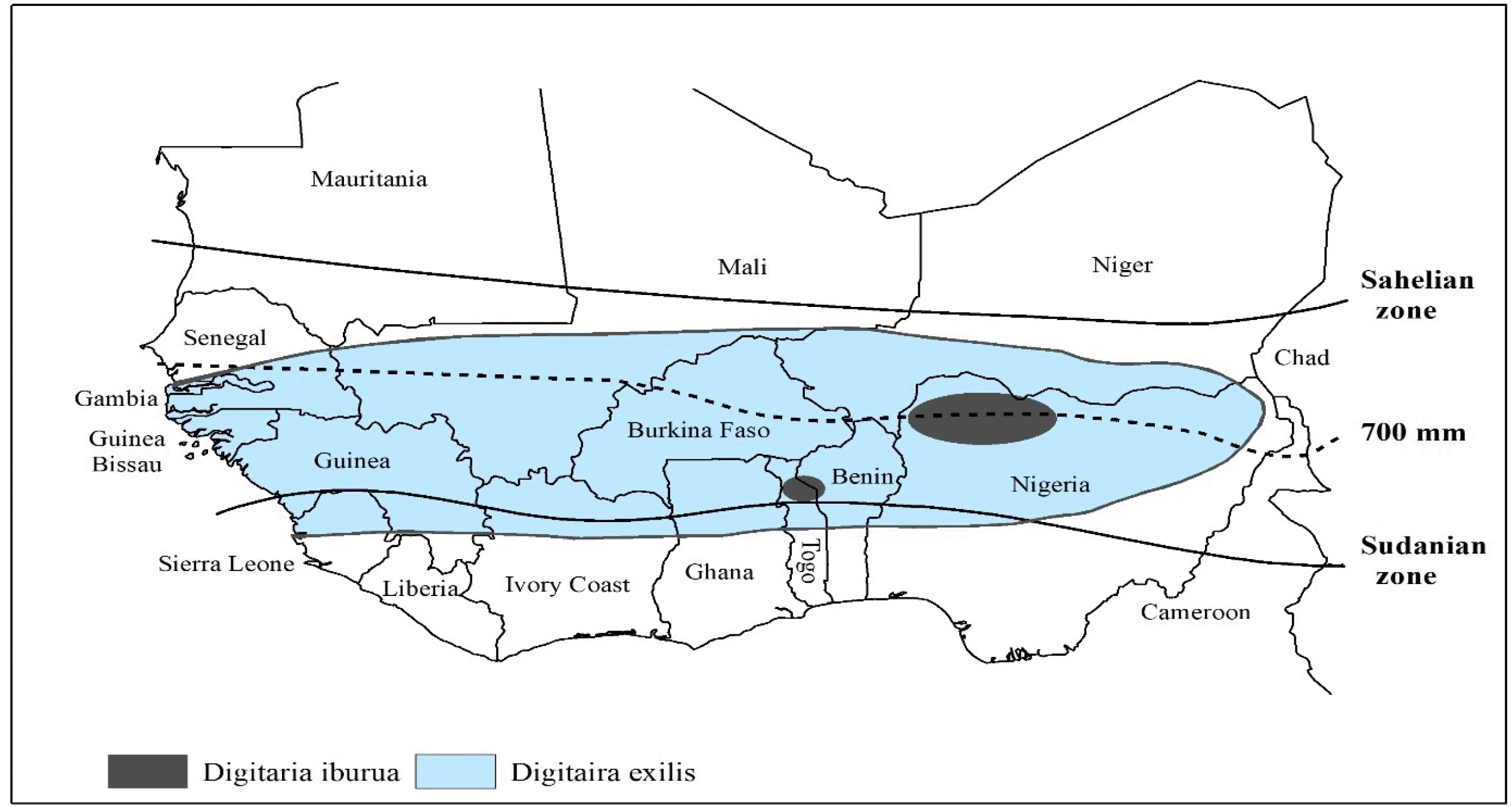
Fig. 2
Panicles presentation of the two fonio species cultivated in West Africa.
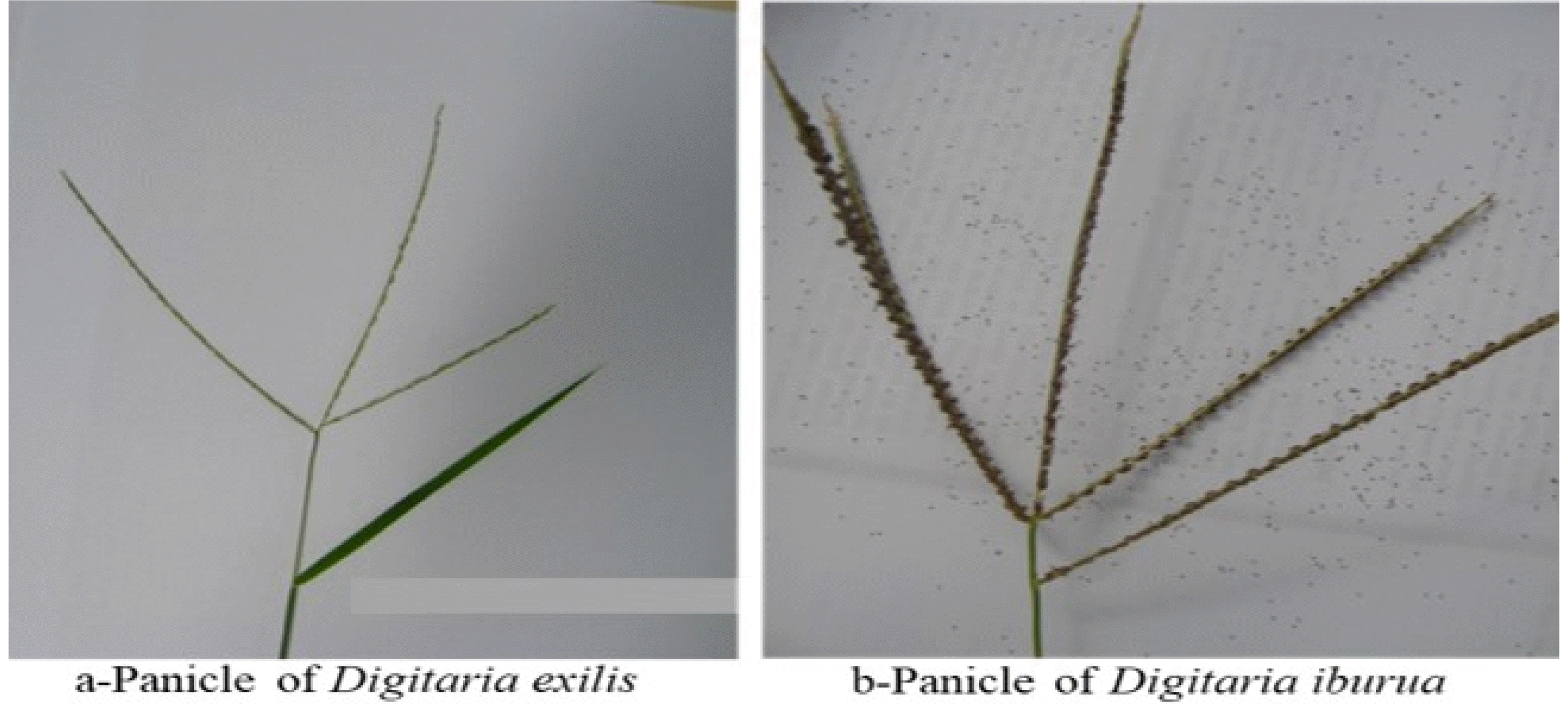
Fig. 3
Germplasm distribution of preserved fonios.
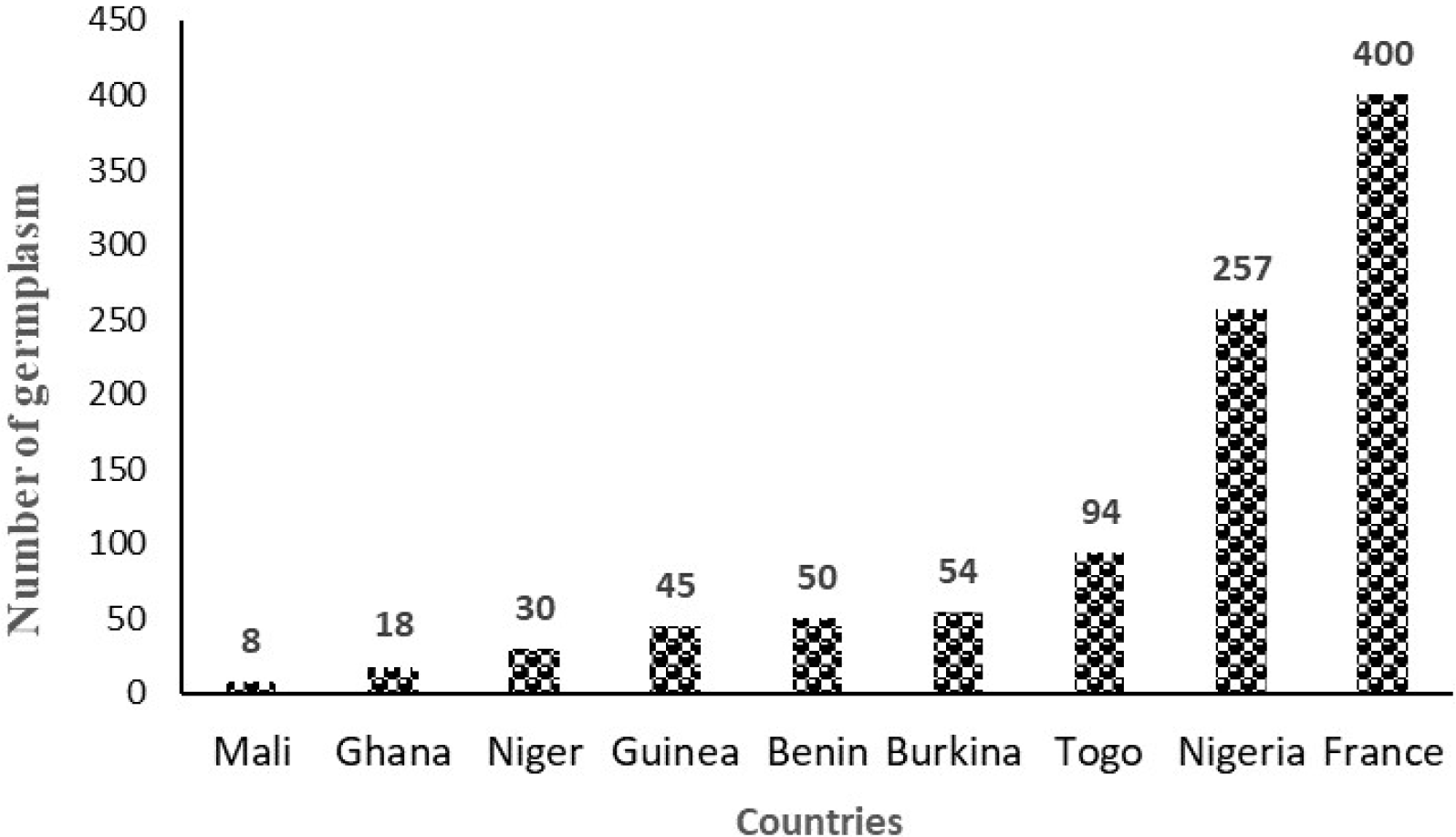
Table 1Phylogenetic studies and diversity of grown fonios.
Table 1
|
References |
Used Markers |
Obtained results |
|
, Hilu et al. (1997)
|
RAPD |
High genetic diversity of fonio (D. exilis), and confirmation of D. longiflora and D. temata as wild relatives of D. exils and D.iburua respectively |
|
, Adoukonou-Sagbadja et al. (2010)
|
AFLP |
Very high genetic affinity with more than 92% similarity noted between wild species D. longiflora and D. ternata respectively with those grown D. exilis and D. iburua
|
|
, Nyam et al. (2017)
|
RFLP |
Clear molecular separation of D. iburua, D. exilis and D. barbinodis, showing the magnitude of their genetic differences at DNA level. |
|
Ngom et al. (2017) |
SSR |
D. longiflora considered to be the closest wild species to D. exilis, had transferable polymorphic loci rate of 100%. |
|
Animasum et al. (2018) |
IISSR |
Grouping of D. exilis and D. iburua in a set and suggestion of a common parent, but these species could be separated by the mechanism of geographic isolation. |
|
, Olodo et al. (2019)
|
|
96% of Transferability of D. exilis to D. longiflora and 71% to D. iburua. The new SSR markers confirmed close genetic proximity of D. exilis to D. longiflora and great genetic difference between D. exilis and D. iburua. |
Table 2Morphological comparison between grown fonios species.
Table 2
|
Organs |
Traits |
Digitaria exilis
|
Digitaria iburua
|
|
Roots |
Type |
Fasciculated (hundreds of fine roots) |
Fasciculated |
|
Dimension |
Diameter (1 mm), length ≤ 228 cm |
- |
|
Stubble |
Size |
30-80 cm |
45 cm-1.4 m |
|
Aspect |
Fine, hollow, erected |
glabrous, upright |
|
Tillers |
2-8 tillers with 5-9 nodes |
4-5 nodes |
|
Leafs |
width |
0.3-0.9 cm |
1 cm |
|
Length |
5-15 cm |
30 cm |
|
Pubescence |
glabrous |
glabrous |
|
Straw |
Aspect |
Erected/ simple |
Erected |
|
Heigth |
about 45 cm |
> 50 cm |
|
Racemes |
Number |
2-5 fingers |
4-10 sous-doigts |
|
Aspect |
Sessile or not |
- |
|
Length |
5-12 cm/ 3-15 cm |
12-13 cm |
|
Spikelets |
Length |
1.5-2 mm |
2 mm |
|
Pubescence |
Glabrous |
courts poils ou presque glabrous |
|
Pedicels |
Number |
grouped by 2-4 |
often 5 |
|
Aspect |
Very frail, glabrous |
glabrous, sometimes hairy |
|
Length |
0.5 to 1.8 mm |
2.5 mm |
|
Caryopsis |
Base |
narrow |
pointed |
|
shape |
Ovoid to ovo-ellipsoid |
Ellipsoid |
|
Dimension |
Diameter 0.5-1mm, length 0.75-2 mm |
Length 1.5-1.75 mm |
|
Coulor |
White to yellow, pink, purple wine-red |
Blackish |
Table 3Evolution in mating system study of grown fonios.
Table 3
|
References |
Genetic tools used |
Mating systems declared or observed |
|
, Cissé (1975)
|
- |
Multiplication of fonio by self-fertilization (autogamy) |
|
, Hilu et al. (1997); Vodouhè and Achigan Dako (2006)
|
|
Reproduction of fonio by cross-pollination (allogamy) |
|
, Adoukonou-Sagbadja et al. (2010)
|
AFLP markers |
Apomixis is the absolute reproduction regime of D. iburua while D. exilis is apomictic with a little autogamy (2% residual sexuality). |
|
, Barnaud et al. (2017)
|
SSR microsatellite markers |
Digitaria exilis breeds highly by self-fertilization with possible cross fertilization rate of 1.7% |
Table 4Phenotypic characterization of grown fonio germplasm.
Table 4
|
References |
Sample size assessed |
Covers areas |
Morphotypes |
|
, Sanou (1993)
|
54 |
Burkina Faso, Mali |
- |
|
, Kwon-Ndung (2014)
|
62 |
Nigeria (collections from 7 States) |
- |
|
, Diallo (2003)
|
160 |
Guinée (4 regions) |
3 |
|
, Clottey et al. (2006b)
|
13 |
Ghana |
- |
|
, Kwon-Ndung and Dachi (2007)
|
35 |
Nigeria (NCRI) |
- |
|
, USAID (2008)
|
63 |
Senegal |
5 |
|
, Adoukonou-Sagbadja et al.(2007)
|
122*
|
Benin, Burkina Faso, Guinea, Mali and Togo |
- |
|
, Saidou et al. (2014)
|
67 |
Niger |
4 |
|
, Sekloka et al. (2016)
|
20 |
Benin |
4 |
References
- Adoukonou-Sagbadja H. 2010. Genetic characterization of traditional fonio millets (Digitaria exilis, D. iburua Stapf) landraces from West-Africa: Implications for conservation and breeding. Ph.D. Thesis. Institute of Crop Science and Plant Breeding I. Justus-Liebig University. Giessen, Germany.
- Adoukonou-Sagbadja H, Dansi A, Vodouhè R, Akpagana K. 2004. Collecting fonio (Digitaria exilis Kipp. Stapf, D. iburua Stapf) landraces in Togo. Plant Genet. Resour. Newsl.. 139: 63-67.
- Adoukonou-Sagbadja H, Dansi A, Vodouhe R, Akpagana K. 2006. Indigenous knowledge and traditional conservation of fonio millet (Digitaria exilis Stapf, Digitaria iburua Stapf) in Togo. Biodivers. Conserv.. 15: 2379-2395.
- Adoukonou-Sagbadja H, Wagner C, Dansi A, Ahlemeyer J, Daïnou O, Akpagana K, et al. 2007. Genetic diversity and population differentiation of traditional fonio millet (Digitaria spp.) landraces from different agro-ecological zones of West Africa. Theor. Appl. Genet.. 115: 917-931.
- Adoukonou-Sagbadja H, Wagner C, Ordon F, Friedt W. 2010. Reproductive system and molecular phylogenetic relationships of fonio millets (Digitaria spp., Poaceae) with some polyploid wild relatives. Trop. Plant Biol.. 3: 240-251.
- Animasaun D, Awujoola K, Oyedeji S, Morakinyo J, Krishnamurthy R. 2018. Diversity level of genomic microsatellite among cultivated genotypes of Digitaria species in Nigeria. Af. Crop Sci. J.. 26: 305-313.
- Animasaun DA, Morakinyo JA, Mustapha OT. 2014a. Assessment of the effects of gamma irradiation on the growth and yield of Digitaria exilis [Haller]. J. Appl. Biosci.. 75: 6164-6172.
- Animasaun DA, Mustapha OT, Oyedeji S. 2014b. Effects of nitrous acid on growth and yield of Digitaria exilis (Haller). Global Journal of Pure and Applied Sciences. 20: 11-16.
- Ayenan MAT, Sodedji KAF, Nwankwo CI, Olodo KF, Alladassi MEB. 2018. Harnessing genetic resources and progress in plant genomics for fonio (Digitaria spp.) improvement. Genet. Resour. Crop Evol.. 65: 373-386.
- Ballogoun VY. 2013. Systèmes post-récolte, transformation, qualité du fonio et produits dérivés au nord du Bénin, Ph.D. Thesis. Faculté des Sciences Agronomique. Université d'Abomey-Calavi, Bénin.
- Barnaud A, Vignes H, Risterucci AM, Noyer JL, Pham JL, Blay C, et al. 2012. Development of nuclear microsatellite markers for the fonio, Digitaria exilis (Poaceae), an understudied West African cereal. Am. J. Bot.. 99: 105-107.
- Barnaud A, Vigouroux Y, Diallo MT, Saidou SI, Piquet M, Barry MB, et al. 2017. High selfing rate inferred for white fonio [Digitaria exilis (Kippist.) Stapf] reproductive system opens up opportunities for breeding programs. Genet. Resour. Crop Evol.. 64: 1485-1490.
- Bautista Salas. 2009. Caractérisation agro-morphologique et moléculaire d'une collection de landraces péruviennes de pigeonpea (Cajanus cajan L. Millsp.) pour l'analyse de sa diversité, Ph.D. Thesis. FUNDP. Belgium.
- Bioversity International, IRRI, WARDA2007. Descriptors for wild and cultivated rice (Oryza spp.).
- CIRAD. 2009. La plante du fonio. In Centre de coopération internationale en recherche agronomique pour le développement; Montpellier, France, http://fonio.cirad.fr/la_plante/culture. 08/08/2018
- Cissé IB. 1975. La culture de fonio et quelques aspects écophysiologiques de la plante. Landbouwhogeschool. Wageningen, Netherlands.
- Clément J, Leblanc JM. 1984. Prospection des Digitaria exilis (Fonio) en Afrique de l'Ouest. Collecte IBPGR-ORSTOM de 1977. Catalogue ORSTOM. 3-7.
- Clottey VA, Agyare WA, Bayorbor TB, Abanga JJ, Kombiok JM. 2006b. Genetic relatedness of fonio (Digitaria spp.) landraces assembled in Ghana. Plant Genet Resour. Newsl.. 147: 6-11.
- Clottey VA, Agyare WA, Kombiok JM, Abdulai H, Kaleem AH. 2006a. Fonio (Digitaria exilis Stapf) germplasm assemblage for characterization, conservation and improvement in Ghana. Plant Genet. Resour. Newsl.. 146: 24-27.
- Cruz JF, Béavogui F, Dramé D. 2011. Le fonio, une céréale africaine. Collection agricultures tropicales en poche. Editions QUAE, Cta, Presses agronomiques de Gembloux. Gembloux, Belgium:
- Dansi A, Adoukonou-Sagbadja H, Vodouhe R. 2010. Diversity, conservation and related wild species of Fonio millet (Digitaria spp.) in the northwest of Benin. Genet. Resour. Crop Evol.. 57: 827-839.
- Diallo TA. Vodouhe SR., Zannon A., Achigan DE., 2003. Diversité génétique de Digitaria exilis en Guinée et mesures de préservation. editors. Actes du premier atelier sur la diversité génétique du fonio en Afrique de l'Ouest. IPGRI. Conakry, Guinée: pp. 29-31.
- Diallo TA, Fliedel G, Stilmant D, Cruz JF. Cruz JF., 2008. Catalogue de quelques écotypes de fonio de Guinée, du Mali et du Burkina Faso. Projet Fonio. editor. Amélioration de la qualité et de la compétitivité de la filière fonio en Afrique de l'Ouest. Cirad. Montpellier, France: pp. 48.
- Dramé D, Cruz J. 2002. Rapport de Mission au Bénin et au Sénégal. Amélioration des technologies post-récolte du fonio (CORAF) 21.
- Dupuis B, Forest F, Stilmant D. 2007. Etude bibliographique : Inventaire des connaissances en termes de variétés cultivées en Guinée, au Mali et au Burkina Faso et inventaire des connaissances en termes de systèmes de culture incluant la production de fonio dans ces trois pays: projet n°. 015403 FONIO. Amélioration de la qualité et de la compétitivité de la filière fonio en Afrique de l'Ouest. Work Package 6. pp. 45.
- Egan AN, Schlueter J, Spooner DM. 2012. Applications of next generation sequencing in plant biology. Am. J. Bot.. 99: 175-185.
- Fofana A, Gueye M, Kanfany G, Tall H, Djiba . 2017. Fiche technique du fonio. Série Fiche Technique ISRA. 14: 11.
- Froment D, Renard C. Raemaekers RH., 2001. Fonio. editor. Agriculture en Afrique tropicale. DGCI. Bruxelles, Belgique: pp. 37-43.
- Gueye M. 2016. Amélioration des techniques de semis, de fertilisation et de récolte du fonio blanc (Digitaria exilis Stapf ; Poaceae) au Sénégal. Ph.D. Thesis. Université Cheikh Anta Diop de Dakar. Sénégal.
- Haq N, Ogbe DF. Williams JT., 1995. Fonio (Digitaria exilis and D. iburua). editor. Cereals and pseudocereals. Chapman and Hall. London, United Kingdom: pp. 225-245.
- Henrard JT. 1950. Monograph of the genus Digitaria. Leuven University Press. Leiden, Netherlander.
- Hilu KW, M'Ribu K, Liang H, Mandelbau C. 1997. Fonio millets: ethnobotany, genetic diversity and evolution. S. Afr. J. Bot.. 63: 185-190.
- Jansky S. 2006. Overcoming hybridization barriers in potato. Plant Breed.. 125: 1-12.
- Jideani IA. 1999. Traditional and possible technological uses of Digitaria exilis (acha) and Digitaria iburua (iburu): a review. Plant Foods Hum. Nutr.. 54: 363-374.
- Kwon-Ndung EH. 2014. Unlocking genes in search of food security. 7th inaugural lecture. NGOPOL Quality Press, Nig. Ltd.. Nigeria: pp. 94.
- Kwon-Ndung EH, Dachi SN. 2007. Acha (fonio) genotypic diversity and management in Nigeria. African Crop Science Conference Proceedings. 8: 787-790.
- Kwon-Ndung EH, Misari SM, Dachi SN. 1998. Collecting germplasm of acha, Digitaria exilis (Kipp. Stapf.). accessions in Nigeria. Plant Genet. Resour. Newsl.. 116: 30-31.
- Kwon-Ndung EH, Misari SM, Dachi SN. 2001. Study on the production practices of Acha (Digitaria exilis Kippist Stapf) in Nigeria. Science Forum: Journal of Pure and Applied Science. 4: 11-19.
- Kwon-Ndung EH, Ochigbo AA. 2004. Acha (fonio) genetic diversity, distribution and conservation in Nigeria. Plant Genetic Resources and Food Security in West and Central Africa. pp. 18.
- Morales-Payán JP, Ortiz JR, Cicero J, Taveras F. Janick J., Whipkey A., 2002. Digitaria exilis as a crop in the Dominican Republic. editors. Trends in New Crops and New Uses. ASHS Press. Alexandria, VA.
- Ngom A, Gueye MC, Gueye M, Billot C, Calatayud C, Diop BM, et al. 2018. Cross-species amplification of microsatellite loci developed for Digitaria exilis Stapf in related Digitaria species. J. Appl. Biosci.. 129: 12982-12995.
- Nyam DD, Kwon-Ndung EH, Wuyep AP. 2017. RFLP-based gel electrophoregram of DNA primers for Acha (Fonio) characterisation from Nigeria. International Journal of Innovative Approaches in Agricultural Research. 1: 51-70.
- Ochatt SJ, Benabdelmouna A, Marget P, Aubert G, Moussy F, Pontécaille C, et al. 2004. Overcoming hybridization barriers between pea and some of its wild relatives. Euphytica. 137: 353-359.
- Olodo KF, Gueye MC, Calatayud C, Diop BM, Kane NA, Ngom A, et al. 2019. EST-SSR development for Digitaria exilis and its relatives D. iburua and D. longiflora from transcriptome sequences. Plant Genet. Resour-C. 17: 280-284.
- Portères R. 1946. L'aire culturale du Digitaria iburua Stapf, céréale mineure de l'ouest-Africain. Agr. Trop.. 1: 589-592.
- Portères R. 1955. Les Céréales mineures du genre Digitaria en Afrique et en Europe. Journal d'agriculture tropicale et de botanique appliquée. 7-9: 349-386.
- Portères R. Harlan JR., de Wet JMJ., Stemler ABL., 1976. African cereals: Eleusine, fonio, black fonio, teff, Brachiaria, paspalum, Pennisetum, and African rice, p.409-452. editors. Origins of African plant domestication. Mouton Publishers. The Hague, Netherlands.
- Renoux L, Dumas P. 1905. Culture du fonio dans la vallée du Sénégal et du Haut Niger. L'agriculture Pratique des Pays Chauds. Bull. Jard. Col. Nogent.. 32: 357-359.
- Saidou SI, Bakasso Y, Inoussa MM, Zaman-Allah M, Atta S, Barnaud A, et al. 2014. Diversité agro-morphologique des accessions de fonio [Digitaria Exilis (Kippist.) Stapf.]. au Niger. Int. J. Biol. Chem. Sci.. 8: 1710-1729.
- Sanou J. 1993. Evaluation de la variabilité au sein d'une collection de fonio (Digitaria exilis Stapf), Structuration, Potentialités agronomiques. Mémoire d'ingénieur. Université Ouagadougou. Burkina Faso: pp. 78.
- Sekloka , Adoukonou-Sagbadja H, Paraïso AA, Kouega Yoa, Bachabi FX, Zoumarou-Wallis N. 2015. Evolution de la diversité des cultivars de fonio pratiqués à Boukoumbé et environs. Int. J. Biol. Chem. Sci.. 9: 2446-2458.
- Sekloka E, Kanlindogbè C, Biaou SSH, Adoukonou-Sagbadja H, Kora A, Motouama TF, et al. 2016. Agro-morphological Characterization of millet fonio accessions (Digitaria spp. Stapf.) collected in commune of Boukoumbé. Northwest of Benin. J. Plant Breed. Crop Sci.. 8: 211-222.
- Stapf O. 1915. Iburu and Fundi, two cereals of Upper Guinea (Digitaria Iburua, D. exilis). Royal Botanic Gardens, Kew, Bulletin of miscellaneous information. 8: 381-386.
- UPOV2015. International Union for the Protection of New Varieties of Plants. Guidelines for the conduct of tests for distinctness, uniformity and stability. GENEVA, TG/283/1 Rev 59.
- USAID.2008. Chaîne de valeurs de la filière fonio au Sénégal. International Resources Group. Washington D.C., U.S.A..
- Vietmeyer ND, Borlaugh NE, Axtell J, Burton GW, Harlan JR, Rachie KO. NRC/BSTID Publication.1996. Fonio (Acha). Lost crops of Africa. National Academy Press, U.S.A.. Washington DC: pp. 59-76.
- Vodouhè SR, Achigan Dako. Brink M., Belay G., 2006. editors. Digitaria exilis (Kippist) Stapf. PROTA (Plant Resources of Tropical Africa/Ressources végétales de l'Afrique tropicale). Wageningen, Netherlands.
- Vodouhè RS, Achigan Dako, Dansi A, Adoukonou-Sagbadja H. 2007. Fonio: A treasure for West Africa. In Plant genetic resources and food security in West and Central Africa. Regional Conference. Ibadan, Nigeria: pp. 219-222.
- Vodouhè SR, Zannou A, Achigan Dako. 2003. Actes du Premier Atelier sur la Diversité Génétique du Fonio (Digitaria exilis) en Afrique de l'Ouest. Conakry, Guinée, 04-06 Août 1998. Institut International des Ressources Phytogénétiques (IPGRI). Rome, Italie: pp. 73.
- Wei ZM, Xu ZH. 1990. Regeneration of fertile plants from embryogenic suspension culture protoplasts of Sorghum vulgare. Plant Cell Rep.. 9: 51-53.