Abstract
Chinese jujube (Ziziphus jujuba Mill.) is an economically important species with over 4,000 years of cultivation history. Cultivar classification and phylogenetic relationship of jujube have been controversial due to the lack of data related to species origin and cultivation. In this study, inter simple sequence repeat (ISSR) markers were used to analyze the genetic characteristics and relationships of Korean and Chinese jujube cultivars. The amplification of genomic DNA of the 32 accessions using 11 primers yielded 149 amplified bands, of which 141 were polymorphic. The amplification of 22 jujube cultivars generated 76 bands, 40 of which were polymorphic, suggesting that many polymorphic bands appeared in the outgroup. The mean genetic similarity index (GSI) of the cultivars was 0.835; Bokjo, Geumseong, Wolchul, and Mudeung cultivars showed the highest GSI of 1, and Sandonglizao and Xiaolizao had the lowest GSI of 0.658. The cluster analysis resolved Indian jujube (Z. mauritiana Lam.) and Paliurus ramosissimus Poir. in a basal Group I, sour jujube 2 (Z. acidojujuba C.Y. Cheng & M.J. Liu) and Damaya formed Group II, Dabailing and Daguazao were clustered in Group III, and the remaining accessions formed Group IV. The Korean cultivars and Korean native varieties showed genetic uniformity and were close to some Chinese cultivars. Accordingly, exploration of domestic and foreign genetic resources should be supplemented with survey of characteristics of collected material for genetic resources management and breeding of elite lines.
-
Key words: Chinese jujube cultivars, Inter simple sequence repeat, Genetic diversity, Polymorphism
INTRODUCTION
Chinese jujube (
Ziziphus jujuba Mill.) is a commonly diploid species (2n = 2x = 24; genome size: 437.65 Mb), and is widely cultivated in China, Korea, Mongolia, and countries that border the Black Sea (
Liu and Wang 2009;
Liu et al. 2014). Jujube is a highly valuable source of food, fuel, and honey (
Adams et al. 1978;
von Maydell 1986;
Azam-ali et al. 2006). Although there are no clear records, jujube has been cultivated for least 4,000 years, and archaeological evidence indicated that it was utilized the dawn of human civilization (
Meyer et al. 2012). According to the records in the Book of Han “Treatise on Geography” and Chapter of Dongyi in the Book of Wei, jujube was introduced to Korea during the first propagation period near BP 2000–3000, and based on the records in the History of Goryeo, it is estimated that full-scale cultivation of jujube began around 1100 AD (
Vavilov 1951;
Meyer et al. 2012). However, cultivar classification and phylogenetic relationship of jujube have remained questionable due to the lack of data related to its origin and cultivation (
Liu and Cheng 1994). This problem was further emphasized by the current trend of reinforced bioresources management.
Various methods have been used to identify varieties and analyze their relationships. Molecular markers are used in several fields because of their ability to identify varieties from small amounts of samples in a short time, to uncover useful genes, and to select superior individuals. The analyses require sufficient level of polymorphisms, which can be obtained from dominant or co-dominant markers such as random amplification of polymorphic DNA (RAPD), inter simple sequence repeat (ISSR), amplified fragment length polymorphism (AFLP), and simple sequence repeat (SSR) (
Agarwal et al. 2008;
Collard and Mackill 2008;
Ribaut et al. 2010).
Co-dominant markers, such as SSR, can differentiate between homozygotes and heterozygotes, rendering them useful not only for the identification of varieties, but also in pedigree analysis. However, polymorphism information of co-dominant markers may lead to errors in genotype identification of polyploids and detection of the frequency of gene loci. These markers are convenient for estimates of genetic distance, which may not reflect the actual genetic distance (
Esselink et al. 2004;
Clark and Jasieniuk 2011). Although alternative processing of the information obtained by co-dominant markers as dominant markers has been suggested, most information is lost due to unique multilocus phenotypes being treated as being equidistant, weakening the advantages of co-dominant markers (
Israel et al. 2009;
Robertson et al. 2010).
ISSR markers are dominant PCR-based markers that are used to detect microsatellites regions (
Zietkiewicz et al. 1994). Because they can be applied without prior knowledge about target genetic resources, they can identify polymorphism information in a timely and cost-effective manner, while being highly reproducible owing to the use of higher bonding temperature and longer primer sequence when compared with RAPD markers (
Powell et al. 1996;
Nagaoka and Ogihara 1997). Accordingly, the present study used ISSR markers to identify the genetic characteristics and relationships of Korean and Chinese jujube cultivars.
MATERIALS AND METHODS
Test material and DNA isolation
We used a total of 32 accessions, comprising 25 accessions of jujube (3 Korean cultivars, 17 Chinese cultivars, and 5 Korean native varieties) and 3 related species that were used as outgroup (
Table 1). Accessions were planted in the National Institute of Forest Science located in Suwon Country, Korea. Young leaves (100 mg) were ground in a beadbeater (Qiagen, Netherlands) and used for DNA isolation using a GeneAll plant SV DNA purification Kit (GeneAll, Korea).
We used primers published by the University of British Columbia (UBC set #9) that have excellent reproducibility and allow clear distinction of amplified products (
Table 2). Each 20 μL PCR solution contained 5 ng template DNA, 0.4 μM primer, 1.5 mM MgCl
2, 250 μM dNTP Mix, 10 mM Tris-HCl (pH 9.0), 30 mM KCl, and 1.5 U
Taq DNA polymerase. The PCR protocol consisted of an initial denaturation step at 94°C for 5 minutes, followed by 35 cycles of denaturation at 94°C for 30 seconds, annealing at 50–56°C for 30 seconds, and extension at 72°C for 60 seconds. The final extension was performed at 72°C for 10 minutes.
PCR profiles were scored for the presence and absence of amplified products. GenAlEx ver. 6.5 (
Peakall and Smouse 2012) and PopGene ver 3.2 (
Yeh and Boyle 1997) were used to derive the percentage polymorphic gene loci, number of alleles (
Na), number of effective alleles (
Ne), expected heterozygosity (
He), Shannon’s gene diversity index (
I), and genetic similarity index (GSI) of the 32 accessions and 22 jujube cultivars (
Nei 1973;
Yeh et al. 1999;
Peakall and Smouse 2012). Cluster analysis based on distance matrix was performed using the unweighted pairgroup method (UPGMA) as implemented in NEIGHBOR of the PHYLIP ver. 3.6b (
Felsenstein 2004). The reliability of the UPGMA topology was assessed via bootstrapping (
Felsenstein 1985) over 1000 replicates generated by MICROSAT and subsequently used in NEIGHBOR and CONSENSE programs in PHYLIP.
RESULTS
Analysis of genetic characteristics
The PCR of the 32 accessions yielded 149 amplified bands. The number of polymorphic amplified bands was 141 (94%), with an average of 12.8 bands per primer (
Table 2). The results of the genetic variability analysis of the amplified loci for the 32 accessions are given in
Table 3. The PCR of the 22 jujube cultivars generated 76 amplified bands, of which 40 were polymorphic. These results indicate that the majority of the polymorphic loci originated in the outgroup. The genetic variability of the polymorphic loci was lower than that of the complete dataset of 32 accessions (
Table 4). The mean GSI of the jujube cultivars was 0.835, with Bokjo, Geumseong, Wolchul, and Mudeung cultivars showing the highest GSI of 1 and Sandonglizao and Xiaolizao cultivars having the lowest GSI of 0.658.
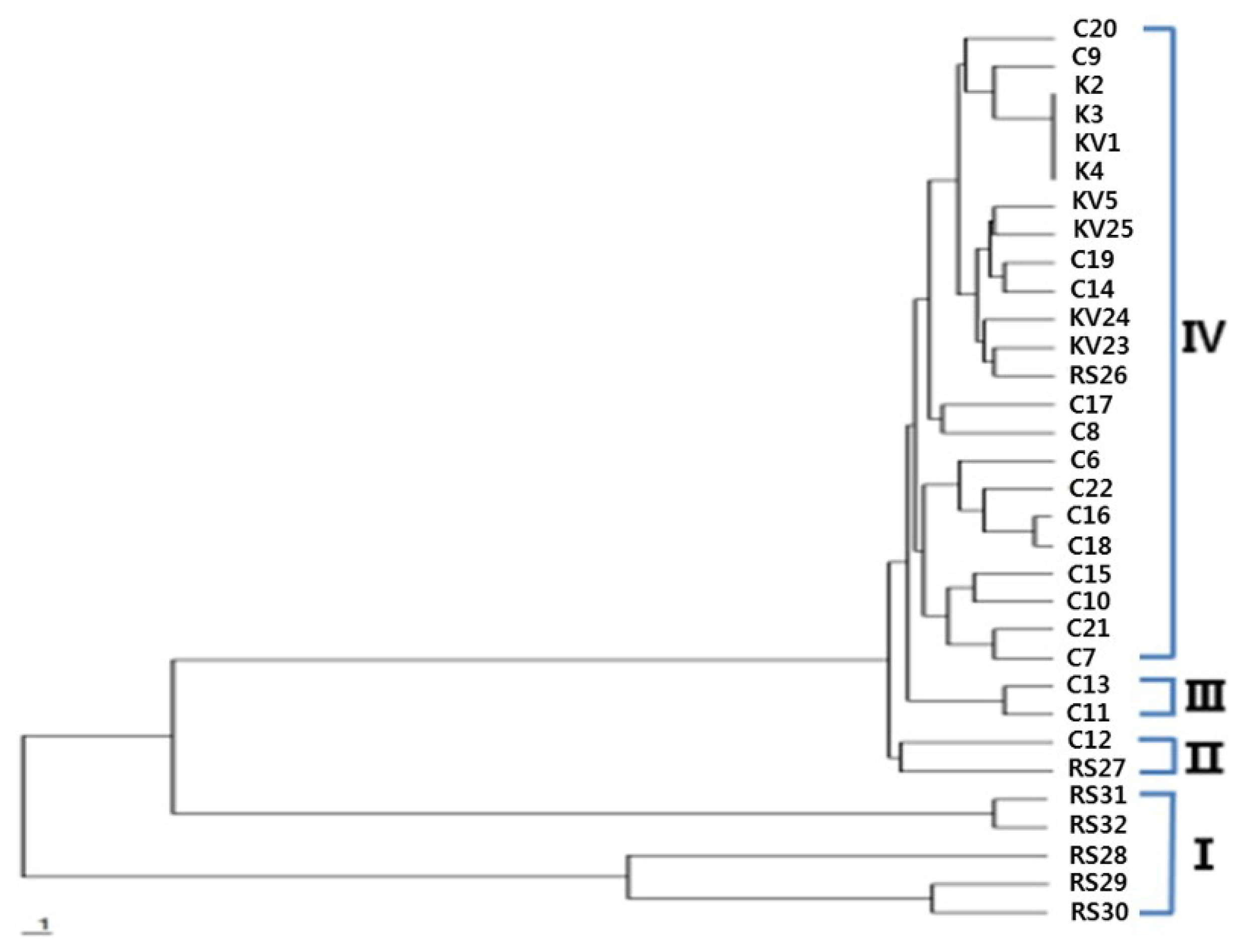
Indian jujube (
Z. mauritiana Lam.) and Maritime jujuba (
Paliurus ramosissimus Poir.) were grouped together in the basal Group I, while sour jujube 2 (
Z. acidojujuba C.Y. Cheng & M.J. Liu) and Damaya formed Group II. Dabailing and Daguazao cultivars were clustered in Group III, and the remaining accessions formed Group IV. Within Group IV, Boeundaechu, Chuncheon 4, Chuncheon 7, Gochang, Jinsixiaozao, and Jinsi No. 3 were in a clade together with sour jujube 1. Korean native variety Bokjo was in a clade with Mudeung, Geumseong, Wolchul, Panzao, and Jinsi No. 4 (
Fig. 1).
DISCUSSION
Most of the polymorphic information was found in the outgroup, whereas jujube cultivars exhibited low genetic variability. Low genetic diversity found among jujube cultivars was remarkable given their long cultivation history and preference for cross pollination, suggesting that low genetic diversity may be associated with acclimation, cultivation, and commercialization processes (
Ackerman 1961;
Lyrene 1983;
Qu and Wang 1993). Asexual propagation presents the genotypes of woody plants with strong self-incompatibility to allow proliferation and dissemination of elite individuals (
Janick 2005). However, as biased selection and dissemination lead to acceleration of the genetic erosion (
Miller and Schaal 2005;
Miller and Gross 2011; Korir
et al. 2014), it is believed that the low genetic diversity of jujube resulted from the selection and dissemination of jujube mostly by asexual propagation. The genetic diversity of jujube was lower than that of other plants cultivated by similar propagation method, including olive (
P: 87%,
He: 0.55), walnut (
Ne: 1.39,
I: 0.37,
He: 0.44), apple (
He: 0.83), cherry (
P: 57%
He: 0.369,
I: 0.546), and pistachio tree (
Ne: 1.48,
He: 0.25), while it was similar to that of pecan tree (
Ne: 1.31,
He: 0.153), which has a short cultivation history (
Rüter et al. 1999;
Ciprian et al. 2002;
Martins-Lopes et al. 2007;
Pazouki et al. 2010;
Ganopoulos et al. 2011;
Qing et al. 2011;
Cornille et al. 2012). Plant species or cultivated crops with a narrow area of origin that can reproduce easily by vegetative propagation are known to have lower genetic diversity compared with plants with many centers of origin that can reproduce by sexual propagation (
Miller and Schaal. 2006;
Pikersgill 2007). It is also believed that comparative plant species in this paper may show various gene mutations stemming from adaptation to various regions in Asia, Europe, and Africa (
Gohary and Hopf 1988;
Mekuria et al. 1999;
Besnard et al. 2001;
Contento et al. 2002;
Baldoni et al. 2006), whereas jujube cultivars show relatively low genetic diversity because they originated from just a single area near the Yellow River in China (
Vavilov 1951;
Meyer et al. 2012). In addition, various breeding studies have been conducted on the comparative plant species owing to their high commercial value. However, the only countries with active commercial production of jujube are China and Korea and cultivar breeding studies on jujube are lacking, the resulting number of scientifically proven varieties is low (
Wang et al. 2014).
Information about the relationships between jujube cultivars and the related species renders inferences about the breeding process and classification possible. Indian jujube and Maritime jujuba included in the outgroup formed an independent clade, whereas the two sour jujubes were separated into two independent groups with other cultivars. Sour jujube is considered a variety of jujube, but many studies classify it as a separate species (
Liu and Cheng 1994). Meanwhile, various studies on phenotypes, physiological characteristics, cytology, and molecular markers have revealed that the two plant species, as wild types of jujube, are very close to each other (
Qu and Wang 1993;
Peng et al. 2000;
Liu et al. 2004).
Li et al. (2010), using sequence-related amplified polymorphism (SRAP) markers to analyze the GSI of the two plant species, found that the two species shared a very similar GSI of 0.86. Moreover, a study by
Peng et al. (2000), using RAPD, and a study by
Li et al. (2005), based on the analysis of the ITS region, have both supported the variety status of sour jujube. The results of the present study were unable to clearly distinguish between jujube and sour jujube, suggesting that sour jujube should be classified as a variety rather than elevated to species level.
Dabailing and Daguazao, characterized by large, round fruits, were easy to identify with the molecular markers. The two cultivars, which were developed by the same breeder during the early 1980s, were selected from different plant sources, but as they show similar morphological characteristics and short genetic distance, they are believed to be closely related. Jinsixiaozao has been cultivated for over 2,500 years and shares similar morphological and physiological characteristics with Boeundaechu, Chuncheon 4, Chuncheon 7, Gochang, and Jinsi No. 3 may, suggesting that these cultivars have derived from Jinsixiaozao. The genetic distance between Bokjo and three cultivars bred in Korea was 0, and Bokjo appeared to be close to Panzao from China, with which it shares similar fruit morphology. Accordingly, Bokjo and Panzao are considered closely related; Bokjo was used in the selective breeding of Geumseong, Mudeung, and Wolchul. Many varieties of fruit crops are developed by bud mutation, usually by changes in chromosome number, chromosome structural abnormality, and point mutations. Therefore, identification of varieties using molecular markers encounters difficulties (
Fang and Roose 1997;
Fang et al. 2001;
Qin et al. 2011;
Jianfeng et al. 2012).
Sugawara and Oowada et al. (1995) used 124 random primers on citrus fruits to identify mutations but discovered only three mutations.
Jianfeng et al. (2012) used RAPD, ISSR, SSR, SRAP, inter-retrotransposon amplified polymorphism (IRAP), and retrotransposon-microsatellite amplified polymorphism (REMAP) markers to differentiate two mandarin cultivars, but polymorphic amplified products were obtained from only ISSR and SRAP markers. Accordingly, it is difficult to conclude whether the Korean cultivars included in the present study were Bokjo.
The findings in the present study showed that Korean jujube cultivars and collected individuals were genetically uniform and close to some Chinese cultivars. Korea has limited genetic resources because there are no natural habitats or secondary source of jujube. Moreover, many genetic resources were lost because of jujube witches’ broom disease in the 1950s. It is believed that jujube trees that were subsequently selected and disseminated for specific purposes belonged to the same individuals or were closely related. Accordingly, genetic resources management and breeding of elite lines of jujube commands not only exploration of domestic and foreign genetic resources, but also surveys of various characteristics of collected individuals.
Fig. 1Dendrogram generated by clustering using UPGMA analysis from ISSR PCR of 32 accessions. Sample names were substituted with cultivar code. See
Table 1.
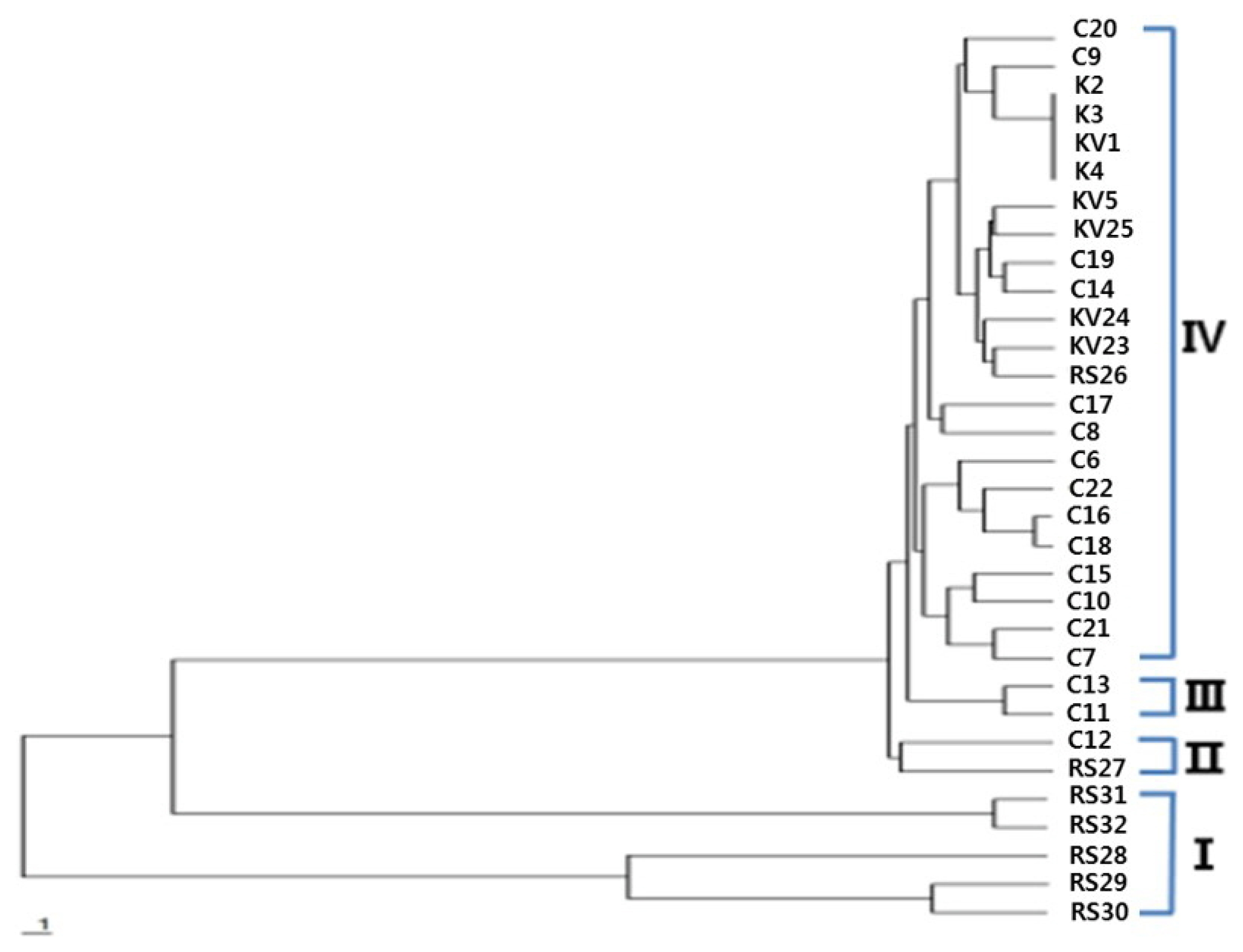
Table 1Samples name and their source used in this study.
Table 1
|
No. |
Common name |
Source |
Codez)
|
|
1 |
Bokjo |
Korea |
KV1 |
|
2 |
Mudeung |
Korea |
K2 |
|
3 |
Wolchul |
Korea |
K3 |
|
4 |
Geumseong |
Korea |
K4 |
|
5 |
Boeundaechu |
Korea |
KV5 |
|
6 |
Dalizao |
China |
C6 |
|
7 |
Huizao |
China |
C7 |
|
8 |
Pozao |
China |
C8 |
|
9 |
Panzao |
China |
C9 |
|
10 |
Zanhuangdazao |
China |
C10 |
|
11 |
Dabailing |
China |
C11 |
|
12 |
Damaya |
China |
C12 |
|
13 |
Daguazao |
China |
C13 |
|
14 |
Jinsixiaozao |
China |
C14 |
|
15 |
Zhongyangmuzao |
China |
C15 |
|
16 |
Sandonglizao |
China |
C16 |
|
17 |
Xiaolizao |
China |
C17 |
|
18 |
Dongzao |
China |
C18 |
|
19 |
Jinsi No. 3 |
China |
C19 |
|
20 |
Jinsi No. 4 |
China |
C20 |
|
21 |
Yuanling No. 1 |
China |
C21 |
|
22 |
Yuanling No. 2 |
China |
C22 |
|
23 |
Chuncheon 4 |
Korea |
KV23 |
|
24 |
Chuncheon 7 |
Korea |
KV24 |
|
25 |
Gochang |
Korea |
KV25 |
|
26 |
Sour jujube 1 |
Korea |
RS26 |
|
27 |
Sour jujube 2 |
Korea |
RS27 |
|
28 |
Indian jujube 1 |
Oman |
RS28 |
|
29 |
Indian jujube 2 |
India |
RS29 |
|
30 |
Indian jujube 3 |
India |
RS30 |
|
31 |
Maritime Jujuba 1 |
Korea |
RS31 |
|
32 |
Maritime Jujuba 2 |
Korea |
RS32 |
Table 2ISSR primers used in this study and summary of ISSR markers from 32 individuals.
Table 2
|
Primer name |
Primer sequencez)
|
Annealing temperature (°C) |
Total number of amplified bands |
Number of polymorphic bands |
|
UBC811 |
(GA)8C |
50 |
16 |
12 |
|
UBC818 |
(CA)8G |
50 |
16 |
15 |
|
UBC822 |
(TC)8A |
52 |
13 |
13 |
|
UBC825 |
(AC)8T |
55 |
13 |
12 |
|
UBC827 |
(AC)8G |
55 |
15 |
14 |
|
UBC828 |
(TG)8A |
52 |
13 |
12 |
|
UBC830 |
(TG)8C |
52 |
13 |
13 |
|
UBC846 |
(CA)8RT |
56 |
8 |
8 |
|
UBC847 |
(CA)8RC |
56 |
19 |
19 |
|
UBC857 |
(AC)8YG |
55 |
13 |
13 |
|
UBC860 |
(TG)8RA |
55 |
10 |
10 |
|
Total (%) |
|
|
149 |
141 |
|
Mean per primer |
|
|
13.55 |
12.81 |
Table 3Summary of genic variation statistics for all loci in 32 individuals.
Table 3
|
N
|
Na |
Ne |
I
|
He |
uHe |
P (%) |
|
Mean |
32 |
1.926 |
1.362 |
0.334 |
0.213 |
0.217 |
94.63 |
|
SE |
|
± 0.027 |
± 0.031 |
± 0.021 |
± 0.016 |
± 0.016 |
|
Table 4Summary of genic variation statistics for all loci in 22 jujube cultivars excluding Chuncheon 4, Chuncheon 7, Gochang, and related species.
Table 4
|
N
|
GS |
Na |
Ne |
I
|
He |
uHe |
P (%) |
|
Mean |
22 |
0.835 |
1.520 |
1.316 |
0.274 |
0.184 |
0.188 |
53.33 |
|
SE |
|
|
± 0.061 |
± 0.043 |
± 0.033 |
± 0.023 |
± 0.024 |
|
References
- Ackerman WL. 1961. Flowering, pollination, self-sterility and seed development of Chinese jujube. J Am Soc Hortic Sci. 77: 265-269.
- Adams R, Adams M, Willens A, Willerns G. 1978. Dry lands, man and plants. Architectural Press. London, U.K: pp. 152.
- Agarwal M, Shrivastava N, Padh H. 2008. Advances in molecular marker techniques and their application in plant sciences. Plant Cell Rep. 27: 617-631.
- Azam-Ali S, Bonkoungou E, Bow C, deKock C, Godara A, Williams JT. 2006. Ber and other jujubes International Centre for Underutilised Crops. University of Southampton. Southampton, SO17 1BJ, UK: pp. 289.
- Baldoni L, Tosti N, Ricciolini C, Belaj A, Arcioni S, Pannelli G, et al. 2006. Genetic structure of wild and cultivated olives in the central Mediterranean basin. Ann Bot. 98: 935-942.
- Besnard G, Baradat P, Berville A. 2001. Genetic relationship in the olive (Olea europaea L.) reflect multilocal selection of cultivars. Theor Appl Genet. 102: 251-258.
- Cipriani G, Marrazzo MT, Marconi R, Cimato A, Testolin R. 2002. Microsatellite markers isolated in olive (Olea europaea L.) are suitable for individual fingerprinting and reveal polymorphism within ancient cultivars. Theor Appl Genet. 104: 223-228.
- Clark LV, Jasieniuk M. 2011. POLYSAT: an R package for polyploid microsatellite analysis. Mol Ecol Resour. 11: 562-566.
- Collard BCY, Mackill DJ. 2008. Marker-assisted selection: an approach for precision plant breeding in the twenty-first century. Philos Trans R Soc Lond B Biol Sci. 363: 557-572.
- Contento A, Ceccarelli M, Gelati MT. 2002. Diversity of Olea genotypes and the origin of cultivated olives. Theor Appl Genet. 104: 1229-1238.
- Cornille A, Gladieux P, Smulders MJ, Roldán-Ruiz I, Laurens F, Le Cam B, et al. 2012. New insight into the history of domesticated apple: secondary contribution of the European wild apple to the genome of cultivated varieties. PLoS Genet. 8: e1002703
- Esselink GD, Nybom H, Vosman B. 2004. Assignment of allelic configuration in polyploids using the MAC-PR (microsatellite DNA allele counting-peak ratios) method. Theor Appl Genet. 109: 402-408.
- Fang DQ, Roose ML. 1997. Identification of closely related citrus cultivars with inter-simple sequence markers. Theor Appl Genet. 95: 408-417.
- Fang JG, Zhang Z, Zhou LH, Chen CS, Wang SH. 2001. The possibility of using RAPD marker for the identification of fruit sport. J Fruit Sci. 18: 182-185.
- Felsenstein J. 1985. Confidence limits on phylogenies: an approach using the bootstrap. Evolution. 39: 783-791.
- Felsenstein J. 2004. PHYLIP (Phylogeny Inference Package) Version 36 Distributed by the author Department of Genomic Sciences. University of Washington. Seattle, WA.
- Ganopoulos IV, Kazantzis K, Chatzicharisis I, Karayiannis I, Tsaftaris AS. 2011. Genetic diversity, structure and fruit trait associations in Greek sweet cherry cultivars using microsatellite based (SSR/ISSR) and morpho-physiological markers. Euphytica. 181: 237-251.
- Gohary D, Hopf M. 1988. Domestication of plants in the old world The origin and spread of cultivated plants in west Asia, Europe and the Nile valley. Clarendon Press. Oxford, U.K: pp. 328.
- Israel JA, Bando KJ, Anderson EC, May B. 2009. Polyploid microsatellite data reveal stock complexity among estuarine North American green sturgeon (Acipenser medirostris). Can J Fish Aquat Sci. 66: 1491-1504.
- Janick J. 2005. The origins of fruits, fruit growing, and fruit breeding. Plant Breed Rev. John Wiley & Sons. New jersey, U.S.A: pp. 255-320.
- Jianfeng H, Yong HQ, Hong XM, Chun YZ, Zi XY, Gui BH. 2012. Molecular marker analysis of ‘Shatangju’ and ‘Wuzishatangju’ mandarin (Citrus reticulata Blanco) Afr. J Biotechnol. 11: 15501-15509.
- Korir NK, Diao W, Tao R, Li X, Kayesh E, Li A, et al. Genetic diversity and relationships among different tomato varieties revealed by EST-SSR markers. Genet Mol Biol. 13: 43-53.
- Li XY. 2005. Molecular phylogeny of Ziziphus in China based on ITS and psbA-trnH sequence data [in Chinese]. Agricultural University of Hebei. Hebei, China.
- Li L, Peng JY, Bai RX. 2010. Analysis on the genetic relationships of Chinese Ziziphus with SRAP markers. Agr. Sci. China. 9: 1278-1284.
- Liu MJ, Cheng CY. 1994. A taxonomic study on Chinese jujube and wild jujube. Journal of Agricultural University of Hebei. 17: 251-263.
- Liu MJ, Zhao J, Cai QL, Liu GC, Wang JR, Zhao ZH, et al. 2014. The complex jujube genome provides insights in to fruit tree biology. Nat Commun. 5: 5315
- Liu M, Wang M. 2009. Chinese jujube germplasm resources. Beijing: China Forestry Publishing House.
- Liu P, Xue HZ, Zhou XY, Liu MJ, Mao YM, Zhou JY. 2004. Study on the biological basis of pollination in Chinese jujube (Zizyphus jujuba) and wild jujube (Z. spinosa). J Fruit Sci. 21: 224-228.
- Lyrene PM. 1983. Flowering and fruiting of Chinese jujubes in Florida. HortScience. 18: 208-209.
- Martins-Lopes P, Lima-Brito J, Gomes S, Meirinhos J, Santos L, Guedes-Pinto H. 2007. RAPD and ISSR molecular markers in Olea europaea L: Genetic variability and molecular cultivar identification. Genet Resour Crop Evol. 54: 117-128.
- Mekuria GT, Collins GG, Sedgley M. 1999. Genetic variability between different accessions of some common commercial olive cultivars. J Hortic Sci Biotechnol. 74: 309-314.
- Meyer RS, DuVal AE, Jensen HR. 2012. Patterns and processes in crop domestication: an historical review and quantitative analysis of 203 global food crops. New Phytol. 196: 29-48.
- Miller AJ, Gross BL. 2011. From forest to field: perennial fruit crops domestication. Am J Bot. 98: 1389-1414.
- Miller AJ, Schaal BA. 2005. Domestication of a Mesoamerican cultivated fruit tree, Spondias purpurea. Proc Natl Acad Sci USA. 102: 12801-12806.
- Miller AJ, Schaal BA. 2006. Domestication and the distribution of genetic variation in wild and cultivared populations of the Mesoamerican fruit tree Spondias purpurea L. (Anacardiaceae). Mol Ecol. 15: 1467-1480.
- Nagaoka T, Ogihara Y. 1997. Applicability of inter-simple sequence repeat polymorphisms in wheat for use as DNA markers in comparison to RFLP and RAPD markers. Theor Appl Genet. 94: 597-602.
- Nei M. 1973. Analysis of gene diversity in subdivided populations. Proc Natl Acad Sci USA. 70: 3321-3323.
- Pazouki L, Salehi Shanjani P, Hagidimitrion M, Pirseyedi SM, Naghavi MR, Avanzato D, et al. 2010. Genetic diversity and relationships among Pistacia species and cultivars. Conserv Genet. 11: 311-318.
- Peakall R, Smouse PE. 2012. GenAlEx 6.5: genetic analysis in excel. population genetic software for teaching and research—an update. Bioinformatics. 28: 2537-2539.
- Peng JY, Shu HR, Sun ZX, Peng SQ. 2000. RAPD analysis of germplasm resources in Chinese date. Acta Hort Sinica. 27: 171-176.
- Pikersgill B. 2007. Domestication of plants in the Americas: insights from mendelian and molecular genetics. Ann Bot. 100: 925-940.
- Powell W, Machray GC, Provan J. 1996. Polymorphism revealed by simple sequence repeats. Trends Plant Sci. 1: 215-222.
- Qin YH, Hu HG, Ye ZX, Lin SQ, Miao HX, Zhang CY, et al. 2011. Identification of progenies derived from sexual hybridization of citrus using RAPD molecular marker. Acta Hortic. 894: 123-132.
- Qing GM, Jun PZ, Dong P. 2011. Genetic analysis of walnut cultivars in China using fluorescent amplified fragment length polymorphism. J Am Soc Hortic Sci. 136: 422-428.
- Qu ZZ, Wang YH. 1993. Chinese fruit trees record Chinese jujube. The Forestry Publishing House of China. Beijing, China: pp. 33-37.
- Ribaut JM, de Vicente MC, Delannay X. 2010. Molecular breeding in developing countries: challenges and perspectives. Curr Opin Plant Biol. 13: 1-6.
- Robertson A, Rich TC, Allen AM, Houston L, Roberts C, Bridle JR, et al. 2010. Hybridization and polyploidy as drivers of continuing evolution and speciation in Sorbus. Mol Ecol. 19: 1675-1690.
- Rüter B, Hamrick JL, Wood BW. 1999. Genetic diversity within provenance and cultivar germplasm collections versus natural populations of pecan (Carya illinoinensis). J Hered. 90: 521-528.
- Sugawara K, Oowada A. 1995. Identification of citrus chimeras by RAPD analysis. HortScience. 30: 1276-1278.
- Vavilov NI. 1951. The origin, variation, immunity and breeding of cultivated plants. The Chronica Botanica. 13. New York, U.S.A: pp. 366.
- Von Maydell HJ. 1986. Trees and shrubs of the Sahel: Their characteristics and uses. GT2. Eschborn, Germany: pp. 525.
- Wang S, Liu Y, Ma L, Liu H, Tang Y, Wu L, et al. 2014. Isolation and characterization of microsatellite markers and analysis of genetic diversity in Chinese jujube (Ziziphus jujuba Mill.). PLoS One. 9: e99842
- Yeh FC, Boyle TJB. 1997. Population genetic analysis of co-dominant and dominant markers and quantitative traits. Belg J Bot. 129: 157.
- Yeh FC, Yang RC, Boyle TBJ, Ye ZH, Mao JX. 1999. POPGENE ver. 1.32: the user-friendly shareware for population genetic analysis. Molecular Biology and Biotechnology Centre. University of Alberta. Alberta, Canada.
- Zietkiewicz E, Rafalski A, Labuda D. 1994. Genome fingerprinting by simple sequence repeat (SSR)-anchored polymerase chain reaction amplification. Genomics. 20: 176-183.